
What Is a Can of Corn in Baseball? Meaning, Origin & Examples
On this page6
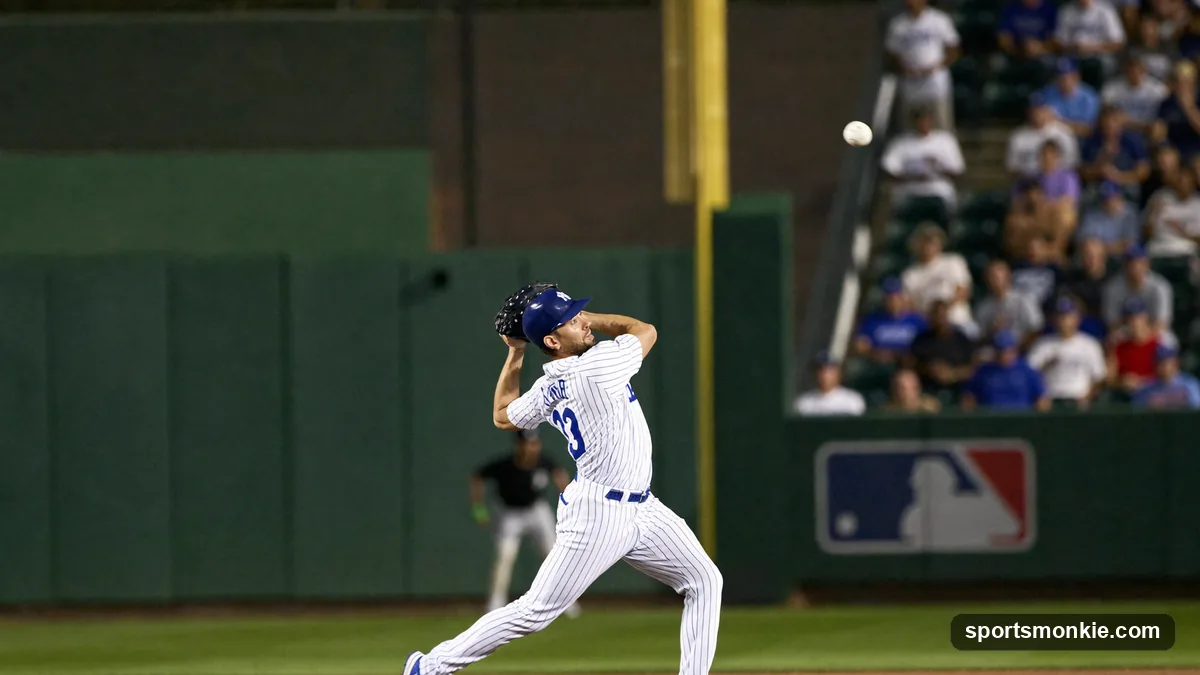
A can of corn in baseball is a routine fly ball hit high enough that a fielder can settle underneath it and catch it with almost no effort — no diving, no long sprint, no drama. It’s one of the sport’s oldest and most colorful pieces of slang, and you’ll still hear it dropped into broadcasts today whenever a batter skies a lazy pop fly straight into a waiting glove. For newcomers building out their baseball terminology vocabulary, “can of corn” is a fun entry point into the game’s rich history of idioms.
Can of Corn: Quick Definition
A can of corn describes any fly ball — almost always to the outfield — that is so easy to track and catch that the fielder barely has to move. The ball typically has a high, predictable arc, giving the fielder plenty of time to camp under it, plant their feet, and make the catch look effortless. It’s the opposite of a diving grab or a running catch; it’s baseball at its most unhurried.
You’ll usually hear the phrase used by broadcasters and commentators rather than official scorers, since it’s slang, not a scored statistic. A typical call might sound like: “Pop-up to shallow center, can of corn for the center fielder.”
Where the Phrase Came From
The origin of “can of corn” is one of baseball’s better linguistic stories, and it has nothing to do with the field itself at first glance.
- The grocery-store theory: In the late 1800s, general store and grocery clerks stocked canned goods on high shelves. Rather than climbing a ladder for every sale, clerks used a long stick with a hook on the end to knock a can loose, letting it tumble down so they could catch it — often in their apron — before it hit the ground or shattered. The gentle, arcing fall of the can looked a lot like an easy, catchable fly ball.
- The corn-as-staple theory: Because canned corn was one of the best-selling, most heavily stocked items in a general store, it was often placed on the most accessible (and easiest to knock down) shelves, reinforcing the “easy” association.
- The cornfield theory: Some etymologists point to the fact that early amateur ballfields were sometimes literally carved out of cornfields, with the outfield informally called the “corn field,” which may have blended into the phrase over time.
Whichever version is most accurate, the phrase had entered baseball vocabulary by the 1890s and stuck around for well over a century.
Who Made “Can of Corn” Famous
While the phrase predates modern broadcasting, it owes much of its staying power to Red Barber, the Hall of Fame broadcaster who called games for the Brooklyn Dodgers, New York Yankees, and Cincinnati Reds across more than 40 years behind the mic. Barber had a knack for folksy, memorable phrases, and “can of corn” became one of his signature calls for an easy fly-ball out. He’s also credited with popularizing other classic idioms like “rhubarb” (a heated on-field argument) and “F.O.B.” (a Brooklyn Dodgers in-joke meaning “full of Brooklyns,” i.e., the bases loaded).
Later generations of broadcasters kept the phrase alive, and it remains part of the everyday language of baseball commentary today.
How “Can of Corn” Is Used in a Game
A can of corn almost always describes a defensive play rather than an offensive one — it’s a compliment to the situation, not really the fielder’s skill, since the whole point is that the catch required minimal effort. Common contexts include:
- A batter popping up a pitch high into shallow left, center, or right field
- A lazy fly ball off a check-swing or a pitch hit off the end of the bat
- A routine sacrifice fly that a fielder catches comfortably, sometimes setting up a runner to score after tagging up
- Any fly ball where the fielder has time to wave off a teammate, call for the ball early, and catch it standing still
It’s rarely used for hard line drives, difficult sinking liners, or balls requiring a fielder to charge, dive, or climb a wall — those get their own vocabulary entirely.
Can of Corn vs. Other Fly Ball Terms
Baseball has a whole family of terms for different kinds of fly balls, and knowing how “can of corn” fits among them helps clarify what makes it distinct.
| Term | Difficulty for Fielder | Typical Description |
|---|---|---|
| Can of corn | Very easy | High, routine fly ball caught with little movement |
| Texas Leaguer | Hard to field | Soft blooper that drops between infield and outfield for a hit |
| Routine fly out | Easy to moderate | Standard fly ball caught after normal positioning/movement |
| Warning-track catch | Difficult | Fielder runs down a deep fly ball near the outfield wall |
| Diving catch | Very difficult | Fielder leaves their feet to reach a hard-to-get-to ball |
| Bloop single | Hard to field | Weakly hit ball that lands just out of reach for a hit |
The table shows why “can of corn” carries a specific, almost affectionate meaning in baseball slang — it’s shorthand for “that one was never in doubt.”
Why the Term Still Matters Today
Even in an era of exit velocity, launch angle, and advanced defensive metrics, “can of corn” survives because it captures something stats can’t: the visual, unhurried rhythm of an easy defensive play. It’s part of the same tradition of colorful baseball language that gives us terms like a double play turned “around the horn,” or a runner erased on a force out at second base. These idioms are part of what makes baseball’s broadcast culture so distinct from other sports, and learning them is a fun way to deepen your understanding of the game beyond the box score.
If you’re building out your baseball vocabulary, browse the full baseball terminology glossary for more definitions, or head back to the Baseball & MLB hub for rules explainers, positions, and more idioms like this one.
Frequently asked questions
What does can of corn mean in baseball?+
A can of corn is a routine fly ball hit high enough that an outfielder (or infielder) can get under it and catch it easily, usually without diving, running far, or breaking a sweat. It's slang for the easiest kind of out to record.
Where did the phrase can of corn come from?+
The most common origin story traces it to 19th-century grocery stores, where clerks used a long hooked pole to knock canned goods off high shelves and then caught the falling cans in their apron. The gentle, predictable arc of a falling can resembled catching a routine fly ball, and the phrase carried over into baseball slang by the late 1800s.
Who popularized the term can of corn in baseball?+
Legendary broadcaster Red Barber, who called MLB games for more than four decades with the Brooklyn Dodgers, New York Yankees, and Cincinnati Reds, is widely credited with popularizing 'can of corn' on the air, alongside other colorful phrases like 'rhubarb' for an on-field argument.
Is a can of corn always a fly ball to the outfield?+
Usually, yes. Most cans of corn are lazy fly balls hit to an outfielder who simply drifts a few steps and catches the ball at a comfortable height. The term can occasionally describe an easy infield pop-up too, but it's most associated with outfield fly balls.
Is can of corn an official baseball rule or just slang?+
It's purely slang, not an official rule from the MLB rulebook. You won't find it in the Official Baseball Rules, but it's a widely understood term across broadcasts, box scores commentary, and fan conversation for describing an unusually easy catch.
Does a can of corn count as an error if it's dropped?+
Yes. If a fielder misplays a can of corn, it's typically scored as an error because the ball was catchable with ordinary effort. The routine nature of the play is exactly why a dropped can of corn stands out and often draws groans from fans and broadcasters.
What's the difference between a can of corn and a Texas Leaguer?+
A can of corn is an easy, well-judged fly ball that a fielder catches comfortably. A Texas Leaguer is the opposite: a soft, awkwardly placed fly ball that drops between the infielders and outfielders for a hit because no one can get to it in time.
Are there other classic baseball idioms similar to can of corn?+
Yes. Baseball has a deep well of old-school slang, including 'tagging up,' 'rhubarb' (an argument), 'southpaw' (a left-handed pitcher), 'bush league' (amateurish), and 'Uncle Charlie' (a curveball). Many of these terms, like can of corn, trace back to early 20th-century broadcasters and clubhouse culture.
Sources
Play & tools
Free browser games and tools — no account, no download.
- Play 162-0 — Draft nine and see if your roster can survive a flawless 162-game MLB season.
- Explore all our games →
- Analyze a trade — Compare both sides of a fantasy baseball trade before you accept.
- Run the MLB predictor — Simulate the MLB postseason bracket down to a World Series champion.
- Open the ERA calculator — Work out earned run average from earned runs and innings pitched — handles the .1/.2 thirds convention.
- Explore all our free sports tools →
Related baseball guides
View all →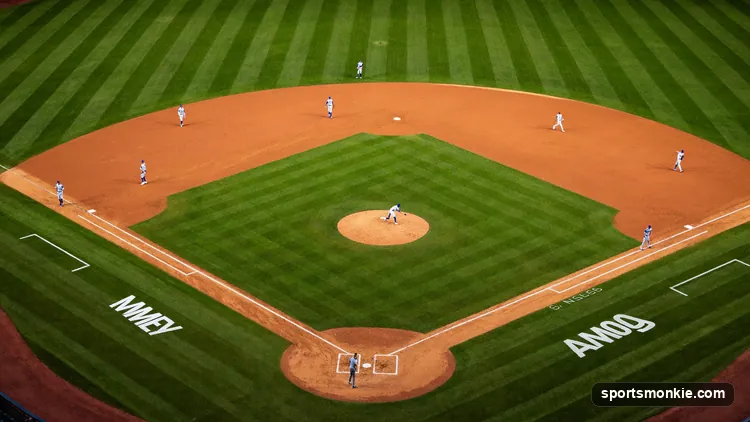
Baseball Positions by Number: The Complete 1-9 Guide
Baseball positions by number run 1-9: pitcher, catcher, first base, second, third, shortstop, left, center, right field. Full scorekeeping guide.
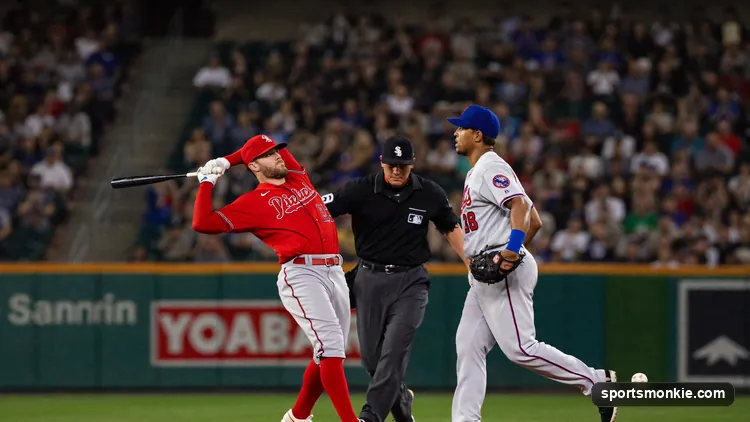
What Is a Double Play in Baseball? Rules, Types & Scoring Explained
A double play in baseball is when the defense records two outs on one continuous play. Learn every type, how it's scored, and the slide rule that protects it.
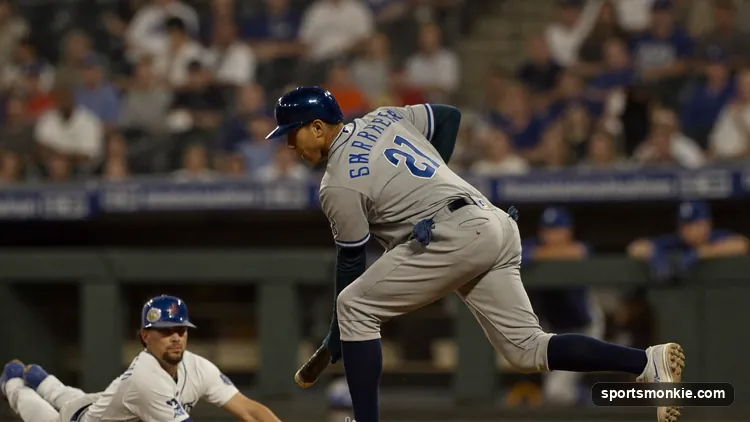
What Is a Force Out in Baseball? Force Play Rules Explained
A force out in baseball happens when a runner must advance to an open base and is put out there before or without a tag. Full rules and examples.
What Is a Full Count in Baseball? 3-2 Count Rules Explained
A full count in baseball is a 3-ball, 2-strike count on the batter, where the next non-foul pitch usually ends the at-bat. Here's how it works.
What Is a Sacrifice Fly in Baseball? Rule, Scoring, RBI Explained
A sacrifice fly in baseball is a fly out that scores a runner from third base. Learn the official rule, scoring, RBI, and how it differs from a sac bunt.
What Is the Strike Zone in Baseball? Rules, Dimensions & 2026 ABS Explained
The strike zone in baseball is the area over home plate a pitch must cross for a strike. Learn its exact dimensions, history, and MLB's ABS challenge rules.