
What Is a Double Play in Baseball? Rules, Types & Scoring Explained
On this page8
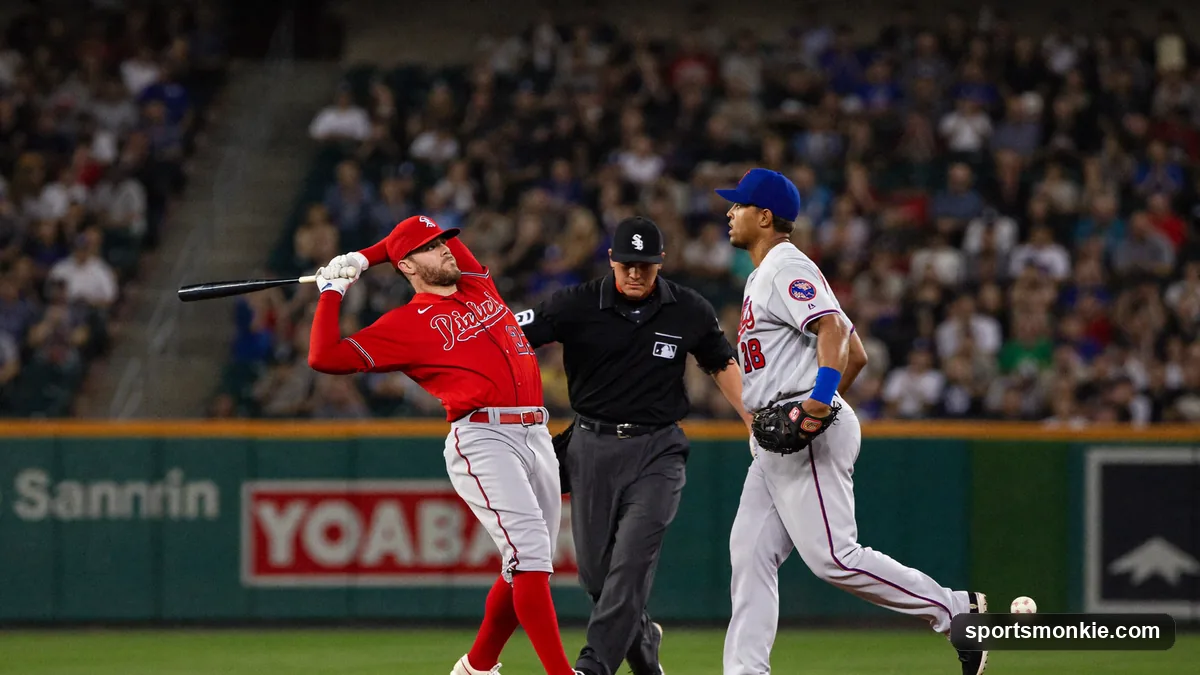
A double play in baseball is when the defense records two outs on the same continuous play. It requires at least one baserunner and fewer than two outs already made, and it’s one of the most valuable defensive plays in the sport because it can erase a rally in a single pitch. Understanding how double plays work — and why fans call turning one “the pitcher’s best friend” — is essential to reading any box score or baseball terminology glossary.
The Basic Rule
A double play can only occur when two conditions are met:
- At least one runner is on base.
- Fewer than two outs have been recorded in the inning (0 or 1 out).
If there are already two outs, the inning ends the instant the first out of the sequence is made, so a second out on the same play is impossible. This is why announcers say a double play “kills the inning” — it typically wipes out a runner and the batter in one shot, ending the threat two outs faster than usual.
The Classic Force Double Play
The most common version happens with a runner on first base and fewer than two outs:
- The batter hits a ground ball to an infielder.
- That fielder throws to second base, where a teammate steps on the bag to force out the runner coming from first (out number one).
- The fielder at second immediately relays the ball to first base, beating the batter-runner for the second out.
Because neither runner needs to be tagged — both are forced to advance — this is called a force double play, and it’s by far the most frequent type turned in a real game.
How Double Plays Are Scored (6-4-3, 4-6-3, and More)
Official scorers record a double play by listing the defensive positions, in numerical order, that touched the ball. Standard position numbers are: 1 = pitcher, 2 = catcher, 3 = first base, 4 = second base, 5 = third base, 6 = shortstop.
| Scoring | Sequence | Description |
|---|---|---|
| 6-4-3 | Shortstop → 2B → 1B | Most common double play; ball hit to short |
| 4-6-3 | 2B → SS → 1B | Ball hit to the second baseman’s side |
| 5-4-3 | 3B → 2B → 1B | Ball hit down the third-base line |
| 1-6-3 | Pitcher → SS → 1B | Comebacker to the mound |
| 3-6-3 | 1B → SS → 1B | First baseman starts it, covers his own base at the end |
A ground ball worked by the third baseman, shortstop, and first baseman in order (5-4-3) is also nicknamed an “around the horn” double play. See how each of these fielders lines up on baseball positions by number for a full breakdown of the numbering system.
Other Ways to Turn Two
Not every double play starts with a ground ball. Common variations include:
- Unassisted double play — a single fielder records both outs alone, such as a first baseman snagging a line drive and stepping on the bag before the runner can scramble back to first.
- Tag double play — the second out comes from tagging a runner rather than forcing him, often on a rundown or a runner caught off base after a fly-out.
- Strike-‘em-out, throw-‘em-out double play — a batter strikes out on a swinging or called third strike while a runner is thrown out attempting to steal, completing the double play at second or third.
- Line-drive double play — an infielder or outfielder snags a hard-hit liner for the first out, then throws behind a runner who had broken from the base, completing the “doubled off” second out.
The Slide Rule: Protecting the Pivot Man
Because the fielder turning the second half of a double play at second base is briefly vulnerable, MLB adopted Rule 6.01(j), the modern slide rule, in 2016. It requires a runner trying to break up a double play to make a “bona fide slide” — starting the slide before the bag, staying within reach of the base, and not changing paths just to hit the fielder. A runner who violates the rule can be called out for interference, and the umpires may also call the batter-runner out at first, completing the double play by rule even if the throw wasn’t in time. This rule followed several high-profile injuries to infielders on takeout slides and is now reviewable by instant replay.
This connects directly to how the defense records a force out in baseball — the runner at second in a double play is almost always out on a force, which is why the slide rule specifically targets force-play situations at the bag.
GIDP: The Hitter’s Side of the Stat
From the batter’s perspective, grounding into a double play is tracked as GIDP (Grounded Into Double Play), a counting statistic that has been kept since 1933 in the National League and 1939 in the American League. Hitters who put the ball on the ground often and run poorly tend to lead the league in GIDP, while burner-type hitters rarely appear near the top of the list because they can beat the relay throw to first.
Triple Plays: The Rare Extension
A double play’s even rarer cousin is the triple play — three outs on one continuous play — which requires the same basic setup (multiple runners on, fewer than two outs) but almost always needs an unusually lucky or well-executed sequence, such as a line drive with two runners going. Triple plays happen only a handful of times across an entire MLB season, which is part of why the routine double play is so prized: it’s the reliable, repeatable version of the same idea.
Why Double Plays Matter So Much
A double play doesn’t just record two outs — it removes a baserunner and denies the batter a chance to reach, all in a single pitch. That’s why pitchers who induce a lot of ground balls are valued highly by teams: with a runner on and less than two outs, a routine grounder can end an inning outright. It’s also why infield defense, particularly at shortstop and second base, is weighted so heavily in evaluating a team’s overall run prevention.
For more foundational rules like this one, start at the baseball terminology glossary or head back to the full baseball hub for MLB rules, records, and explainers.
Frequently asked questions
What is a double play in baseball?+
A double play in baseball is when the defensive team records two outs during the same continuous play. It can only happen with at least one baserunner on and fewer than two outs already recorded, since the third out ends the inning before a second out could count.
What is the most common type of double play?+
The most common is the 'force double play' with a runner on first base. A batter hits a ground ball, an infielder throws to second base to force out the lead runner, and that fielder relays to first base to force out the batter-runner before he arrives.
What do the numbers 6-4-3 mean in a double play?+
The numbers refer to the standard defensive positions that touched the ball, in order. A 6-4-3 double play means the shortstop (6) fielded the ball and threw to the second baseman (4), who threw to the first baseman (3) to complete the play.
Can a double play happen without a ground ball?+
Yes. A double play can also come from a line drive or fly ball caught for the first out while a baserunner is off the base, followed by a throw (or an unassisted tag) to the base before the runner returns, doubling him off.
What is an unassisted double play?+
An unassisted double play happens when a single fielder records both outs without help from a teammate, such as a first baseman catching a line drive and then stepping on first base before the runner can scramble back.
What is the slide rule and how does it relate to double plays?+
MLB Rule 6.01(j), adopted in 2016, requires a runner breaking up a double play at second base to make a 'bona fide slide' toward the bag. A runner who instead changes his path or targets the fielder can be ruled out for interference, and the batter-runner is called out too.
What is GIDP in baseball stats?+
GIDP stands for 'Grounded Into Double Play.' It is a batting statistic that tracks how often a hitter grounds into a double play, tracked since 1933 in the National League and 1939 in the American League.
Why is a double play called a 'twin killing'?+
It's baseball slang for erasing two baserunners at once. Double plays are also nicknamed the 'pitcher's best friend' because they kill an offensive rally faster than almost any other defensive play.
Sources
Play & tools
Free browser games and tools — no account, no download.
- Play 162-0 — Draft nine and see if your roster can survive a flawless 162-game MLB season.
- Explore all our games →
- Analyze a trade — Compare both sides of a fantasy baseball trade before you accept.
- Run the MLB predictor — Simulate the MLB postseason bracket down to a World Series champion.
- Open the ERA calculator — Work out earned run average from earned runs and innings pitched — handles the .1/.2 thirds convention.
- Explore all our free sports tools →
Related baseball guides
View all →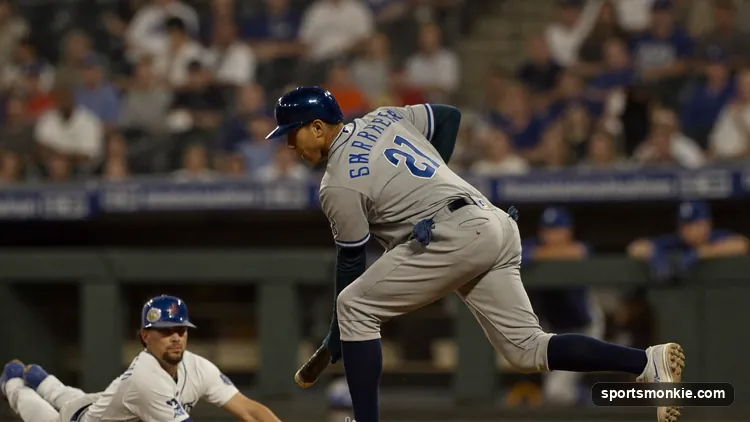
What Is a Force Out in Baseball? Force Play Rules Explained
A force out in baseball happens when a runner must advance to an open base and is put out there before or without a tag. Full rules and examples.

The Infield Fly Rule in Baseball, Explained Simply
The infield fly rule calls the batter out on an easy pop-up with runners on first and second (or bases loaded) and fewer than two outs. Here is why it exists.
What Is a Balk in Baseball? Rules, Types, and Penalty
A balk is an illegal pitching motion with runners on base, and the penalty advances every runner one base. Here are the common types and the reasons.
Baseball Positions by Number: The Complete 1-9 Guide
Baseball positions by number run 1-9: pitcher, catcher, first base, second, third, shortstop, left, center, right field. Full scorekeeping guide.
How Many Innings Are in a Baseball Game? (9 in MLB)
A baseball game has nine innings in MLB, the minors, and college. High school plays seven and Little League six. Here's every level, plus how long games last.
What Is a Full Count in Baseball? 3-2 Count Rules Explained
A full count in baseball is a 3-ball, 2-strike count on the batter, where the next non-foul pitch usually ends the at-bat. Here's how it works.