
What Is a Grand Slam in Baseball?
On this page8
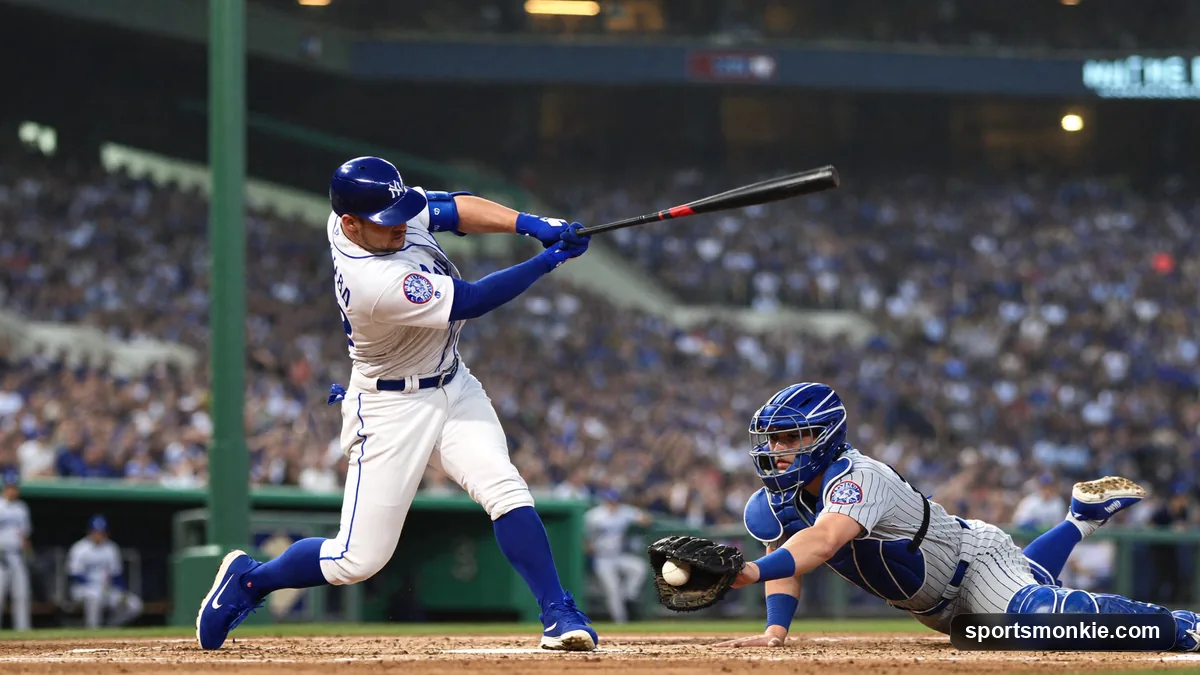
A grand slam is a home run hit with the bases loaded — runners on first, second, and third base — so it scores all three runners plus the batter for four total runs, the maximum any single play can produce in baseball.
How a grand slam happens
There’s no special rule that creates a grand slam; it’s simply the label given to any home run hit while every base is occupied. For a grand slam to happen, three things have to line up: a runner on first, a runner on second, a runner on third, and then the batter drives the ball out of play (over the fence, or in rare cases around the bases before the defense can retire him on an inside-the-park homer). Since the bases can only ever hold three runners at once, four runs is the ceiling for any single plate appearance — which is exactly what makes the grand slam the most valuable hit in the sport.
Why it scores four runs
Baseball only allows three baserunners on base at any time (first, second, third), plus the batter at the plate. When the batter’s ball clears the fence with all three bases loaded, every runner is forced to score, followed by the batter himself as he completes his own trip around the bases. That’s four runs from one swing, turning a single at-bat into what would otherwise take multiple hits, walks, or productive outs to manufacture.
Where the name comes from
“Grand slam” isn’t originally a baseball term — it comes from the card game bridge, where a “grand slam” means winning every possible trick in a hand. Baseball borrowed the phrase because a bases-loaded home run does the batting equivalent: it clears out every runner on base and maximizes the damage of a single play, the same way a grand slam in bridge maximizes the value of a hand. Broadcasters sometimes use colorful nicknames for the play too, most famously longtime Seattle Mariners announcer Dave Niehaus, who called it a “grand salami.”
Walk-off and ultimate grand slams
A walk-off grand slam ends the game on the spot because it comes in the home team’s last at-bat and puts them ahead, so the game is over the instant the go-ahead run crosses the plate — teammates often swarm the batter at home plate before he can finish circling the bases. The rarest version is the ultimate grand slam: a walk-off slam hit when the batting team was trailing by exactly three runs with two outs in their final at-bat, turning what should have been a loss into a precise one-run win in a single swing. It’s considered one of the most dramatic plays in the sport because it combines the biggest possible hit with the highest possible stakes.
Grand slam records
| Category | Record holder(s) | Total |
|---|---|---|
| Career grand slams | Alex Rodriguez | 25 |
| Career grand slams (2nd) | Lou Gehrig | 23 |
| Career grand slams (3rd) | Manny Ramirez | 21 |
| Single-season grand slams | Don Mattingly (1987), Travis Hafner (2006) | 6 |
| First MLB grand slam | Roger Connor, September 10, 1881 | — |
| Two grand slams, same inning | Fernando Tatis, 1999 | — |
| Two grand slams in a game, by a pitcher | Tony Cloninger, 1966 | — |
Alex Rodriguez’s 25 career grand slams put him well clear of Lou Gehrig and Manny Ramirez, and his record reflects both his power and his longevity in the middle of a lineup. On the single-season side, Don Mattingly’s six grand slams in 1987 are especially notable because he never hit another one in his entire career — every grand slam he ever hit came in that single, historic season.
Grand slams in the postseason and World Series
Grand slams carry extra weight when they happen on the biggest stage. The first grand slam in World Series history came off the bat of Elmer Smith for the Cleveland Indians in 1920, and the moment has been echoed many times since. In the 2024 World Series, Freddie Freeman hit the first walk-off grand slam in World Series history in Game 1, an instant classic that swung momentum for the Los Angeles Dodgers. A year later, Addison Barger delivered the first pinch-hit grand slam in World Series history, showing that even a player coming off the bench can produce the biggest hit of a game. Teams have also stacked multiple slams in a single postseason game — the Boston Red Sox became the first club to hit two grand slams in one postseason contest during Game 2 of the 2021 ALCS. These moments tend to be remembered for years, since a grand slam in a close playoff game can single-handedly decide a series.
Grand slam vs. other big hits
A grand slam is often compared to other high-run plays, but it stands alone because it requires the bases to be completely loaded. A three-run homer with runners on second and third, for example, drives in the same number of runners minus one — it’s a big hit, but it isn’t a grand slam unless first base was occupied too. Understanding this distinction matters when reading a box score or following live play-by-play, since only bases-loaded home runs get the grand slam label.
Where it fits in baseball strategy
A grand slam is the payoff for situations that pitchers work hard to avoid: getting into trouble with runners on and then loading the bases rather than pitching around a hitter. It’s closely tied to other bases-loaded and scoring plays covered in our baseball terminology glossary, including the sacrifice fly, which also drives in runs from a fly ball but without clearing the bases, and the bunt, a small-ball tactic teams sometimes use instead of swinging away in bases-loaded situations. For more explainers like this one, see our full library of baseball and MLB guides.
Frequently asked questions
What is a grand slam in baseball?+
A grand slam is a home run hit when the bases are loaded — meaning there are runners on first, second, and third base — so the batter's home run scores all three runners plus himself, for four total runs. It's the most runs a single plate appearance can produce in baseball, since only four runners (three on base plus the batter) can be on the field at once.
How many runs does a grand slam score?+
A grand slam always scores exactly four runs: the three baserunners who were on first, second, and third, plus the batter who hit the home run himself. No other single play in baseball can produce more than four runs, which is why the grand slam is considered the most valuable individual hit in the game.
Do you need the bases loaded for a grand slam?+
Yes. A home run only counts as a grand slam if all three bases are occupied at the moment of the pitch — runners on first, second, and third. A three-run homer with runners on second and third, for example, is not a grand slam no matter how important it is; the bases must be completely loaded.
What is a walk-off grand slam?+
A walk-off grand slam is a grand slam that ends the game immediately because the home team was trailing or tied and the four runs put them ahead in their last at-bat. Since the game ends the moment the winning run scores, the batter's teammates often mob him at home plate before he can even finish his trot around the bases.
What is an ultimate grand slam?+
An 'ultimate grand slam' is the rarest version of the play: a walk-off grand slam that turns a three-run deficit into an exact one-run victory, meaning the batting team was down by three runs with two outs in their final at-bat before the slam won the game. It is considered one of the most dramatic outcomes possible in baseball.
Who holds the career grand slam record in MLB?+
Alex Rodriguez holds the all-time MLB career grand slam record with 25, well ahead of Lou Gehrig's 23 and Manny Ramirez's 21. All three are among the most feared power hitters in baseball history, and their totals reflect both their talent and the sheer number of plate appearances they logged with the bases loaded over long careers.
What is the record for grand slams in a single season?+
Don Mattingly (1987) and Travis Hafner (2006) share the single-season MLB record with six grand slams each. Remarkably, all six of Mattingly's career grand slams came in that one 1987 season — he never hit another one before or after.
Is a grand slam the same as a home run?+
A grand slam is a specific type of home run, not a separate kind of hit. Every grand slam is scored as a home run in the box score and counts toward a player's home run total; 'grand slam' is simply the descriptive term used when that home run happens to come with the bases loaded, since it's the biggest possible version of the play.
Sources
Play & tools
Free browser games and tools — no account, no download.
- Play 162-0 — Draft nine and see if your roster can survive a flawless 162-game MLB season.
- Explore all our games →
- Analyze a trade — Compare both sides of a fantasy baseball trade before you accept.
- Run the MLB predictor — Simulate the MLB postseason bracket down to a World Series champion.
- Open the ERA calculator — Work out earned run average from earned runs and innings pitched — handles the .1/.2 thirds convention.
- Explore all our free sports tools →
Related baseball guides
View all →
How Many Innings Are in a Baseball Game? (9 in MLB)
A baseball game has nine innings in MLB, the minors, and college. High school plays seven and Little League six. Here's every level, plus how long games last.
Dropped Third Strike Rule in Baseball, Explained
On an uncaught third strike, the batter can try to reach first base if it's unoccupied or there are two outs — the strikeout doesn't automatically end the at-bat.
What Is a Ground-Rule Double in Baseball?
A ground-rule double awards the batter two bases when a fair ball bounces over the outfield fence or is out of play. Runners advance two bases from where they were.
What Is Tagging Up in Baseball?
Tagging up is when a baserunner waits on his base until a fly ball is caught, then advances. He must be touching the base at the moment of the catch.
What Is the Designated Hitter (DH) in Baseball?
The designated hitter bats in place of the pitcher and never plays the field. Since 2022 the universal DH applies in both the American and National Leagues.
The Ghost Runner Rule in MLB, Explained
The ghost runner rule places an automatic runner on second base to start each half-inning in extra innings. Why MLB added it and how it works.