
Dropped Third Strike Rule in Baseball, Explained
On this page5
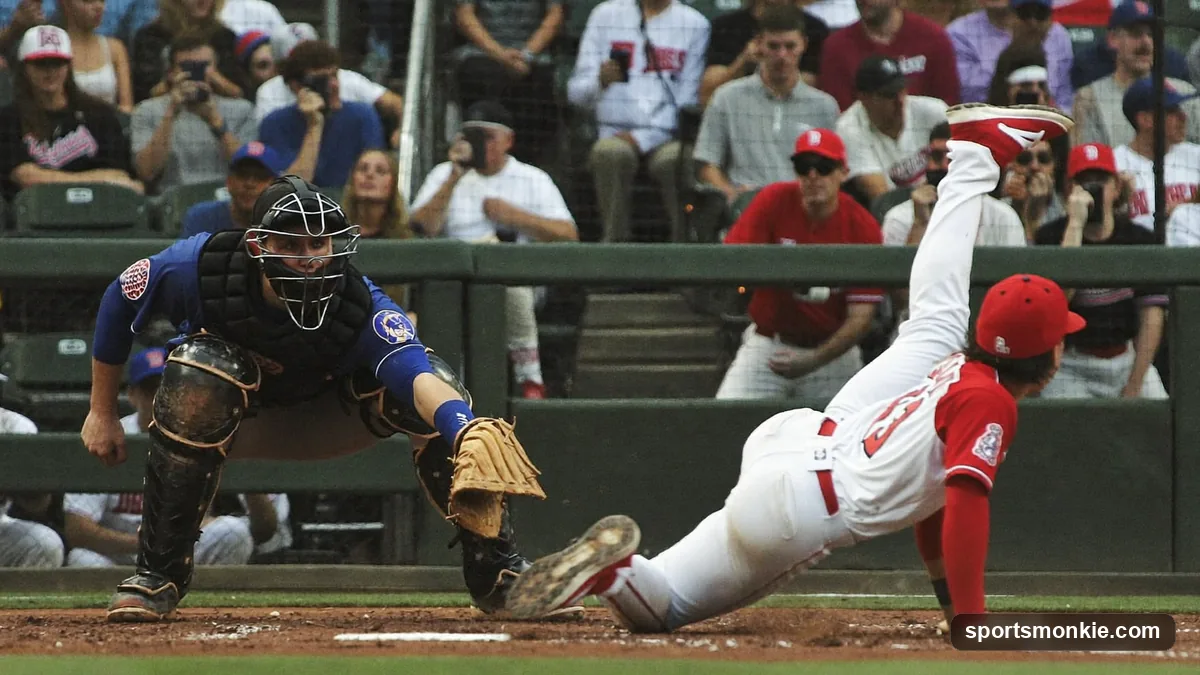
The dropped (or uncaught) third strike rule lets a batter try to run to first base when the catcher fails to cleanly catch strike three — but only if first base is unoccupied, or there are two outs. The batter is still charged with a strikeout, yet he is not out until tagged or thrown out. It’s why a team can “strike out” a batter who still reaches base.
How the rule works
If the catcher drops strike three or it hits the dirt, the strikeout is not automatically an out. The batter may bolt for first base and must be retired like any runner — tagged, or thrown out at first. The pitcher still gets credit for the strikeout either way.
When the batter can run
| Situation | Can the batter run? |
|---|---|
| First base empty, any number of outs | Yes |
| Two outs (first base occupied or not) | Yes |
| Fewer than 2 outs, runner on first | No — batter is out |
The runner-on-first restriction exists so a catcher can’t intentionally drop strike three to start a cheap double play.
The strikeout still counts
Because the strikeout is recorded even when the batter reaches, a pitcher can occasionally log more than three strikeouts in an inning — a batter reaching on a dropped third strike keeps the frame alive for another one.
Why it exists
The rule traces to baseball’s roots, when an out required the third strike to actually be caught, mirroring how a fielder must catch a batted ball. Today it keeps the catcher honest and produces some of the game’s most confusing, dramatic moments — a strikeout that doesn’t end the at-bat has even swung a World Series game.
Where it fits
It belongs to baseball’s family of situational quirks, alongside the infield fly rule, tagging up, and the ground-rule double. For more, see our baseball guides.
Frequently asked questions
What is the dropped third strike rule?+
It is the rule that a batter is not automatically out on a third strike if the catcher does not catch the pitch cleanly. If the ball is dropped or hits the dirt, the batter may attempt to run to first base. He can be put out by being tagged or by a throw to first, just like a batted ball. The strikeout still counts in the stats even if the batter reaches safely.
When can a batter run on a dropped third strike?+
Only in two situations: when first base is unoccupied, or when there are two outs (in which case first base can be occupied and the batter may still run). With fewer than two outs and a runner on first, the batter is automatically out on a dropped third strike, to prevent the catcher from intentionally dropping it to start a cheap double play.
Does the strikeout still count on a dropped third strike?+
Yes. The pitcher is credited with a strikeout and the batter charged with one even if he reaches first base safely after a dropped third strike. This is why a pitcher can occasionally record more than three strikeouts in a single inning — a batter who reaches on a dropped third strike keeps the inning alive, allowing another strikeout later.
Why does the dropped third strike rule exist?+
The rule dates to baseball's origins, when the batter was simply not out until the third strike was actually caught, mirroring the idea that a fielder must catch a ball to record an out. It survives today as a quirk that keeps the catcher honest — he must field strike three cleanly — and it occasionally produces dramatic, confusing plays when a strikeout does not end the at-bat.
Can a game end on a dropped third strike?+
Yes, and it has produced famous moments. With two outs, a dropped third strike that the catcher recovers and throws to first for the out can end an inning or a game, while a wild enough drop can let the batter reach and extend it. A notable World Series game turned on a dropped third strike that the batter beat out, keeping a rally alive.
Is a dropped third strike the same as a wild pitch?+
They can overlap but are scored differently. If the catcher simply misses catching strike three, it is an uncaught third strike. If the pitch was errant enough to be a wild pitch or a passed ball, that is also recorded, and runners (including the batter) may advance. In all cases the key point is the same: an uncaught third strike does not automatically retire the batter.
How does it relate to other baseball rules?+
It sits among baseball's more unusual situational rules, alongside the [infield fly rule](/infield-fly-rule/) and baserunning rules like [tagging up](/what-is-tagging-up-in-baseball/) and the [ground-rule double](/what-is-a-ground-rule-double/). Each governs a specific edge case, and together they explain a lot of the confusing moments casual fans notice in a game.
Sources
Play & tools
Free browser games and tools — no account, no download.
- Play 162-0 — Draft nine and see if your roster can survive a flawless 162-game MLB season.
- Explore all our games →
- Analyze a trade — Compare both sides of a fantasy baseball trade before you accept.
- Run the MLB predictor — Simulate the MLB postseason bracket down to a World Series champion.
- Open the ERA calculator — Work out earned run average from earned runs and innings pitched — handles the .1/.2 thirds convention.
- Explore all our free sports tools →
Related baseball guides
View all →
What Is a Ground-Rule Double in Baseball?
A ground-rule double awards the batter two bases when a fair ball bounces over the outfield fence or is out of play. Runners advance two bases from where they were.
The Ghost Runner Rule in MLB, Explained
The ghost runner rule places an automatic runner on second base to start each half-inning in extra innings. Why MLB added it and how it works.
How Many Innings Are in a Baseball Game? (9 in MLB)
A baseball game has nine innings in MLB, the minors, and college. High school plays seven and Little League six. Here's every level, plus how long games last.
What Is a Grand Slam in Baseball?
A grand slam in baseball is a home run hit with the bases loaded, scoring all four runners for the maximum four runs possible on a single swing.
What Is Tagging Up in Baseball?
Tagging up is when a baserunner waits on his base until a fly ball is caught, then advances. He must be touching the base at the moment of the catch.
Tyler Mahle Caught Swearing on TV After Dubon's Dropped Pop Gifts Dodgers a Run
Tyler Mahle's four-word reaction on FS1 summed up Atlanta's night after Mauricio Dubon's dropped pop fly let Shohei Ohtani score in NLDS Game 4.