
Yandy Diaz Refused to Challenge a Strike Three in the ALCS, Then Homered to Save the Night
On this page5
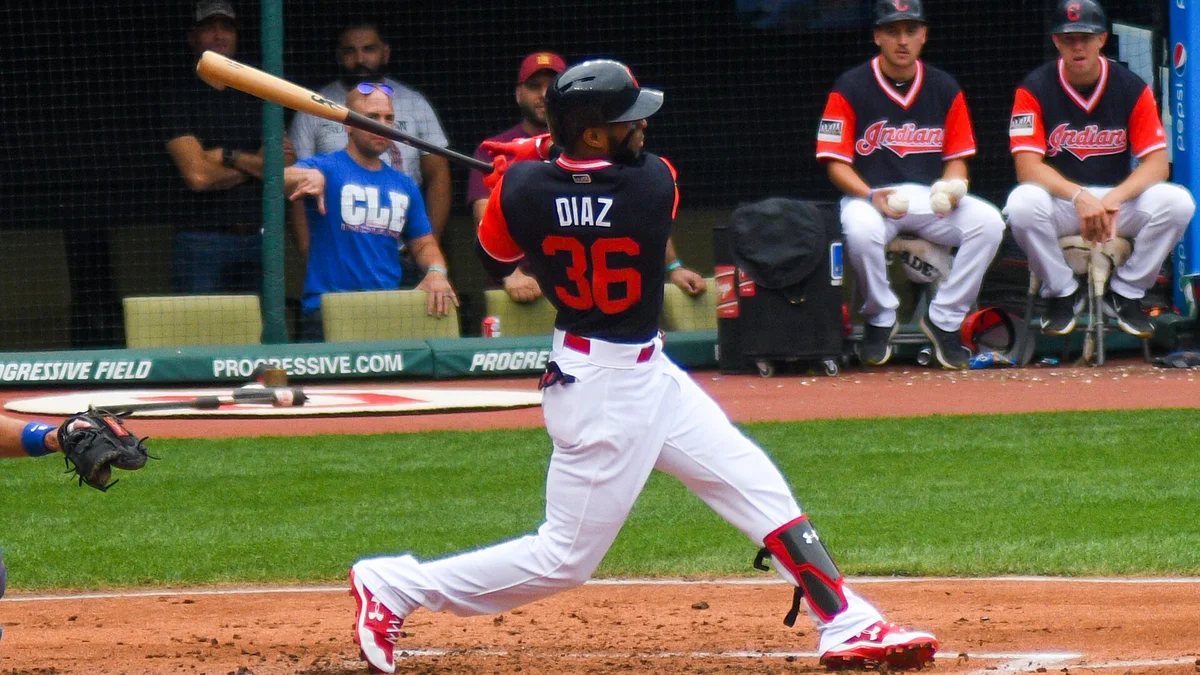
The most valuable thing in Yandy Diaz’s uniform on Saturday night was a challenge he will not spend. Tampa Bay’s leadoff hitter took a called strike three that was outside the zone in the seventh inning of a one-run ALCS game, with two runners on and both of his team’s challenges unused, and walked back to the dugout. The Rays won 7-3 anyway, which is the only reason the moment is an oddity rather than an inquest.
What happened in the seventh inning?
The Rays led 2-1 when Richie Palacios and Taylor Walls opened the seventh with singles and moved up on a double steal. Diaz worked Slade Cecconi to 2-2, then took a cutter that Larry Brown Sports reports was outside the zone. It was called strike three. Diaz, who the same reporting says has refused to initiate an ABS challenge all season because he would rather focus on his at-bats than second-guess calls, did not challenge. The reaction from Rays fans arrived instantly and in one voice: this was the moment the principle was supposed to bend, and it did not.
Who rescued the inning?
The next two hitters, and a rookie’s glove. Jonathan Aranda singled to right to score Palacios, and right fielder Chase DeLauter, loading up to throw home, let the ball slip under his glove, Reuters reports. Walls scored on the error, Aranda reached third and came home on Chandler Simpson’s sacrifice fly. A rally that Diaz’s strikeout had nearly stalled at 2-1 ended at 5-1. Sports Illustrated framed Cleveland’s side of the inning as rookie growing pains, with Daniel Espino’s short outing in the sixth and DeLauter’s error in the seventh costing the Guardians the game. Cleveland still cut it to 5-3 in the bottom half, on Travis Bazzana’s two-out homer and Brayan Rocchio’s RBI single, which is what brought Diaz back to the plate in the ninth with the game live again. The same Guardians outfield had already given this series an error chapter, when Jose Ramirez took the blame for two miscues in Game 2.
How did Diaz answer in the ninth?
With the swing the challenge was supposed to protect. One out, a runner on, the lead down to two: Diaz drove Matt Festa’s pitch the other way for a two-run homer that barely cleared the right-field wall, USA Today reports, restoring 7-3 and closing the scoring. It was his first home run of the postseason. The shape of his night is the whole argument in miniature. The at-bat he refused to extend by challenging produced nothing, and the at-bat that needed no help from any system produced the runs that ended the argument for one night.
Why does a refused challenge matter this much?
Because the challenge system only exists for players willing to use it, and this postseason is running a natural experiment on that question. In the NLCS last week, Will Smith twice declined ABS challenges on strikes against Brandon Turang, calls his manager said changed Yoshinobu Yamamoto’s outing, and Smith’s reasoning was conservation: challenges are a resource for the whole team and the whole game. Diaz’s refusal, as reported, is different in kind. It is not a resource decision made pitch by pitch. It is a standing refusal, applied the same way in a 2-1 ALCS game with the go-ahead insurance runs on base as in a quiet August inning. October keeps punishing unforced passivity of every kind, from Smith’s declines to Logan Henderson’s two throwing errors gifting the Dodgers runs in NLCS Game 2.
What happens next in the series?
Game 5 is Sunday in Cleveland, the series tied 2-2, with Game 6 in St. Petersburg on Monday already guaranteed. Stephen Vogt announced after Game 4 that Parker Messick starts for Cleveland, USA Today reports. Diaz will bat leadoff against him, and the first borderline strike he takes will restart the argument his homer postponed. Pat Murphy’s Brewers reached the World Series this week being praised as gamers rather than stars; the Rays are two wins from joining them with a leadoff hitter whose most-discussed contribution to a 7-3 win was a button he declined to press. If he presses it in Game 5 and wins, the story becomes growth. If a called third strike ends a rally again, Saturday’s rescue will not be remembered as mercy. It will be remembered as the warning.
Frequently asked questions
What did Yandy Diaz refuse to challenge?+
A called strike three in the top of the seventh inning of Game 4. With Richie Palacios and Taylor Walls on base, nobody out and the Rays ahead 2-1, Slade Cecconi's 2-2 cutter was called a strike despite being outside the zone, and Diaz walked away instead of tapping a challenge, Larry Brown Sports reports. Tampa Bay had both of its two ABS challenges available.
Has Diaz really refused to challenge all season?+
That is Larry Brown Sports' reporting: it says Diaz has refused to initiate an ABS challenge all season, believing it is better to focus on his at-bats than to second-guess ball-and-strike calls. Fan reaction during Game 4 ran on the same assumption, with supporters posting that they expected his first challenge of the year and did not get it.
How did the inning end after the strikeout?+
Jonathan Aranda followed with a single to right that scored Palacios, and Chase DeLauter's error let Walls score too and put Aranda on third, Reuters reports. Chandler Simpson's sacrifice fly made it 5-1. Cleveland cut it to 5-3 in the bottom of the inning on Travis Bazzana's homer and Brayan Rocchio's RBI single.
How did Diaz redeem himself?+
In the top of the ninth, with Tampa Bay's lead down to 5-3, Diaz hit a two-run homer off Matt Festa that barely cleared the right-field wall, USA Today reports. It was his first home run of the postseason and restored the four-run cushion in the 7-3 win that levelled the ALCS at 2-2.
How does the ABS challenge system work?+
Each team carries two challenges of ball-and-strike calls into a game and keeps a challenge when the call is overturned. Only the batter, the pitcher or the catcher can start one, and it has to come immediately after the pitch. The contrast inside this postseason is sharp: in the NLCS, Will Smith twice declined to challenge for the Dodgers on pitches that cost Yoshinobu Yamamoto, a decision his manager defended as protecting the challenges for later.
When is Game 5?+
Sunday, October 18, in Cleveland, with the series tied 2-2 and a return to Tropicana Field for Game 6 on Monday already guaranteed. After Game 4, Cleveland manager Stephen Vogt announced that Parker Messick will start Game 5, USA Today reports.
Sources
- Larry Brown Sports: Rays fans slammed Yandy Diaz for the same reason during ALCS Game 4 (the seventh-inning sequence, the cutter outside the zone, the season-long refusal to challenge and the fan reaction)
- Reuters: Jonathan Aranda's 3-hit night leads Rays past Guardians, ties ALCS 2-2 (the full scoring account, Caminero's go-ahead double, DeLauter's misplay, the Bazzana homer and Diaz's ninth-inning two-run homer)
- USA Today: How Rays beat Guardians in Cleveland to tie ALCS and guarantee Game 6 (the ninth-inning homer barely clearing the wall, the series schedule and Messick starting Game 5)
- Sports Illustrated: Guardians' rookie growing pains lead to loss against Rays in ALCS Game 4 (Espino's outing, DeLauter's missed grounder in right and Vogt's postgame reaction)
- Larry Brown Sports: Guardians burned by massive fielding blunder in Game 4 loss (DeLauter loading up for the throw home as the ball went under his glove, and Diaz owing Aranda for the rescue)
Play & tools
Free browser games and tools — no account, no download.
- Play 162-0 — Draft nine and see if your roster can survive a flawless 162-game MLB season.
- Explore all our games →
- Analyze a trade — Compare both sides of a fantasy baseball trade before you accept.
- Run the MLB predictor — Simulate the MLB postseason bracket down to a World Series champion.
- Open the ERA calculator — Work out earned run average from earned runs and innings pitched — handles the .1/.2 thirds convention.
- Explore all our free sports tools →
Related baseball guides
View all →
Ramirez Takes the Blame as Two Miscues Sink the Guardians in ALCS Game 2
Jose Ramirez left third base uncovered, then let a grounder through his legs on the turf edge as three unearned runs beat Cleveland 3-1 in ALCS Game 2.
MLB Moves ALCS Game 3 Up Five Hours as Cleveland Rain Closes In
Guardians-Rays Game 3 on Thursday becomes a 1 p.m. matinee instead of a 6 p.m. start as MLB races the Cleveland forecast, with Friday's Game 4 looking even wetter.
Ramirez Homers Off a Pitch 0.74 Feet Off the Ground, the Lowest Postseason Homer on Record
Jose Ramirez golfed a knuckle-curve 0.74 feet above the ground for the Game 5 winner, the lowest pitch hit for a postseason home run since tracking began in 2008.

White Sox Tease a Mystery First Pitch, Fans Expect Obama or the Pope and Get Belmont Cameli
Chicago teased a big-name mystery guest for the ALDS Game 3 first pitch, fans guessed Obama, Pope Leo XIV and Michael Jordan, and the reveal was actor Belmont Cameli.
Volpe's Tying Homer Is Overturned on Fan Interference as Rays Sweep Yankees
Anthony Volpe's apparent game-tying homer in ALDS Game 3 was overturned to an RBI double on fan interference, and the Yankees' season ended 30 years after Jeffrey Maier.
Ohtani Bats Sixth and Reaches Three Times as Dodgers Fall 6-2 to Trail 3-0
Shohei Ohtani batted sixth in NLCS Game 3 and reached base three times, but the Dodgers lost 6-2 to Milwaukee and now trail the series 3-0.