
Smith Declines Two ABS Challenges on Turang as Roberts Says the Misses Changed Yamamoto's Outing
On this page6
- 01What exactly did Smith decline to challenge?
- 02Why does the catcher, not the manager, own that call?
- 03What did Smith and Roberts each say afterwards?
- 04How did the third inning unravel from there?
- 05Would the challenges definitely have changed the result?
- 06What happens next for Smith, Roberts and the challenges?
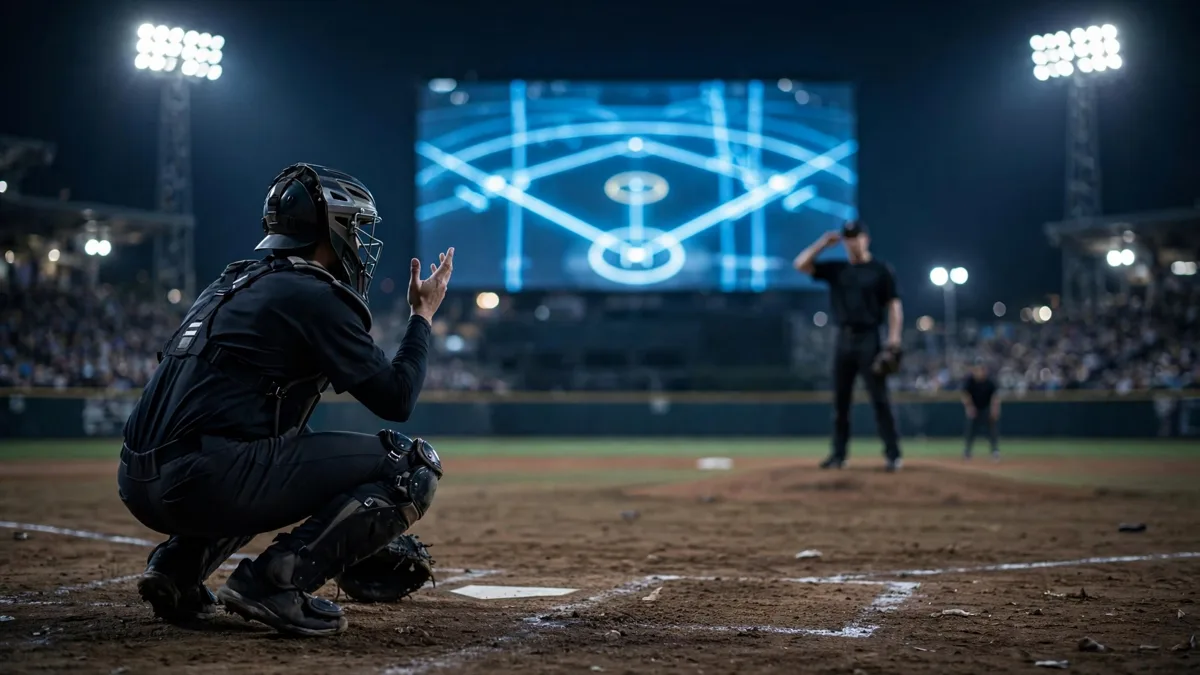
The biggest decision of NLCS Game 2 was a tap on the helmet that never came. Twice on Monday, once in the first inning and once in the third, Los Angeles catcher Will Smith declined to challenge a pitch to Milwaukee leadoff man Brice Turang that Sports Illustrated reports would have been called strike three. Both times Turang stayed at the plate, both times he reached base, and both times he came around to score. The second sequence ran straight into the 36-pitch third inning that ended Yoshinobu Yamamoto’s night, and it left manager Dave Roberts explaining afterwards why a call his own catcher owned had changed his ace’s outing.
What exactly did Smith decline to challenge?
Two called balls on would-be third strikes to the same hitter. In the first inning, home plate umpire Chris Segal ruled a Yamamoto pitch a ball when the tracking had it as a strike, the New York Post reports, and Smith let the call stand rather than spend a challenge. Turang doubled on a full-count fastball three pitches later and scored on William Contreras’s single. In the third, with David Hamilton already on second after a single and a steal, a full-count pitch to Turang again would have ended the at-bat, Sports Illustrated reports. This time Yamamoto visibly wanted the review, pointing at his own head from the mound, and Smith still chose not to. Turang walked.
Why does the catcher, not the manager, own that call?
Because the catcher is the one person who sees the pitch the way the tracking system does. Roberts made that logic explicit after the game, saying the club tries to defer to its catchers for challenges because of the view they have, ClutchPoints reports. That deference is the system working as designed on most nights: the dugout is 200 feet from the corner of the strike zone the pitch has to clip. Game 2 is the cost side of the design. The person empowered to overturn the call is also the person who has to judge, in about a second, whether the pitch was firm enough in the zone to be worth one of a limited stock of challenges, early in a game that might need them later.
What did Smith and Roberts each say afterwards?
They described the same two seconds from opposite ends of the decision. Smith’s account was about game state: it was early, the Dodgers had Turang on the ropes, and he figured they could finish the at-bat without risking a challenge, the New York Post reports. On the third-inning pitch specifically, Roberts said Smith did not feel it was a strike in that spot. Roberts’s own verdict was sharper. He said he did not appreciate the decisions, and that looking back, a called third strike changes the outing, ClutchPoints reports. The New York Post framed the answer as a manager trying not to second-guess his catcher in public. Both readings can be true at once, and the gap between them is the story: the defer-to-the-catcher policy survived the press conference, but only just.
How did the third inning unravel from there?
One batter at a time, until Yamamoto had nothing left. Contreras flew out, which should have been the inning’s second out becoming its third, and then Jake Bauers produced the longest plate appearance of Yamamoto’s MLB career, the New York Post reports: a 12-pitch walk in which he fouled off seven straight pitches after reaching a full count, long enough that the battery in Yamamoto’s PitchCom device died and had to be replaced mid-duel. Christian Yelich, the captain Milwaukee benched for Game 1, then singled in two runs on a hung curveball. Yamamoto’s line closed at eight outs and 75 pitches, the shortest start of his playoff career, in a game Milwaukee had already tilted with its starting pitcher’s two throwing errors.
Would the challenges definitely have changed the result?
No, and it is worth separating the outing from the outcome. Roberts’s claim is the narrower one, and the evidence supports it: strike three to Turang in the third ends the inning before Bauers and Yelich ever bat with runners moving, and Yamamoto, who had settled through a clean second inning, likely pitches into the middle innings. The result is a different question. Los Angeles produced three hits all night, scored every run it got without a run-scoring hit, and did not put a runner on against Milwaukee’s bullpen across the last five innings, Reuters reports. This is a series being decided by margins the Dodgers keep donating, from a final-strike walk-off in the division series to Monday’s free baserunners, on a night when Milwaukee’s Game 1 hero spent his off day trading a signed jersey for his own one-of-one card.
What happens next for Smith, Roberts and the challenges?
Game 3 is Wednesday in Los Angeles, with Milwaukee two wins from the World Series and the Dodgers out of margin for donated innings. The practical question is whether Monday changes behaviour: whether Smith challenges the first borderline third strike he sees, whether Yamamoto’s visible request from the mound becomes a standing instruction, and whether Roberts’s deference survives another missed call. None of that requires a rule change or a league statement. It requires one tap on a helmet, the smallest gesture in the sport this October, from the player who chose twice on Monday to keep his hand down.
Frequently asked questions
What is an ABS challenge in this series?+
It is the Dodgers' option to ask for the automated ball-strike tracking to review a called pitch. The catcher is the player with the clearest view of where the pitch crossed, which is why Roberts said the club tries to defer to its catchers on challenges, ClutchPoints reports. Smith had the option on both Turang pitches and let both calls stand.
What happened on the first declined challenge?+
In the first inning, home plate umpire Chris Segal ruled a Yamamoto pitch to Turang a ball when it would have been a called third strike, the New York Post reports. Smith declined the challenge, Turang doubled three pitches later, and William Contreras singled him in to tie the game 1-1, Sports Illustrated reports.
What happened on the second declined challenge?+
In the third inning, Turang again would have been out on strikes if the Dodgers had challenged a full-count pitch, Sports Illustrated reports. Yamamoto appeared to ask for the challenge by pointing at his own head, Smith chose not to, and Turang walked. Jake Bauers then worked a 12-pitch walk and Christian Yelich singled in two runs to end Yamamoto's night.
What did Will Smith say about the decisions?+
That the game situation argued for saving the challenges. Smith said it was kind of early in the game and the Dodgers had Turang on the ropes, so he figured they could get him out without risking a challenge, the New York Post reports. On the third-inning pitch, Roberts said Smith did not feel it was a strike in that spot.
What did Dave Roberts say about the missed challenges?+
Two things that sit in tension. Roberts told reporters he did not appreciate the decisions, noting that Smith has a great view and that the club defers to its catchers, and that looking back the calls change the outing, ClutchPoints reports. The New York Post's game report framed the same answer as Roberts trying not to second-guess his catcher while accepting the outcome would have been different.
How short was Yamamoto's start in Game 2?+
The shortest of his playoff career. Yamamoto recorded eight outs in a 75-pitch outing and left trailing in the third inning, the New York Post reports. Sports Illustrated reports the third inning alone took 36 pitches, included the longest plate appearance of Yamamoto's MLB career, the 12-pitch Bauers walk, and ended with Yelich's two-run single.
Did the missed challenges cost the Dodgers the game on their own?+
No, and the rest of the box score is the counterweight. Los Angeles managed three hits, scored all four of its runs without a run-scoring hit, and was retired in order by Milwaukee's bullpen over the final five innings, Reuters reports. The challenges changed Yamamoto's outing, as Roberts put it; the Dodgers' bats and Milwaukee's relievers decided the 7-4 final.
What happens next in the NLCS?+
Game 3 is Wednesday at Dodger Stadium, with Milwaukee leading the series 2-0. Every close pitch to a Milwaukee hitter will now be read against Monday's two decisions, and whether Smith challenges earlier, and whether Roberts keeps deferring to his catcher in public, is the open follow-up on this article.
Sources
- Sports Illustrated: Dodgers' Yoshinobu Yamamoto chased by Brewers in 3rd inning of Game 2 (both Turang at-bats would have ended in strikeouts with a challenge, Yamamoto asking for the second one, and the 36-pitch third inning)
- New York Post: Brewers demoralize Dodgers, Yoshinobu Yamamoto to take stunning 2-0 NLCS lead (Segal's missed call, Smith's early-game explanation, Roberts on the third-inning pitch, the 12-pitch Bauers duel and Yamamoto's shortest playoff outing)
- ClutchPoints: Dave Roberts reveals what moment changed in NLCS Game 2 vs. Brewers (Roberts saying he did not appreciate the missed challenge and that it changes the outing)
- Reuters: William Contreras sparks Brewers' Game 2 rally against Dodgers (the 7-4 final, Contreras's three tying or go-ahead RBI hits and the bullpen retiring all 15 batters it faced)
Play & tools
Free browser games and tools — no account, no download.
- Play 162-0 — Draft nine and see if your roster can survive a flawless 162-game MLB season.
- Explore all our games →
- Analyze a trade — Compare both sides of a fantasy baseball trade before you accept.
- Run the MLB predictor — Simulate the MLB postseason bracket down to a World Series champion.
- Open the ERA calculator — Work out earned run average from earned runs and innings pitched — handles the .1/.2 thirds convention.
- Explore all our free sports tools →
Related baseball guides
View all →
Henderson's Two Throwing Errors Gift the Dodgers Two Runs in NLCS Game 2
Brewers starter Logan Henderson made two throwing errors in NLCS Game 2, a wild pickoff in the third and a bunt play in the fifth, and each one scored a Dodgers run.
Brewers Bench Captain Christian Yelich for NLCS Game 1 Against Tarik Skubal
Milwaukee opened the NLCS with captain Christian Yelich on the bench against left-hander Tarik Skubal, starting Andrew Vaughn at DH in a platoon move.
Misiorowski Trades a Signed Jersey and Cleats to a Fan for His Own 1-of-1 Card
Brewers ace Jacob Misiorowski traded a signed game-worn jersey and cleats to a fan at Petco Park for his own one-of-one Topps card showing him throwing a football.
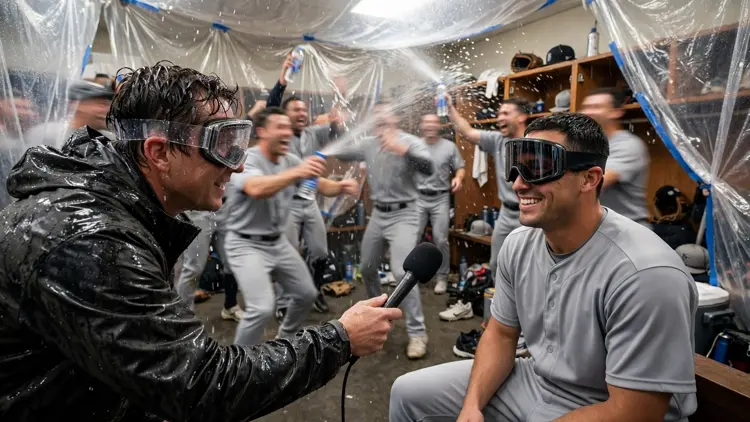
Tarik Skubal's Beer-Soaked Interview Steals the Dodgers' NLDS Celebration Without Him Pitching
Tarik Skubal never threw a pitch in Game 4, then produced the Dodgers' viral moment: two live interviews drowned in beer, weeks before his free agency.
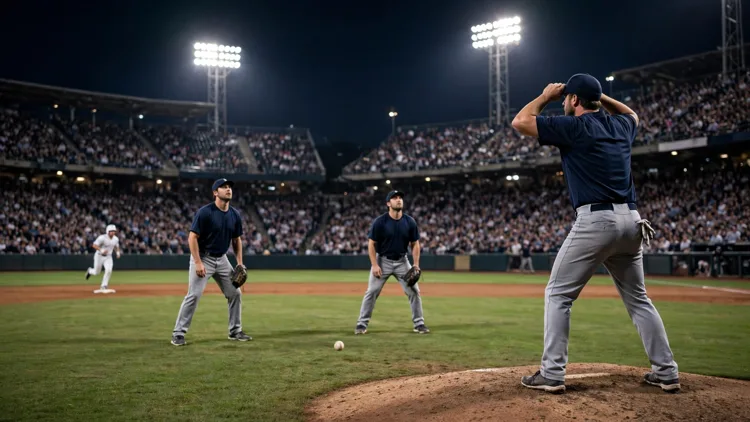
Tyler Mahle Caught Swearing on TV After Dubon's Dropped Pop Gifts Dodgers a Run
Tyler Mahle's four-word reaction on FS1 summed up Atlanta's night after Mauricio Dubon's dropped pop fly let Shohei Ohtani score in NLDS Game 4.
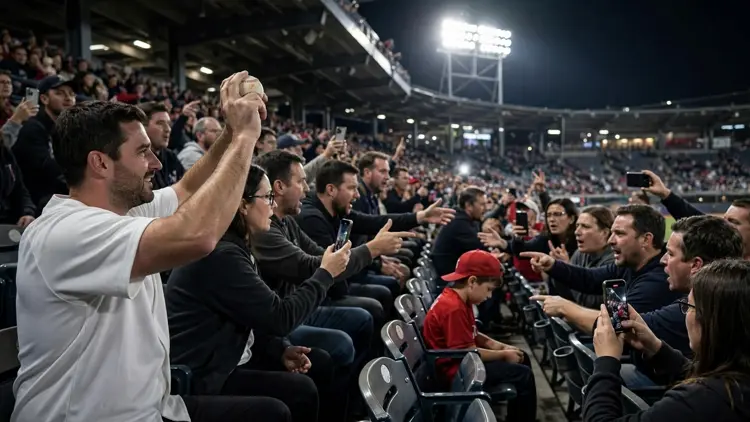
Dodgers Fan Refuses to Give NLDS Foul Ball to a Young Braves Fan and Goes Viral
A Dodgers fan in a Yamamoto jersey caught a foul ball in Game 3 of the NLDS, refused the crowd's chant to give it to a young Braves fan, and the clip passed 2.6 million views on X.