
What Is a Ground-Rule Double in Baseball?
On this page5
A ground-rule double awards the batter second base — and advances every runner two bases — when a fair batted ball leaves the field of play without being a home run. The classic case is a fair ball that bounces over the outfield fence, but it also covers balls stuck in the wall or lost under a park’s specific ground rules. Because the ball is dead, everyone gets exactly two bases.
How a ground-rule double works
When a fair ball goes out of play off a bounce, or gets lodged in a fixture, the umpire kills the play. The batter is awarded second base, and every runner advances two bases from where they were at the time of the pitch — regardless of how far they had actually run.
The two-base cap
| Runner started on | Advances to |
|---|---|
| First | Third (cannot score) |
| Second | Home (scores) |
| Third | Home (scores) |
That cap is the rule’s defining quirk: a fast runner on first who might have scored on a live ball is held at third because the ball is dead.
Not a home run
A ball that clears the fence in fair territory on the fly is a home run. One that bounces first and then hops over is a ground-rule double, worth two bases. The bounce is the whole difference.
Where the name comes from
“Ground rules” are a park’s venue-specific rules for balls that hit odd features — Wrigley’s ivy, wall padding, a gap under a fence. Many such plays award two bases, and over time “ground-rule double” became the everyday name even for the standard bounce-over double, which is technically an automatic double under the universal rules.
Where it fits
The ground-rule double is one of baseball’s dead-ball and baserunning rules, alongside tagging up, the dropped third strike, and the infield fly rule. For more, see our baseball guides.
Frequently asked questions
What is a ground-rule double?+
A ground-rule double is a two-base award to the batter when a fair ball goes out of play without clearing the fence on the fly for a home run. The most common example is a ball that bounces in fair territory and then hops over the outfield wall. The ball is ruled dead, the batter gets second base, and all runners advance two bases from the base they occupied at the pitch.
How far do runners advance on a ground-rule double?+
Exactly two bases, measured from where each runner was at the time of the pitch — not from where they happened to be running. So a runner on first goes to third, and a runner on second scores. A runner on second cannot score if he was only on first, even if he was rounding third when the ball went out. The dead-ball rule caps the advance at two bases for everyone.
Why is it called a 'ground-rule' double?+
The name comes from the idea of a ballpark's ground rules — the venue-specific rules for balls that hit quirky features. Many such plays (a ball stuck in the outfield wall padding, lost in Wrigley Field's ivy, or lodged under a fence) are two-base awards under those local rules. Over time 'ground-rule double' became the common name even for the standard bounce-over-the-fence double, which is actually a leaguewide rule.
Is a bounce over the fence a home run?+
No. A fair ball that bounces in the field and then goes over the fence is a ground-rule double, worth two bases, not a home run. To be a home run, the ball must clear the fence in fair territory on the fly without touching the ground first. The bounce is the key difference: on the fly it's a homer, off a bounce it's a double.
Can a runner score from first on a ground-rule double?+
No. Because the award is exactly two bases from the pitch, a runner who started on first can only reach third, even on a deep ball. This sometimes frustrates the batting team when a runner was fast enough to score on a live ball, but the dead-ball rule takes that possibility away. It can also help the defense by stopping a run that would otherwise have scored.
What's the difference between a ground-rule double and an automatic double?+
They are often used to mean the same thing. Purists note that a true 'ground-rule' double comes from a park's specific ground rules, while the bounce-over-the-fence double is technically an 'automatic double' under the universal rules. In everyday use, both are called ground-rule doubles. Either way the effect is identical: the batter gets two bases and the ball is dead.
How does it relate to other baseball rules?+
It is one of several dead-ball and baserunning rules that shape how runners advance, alongside [tagging up](/what-is-tagging-up-in-baseball/), the [dropped third strike](/dropped-third-strike-rule/), and the [infield fly rule](/infield-fly-rule/). Each covers a specific situation, and together they account for many of the stoppages and odd advances that puzzle newer fans.
Sources
Play & tools
Free browser games and tools — no account, no download.
- Play 162-0 — Draft nine and see if your roster can survive a flawless 162-game MLB season.
- Explore all our games →
- Analyze a trade — Compare both sides of a fantasy baseball trade before you accept.
- Run the MLB predictor — Simulate the MLB postseason bracket down to a World Series champion.
- Open the ERA calculator — Work out earned run average from earned runs and innings pitched — handles the .1/.2 thirds convention.
- Explore all our free sports tools →
Related baseball guides
View all →
Dropped Third Strike Rule in Baseball, Explained
On an uncaught third strike, the batter can try to reach first base if it's unoccupied or there are two outs — the strikeout doesn't automatically end the at-bat.
The Ghost Runner Rule in MLB, Explained
The ghost runner rule places an automatic runner on second base to start each half-inning in extra innings. Why MLB added it and how it works.
How Many Innings Are in a Baseball Game? (9 in MLB)
A baseball game has nine innings in MLB, the minors, and college. High school plays seven and Little League six. Here's every level, plus how long games last.
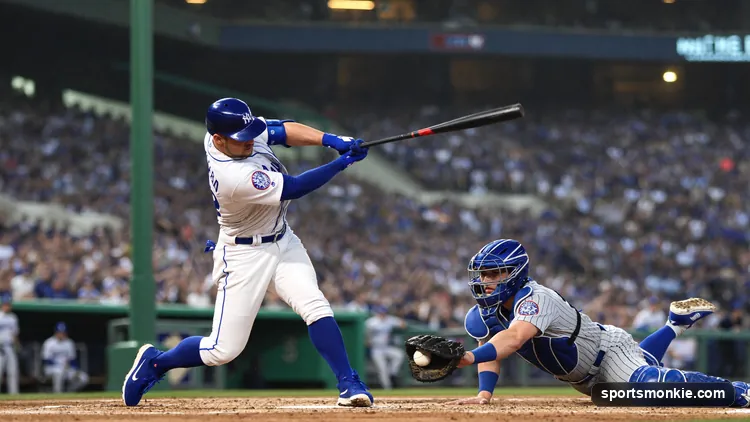
What Is a Grand Slam in Baseball?
A grand slam in baseball is a home run hit with the bases loaded, scoring all four runners for the maximum four runs possible on a single swing.
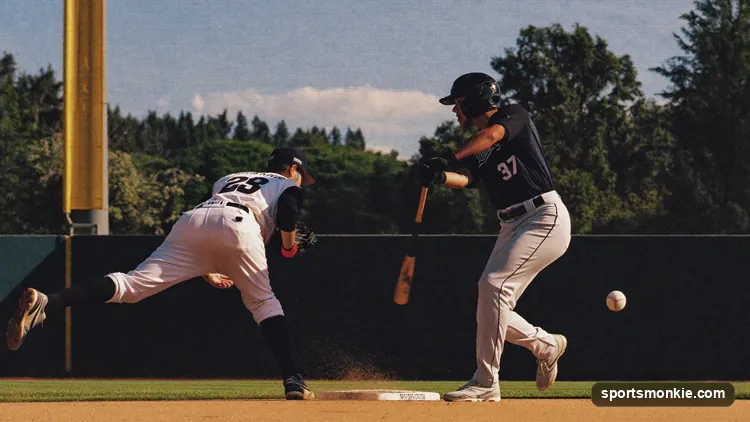
What Is Tagging Up in Baseball?
Tagging up is when a baserunner waits on his base until a fly ball is caught, then advances. He must be touching the base at the moment of the catch.
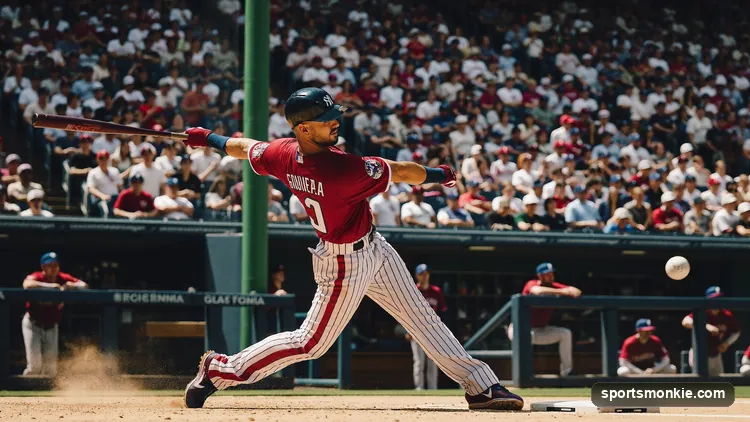
What Is the Designated Hitter (DH) in Baseball?
The designated hitter bats in place of the pitcher and never plays the field. Since 2022 the universal DH applies in both the American and National Leagues.