
Wiffle Ball Rules: How to Play and Score
On this page6
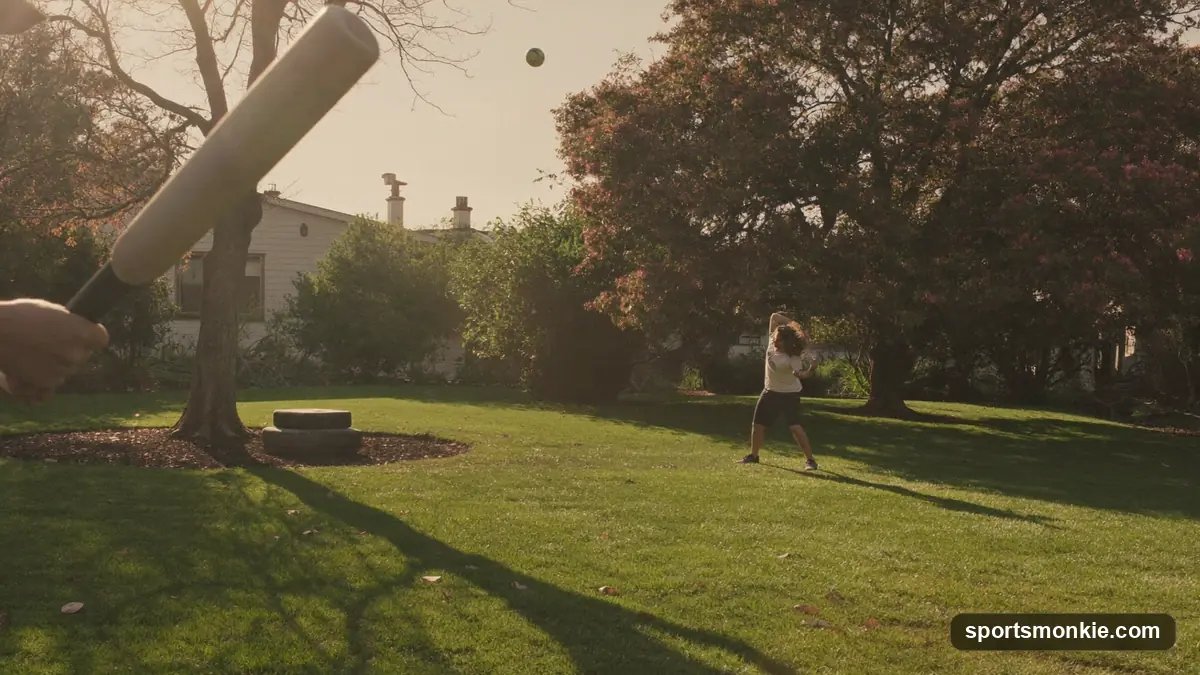
Wiffle ball is a simplified, backyard version of baseball played with a hollow, perforated plastic ball and a slim plastic bat, and its rules are built so that just two players can enjoy a full game without needing a full field. In the original format published by The Wiffle Ball, Inc., there is no running the bases: outs and hits are decided by where a batted ball lands inside marked zones, strikeouts are called when the batter misses, and the side with the most runs after the agreed number of innings wins.
That zone-based design is what separates wiffle ball from plain “baseball with a plastic ball.” It removes the need for a big roster, real bases and a large outfield, which is exactly why David N. Mullany created it in 1953 for his son in a Connecticut backyard. Here is how the game is set up, how you score it, and how the many backyard variants change the picture.
The equipment and the field
Wiffle ball needs only two pieces of official gear: the ball and the bat. The ball is a lightweight hollow sphere, roughly the size of a baseball, with a set of oblong holes on one hemisphere. Those holes are the whole point, they make the ball curve, dive and rise dramatically with very little effort, which keeps the pitcher-versus-batter duel interesting even in a tiny space. The bat is a thin, hollow plastic bat, much lighter than a wooden or aluminum baseball bat.
The field is flexible. A classic official layout uses a series of zones marked out from home plate: an area close in for singles, then progressively deeper zones for doubles, triples and home runs, with a boundary line for the home run. Many casual games instead paint a strike-zone rectangle on a wall, fence or board behind the batter so the pitcher has a clear target and the strike zone is not a judgment call.
How the official (no-baserunning) game works
The signature feature of official wiffle ball is that nobody runs. Instead, the result of each at-bat is read off the field.
- Strikeouts: a batter who swings and misses, or who lets a pitch land in the marked strike zone, accumulates strikes. Three strikes is a strikeout, just like baseball.
- Walks: pitches that miss the strike zone are balls, and four balls is a walk, which is scored as if the batter reached base.
- Hits by zone: when the batter puts the ball in play, where it lands decides the result. A ball landing in the single zone is a single, the next zone out is a double, and so on to a home run past the boundary line.
- Outs: a batted ball caught on the fly is an out, and a ball that lands in a designated out area (such as a grounder that stops short) is also an out. Three outs end the half-inning.
Because there are no runners, “advancing” is tracked on a scorecard: a single with a runner already “on” moves the imaginary runners along exactly as they would in baseball, and runs count when those imaginary runners cross home. This is what lets two people play a complete, scoreable game.
Scoring at a glance
The table below shows the core outcomes in the classic zone game. Exact zone distances vary by field, so treat these as the standard categories rather than fixed measurements.
| Result | How it happens | Effect |
|---|---|---|
| Strikeout | Three strikes (swings and misses or pitches in the zone) | Batter is out |
| Walk | Four balls (pitches missing the zone) | Batter reaches base |
| Single / Double / Triple | Batted ball lands in the matching hit zone | Runner(s) advance accordingly |
| Home run | Batted ball clears the home-run line on the fly | All runners plus batter score |
| Fly-out | Batted ball caught in the air | Batter is out |
| Grounder out | Ball stops in the marked out area | Batter is out |
A regulation game is usually a set number of innings (often six or nine, agreed in advance), with three outs per team per half-inning, and the team with more runs at the end wins. If it is tied, most groups play extra innings.
Pitching and the magic of the holes
The ball’s perforations let a pitcher throw sharp curves, sliders and risers with almost no strain, and mastering pitch movement is the heart of competitive wiffle ball. By turning the holes to face a particular direction and adding spin, a pitcher can make the ball dart down and away or jump upward late. There is no single official “best” pitch, but risers and hard sliders are widely regarded as the toughest to hit because the break is so exaggerated. This is the same idea that governs movement in the full game, our explainer on the balk in baseball covers how pitching motion is regulated in the pro game, a layer of rules wiffle ball happily ignores.
Backyard variants and house rules
Almost nobody plays wiffle ball exactly by one rulebook, and that is part of its charm. Common variations include:
- Baserunning versions: some groups add real or “ghost” runners and bases, turning it into scaled-down baseball. In these, force outs and tag outs apply, and some yards allow “pegging” (throwing the ball at a runner) although many ban it for safety.
- Fast-pitch vs. no-walks: to keep games moving, some leagues remove walks entirely or use a strike-zone board so balls and strikes are automatic.
- Small rosters: with only two players, one pitches while the other bats, then they swap, using imaginary runners to keep score.
- Custom home-run lines: because the ball is so light, fences are set wherever the yard allows, often 60 to 100 feet out.
The key etiquette rule is simply to agree on the format before the first pitch, especially on baserunning, pegging and the home-run distance.
Why the format works
Wiffle ball endures because its rules solve a real problem: how to get the fun of a pitcher-hitter duel and the shape of baseball into a backyard with two or three people and no umpire. The curving ball keeps pitching skillful, the zone system removes the need for fielders and bases, and the flexible field means the same rules scale from a driveway to an organized tournament. If you enjoy the pitching side, our guides to ERA in baseball and the rare perfect game in baseball show how the full sport measures the same pitcher-versus-hitter battle that wiffle ball miniaturizes.
The short version: grab a perforated ball and a plastic bat, mark a strike zone and a few hit zones, play three outs a side over an agreed number of innings, score hits by where the ball lands, and settle your house rules on baserunning before you start.
Frequently asked questions
Can you throw the ball at the runner in wiffle ball?+
In most no-baserunning wiffle ball formats there are no runners to hit, because outs and bases are decided by where the batted ball lands, so throwing at a runner never comes up. In backyard variants that do use baserunning, 'pegging' or throwing the ball at a runner to get them out is a common house rule, but it is not part of the official field-zone game and many groups ban it because the ball is hard plastic. Always agree on it before the first pitch.
What is the nastiest pitch in wiffle ball?+
The riser and the hard slider are usually considered the nastiest wiffle ball pitches. Because the ball has holes on only one side, orienting those holes and adding spin makes it break sharply and late, and a well-thrown riser can jump upward in a way a normal baseball never does. There is no single official 'nastiest' pitch; it depends on grip, arm slot and how the perforations are aimed, which is exactly why the ball was designed the way it was.
How do you get people out in wiffle ball?+
The main outs are strikeouts and batted-ball outs. A batter strikes out by missing or by taking a pitch that lands in the strike zone, often a board or painted rectangle behind the batter, and a batted ball can be an out if it is caught on the fly or lands in a zone marked as an out. In baserunning variants you can also record force outs and tag outs like in baseball. Three outs end a team's half-inning.
How far is a home run in wiffle ball?+
There is no fixed distance; the home-run line is whatever the field is set up to use. Because wiffle balls are light and do not travel far, backyard home-run fences are often only 60 to 100 feet away, and organized leagues mark their own boundaries. In zone-based games a home run is simply a ball hit past the marked home-run line on the fly, so the distance changes with every field.
Sources
Play & tools
Free browser games and tools — no account, no download.
- Play 162-0 — Draft nine and see if your roster can survive a flawless 162-game MLB season.
- Explore all our games →
- Analyze a trade — Compare both sides of a fantasy baseball trade before you accept.
- Run the MLB predictor — Simulate the MLB postseason bracket down to a World Series champion.
- Open the ERA calculator — Work out earned run average from earned runs and innings pitched — handles the .1/.2 thirds convention.
- Explore all our free sports tools →
Related baseball guides
View all →
Bocce Ball Rules: How to Play and Score
Bocce ball rules explained: how to play, scoring, court size, fouls, and what happens when you hit the pallino. For backyard and league games.
What Is a Double Play in Baseball? Rules, Types & Scoring Explained
A double play in baseball is when the defense records two outs on one continuous play. Learn every type, how it's scored, and the slide rule that protects it.
What Is a Force Out in Baseball? Force Play Rules Explained
A force out in baseball happens when a runner must advance to an open base and is put out there before or without a tag. Full rules and examples.
Gaga Ball Rules: How to Play the Pit Game
Gaga ball rules explained: a softer, faster dodgeball played in a pit. Hit opponents below the knee to get them out, and no double touches.
Kickball Rules: How to Play & Score
Kickball rules explained: kick a pitched ball and run the bases like baseball. Field setup, scoring, outs, and whether you can peg runners.
Woodruff Makes Brewers' World Series Roster After No Game Since July 4
Brandon Woodruff hasn't pitched since July 4. The Brewers added him to their World Series roster hours before Game 1 anyway, and the gamble has a real catch.