
What Is a Perfect Game in Baseball?

Twenty-seven batters come to the plate, and twenty-seven walk back to the dugout. No hits, no walks, no hit batsmen, not even a runner reaching on a fielding error. When a pitcher pulls that off, he has done something that has happened only a couple of dozen times in more than a century of Major League Baseball. That is a perfect game, the cleanest possible outing a pitcher can have.
The definition
A perfect game means every batter the pitcher faces is retired, and no opposing player reaches base by any method for the entire game. In a nine-inning game that is 27 consecutive outs with a spotless slate: no hits allowed, no bases on balls, no batters hit by a pitch, and no runners reaching on defensive errors.
The moment any runner reaches base, for any reason, the perfect game is gone. It can be a clean single, a four-pitch walk, or a routine grounder that a fielder boots. The offence does not even need to score; a single baserunner is enough to end it.
Perfect game vs no-hitter
People often use the two terms loosely, but they are not the same, and the difference matters.
| No-hitter | Perfect game | |
|---|---|---|
| Hits allowed | None | None |
| Walks allowed | Permitted | None |
| Hit batsmen | Permitted | None |
| Errors letting a runner on | Permitted | None |
| Runners reach base | Possible | Never |
Every perfect game is automatically a no-hitter, because you cannot allow a hit and still be perfect. But the reverse is not true. Plenty of no-hitters include a walk or two, which means a runner reached base and the game was never perfect.
Why it is so rare
Retiring 27 hitters in a row asks a pitcher to be sharp for roughly three hours without a single lapse, and it also asks the eight players behind him to make every play cleanly. One misjudged hop, one throw pulled off the bag, and the perfect game dies through no fault of the pitcher at all.
That shared dependence is part of what makes the feat special. A pitcher can dominate all night and still lose the perfect game to a teammate’s error, which is why defenders playing behind a pitcher chasing perfection feel the pressure just as sharply.
Late-game tension
Baseball has an unwritten tradition around a perfect game in progress: teammates often stop talking to the pitcher in the dugout so as not to jinx it. The tension climbs with every out, because there is no cushion. In a normal game a pitcher can shrug off a hit; here, one mistake erases the whole achievement.
If you want the earlier, more common cousin of this feat, our explainer on the walk-off in baseball covers another of the sport’s dramatic endings. But nothing tops the quiet, mounting pressure of a pitcher three outs from perfection, needing the last few hitters to go down in order to join one of baseball’s smallest clubs — retiring all 27 batters across a full nine innings.
We dig into a related angle in Wiffle Ball Rules.
Frequently asked questions
What is the difference between a perfect game and a no-hitter?+
A no-hitter only means the opposing team got no hits, but runners can still reach base through walks, hit batsmen, or errors. A perfect game is stricter: no batter reaches base at all, by any means. Every perfect game is a no-hitter, but most no-hitters are not perfect games.
Can a perfect game be lost?+
A pitcher can throw a perfect game and still not win if it goes to extra innings scoreless and his team loses later, but historically a perfect game is credited only when the pitcher completes at least a full game retiring every batter faced with none reaching base. A single walk, hit, or error ends the perfect game instantly.
How many outs are in a perfect game?+
In a standard nine-inning game a perfect game requires 27 consecutive outs, three per inning across nine innings, with no batter reaching base.
Sources
Play & tools
Free browser games and tools — no account, no download.
- Play 162-0 — Draft nine and see if your roster can survive a flawless 162-game MLB season.
- Explore all our games →
- Analyze a trade — Compare both sides of a fantasy baseball trade before you accept.
- Run the MLB predictor — Simulate the MLB postseason bracket down to a World Series champion.
- Open the ERA calculator — Work out earned run average from earned runs and innings pitched — handles the .1/.2 thirds convention.
- Explore all our free sports tools →
Related baseball guides
View all →
What Is a Walk-Off in Baseball?
A walk-off is when the home team scores the winning run in the bottom of the final inning, ending the game instantly. Here is how it works and the types.
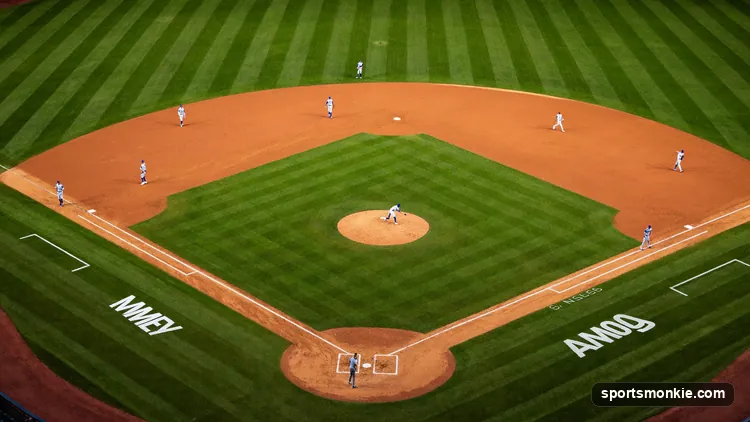
Baseball Positions by Number: The Complete 1-9 Guide
Baseball positions by number run 1-9: pitcher, catcher, first base, second, third, shortstop, left, center, right field. Full scorekeeping guide.

Baseball Terminology Glossary: Every Key Term Explained
A complete baseball terminology glossary covering hitting, pitching, fielding, baserunning, and scoring terms every fan needs to know.
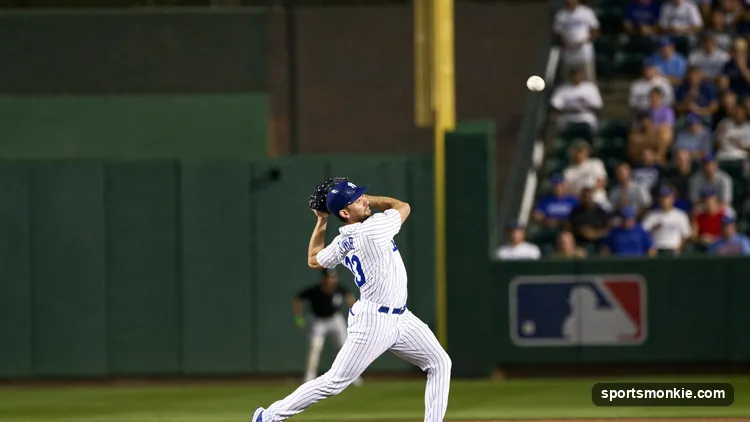
What Is a Can of Corn in Baseball? Meaning, Origin & Examples
A can of corn in baseball is an easy, high fly ball a fielder catches without moving much. Learn the term's grocery-store origin and how it's used.
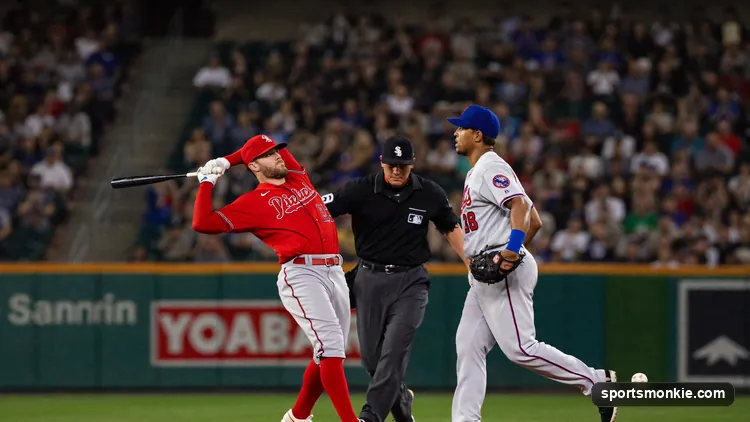
What Is a Double Play in Baseball? Rules, Types & Scoring Explained
A double play in baseball is when the defense records two outs on one continuous play. Learn every type, how it's scored, and the slide rule that protects it.
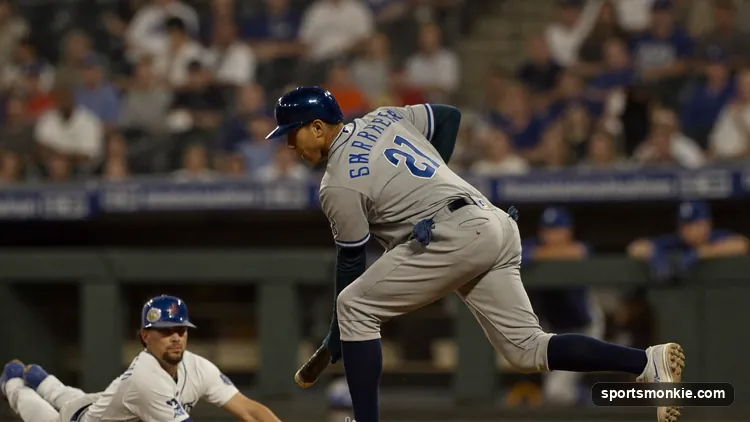
What Is a Force Out in Baseball? Force Play Rules Explained
A force out in baseball happens when a runner must advance to an open base and is put out there before or without a tag. Full rules and examples.