
What Is a Quality Start in Baseball?
On this page6
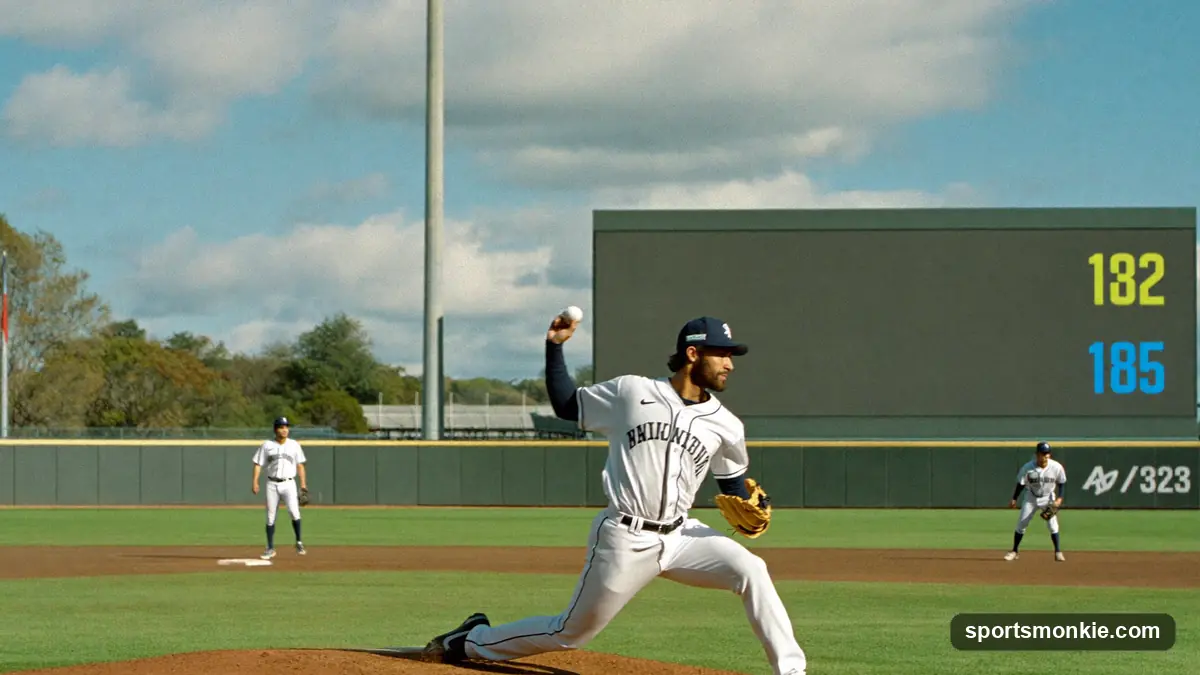
A quality start in baseball is a stat credited to a starting pitcher who throws at least six innings and allows three or fewer earned runs in a single game. Meet both conditions, six-plus innings and no more than three earned runs, and you have recorded a quality start, regardless of whether your team wins or loses.
The stat exists to answer a simple question: did the starter give the team a decent chance to win? It was invented in 1985 by sportswriter John Lowe precisely because traditional pitcher stats like wins depend heavily on run support the pitcher cannot control. Here is how the quality start works, why it is useful, and why it also gets criticised.
The definition, exactly
The two conditions are fixed and easy to check.
- At least 6 innings pitched. Anything less, even five and two-thirds innings, does not qualify.
- 3 or fewer earned runs allowed. Unearned runs (those following errors) do not count against the pitcher here.
Both must be true. A pitcher who throws seven scoreless innings clearly qualifies; one who throws five innings of one-run ball does not, because they fell short on innings. The six-inning floor is what makes the stat about durability as well as run prevention.
Why the stat was created
Before the quality start, the main way to credit a starting pitcher was the win, but wins are notoriously unfair. A pitcher can dominate for seven innings and get a no-decision or even a loss if their offense fails to score, while another can pitch poorly and still “win” thanks to a big rally. John Lowe designed the quality start to strip away that luck and measure only what the starter did.
The result is a stat that tracks a starter’s job description directly: pitch deep into the game and keep the runs down. It has become a standard shorthand in broadcasts and box scores for a solid, unspectacular outing.
The criticism: is the bar too low?
The most common objection is arithmetic. Three earned runs over exactly six innings works out to a 4.50 ERA, which is a decidedly mediocre rate. Critics argue that crediting a “quality” start for what amounts to a 4.50-ERA performance sets the bar too low and flatters middling pitchers.
Defenders counter two ways. First, three earned runs is the ceiling, most quality starts are much better than the worst-case line, so the average quality start has an ERA well below 4.50. Second, a simple, consistent stat is more useful than a perfect one; the quality start is meant to be a quick filter, not a full evaluation. For that deeper look, rate stats do more work, which is where numbers like ERA and WHIP come in.
How it compares to other pitching stats
The quality start sits alongside several other ways of measuring a pitcher, each with a different focus.
| Stat | What it measures | Strength | Weakness |
|---|---|---|---|
| Quality start | 6+ IP, ≤3 ER in a game | Simple, ignores run support | Bar can be low (4.50 ERA ceiling) |
| Win | Pitcher of record in a team win | Familiar, historic | Heavily luck- and offense-dependent |
| ERA | Earned runs per 9 innings | Rate-based, comparable | Ignores defense and park |
| WHIP | Baserunners allowed per inning | Isolates traffic allowed | Says nothing about run damage |
No single stat tells the whole story, which is why analysts read them together. The quality start’s job is to be the easy, at-a-glance measure of whether a starter did their part.
The quality start in the modern game
The stat has taken on new relevance as baseball has changed. Starting pitchers throw fewer innings than they did decades ago, with bullpens handling more of each game and “openers” and pitch-count limits pulling starters early. In that environment, simply reaching the six-inning threshold has become a genuine marker of durability, not just run prevention. A pitcher who racks up quality starts is increasingly valued for sparing an overworked bullpen, which is part of why the stat has aged better than critics once predicted.
There is also a “tough loss” and “cheap win” vocabulary built around it. A tough loss is a quality start in which the pitcher still takes the defeat, while a cheap win is a victory credited to a starter who did not throw a quality start. Those labels exist precisely because the quality start measures the pitcher’s own work rather than the scoreboard, filling the gap that the win statistic leaves open.
Where it fits in the bigger picture
The quality start is a “did the job” stat, not a “was dominant” stat. For dominance you look to rarer feats, and the ceiling of pitching achievement, like a perfect game, lives in a completely different world from a routine quality start. Modern analysis has also moved toward all-encompassing measures such as WAR, which try to capture a pitcher’s total value in one number rather than counting individual good outings.
Even so, the quality start endures because it is intuitive. Fans and broadcasters can grasp “six innings, three runs or fewer” instantly, and over a season a pitcher’s quality-start count is a quick read on how reliably they kept their team in games.
The short version: a quality start is six or more innings with three or fewer earned runs, credited regardless of the result. It was built to sidestep the luck baked into pitcher wins, it can be criticised for a modest 4.50-ERA ceiling, and a pitcher can absolutely throw one and still take the loss.
Frequently asked questions
Is a quality start 5 or 6 innings?+
Six innings. The definition requires at least six innings pitched with three or fewer earned runs allowed. Five innings does not qualify no matter how few runs are given up, because the stat is designed to reward a starter who works deep enough into the game to spare the bullpen. The six-inning threshold is the fixed floor of the entire definition.
What is the Ohtani rule?+
The Ohtani rule, introduced by MLB in 2022, lets a player who starts a game as both the pitcher and the designated hitter remain in the lineup as the DH even after being removed from the mound. Before the rule, a two-way starter who left the pitching role would also lose the DH spot. It is named for Shohei Ohtani and is unrelated to the quality-start definition, though both concern starting pitchers.
Can you lose a quality start?+
Yes. A quality start describes the pitcher's line, six-plus innings and three or fewer earned runs, not the game's outcome. A pitcher can throw a quality start and still be charged with the loss if their team scores two runs or fewer while they allow three. This is a common criticism and a common frustration: a pitcher can do their job by the definition and still take an 'L.'
How many quality starts did Nolan Ryan have?+
Nolan Ryan recorded more than 400 quality starts across his record 27-season career, which places him among the all-time leaders in the category. Because the stat was defined in 1985 and applied retroactively, totals for long-career pitchers like Ryan are calculated from their full game logs. His enormous start total, over 700 career starts, gave him the volume to pile up quality starts.
Sources
Play & tools
Free browser games and tools — no account, no download.
- Play 162-0 — Draft nine and see if your roster can survive a flawless 162-game MLB season.
- Explore all our games →
- Analyze a trade — Compare both sides of a fantasy baseball trade before you accept.
- Run the MLB predictor — Simulate the MLB postseason bracket down to a World Series champion.
- Open the ERA calculator — Work out earned run average from earned runs and innings pitched — handles the .1/.2 thirds convention.
- Explore all our free sports tools →
Related baseball guides
View all →
BABIP in Baseball: What It Means
BABIP is Batting Average on Balls In Play, how often balls hit into the field become hits. What it means, how to calculate it, and how to read it.

What Is Tommy John Surgery?
Tommy John surgery rebuilds a pitcher's torn elbow ligament with a tendon graft. Why pitchers need it, recovery time, and whether they throw harder after.
What Is ERA in Baseball? Meaning and How to Calculate It
ERA is earned run average: the earned runs a pitcher allows per nine innings. Here is the formula, what counts as earned, and how to read the number.

How Many Innings Are in a Baseball Game? (9 in MLB)
A baseball game has nine innings in MLB, the minors, and college. High school plays seven and Little League six. Here's every level, plus how long games last.
What Is a Grand Slam in Baseball?
A grand slam in baseball is a home run hit with the bases loaded, scoring all four runners for the maximum four runs possible on a single swing.
What Is a Sacrifice Fly in Baseball? Rule, Scoring, RBI Explained
A sacrifice fly in baseball is a fly out that scores a runner from third base. Learn the official rule, scoring, RBI, and how it differs from a sac bunt.