
What Is Tommy John Surgery?
On this page6
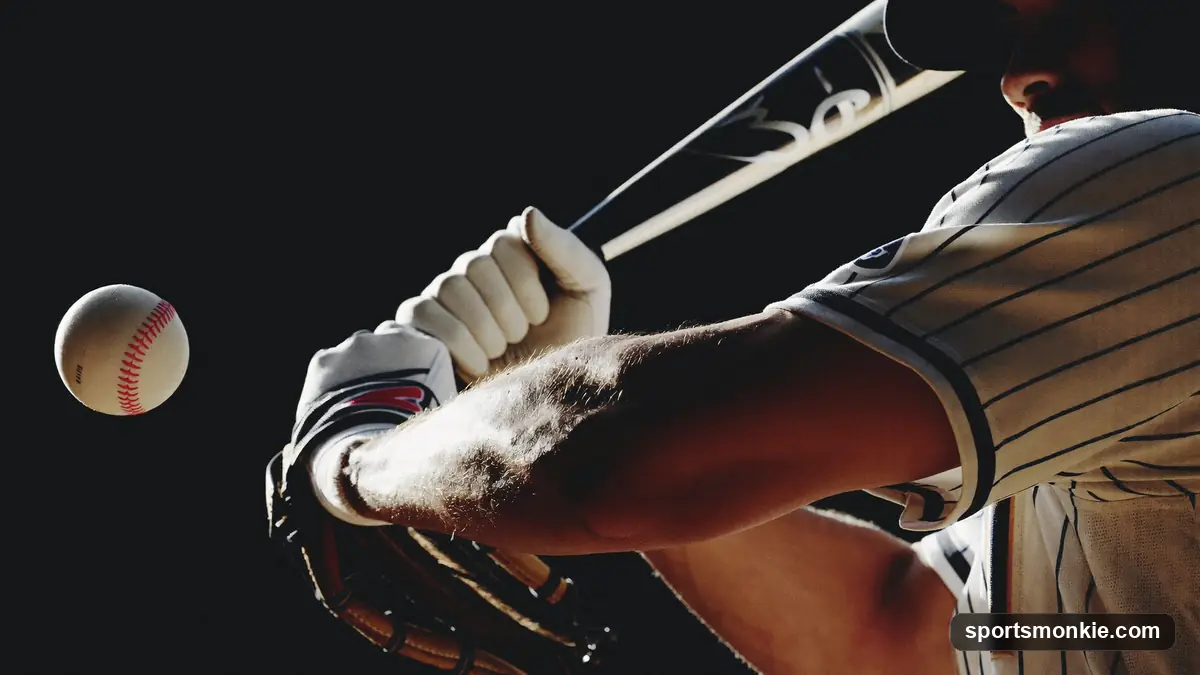
Tommy John surgery is the everyday name for ulnar collateral ligament reconstruction, an operation that rebuilds a torn ligament on the inner side of the elbow. A surgeon replaces the damaged ligament with a healthy tendon taken from elsewhere in the patient’s own body, most often the forearm or hamstring, and threads it through small holes drilled in the bones to recreate the joint’s stability.
It carries a pitcher’s name because a pitcher was the first patient. What follows explains why throwers wear out this ligament, what the operation involves, how long recovery takes, and the biggest myth surrounding it.
Why pitchers need it
The ulnar collateral ligament, or UCL, holds the inside of the elbow together and takes enormous stress during an overhand throw. Every high-velocity pitch stretches it, and over thousands of throws that ligament can fray or snap. Once it is significantly torn, it cannot heal well enough on its own for someone to pitch at a high level, so surgery becomes the route back.
This is why the injury clusters among baseball pitchers, though javelin throwers, quarterbacks and other overhead athletes can suffer it too. According to Johns Hopkins Medicine, the surgery aims to stabilise the elbow, reduce pain and restore range of motion so the athlete can return to throwing.
Where the name comes from
The procedure is named after Tommy John, a Los Angeles Dodgers pitcher who tore his UCL in July 1974. Dr. Frank Jobe performed the first-ever reconstruction on him later that year, a genuine experiment at the time with no track record to lean on.
It worked better than anyone expected. John missed the 1975 season rehabbing, returned in 1976, and pitched all the way until 1989. He won 164 games after the surgery, more than the 124 he had won before it, which turned a one-off gamble into the standard treatment now bearing his name.
What the operation involves
The core steps are consistent, even as techniques have refined over the decades.
- Harvesting the graft. The surgeon takes a tendon from the patient, commonly the palmaris longus in the forearm (which not everyone has) or a hamstring tendon.
- Drilling anchor points. Small holes are made in the two bones that meet at the elbow, the humerus and the ulna.
- Weaving the new ligament. The graft is threaded through those holes, often in a figure-of-eight pattern, and secured to take over the old UCL’s job.
The surgery itself is not the hard part. The recovery is.
How long is the recovery?
For a pitcher, full recovery typically runs 12 to 18 months. The timeline is deliberately slow because the graft has to bond and strengthen before it can handle throwing stress again, and rushing it invites re-injury.
| Stage | Rough timeline |
|---|---|
| Immobilise and protect the elbow | First few weeks |
| Regain range of motion and basic strength | Months 1-4 |
| Begin a structured throwing program | Around months 4-6 |
| Build back toward game velocity | Months 9-14 |
| Return to competitive pitching | Roughly 12-18 months |
Position players who do not throw at full pitching intensity often recover faster, sometimes in six to nine months. But for the pitchers who need it most, planning for well over a year off the mound is realistic.
The myth: does it make you throw harder?
This is the most persistent misunderstanding. Tommy John surgery does not add velocity. A reconstructed ligament is built to restore normal function, not to make the arm stronger than it was when healthy.
Where the myth comes from is real, though. Many young pitchers return throwing harder than before, but that is because the injury forced them to rest a chronically overworked arm and rebuild it with months of guided strength work. The same gains might have come from that rest and training without a torn ligament. No pitcher should ever seek the surgery hoping for a speed boost.
The bigger picture
Return rates are strong, commonly cited around 80 to 90 percent for pitchers, and plenty go on to long careers afterward. The real concern now is a second tear later on, which is tougher to recover from and increasingly common as the surgery becomes routine at younger ages.
That has pushed the conversation toward prevention: managing pitch counts, resting between starts, and not throwing through elbow pain. To see the arms that have defined pitching excellence, browse the greatest baseball players, and for another core pitching concept, read our explainer on what ERA means in baseball.
The short version: Tommy John surgery rebuilds a torn elbow ligament with a tendon graft, it is named after its first patient, recovery takes 12 to 18 months for pitchers, and it restores the arm rather than upgrading it.
Frequently asked questions
Why is it called Tommy John surgery?+
It is named after Tommy John, the Los Angeles Dodgers pitcher who was the first person to undergo the operation, in 1974. Surgeon Dr. Frank Jobe performed the pioneering reconstruction. John recovered and pitched for another 14 seasons, winning more games after surgery than before, which is why his name became the household term for the procedure.
Do pitchers throw harder after Tommy John surgery?+
Not because of the surgery itself, which is a persistent myth. Any velocity gains come from the long, structured rehab and the extended rest the arm gets, not from the new ligament being stronger. A repaired UCL is designed to restore normal function, not to upgrade the arm beyond what it could do when healthy.
Can a pitcher still pitch after Tommy John surgery?+
Yes, and most do. Return-to-play rates for pitchers are commonly reported around 80 to 90 percent, and many pitch effectively for years afterward. Tommy John himself won 164 games after his operation. The bigger risk is a second tear later in a career, which is harder to come back from than the first.
How can pitchers avoid needing Tommy John surgery?+
There is no guarantee, but managing workload is the main lever. Sports medicine groups point to pitch-count limits, adequate rest between outings, avoiding year-round throwing at a young age, and good mechanics as the factors that reduce UCL stress. Throwing through elbow pain is the behaviour most linked to eventual tears.
Sources
Play & tools
Free browser games and tools — no account, no download.
- Play 162-0 — Draft nine and see if your roster can survive a flawless 162-game MLB season.
- Explore all our games →
- Analyze a trade — Compare both sides of a fantasy baseball trade before you accept.
- Run the MLB predictor — Simulate the MLB postseason bracket down to a World Series champion.
- Open the ERA calculator — Work out earned run average from earned runs and innings pitched — handles the .1/.2 thirds convention.
- Explore all our free sports tools →
Related baseball guides
View all →
What Is a Quality Start in Baseball?
A quality start is when a starting pitcher throws at least 6 innings and allows 3 or fewer earned runs. The stat explained, its limits and how it's used.
Slider vs Curveball: Grip, Spin, and Movement Compared
Slider vs curveball compared: grip, spin axis, velocity, and movement shape, plus a table showing exactly how to tell the two pitches apart.

How Do the MLB Playoffs Work? (12-Team Format)
The MLB playoffs are a 12-team bracket: six per league — three division winners and three wild cards — through the Wild Card Series, Division Series, LCS and World Series.
How Does the MLB Wild Card Work?
MLB's wild card gives each league three playoff berths to the best non-division winners. The lower seeds meet in a best-of-three Wild Card Series.
What Is the Designated Hitter (DH) in Baseball?
The designated hitter bats in place of the pitcher and never plays the field. Since 2022 the universal DH applies in both the American and National Leagues.

What Is a Bullpen Game in Baseball?
What is a bullpen game? A team uses a chain of relief pitchers instead of a starter. Why it happens, how the win is decided, and if it works.