
What Is a Walk-Off in Baseball?

On this page4
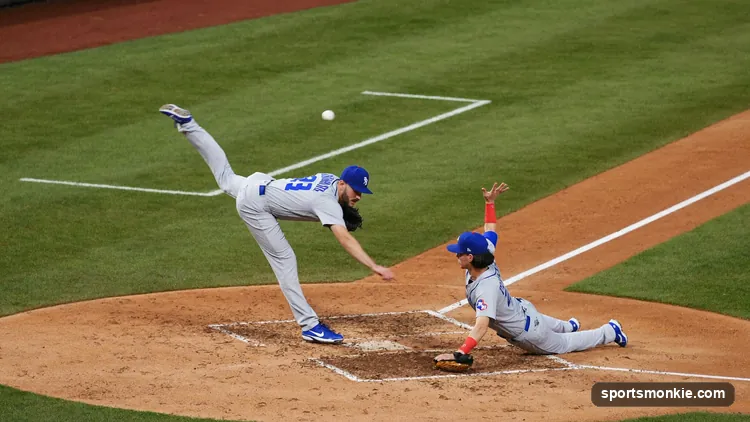
Bottom of the ninth, tie game, a runner on second. The batter lines a single into the gap, the runner rounds third and slides home, and before the ball is even back to the infield the home dugout has emptied onto the field. The game is over the instant that run scores. No bottom-of-the-inning cleanup, no final out. That sudden ending is a walk-off.
The core idea
A walk-off happens when the home team scores the winning run in its last at-bat and the game ends immediately. Because the home team always bats last, it can win the moment it takes the lead in the bottom of the ninth or in any extra inning. There is no reason to keep playing once the home team is ahead with no more turns for the visitors.
That is the key difference from every other run in the game. Normally an inning finishes on outs. A walk-off run ends the game the second it crosses the plate.
Why only the home team
Baseball’s batting order between the two teams is fixed: the visiting team bats in the top of each inning, the home team in the bottom. If the visitors take the lead in extra innings, the home team still gets to respond in the bottom half. The home team’s rally is the last word, so only it can end the game with a hit.
The visiting team can absolutely win in extras. It just cannot do so on a walk-off, because its lead is never the final event of the inning.
Types of walk-offs
A walk-off is defined by the result, not the method. Any play that pushes the winning run home in the bottom of the final inning qualifies.
| Walk-off type | How the run scores |
|---|---|
| Walk-off home run | Batter hits it out; the game ends as he rounds the bases |
| Walk-off hit | A single, double, or triple drives in the winning run |
| Walk-off walk | Bases loaded, the batter draws a walk, forcing in the run |
| Walk-off hit by pitch | Bases loaded, the batter is hit, forcing in the run |
| Walk-off error / wild pitch | A defensive mistake lets the winning run score |
| Walk-off sacrifice fly | A fly ball is caught, and the runner tags up and scores |
The most dramatic is the walk-off home run, sometimes called a walk-off “grand slam” if the bases are loaded. But an unglamorous bases-loaded walk ends the game just as completely.
One rule detail on the home run
A walk-off home run still has to be legal. The batter and any runners ahead of him must touch all their bases in order. On a game-ending homer, only the runners needed to win have to score, but the batter who hit it out is credited with the home run only if he completes the trip around the bases. In practice players do circle the bases through the celebration for exactly this reason.
The walk-off is one of the reasons baseball has no clock. Because the home team is guaranteed its final at-bat, a game is never truly over until the last out or the winning run, and that is what makes the bottom of the ninth the tensest half-inning in the sport. A walk-off can only happen in the bottom of the ninth or in extra innings.
Frequently asked questions
Why is it called a walk-off?+
The name captures what happens next: the winning run scores, the game is over, and both teams walk off the field. The pitcher who gave up the run, in particular, walks off having lost, which is where the phrase is often traced.
Can only the home team get a walk-off?+
Yes. A walk-off requires taking the lead in the bottom of the final inning, and only the home team bats last. The visiting team can win in extra innings but never on a walk-off, because the home team still gets to bat after them.
Does the game keep going after a walk-off?+
No. The moment the winning run crosses the plate in the bottom of the ninth or later, the game ends immediately. Any runners behind the winning run do not matter, though a walk-off home run must still be legally rounded.
Sources
Play & tools
Free browser games and tools — no account, no download.
- Play 162-0 — Draft nine and see if your roster can survive a flawless 162-game MLB season.
- Explore all our games →
- Analyze a trade — Compare both sides of a fantasy baseball trade before you accept.
- Run the MLB predictor — Simulate the MLB postseason bracket down to a World Series champion.
- Open the ERA calculator — Work out earned run average from earned runs and innings pitched — handles the .1/.2 thirds convention.
- Explore all our free sports tools →
Related baseball guides
View all →
Baseball Terminology Glossary: Every Key Term Explained
A complete baseball terminology glossary covering hitting, pitching, fielding, baserunning, and scoring terms every fan needs to know.
What Is a Sacrifice Fly in Baseball? Rule, Scoring, RBI Explained
A sacrifice fly in baseball is a fly out that scores a runner from third base. Learn the official rule, scoring, RBI, and how it differs from a sac bunt.
What Is a Balk in Baseball? Rules, Types, and Penalty
A balk is an illegal pitching motion with runners on base, and the penalty advances every runner one base. Here are the common types and the reasons.

The Infield Fly Rule in Baseball, Explained Simply
The infield fly rule calls the batter out on an easy pop-up with runners on first and second (or bases loaded) and fewer than two outs. Here is why it exists.

What Is a Perfect Game in Baseball?
A perfect game is when a pitcher retires all 27 batters in a row with no runner reaching base. See how it differs from a no-hitter and why it is so rare.
Baseball Positions by Number: The Complete 1-9 Guide
Baseball positions by number run 1-9: pitcher, catcher, first base, second, third, shortstop, left, center, right field. Full scorekeeping guide.