
Kickball Rules: How to Play & Score
On this page7
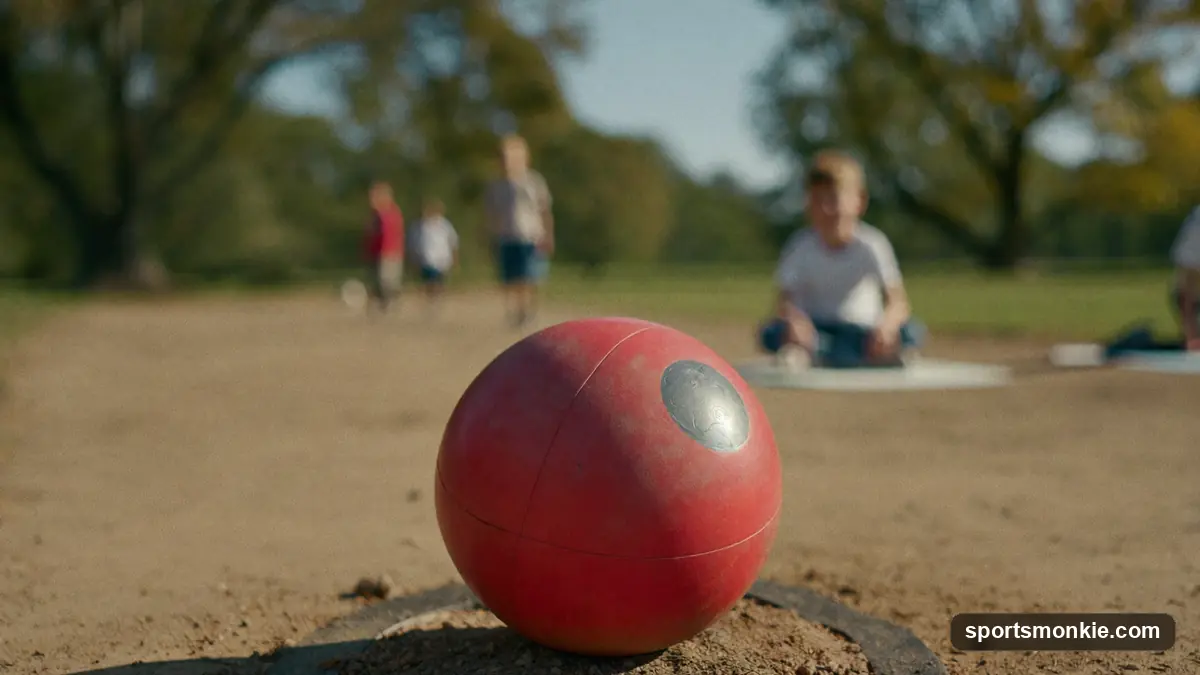
Kickball is basically baseball played with your feet. A pitcher rolls a large rubber ball toward home plate, the kicker boots it into the field, and then runs the bases to try to score. The fielding team gets the kicker’s team out and eventually forces a change of sides.
If you know baseball, you already know most of kickball. The differences are the big rubber ball, the kick instead of a bat, and one rule that surprises newcomers: in most versions you can get a runner out by hitting them with a thrown ball. Here is the full setup, from the field to scoring to outs.
The field and setup
Kickball uses a baseball-style diamond with four bases, home plate, and a pitcher’s spot. You do not need a manicured field; the game is famous for being played on grass, gym floors, and park diamonds alike, which is part of its appeal.
Two teams take turns kicking and fielding. The kicking team sends its players up one at a time in a set order, while the fielding team spreads out to cover the bases and the outfield. A pitcher rolls the ball along the ground to the kicker, who must kick it from at or behind home plate. Team sizes vary by league, with adult games often fielding roughly 8 to 11 players at a time.
How to play, step by step
The flow of a kickball game mirrors baseball closely.
- The pitcher rolls the ball toward home plate along the ground.
- The kicker boots it into fair territory and runs toward first base.
- Runners already on base advance if they can.
- The fielding team tries to record an out.
- Three outs end the half-inning and the teams switch roles.
- A run scores each time a runner rounds the bases and reaches home.
Strikes, balls, and fouls are counted much like baseball, though the exact thresholds vary by league. Under standard adult rules you cannot lead off or steal, so runners have to stay put until the ball is kicked, and may leave the base once a fielder touches the ball rather than fully catches it.
How you get out
The fielding team has several ways to record an out, and this is where kickball adds its signature twist.
| Out type | How it happens |
|---|---|
| Catch | A kicked ball is caught in the air before it lands |
| Force out | A fielder with the ball touches the base before the runner arrives |
| Tag | A fielder tags a runner with the ball while off the base |
| Pegging | A thrown ball hits a runner (below the shoulders in most rule sets) |
That last one, pegging, is the fun part. In many versions you can throw the ball and hit a runner between the bases to get them out. Under World Adult Kickball Association rules, a hit to the head or neck does not count and the runner is ruled safe, except when the runner is sliding. Because a ball to the face is a real risk, plenty of youth and school leagues ban throwing at runners altogether, so confirm your league’s rule before you wind up.
Common rule variations
Because kickball is played everywhere from official leagues to backyard cookouts, the rules bend to fit the crowd. Knowing the common variations prevents mid-game arguments.
- Pegging on or off: competitive leagues usually allow hitting runners with a thrown ball below the shoulders; youth and school versions often ban it entirely.
- Bunting: some leagues limit or outlaw bunts to keep the game moving, while others allow them freely.
- Fouls and strikes: the number of fouls or strikes allowed before an out varies, so agree on it up front.
- Fielding the pitch: the pitcher must usually roll the ball smoothly along the ground, without big bounces, so the kicker gets a fair pitch.
The World Adult Kickball Association publishes a full rulebook that many organized leagues adopt as a baseline, then tweak. For a casual game, the smartest move is to spend two minutes agreeing on pegging, bunting, and how many innings you will play before the first pitch.
Kickball vs baseball at a glance
Kickball borrows its skeleton from baseball, but a few differences change how it feels to play. The table below sums up the key contrasts.
| Element | Kickball | Baseball |
|---|---|---|
| Putting ball in play | Kick a rolled ball | Bat a pitched ball |
| Ball | Large rubber ball | Small hard ball |
| Getting runners out | Tag, force, catch, or peg | Tag, force, or catch |
| Stealing | Not allowed (standard rules) | Allowed |
| Equipment needed | Just a ball and bases | Bats, gloves, and a ball |
That low equipment bar is a big reason kickball spread through schools and rec leagues. Anyone can play with almost nothing, and the rules are intuitive to anyone who has watched baseball.
Scoring and winning
Scoring works exactly like baseball: each runner who makes it all the way around the bases and touches home plate scores one run for the kicking team. There is no limit on runs in an inning until the fielding team records three outs.
Games are usually played to a fixed number of innings, commonly around six or seven in organized adult leagues, with the higher run total winning. Backyard games often just play until people are done or a time limit runs out. Because the rules flex so easily, kickball scales from a serious league sport to a casual cookout game without much fuss.
The short version
Kickball plays like baseball with a rolled rubber ball you kick: run the bases, score by reaching home, and switch sides after three outs. You generally cannot steal or lead off, and in most rule sets a fielder can get you out by hitting you with a thrown ball below the shoulders. It is one of the great low-gear group games, right alongside gaga ball rules, four square rules, and a properly measured cornhole distance setup.
Frequently asked questions
Can you throw the ball at a runner in kickball?+
In most rule sets, yes. Hitting a runner with a thrown ball, often called pegging, records an out. But under WAKA rules a hit to the head or neck does not count and the runner is ruled safe, except when the runner is sliding. Some youth and school leagues ban throwing at runners entirely for safety, so always check your league's rules.
Can you steal a base in kickball?+
Under standard WAKA rules, no. Stealing bases and leading off are not allowed, so runners must stay on the base until the ball is kicked. Runners may leave once the ball is touched by the fielding team, not necessarily caught. Casual backyard games sometimes allow stealing, but the official adult game does not.
What are the basic rules of kickball?+
A pitcher rolls the ball, the kicker boots it and runs the bases, and the fielding team tries to make outs. Three outs end a half-inning, and reaching home plate scores a run. You cannot lead off or steal, and fouls and strikes are counted much like baseball, with rules varying slightly by league.
How many players are on a kickball team?+
Team sizes vary by league, but adult WAKA-style games commonly field around 8 to 11 players at a time, similar to baseball. Recreational and school games flex the number based on how many people show up, so the exact count is one of the first things a league sets.
Sources
Play & tools
Free browser games and tools — no account, no download.
- Play today's Sports Connections — Today's Sports Connections — daily hints, answers, and play the grid.
- Play Guess the NFL Player — A new mystery NFL player every day. Eight guesses, with a clue on each — plus free unlimited mode.
- Explore all our games →
Related guides

Tetherball Rules: How to Play and Setup
Tetherball rules made simple: two players hit a roped ball opposite ways to wrap it around the pole. Court setup, serving, fouls and how to win.

Gaga Ball Rules: How to Play the Pit Game
Gaga ball rules explained: a softer, faster dodgeball played in a pit. Hit opponents below the knee to get them out, and no double touches.
Four Square Rules: Classic & Advanced
Four square rules explained: bounce the ball into other squares, move up as players are out, reach the top square. Classic and advanced play.

Kan Jam Rules: Scoring, Dunks and Instant Wins
Kan Jam rules: 2v2 with cans 50 feet apart, score 1, 2 or 3 points per throw, and win by reaching exactly 21 or landing an Instant Win.

Spikeball (Roundnet) Rules Explained
Spikeball rules made simple: 2v2 teams, rally scoring to 21, three touches to return, and why rim shots are outs. How to serve, score and win.

Bocce Ball Rules: How to Play and Score
Bocce ball rules explained: how to play, scoring, court size, fouls, and what happens when you hit the pallino. For backyard and league games.