
Four Square Rules: Classic & Advanced
On this page7
Four square is a playground game for four players standing in a two-by-two grid of numbered squares. The server bounces the ball into another player’s square, and each player has to hit it, after one bounce, into someone else’s square. Miss, break a rule, or send it out, and you are eliminated for that round.
When a player is out, they leave and the others move up to higher squares, with a new player entering at the bottom. The whole game is a climb toward the top square, the most prized spot, where the holder often gets to call special rules. Here is how the classic game works and the advanced twists that make it addictive.
The court and the goal
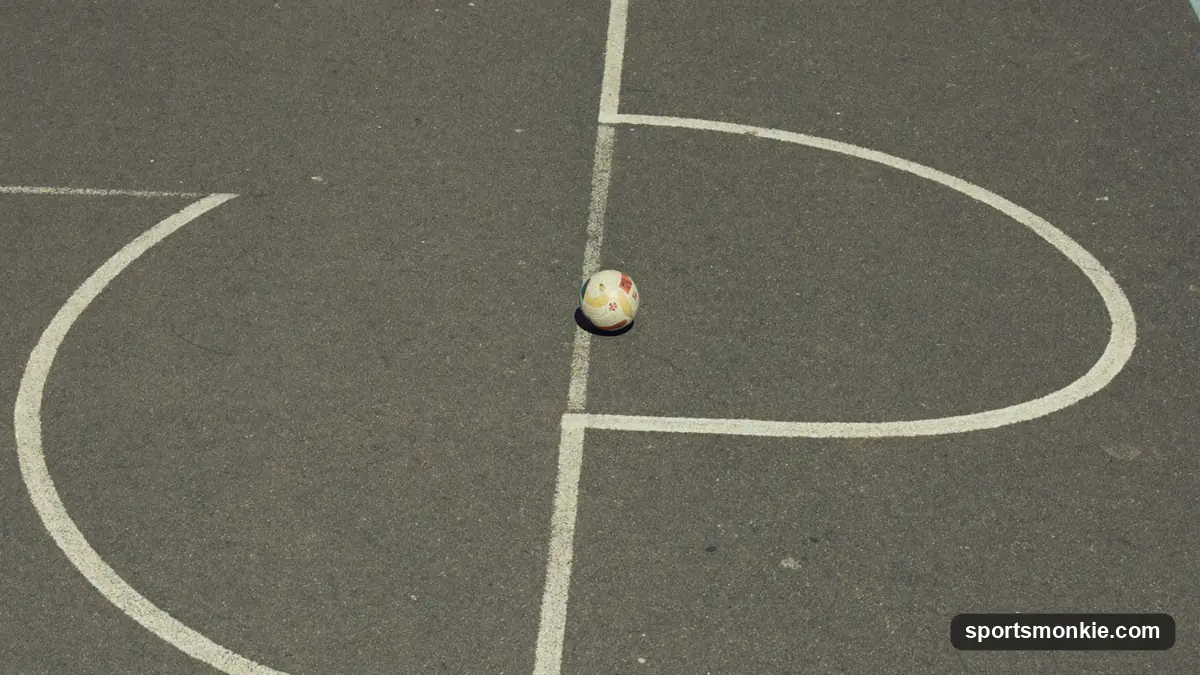
A four square court is a large square divided into four equal squares, usually numbered or ranked from highest to lowest. You can chalk one on a driveway or find them painted on school blacktops everywhere. All you need beyond the court is a bouncy playground ball.
Four players each stand in one square. The squares are ranked, and the objective is to advance to the highest square and stay there. Because players constantly rotate as others are eliminated, four square is less about a final score and more about how long you can hold the top spot, which keeps a group of players cycling through for as long as they want to play.
How to play, step by step
The basic flow is quick to learn.
- The player in the top square serves by bouncing the ball once in their own square and hitting it into another square.
- The receiving player must let it bounce once in their square, then hit it into any other square.
- Play continues around the squares until someone makes an error.
- That player is out and goes to the lowest square (or leaves, if others are waiting).
- Everyone below the vacated square moves up one, and a new player enters at the bottom.
The ball must bounce exactly once in your square before you return it. You hit it with your hands only, and you cannot catch, carry, or hold it at any point. Those two rules, one bounce and hands-only, are the backbone of the game.
What gets you out
Knowing the fouls is knowing the game. A player is eliminated when they commit any of these common errors.
| You are out if you… | Detail |
|---|---|
| Miss the ball | Fail to return it before a second bounce |
| Hit it out of bounds | Send it outside the court |
| Let it bounce twice | The ball bounces more than once in your square |
| Hold or carry the ball | Catching, carrying, or holding is not allowed |
| Hit it back to the sender | Some rule sets ban returning it straight to whoever hit it |
| Hit with the wrong body part | In most versions only hands are legal |
Exact fouls vary by house rules, which is part of four square’s charm. The line-ball question, whether a ball landing on a line is in or out, is one of the most-argued calls, so groups usually agree on it before starting.
Classic vs advanced rules
The version most people learn as kids is the classic game above: serve, one bounce, return, and rotate. It is easy, fast, and needs no special skills.
Advanced and competitive four square layers on trick shots and called rules. The signature move is the cherry bomb, a hard downward slam meant to be nearly impossible to return. Other common house rules include moves that add spin, force awkward returns, or restrict where the ball can be played. In most playground versions, the player in the top square calls which special rules are in effect for the round before serving, and everyone must follow them until a new server takes over the top square. That is why no two schoolyards play exactly alike, and why the game rewards both skill and a good memory for the local rulebook.
Simple strategy to stay on top
Four square rewards placement over power. The most reliable way to survive and climb is to keep your returns low and aimed at the corners of an opponent’s square, where the ball is hardest to reach after a bounce. A well-placed soft shot beats a wild slam that sails out of bounds and eliminates you instead.
Reading opponents helps too. If a player leans one way or crowds the front of their square, send the ball to the space they are leaving open. When you hold the top square, mix up your serves so no one settles into a rhythm, and only reach for flashy moves like a cherry bomb when the house rules allow them and you can control the shot. Patience, accuracy, and staying calm under a fast rally will keep you in the top square far longer than trying to blast everyone out.
Four square around the world
Part of four square’s staying power is how easily it travels and mutates. The same basic grid supports countless local variants, from playground versions with invented moves to the organized competitions run under published rules. The Four Square World Championship and rule hubs like SquareFour.org have codified a consistent framework, yet most casual games still run on whatever rules a particular school or neighborhood grew up with.
That blend of a simple, universal core and endless local house rules is exactly why the game endures. You can walk up to a court anywhere, learn the local rules in a minute, and start playing.
The short version
Four square puts four players in ranked squares, bouncing a ball into each other’s squares with one bounce and hands only; miss or foul and you drop down while others move up, all chasing the top square. Classic rules are simple, and advanced play adds cherry bombs and top-square-called house rules. It is a gym-class and driveway staple, right alongside gaga ball rules, kickball rules, and backyard setup games such as cornhole distance.
Frequently asked questions
What are the official four square rules?+
The core official rules are simple: four players, one per square ranked highest to lowest, hit the ball with their hands only, and it must bounce once in your square before you return it into another square. You cannot catch, carry, or hold the ball. Break a rule or fail a return and you are out, dropping to the lowest square while others move up.
What is a cherry bomb in four square?+
A cherry bomb is a hard slam: a player grabs or strikes the ball and drives it forcefully down into an opponent's square, often calling out 'Cherry bomb.' It is one of the toughest balls to return. Whether it is legal depends on the house rules; competitive play allows hard hits, but many schools restrict them for safety.
How do you win at four square?+
There is no single final winner in a casual game; the aim is to reach and stay in the top square as long as possible. You get there by eliminating the players above you and moving up when others are out. Consistency, accurate placement, and forcing opponents into bad returns keep you in the top square the longest.
Can the server make up the rules in four square?+
Often yes. In most playground versions the player in the top square calls the special rules for that round, such as allowing or banning cherry bombs and other trick shots, before serving. Everyone must follow the called rule until a new server takes the top square, which is why house rules vary so widely.
Sources
Play & tools
Free browser games and tools — no account, no download.
- Play today's Sports Connections — Today's Sports Connections — daily hints, answers, and play the grid.
- Play Guess the NFL Player — A new mystery NFL player every day. Eight guesses, with a clue on each — plus free unlimited mode.
- Explore all our games →
Related guides

Gaga Ball Rules: How to Play the Pit Game
Gaga ball rules explained: a softer, faster dodgeball played in a pit. Hit opponents below the knee to get them out, and no double touches.
Kickball Rules: How to Play & Score
Kickball rules explained: kick a pitched ball and run the bases like baseball. Field setup, scoring, outs, and whether you can peg runners.
Tetherball Rules: How to Play and Setup
Tetherball rules made simple: two players hit a roped ball opposite ways to wrap it around the pole. Court setup, serving, fouls and how to win.

Kan Jam Rules: Scoring, Dunks and Instant Wins
Kan Jam rules: 2v2 with cans 50 feet apart, score 1, 2 or 3 points per throw, and win by reaching exactly 21 or landing an Instant Win.

Spikeball (Roundnet) Rules Explained
Spikeball rules made simple: 2v2 teams, rally scoring to 21, three touches to return, and why rim shots are outs. How to serve, score and win.

Racquetball Rules: Serving, Scoring, Hinders
Racquetball rules made simple: how to serve legally, sideout scoring to 15, the tiebreaker to 11, and the difference between dead-ball and penalty hinders.