
Gaga Ball Rules: How to Play the Pit Game
On this page8
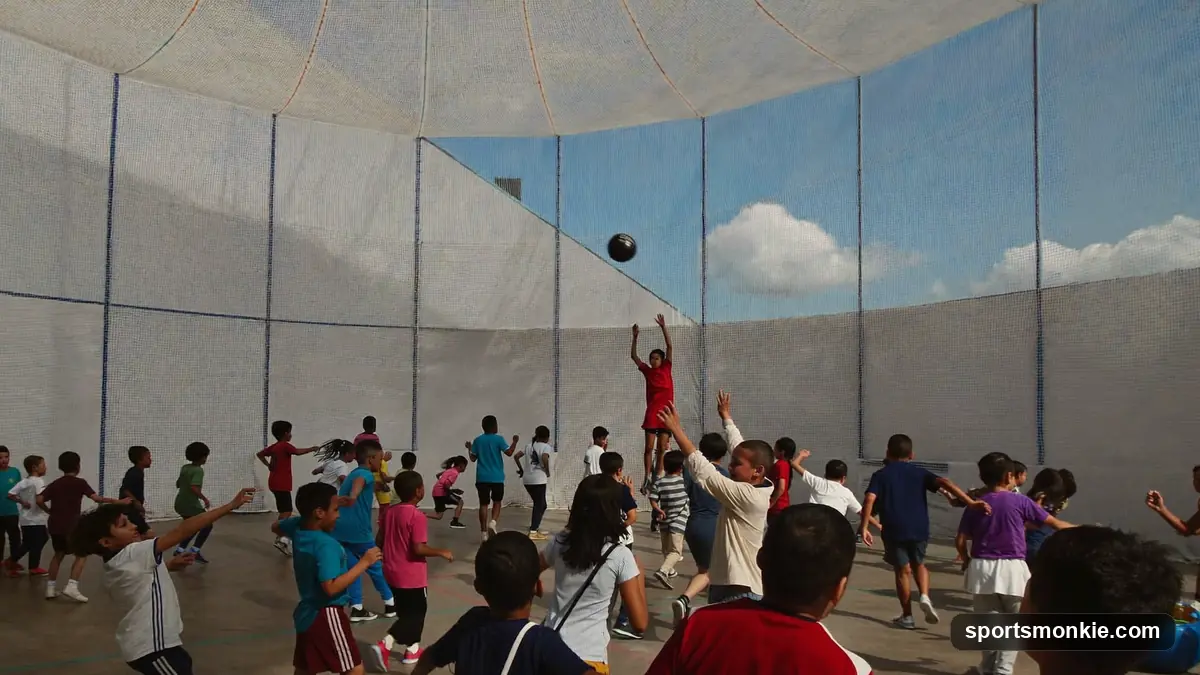
Gaga ball is a faster, gentler cousin of dodgeball played inside a walled pit, usually an octagon. Players slap a soft ball with their hands and try to hit opponents on or below the knee to eliminate them, and the last person left standing wins.
The pit and the below-the-knee target are what make gaga its own game. Because you can only hit the ball, not throw it hard from range, and because the walls keep it in constant play, rounds are quick and everyone stays involved. Here is how to play, the rules that trip people up, and how to keep games moving.
The pit and the goal
Gaga is played in a gaga pit, an enclosed area with low walls, most often shaped like an octagon. The walls are the point: they keep the ball in play and give players something to work the ball off of, so the action never really stops.
The objective is simple. Hit other players with the ball, on or below the knee, and they are out. Get hit yourself and you are eliminated too. Play continues, with the pit effectively shrinking in a social sense as players drop out, until one person remains as the winner. Then you reset and go again, which is why gaga is a staple at camps and in gym class.
How a round starts
Getting a game going takes only a few seconds.
- All players start inside the pit, each touching a wall.
- Someone tosses the ball up into the middle.
- On each of the first two bounces, players call out “Ga,” then “Ga” again.
- After the second “Ga,” the ball is live and play begins.
From there, players hit the ball with open or closed hands toward opponents’ lower legs. There is no set turn order; it is a free-for-all until eliminations narrow the field.
The core rules
A short list of rules keeps gaga fair and fast. These are the ones that decide most disputes.
| Rule | How it works |
|---|---|
| Target zone | A hit on or below the knee eliminates a player |
| Hands only | Strike the ball with your hand; no kicking or throwing it |
| No double touch | You cannot hit the ball twice in a row before it touches a wall or another player |
| Stay upright | No sitting, kneeling, or turtling to shield your legs |
| Catch out | Catching a hit ball on the fly eliminates the player who hit it |
The double-touch rule is the one beginners break most. After you hit the ball, it has to touch a wall or another player before you can hit it again. Otherwise it is a double touch and you are out. The one common exception: when only two players are left, many versions let each player hit the ball a few times in a row, with a wall touch resetting the count, to keep the duel workable.
Staying alive: jumping and dodging
Because the target is the knee and below, footwork is everything. Jumping to avoid a low ball is legal and is the signature gaga skill; timing a jump over a fast grounder is often what keeps you in the game.
What you cannot do is crouch, sit, or drop to your knees to protect your lower legs. Staying upright is required, which is why turtling is banned. Catching a ball in the air is another live option in most rule sets: snag a hit cleanly before it bounces and the player who struck it is out, which rewards a bold defense.
Keeping it safe and fun
Gaga’s popularity at camps and schools comes from being low-contact and easy to run. A soft foam or lightweight ball is standard, which keeps the hand-striking gentle and the sting of a hit low. There is no hard throwing, no tackling, and no complicated equipment.
To keep games flowing, most groups restart immediately after each winner and rotate eliminated players back in for the next round. Because a round can end in a minute or two, a large group can cycle through many games quickly, and no one sits out for long.
Popular variations
Once a group knows the basics, gaga ball adapts easily to different sizes and skill levels. A few variations keep things fresh.
- Teams: instead of a free-for-all, players split into teams and are only out when their whole team is eliminated.
- Multiple balls: adding a second ball speeds the game up and forces players to track threats from more than one direction.
- Waist-level target: younger or beginner groups sometimes count hits below the waist rather than below the knee, making eliminations easier.
- No-catch version: dropping the catch-out rule simplifies play for the youngest players.
These tweaks are why gaga scales so well from a small camp cabin to a large gym class. Because the pit and the core hitting mechanic stay the same, a group can change one rule and get a noticeably different game without any new equipment.
Why gaga ball is so popular
Gaga ball has spread rapidly through camps, schools, and community centers, and the reasons are practical. It is inclusive, since players of very different ages and abilities can compete in the same round, and eliminated players are back in within a minute or two. It is low-contact, relying on dodging and hand-striking rather than hard throws or collisions. And it needs almost nothing beyond a pit and a soft ball.
That combination of fast rounds, easy rules, and gentle contact makes it a natural fit for large groups that need everyone active. For anyone organizing recess, gym class, or a camp activity, gaga delivers a lot of engagement for very little setup.
The short version
Gaga ball is dodgeball in a pit: hit opponents on or below the knee with a soft ball, using your hands only, and be the last one standing. You cannot double-touch the ball or turtle to hide your legs, but you can jump to dodge and catch to eliminate a hitter. It is one of the easiest group games to set up, right alongside kickball rules, four square rules, and yard games that depend on a measured cornhole distance.
Frequently asked questions
Can your knees touch the ground in gaga ball?+
No. Players must stay upright on their feet, and dropping to your knees or sitting to shield your lower legs, sometimes called turtling, is not allowed. The rule keeps the game fair, since the knees and below are the target zone, and crouching down would make a player nearly impossible to hit out.
Are you allowed to jump in gaga ball?+
Yes. Jumping is a legal and common way to dodge a ball aimed at your legs, and it is one of the main skills in the game. What you cannot do is leave the pit or sit and turtle. Jumping to avoid a low hit is completely within the rules and often the difference in staying alive.
Is there a special ball for gaga ball?+
Not a strict requirement, but a soft foam or lightweight rubber ball, often a gaga-specific ball or a soft playground ball, is standard. A softer ball is safer for the hand-striking, close-quarters play and reduces the sting of a hit, which is why camps and schools favor it over a hard ball.
Can you catch the ball in gaga ball to get someone out?+
Yes, in most rule sets. If you catch the ball in the air on a fly before it bounces, the player who last hit it is out. This rewards aggressive but controlled hits and gives a defender a way to turn the tables, though some casual versions leave the catch rule out, so confirm before you start.
Sources
Play & tools
Free browser games and tools — no account, no download.
- Play today's Sports Connections — Today's Sports Connections — daily hints, answers, and play the grid.
- Play Guess the NFL Player — A new mystery NFL player every day. Eight guesses, with a clue on each — plus free unlimited mode.
- Explore all our games →
Related guides
Four Square Rules: Classic & Advanced
Four square rules explained: bounce the ball into other squares, move up as players are out, reach the top square. Classic and advanced play.
Kickball Rules: How to Play & Score
Kickball rules explained: kick a pitched ball and run the bases like baseball. Field setup, scoring, outs, and whether you can peg runners.
Tetherball Rules: How to Play and Setup
Tetherball rules made simple: two players hit a roped ball opposite ways to wrap it around the pole. Court setup, serving, fouls and how to win.

Kan Jam Rules: Scoring, Dunks and Instant Wins
Kan Jam rules: 2v2 with cans 50 feet apart, score 1, 2 or 3 points per throw, and win by reaching exactly 21 or landing an Instant Win.

Spikeball (Roundnet) Rules Explained
Spikeball rules made simple: 2v2 teams, rally scoring to 21, three touches to return, and why rim shots are outs. How to serve, score and win.

Bocce Ball Rules: How to Play and Score
Bocce ball rules explained: how to play, scoring, court size, fouls, and what happens when you hit the pallino. For backyard and league games.