
How Does MMA Scoring Work? Judging Explained
On this page4
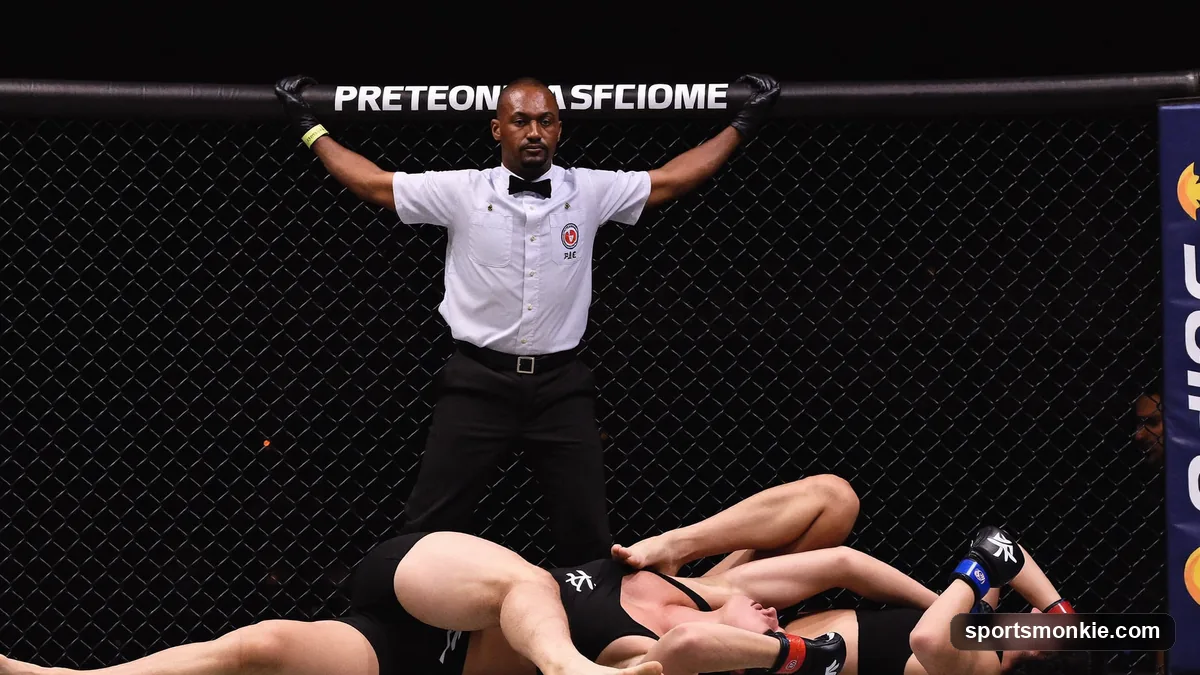
MMA is scored with the 10-point must system: three judges score each round, giving 10 points to the winner and 9 or fewer to the loser. They judge on a ranked set of criteria — effective striking and grappling first, then aggression and control of the fighting area — with damage and impact weighed more heavily than volume. If the fight goes the distance, the round totals decide the result.
MMA borrowed its point structure from boxing but judges rounds on very different things, which is why scoring controversies are common when a fight is close. Here is how the criteria are ranked, what “effective” actually means, and how the round scores turn into a decision.
The judging criteria, in order
The Unified Rules of MMA tell judges to weigh the criteria in a set priority, not equally. This ranking is the key to understanding MMA scoring.
| Priority | Criterion | What it rewards |
|---|---|---|
| 1 (primary) | Effective striking and grappling | Damage and impact from strikes, takedowns, submission attempts and position advances |
| 2 (secondary) | Effective aggression | Moving forward and forcing the action in a way that lands |
| 3 (secondary) | Control of the fighting area | Dictating where and how the fight takes place |
Judges start with effective striking and grappling. Only if the fighters are even there do they move to aggression, and only if still even to control. That order matters: it means damage usually beats mere activity, and control time on its own does not win a round.
What “effective” really means
The word “effective” is doing the heavy lifting. Effective striking is not the highest punch count — it is the striking that lands cleanly and does damage. Effective grappling is not holding someone down — it is takedowns, submission threats, ground strikes and advancing position that have real impact. A fighter who lands fewer but harder shots can beat a busier opponent, and a grappler who threatens finishes outscores one who simply lies in control.
This is where a lot of fans and fighters disagree with the judges. Piling up control time against the cage or on the ground, without doing damage or improving position, is a secondary factor — so a fighter can dominate the clock and still lose the round to someone landing the more meaningful strikes. The 10-point must system supplies the numbers; these criteria decide who those numbers go to.
From rounds to a decision
Each round is scored 10-9 in the normal case, 10-8 for a dominant round, and rarely 10-7. A standard MMA fight is three rounds and a championship or main event is five, as our guide to how many rounds a UFC fight has explains. If nobody finishes, the judges’ round totals are added up and compared:
- Unanimous decision — all three judges score it for the same fighter.
- Split decision — two judges favour one fighter, one favours the other.
- Majority decision — two judges pick the winner, the third scores a draw.
- Draw — the cards cancel out (unanimous, majority or split draw).
Point deductions for fouls come off a fighter’s round score and can swing a close card, even turning a narrow win into a draw. In a title fight, a draw means the champion keeps the belt.
MMA vs boxing scoring
The point framework is identical to boxing’s, but the criteria are not. Boxing judges weigh clean punching, aggression, ring generalship and defence, while MMA adds grappling, control and the ground game — a much larger set of things to assess in each round. Our explainer on how boxing scoring works covers the striking-only version, and the difference in criteria is why a fighter can look dominant to a boxing eye yet lose an MMA round, or the reverse.
For a sense of the fighters who mastered this scoring puzzle across full careers, our roundup of undefeated UFC fighters tracks the athletes who kept winning rounds — and finishing fights — without ever losing.
The short version: MMA uses the 10-point must system, with judges ranking effective striking and grappling first and control second, rewarding damage over volume — and the round totals produce a unanimous, split or majority decision, or a draw, when a fight goes the distance.
Frequently asked questions
What are the MMA judging criteria?+
MMA judges score in a priority order set by the Unified Rules: first, effective striking and grappling, which is the primary factor and weighs damage and impact most heavily; then effective aggression; and finally control of the fighting area. Judges start with striking and grappling and only move to the secondary criteria if the fighters are even on the first, so damage generally outweighs cage control.
How is a UFC fight scored?+
A UFC fight uses the 10-point must system. Three judges score each round, awarding 10 to the round winner and 9 or fewer to the loser, based on effective striking and grappling, aggression and control. A standard fight is three rounds and a title fight or main event is five. If it goes the distance, the round totals are added up and compared to decide the result.
What does effective grappling mean in MMA scoring?+
Effective grappling covers takedowns, submission attempts, advancing position and reversals that have a real impact — not just holding an opponent down. A judge rewards a fighter who threatens submissions, passes guard, lands ground strikes or completes meaningful takedowns. Simply controlling position without doing damage or advancing counts for less than active, damaging grappling under the criteria.
What is a split decision in MMA?+
A split decision is when two of the three judges score the fight for one fighter and the third scores it for the opponent. The fighter favoured by two judges wins. It differs from a unanimous decision, where all three judges agree, and a majority decision, where two judges pick the winner and the third scores it a draw. Split decisions signal a close, debatable fight.
Does control time win rounds in MMA?+
Not on its own. Control of the fighting area is a secondary criterion, so holding an opponent down or against the cage without doing damage or advancing position scores less than effective striking or grappling. Judges are instructed to reward impact first. A fighter can rack up control time and still lose a round to an opponent who lands the more damaging strikes.
What happens if an MMA fight is a draw?+
A draw happens when the judges' scorecards cancel out — for example one judge each way and one even, or two even cards. Common types are the unanimous draw, majority draw and split draw. In a title fight, a draw means the champion keeps the belt. Point deductions for fouls can also create a draw by turning a would-be winning card into a level one.
Sources
Play & tools
Free browser games and tools — no account, no download.
- Play today's Sports Connections — Today's Sports Connections — daily hints, answers, and play the grid.
- Play Guess the NFL Player — A new mystery NFL player every day. Eight guesses, with a clue on each — plus free unlimited mode.
- Explore all our games →
Related guides

MMA Weight Classes Explained: Full Division List
MMA uses nine standard weight classes from strawweight (115 lb) to heavyweight (265 lb) under the Unified Rules. Full limits in pounds and kilograms.

The 10-Point Must System Explained
The 10-point must system scores each round 10 to the winner, 9 or fewer to the loser. How it works in boxing and MMA, with 10-8 and 10-7 rounds.
How Many Rounds Are in a UFC Fight?
Most UFC fights are three rounds of five minutes; title fights and main events are five rounds. UFC round counts, round length and rest explained.
UFC Weight Classes Explained: All 12 Divisions
The UFC has eight men's and four women's weight classes, from flyweight (125 lb) to heavyweight (265 lb). Full limits in pounds and kilograms.

TKO vs KO: What's the Difference?
A KO is a knockout by count; a TKO is a technical knockout stopped by the referee, doctor or corner. The difference explained, plus technical decisions.
Weight Cutting in Combat Sports Explained
Weight cutting is shedding water weight to make a lower class, then rehydrating. How fighters cut weight, the risks, and rehydration explained.