
What Is a DRS Train in F1? Why a Queue Cancels the Advantage
On this page5
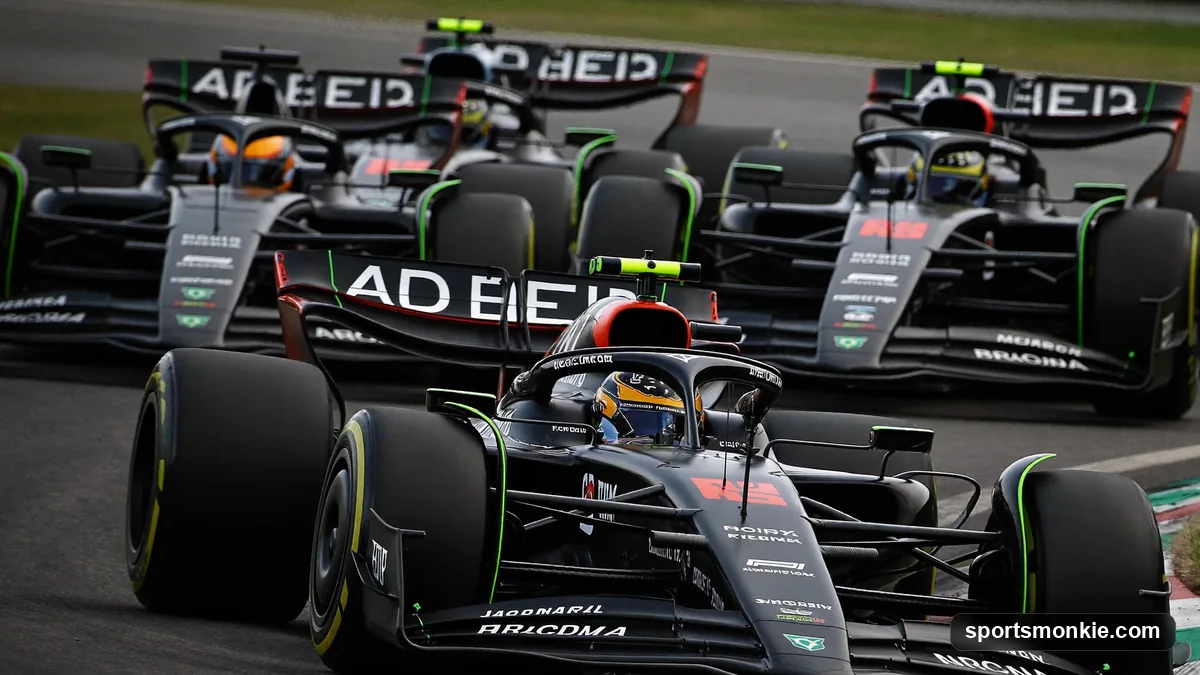
A DRS train is a line of Formula 1 cars in which each one sits within one second of the car ahead, so every driver in the queue gets to open DRS at the same time. Because the car in front is also using DRS, the trailing car’s straight-line advantage vanishes, and overtaking becomes nearly impossible. The result is a bunched pack that can hold station for lap after lap — the passing aid quietly cancelling itself out.
It is one of the most misunderstood things in modern F1, because it looks like close racing but is actually a stalemate.
Why the train forms
To follow this, you need the one rule behind DRS: a driver can only open the rear-wing flap when they are within one second of the car ahead at a detection point, and only in a designated zone. That gap is the whole game.
When a single car is within a second of a lone leader, it gets DRS and the leader does not — a clear advantage. But when a whole group is bunched so that every car is within a second of the one in front, every car opens DRS on the same straight. The boost that is supposed to help you pass now helps the car ahead just as much, so the gaps barely move.
That is a DRS train: the aid meant to break up the field instead glues it together. It is a direct, distinct consequence of how DRS works, not a separate device.
Why it kills overtaking
DRS only produces a pass when there is an asymmetry — you have it, the car ahead doesn’t. A train removes the asymmetry.
| Scenario | Who has DRS | Result |
|---|---|---|
| One car chasing a lone leader | Chaser only | Real overtaking chance |
| Two cars, both within a second of the car ahead | Both | Advantage cancels |
| A full train of cars | Everyone | Order effectively frozen |
Down the straight, both the attacker and the car they are chasing gain the same top speed, so the attacker cannot close enough to out-brake into the corner. Multiply that across six or eight cars and you get a conga line that can run for a dozen laps with almost no position changes, even though the cars look right on top of each other.
How drivers escape a DRS train
Since straight racing rarely breaks a train, the escape is almost always strategic:
- The undercut — pit for fresh tyres, run hard in clean air, and rejoin ahead of the train. This is the most reliable exit and ties directly into undercut versus overcut strategy.
- Deliberately dropping back — some drivers back off to create a bigger gap, then attack with a longer run-up and more DRS effect into the zone.
- Waiting for chaos — a safety car, a mistake, or a pit-stop cycle can reshuffle the pack and split the train.
None of these are guaranteed, which is why teams often decide the only way to gain places is to get a driver into clear air as early as possible rather than sit in the queue.
The DRS train and the wider following problem
The train is really a symptom of a bigger issue: how hard it is to follow closely in dirty air. A car needs to be within one second to use DRS, but sitting that close means running in the leading car’s turbulent wake, which hurts grip in the corners — the slipstream and dirty-air trade-off. The 2022 ground-effect regulations aimed to let cars follow more closely and reduce reliance on DRS, but where cars are evenly matched and passing spots are scarce, trains still form.
The bottom line on the DRS train
A DRS train is a queue of cars all within one second of each other, so everyone opens DRS at once and the advantage cancels — the order freezes even though the racing looks close. It is distinct from DRS itself: it is what happens when the one-second rule applies to the whole pack at the same time. The way out is strategy — an undercut into clean air — not a straight-line pass.
To understand the tool at the heart of it, start with our DRS explainer, then see how the free, natural version works in our slipstream and tow guide.
Frequently asked questions
What is a DRS train in F1?+
A DRS train is a group of cars running nose to tail, each within one second of the car ahead, so all of them can activate DRS on the same straight at the same time. Because everyone gets the drag reduction at once, the relative advantage cancels out and the cars stay locked in position, often for many laps.
Why does a DRS train stop overtaking?+
DRS only helps you pass if the car ahead does not have it. In a train, the car in front is also within one second of the car ahead of it, so it opens DRS too. Both cars gain the same top-speed boost, the gap barely changes, and the following driver cannot make the move stick into the braking zone.
How is a DRS train different from DRS?+
DRS is the device — a rear-wing flap that opens to cut drag when a car is within one second of the one ahead in a designated zone. A DRS train is what happens when many cars are all within that one-second window at once: the tool that is meant to aid overtaking instead helps everyone equally and neutralises itself.
How do drivers break out of a DRS train?+
The usual escape is strategy, not overtaking. A driver pits to run in clear air, uses fresh tyres to build a gap, and rejoins ahead of the train — the undercut. Others try to drop back deliberately to get a bigger run with DRS, or hope a safety car or mistake ahead shuffles the order. Straight racing rarely breaks it.
On which tracks are DRS trains most common?+
DRS trains form most easily on circuits with a single DRS zone, closely matched cars, and corners that make following hard. Tracks where the cars are similar in top speed and there is only one real overtaking spot tend to produce long trains, because no single car has enough of an edge to clear the one ahead.
Does a DRS train ever help a driver?+
It can help whoever is at the front of it. The lead car of a DRS train is defending against several cars that cannot pass each other, so it is relatively safe as long as the train holds. It also keeps a pack bunched, which can matter for a driver hoping a late safety car or pit-stop cycle reshuffles the group.
Sources
Play & tools
Free browser games and tools — no account, no download.
- Play 24-0 — Draft an F1 chassis and two drivers, then chase a perfect 24-0 — win every race on the 24-round calendar.
- Explore all our games →
Related motorsport guides
View all →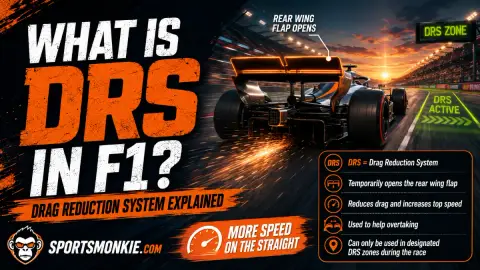
What Is DRS in F1? Drag Reduction System Explained
DRS opened a flap in an F1 rear wing to cut drag and aid overtakes. It was dropped for 2026, replaced by active aero and Override Mode. See how it works.
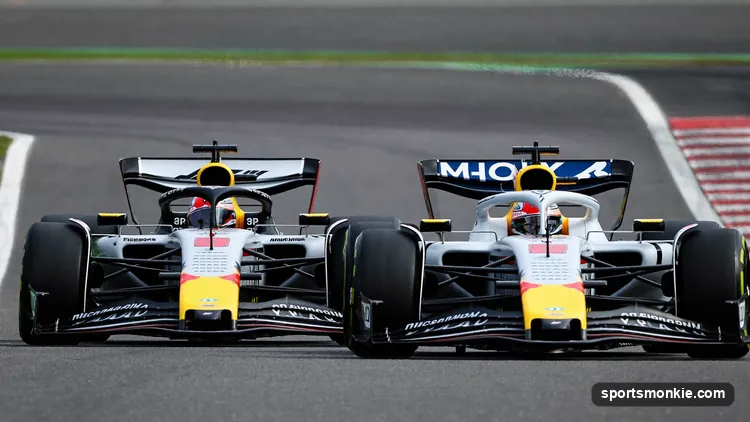
F1 Slipstream and Tow Explained: The Physics of Drafting
A slipstream, or tow, is the low-drag pocket of air behind an F1 car. Follow closely and you gain top speed on the straights — the base that DRS builds on.
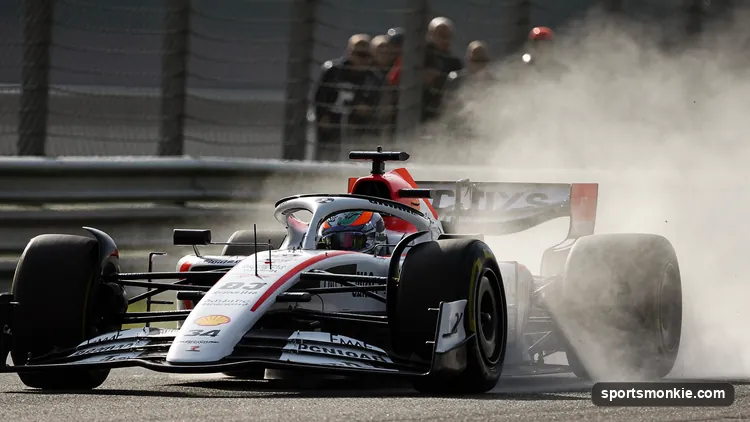
What Is Dirty Air in F1? Why It Kills Overtaking
Dirty air in F1 is the turbulent wake behind a car that robs the following car of downforce, making it slide and struggle to follow closely or overtake.
F1 Ground Effect Explained: The Floor That Sucks Cars Down
F1 ground effect uses the car's floor to create downforce, sucking it to the track. It returned in 2022 via venturi tunnels, and brought porpoising too.
F1 Porpoising Explained: The 2022 Bouncing and How It Was Fixed
Porpoising is the violent vertical bouncing that hit F1's ground-effect cars in 2022. Here's the aerodynamics behind it and how teams and the FIA cured it.
Undercut vs Overcut in F1: The Two Pit Strategies Explained
The undercut means pitting earlier to jump a rival on fresh tyres; the overcut means staying out longer to pass them. Here's exactly when each one wins.