
F1 Porpoising Explained: The 2022 Bouncing and How It Was Fixed
On this page6
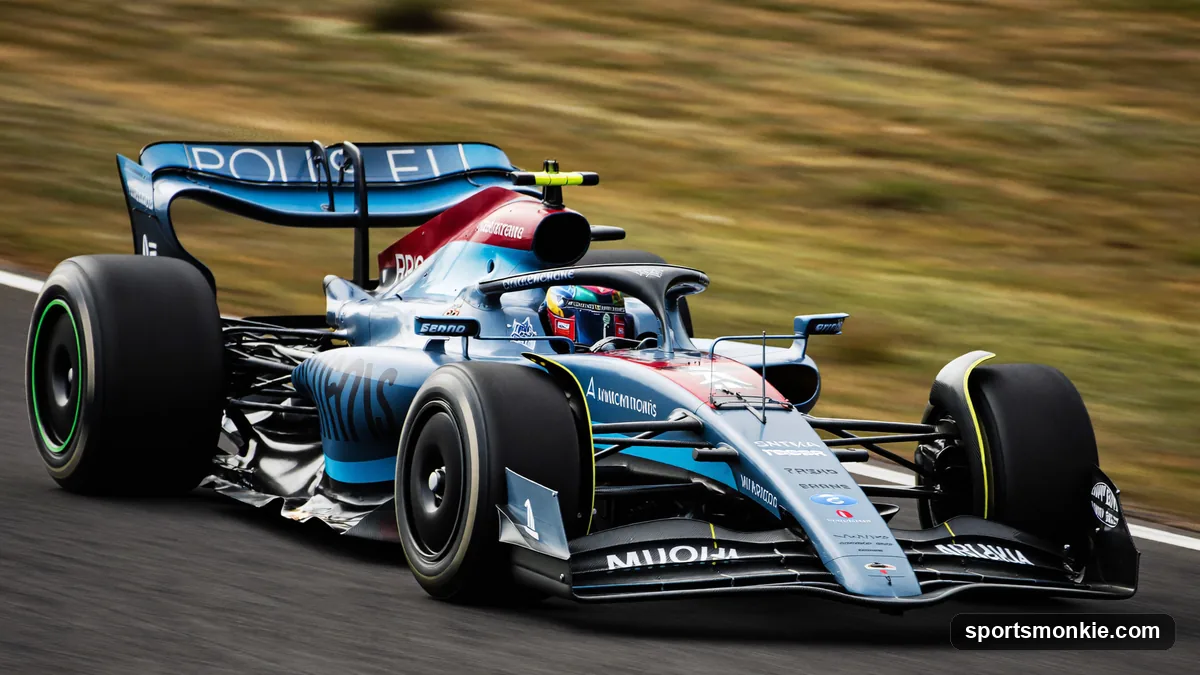
Porpoising is the violent vertical bouncing that hit Formula 1’s ground-effect cars when the current rules arrived in 2022. As a car gathers speed, its underfloor sucks it down toward the track until the airflow suddenly stalls, the downforce collapses, the car springs back up on its suspension, and the whole cycle repeats — several times a second. Teams cured it by raising ride height and reshaping the floor, and the FIA raised the floor edges for 2023.
The name comes from the way a porpoise bobs in and out of the water, and for one season it was the defining problem of the sport.
Why 2022 brought it back
The 2022 regulations reintroduced ground effect — generating downforce from shaped tunnels under the car rather than mostly from the wings. Ground-effect floors are enormously powerful, but they work best when the floor runs extremely close to the track, sealing the fast-moving air underneath. The closer to the ground, the more suction, the more grip. That is the whole appeal, and it is covered in full in our F1 ground effect explainer.
The problem is what happens at the edge of that behaviour.
The physics of the bounce
Porpoising is a feedback loop:
- The car speeds up, and the underfloor generates more and more downforce, pulling the car toward the track.
- The floor gets so close that the airflow underneath briefly stalls — it can no longer flow cleanly, and the suction suddenly collapses.
- With the downforce gone, the springs push the car back up.
- Raised off the ground, the airflow reattaches, the downforce returns, and the car is yanked back down.
Repeat that several times a second and you get the rapid, teeth-rattling bounce seen on the straights in early 2022. It was worst at high speed, exactly where the cars were meant to be quickest and most stable.
How teams and drivers fought it
Every fix traded away performance, which is why it took real engineering to solve:
| Fix | How it helps | The cost |
|---|---|---|
| Raise ride height | Keeps the floor out of the stall zone | Less downforce, slower laps |
| Stiffen the suspension | Resists the vertical oscillation | Harsher ride, worse over kerbs |
| Reshape floor edges and tunnels | Makes the airflow more stable | Complex, costly aero redesign |
The teams that understood their floor’s behaviour fastest — and could stiffen and reshape without giving up too much grip — recovered quickest. The ones that ran low and stiff to chase downforce paid for it with the most brutal bouncing.
Why it became a safety issue
This was not just uncomfortable. Drivers were taking repeated heavy vertical hits lap after lap, and several reported back pain, blurred vision at the point of impact, and difficulty concentrating at speed. When drivers start describing a phenomenon as a safety risk, the governing body has to act.
The FIA introduced a technical directive during the 2022 season that monitored and limited how much vertical oscillation each car was allowed, using a defined aerodynamic oscillation metric, and added floor-stiffness checks to stop teams flexing their way around it. For 2023, the rules raised the floor edges and the underfloor throat height by a set amount, lifting the whole working range away from the stall point. Across the grid, the bouncing largely disappeared.
Porpoising versus mechanical bouncing
It is worth separating two things that look similar. Porpoising is aerodynamic — the downforce itself building and collapsing on a smooth straight. Bouncing over kerbs and bumps is mechanical — the suspension reacting to the surface. They can feed each other: a car run very stiff to fight porpoising is also less able to absorb bumps, so drivers in 2022 often complained about both at once. Fixing one could aggravate the other, which is why setup that year was such a knife-edge.
The bottom line on porpoising
Porpoising is the aerodynamic bouncing that gripped F1 in 2022, caused by ground-effect floors whose downforce built, stalled and rebuilt several times a second. Teams tamed it by raising ride height, stiffening setups and reshaping the floor — each at a cost in grip — and the FIA raised the floor edges for 2023 to curb it across the field. It was the price of chasing ground effect’s huge downforce too close to the ground.
To understand the downforce that caused it in the first place, read our F1 ground effect explainer, and see how the aero rules also shape overtaking in our slipstream and tow guide.
Frequently asked questions
What is porpoising in F1?+
Porpoising is a rapid up-and-down bouncing of the car on the straights, named after the way a porpoise bobs through water. It appeared in 2022 when F1 returned to ground-effect floors, and it happens when the underfloor's downforce repeatedly builds, collapses and rebuilds, throwing the car toward and away from the track several times a second.
Why did porpoising happen in 2022?+
The 2022 rules reintroduced ground effect, generating most downforce from shaped tunnels under the car that work best when the floor runs very close to the track. Run too low and the airflow briefly stalls, the suction drops, the car lifts on its springs, the airflow reattaches, and it slams down again — an oscillation the new floors were prone to.
How did teams fix porpoising?+
Teams raised ride height to keep the floor out of the stall zone, stiffened the suspension to resist the bouncing, and redesigned the floor edges and tunnels to make the airflow more stable. All of these cost some downforce, so the real engineering challenge was killing the bounce while giving up as little performance as possible.
Is porpoising dangerous for drivers?+
It can be. Severe porpoising subjected drivers to repeated heavy vertical impacts, causing back pain and, several drivers said, affecting their vision and concentration at high speed. Those safety concerns pushed the FIA to step in with a technical directive and to raise the floor edges in the 2023 rules to reduce the effect.
What did the FIA do about porpoising?+
The FIA introduced a technical directive during 2022 to monitor and limit the vertical oscillation each car was allowed, using an aerodynamic oscillation metric, and mandated floor-stiffness checks. For 2023 it raised the floor edges and the underfloor throat height by a set amount, which reduced the tendency to porpoise across the grid.
Is porpoising the same as bouncing over bumps?+
No. Porpoising is a purely aerodynamic oscillation caused by the underfloor's downforce building and collapsing, and it happens on smooth straights. Bouncing over kerbs or bumps is mechanical, driven by the suspension reacting to the track surface. A stiff setup run to fight porpoising can make that mechanical bouncing worse, which is part of the trade-off.
Sources
Play & tools
Free browser games and tools — no account, no download.
- Play 24-0 — Draft an F1 chassis and two drivers, then chase a perfect 24-0 — win every race on the 24-round calendar.
- Explore all our games →
Related motorsport guides
View all →
F1 Cost Cap Explained: The Budget Limit and What Counts
F1's cost cap limits team spending to roughly $135M a year, adjusted for inflation. Driver pay is excluded. Breach it and fines and testing cuts follow.
F1 Flags Explained: Every Racing Flag and What It Means
A full reference to every F1 flag — green, yellow, double yellow, red, blue, white, black, meatball, black-and-white, chequered and the striped flag.
F1 Formation Lap Explained: Purpose, Rules and Aborted Starts
The formation lap is the single lap to the grid before an F1 race starts. Drivers warm tyres and brakes, hold position, and stop for the standing start.
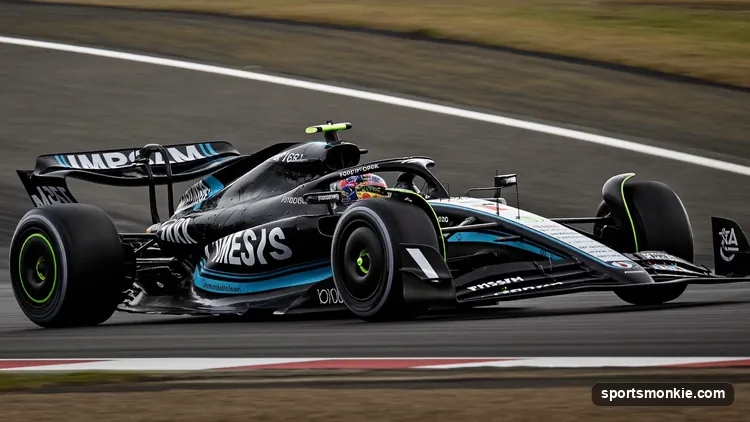
F1 Ground Effect Explained: The Floor That Sucks Cars Down
F1 ground effect uses the car's floor to create downforce, sucking it to the track. It returned in 2022 via venturi tunnels, and brought porpoising too.
F1 Red Flag Explained: What It Means and How Restarts Work
A red flag stops an F1 session immediately. Cars slow to a delta and return to the pit lane, teams can work on them, and the race restarts from there.
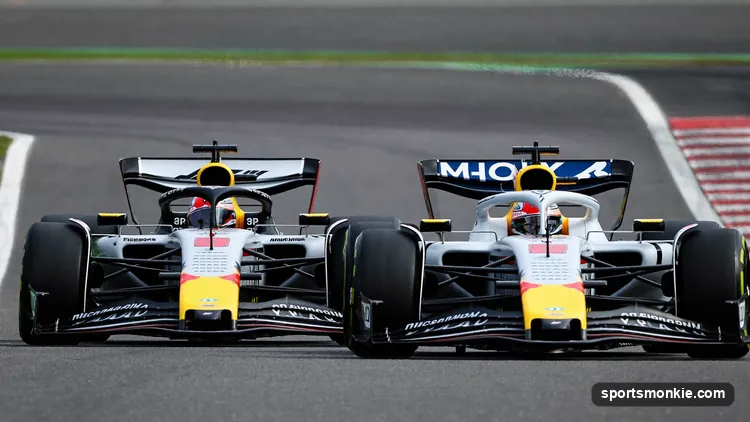
F1 Slipstream and Tow Explained: The Physics of Drafting
A slipstream, or tow, is the low-drag pocket of air behind an F1 car. Follow closely and you gain top speed on the straights — the base that DRS builds on.