
F1 Flags Explained: Every Racing Flag and What It Means
On this page6
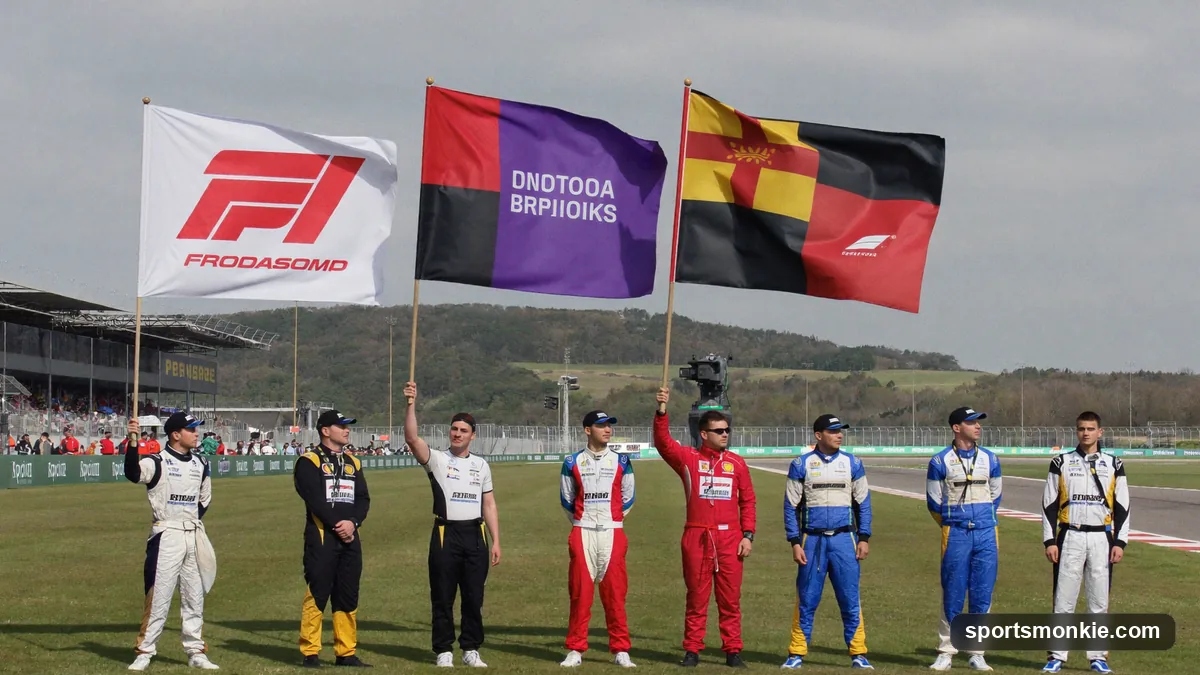
Formula 1 uses eleven marshalling flags, each with a single fixed meaning, to tell drivers what is happening on a part of the track they cannot yet see. Green means clear, yellows warn of danger and ban overtaking, red stops the session, blue orders a backmarker aside, and the chequered flag ends the running. The rest handle penalties, warnings, and hazards. This is the complete reference.
Marshals wave these at trackside posts, and most now appear on electronic light panels too, so a driver gets the message even at 200mph.
The complete F1 flag table
| Flag | Meaning |
|---|---|
| Green | Track clear — resume racing; shown after a hazard has passed |
| Single yellow | Danger ahead — slow down, no overtaking |
| Double yellow | Greater danger — slow significantly, be ready to stop, no overtaking |
| Red | Session stopped — slow to a delta and return to the pit lane |
| Blue | Faster car behind — let it past (shown to backmarkers) |
| White | Slow-moving vehicle on track ahead |
| Yellow-and-red striped | Slippery surface ahead — oil, water or debris |
| Black | Driver disqualified — return to the pits (shown with car number) |
| Black-and-orange (meatball) | Mechanical problem — that car must pit (with car number) |
| Black-and-white (diagonal) | Warning for unsportsmanlike conduct (with car number) |
| Chequered | End of the session |
Keep that table handy and the rest of this article simply explains the ones people most often mix up.
The yellow family: danger and no overtaking
Yellows are the workhorses. A single yellow means there is a hazard ahead — a car off the road, debris, a marshal at the edge — so the driver must slow and be ready to change line, and crucially must not overtake within that sector. A double yellow raises the severity: a serious obstruction, possibly with people on track, so slow right down and be prepared to stop.
The no-overtaking rule is strict, and yellows are policed hardest in qualifying, where a driver who fails to back off enough usually has the lap deleted and can face a grid penalty. A green flag at the next post confirms the danger is cleared and racing can resume.
Red, blue and white
The red flag is the big one: it stops the session entirely and sends cars back to the pit lane. It has its own procedures and strategic quirks, which we cover in full in the F1 red flag explainer.
The blue flag is aimed only at lapped cars. It tells a backmarker that a car a full lap ahead is closing and must be allowed past at the first safe chance — it is never shown to two cars racing for the same position. The detail, including the three-flag rule before a penalty, is in our dedicated blue flag guide.
The white flag in F1 signals a slow-moving vehicle on the track ahead — a recovery truck, a car limping back, or the medical car — so the driver knows to expect something much slower in their path.
The black flags: penalties and warnings
Three flags are black or partly black, and they mean very different things:
- Black flag — the driver is disqualified and must return to the pits. Rare, and shown with the car number.
- Black-and-orange, the “meatball” — a mechanical problem makes the car unsafe (loose bodywork, a leak, damage), so it must pit to fix it. A safety order, not a punishment.
- Black-and-white, split diagonally — a formal warning for unsportsmanlike behaviour, effectively a yellow card that a penalty may follow.
Mixing up the meatball and the black flag is common, but the difference is simple: orange disc means “fix your car,” solid black means “you’re out.”
The striped and chequered flags
The yellow-and-red striped flag warns of a slippery surface ahead — oil, water, or debris that reduces grip — so the driver can expect the track to be treacherous even though nothing is blocking it.
The chequered flag is the one everyone knows: the black-and-white checkerboard that ends the session. In a race it greets the leader as they complete the final lap, then waves for every car as it crosses the line.
The bottom line on F1 flags
Eleven flags, each with one job: green clears, yellows warn and ban passing, red stops, blue moves a backmarker aside, white flags a slow vehicle, the striped flag warns of a slippery surface, the three black flags cover disqualification, mechanical safety and conduct, and the chequered flag ends it. Learn the table above and you can read a race the way the drivers do.
Flags are a cross-motorsport language with local dialects. Compare how stock-car racing uses them in our NASCAR flags guide, or dig into the most consequential one in the F1 red flag explainer.
Frequently asked questions
How many flags are used in F1?+
Eleven flags are in regular use: green, single yellow, double yellow, red, blue, white, black, black-and-orange (meatball), black-and-white, chequered, and the yellow-and-red striped flag. Some are waved by marshals at trackside posts, while others are shown electronically on the light panels around the circuit as well.
What does a yellow flag mean in F1?+
A single yellow means danger ahead — slow down, be ready to change direction, and do not overtake. A double yellow means greater danger, so slow significantly and be prepared to stop, again with no overtaking. Yellows protect marshals or a stranded car, and ignoring them brings penalties, especially in qualifying.
What does a blue flag mean in F1?+
A blue flag tells a driver that a faster car is behind and about to lap them, and that they must let it past at the earliest safe opportunity. It is shown to backmarkers, not to cars racing for position on the same lap. Ignore three blue flags and the driver risks a penalty.
What is the meatball flag in F1?+
The meatball flag is black with an orange disc in the centre, shown alongside a car number. It orders that specific driver to return to the pits because the car has a mechanical problem — loose bodywork, a fluid leak, or damage — that makes it dangerous. It is a safety instruction, not a penalty.
What does the black-and-white flag mean in F1?+
The black-and-white flag, divided diagonally, is a warning for unsportsmanlike behaviour, shown with a driver's number. It is effectively a yellow card: a formal notice that the driver's conduct — track-limits abuse or dangerous defending, for example — has been noticed and that a penalty may follow if it continues.
What does the chequered flag mean?+
The chequered flag, a black-and-white checkerboard, signals the end of the session — the race, a practice run, or qualifying. In a race it is shown to the leader as they cross the line to complete the final lap, and then to every car as it finishes. Crossing under the chequered flag officially ends the running.
Sources
Play & tools
Free browser games and tools — no account, no download.
- Play 24-0 — Draft an F1 chassis and two drivers, then chase a perfect 24-0 — win every race on the 24-round calendar.
- Explore all our games →
Related motorsport guides
View all →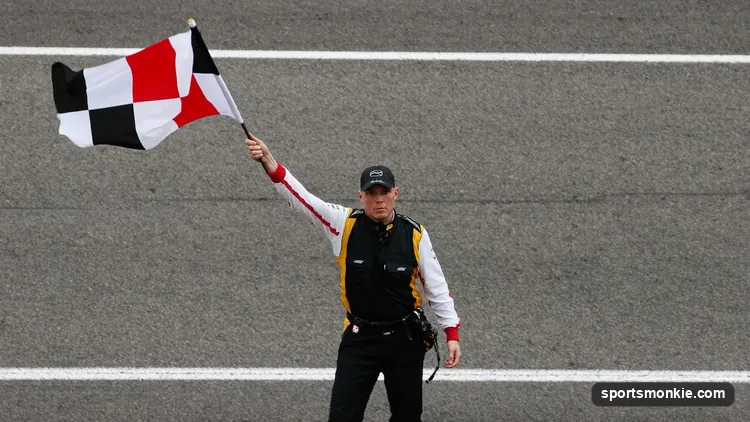
F1 Red Flag Explained: What It Means and How Restarts Work
A red flag stops an F1 session immediately. Cars slow to a delta and return to the pit lane, teams can work on them, and the race restarts from there.
F1 Formation Lap Explained: Purpose, Rules and Aborted Starts
The formation lap is the single lap to the grid before an F1 race starts. Drivers warm tyres and brakes, hold position, and stop for the standing start.
Parc Fermé in F1 Explained: The Rules That Lock a Car's Setup
Parc fermé is F1's restricted-work condition from the start of qualifying to the race. Change the setup and the car has to start from the pit lane.
F1 Cost Cap Explained: The Budget Limit and What Counts
F1's cost cap limits team spending to roughly $135M a year, adjusted for inflation. Driver pay is excluded. Breach it and fines and testing cuts follow.
F1 Porpoising Explained: The 2022 Bouncing and How It Was Fixed
Porpoising is the violent vertical bouncing that hit F1's ground-effect cars in 2022. Here's the aerodynamics behind it and how teams and the FIA cured it.
F1 Safety Car Explained: When It Comes Out and the Rules
The F1 safety car neutralises the race behind a real car when there's danger on track. Learn when it deploys, the rules, and how restarts work.