
NASCAR Flags and What Each One Means
On this page9
NASCAR uses a set of coloured flags to tell drivers what is happening on the track, and each one has a single, fixed meaning. Green means go, yellow means slow down and hold position under caution, red stops the race, black orders one driver to pit, white means one lap to go for the leader, the checkered flag ends the race, and the blue flag with a yellow stripe tells a slow car to let faster traffic by.
These flags are NASCAR’s oldest and most important communication tool, dating back to a time before radios. Even now, with electronic scoring and constant radio contact, the flags remain the official signals every driver must obey. Here is what each one means and when you will see it.
The full set of NASCAR flags
Here is every flag and its meaning at a glance, before we look at the important ones in detail.
| Flag | Meaning |
|---|---|
| Green | Start or restart the race; racing is live |
| Yellow (caution) | Slow down, no passing, form up behind the pace car |
| Red | Stop the race; cars halt at a designated spot |
| Black | Specific driver must pit (penalty or car problem) |
| Black with white cross | That car is no longer being scored |
| White | Leader has one lap remaining |
| Checkered | The race is over |
| Blue with yellow stripe | Slower car must yield to faster, lapping traffic |
Every driver learns these before they ever race, and officials at the flag stand near the start/finish line display them throughout the event.
Green: go racing
The green flag starts the race and every restart after a caution. When it waves, racing is live, cars can pass freely, and the field is at full speed. A race can have many green-flag runs broken up by cautions, and “green-flag racing” is simply the term for competitive, full-speed running.
Yellow: the caution flag
The yellow, or caution, flag is one of the most consequential in the sport. It comes out when there is a hazard on the track, a crash, debris, spun car or fluid, and it tells drivers to slow immediately, stop passing, and fall in line behind the pace car. The field holds position at a controlled speed while safety crews deal with the problem. Cautions bunch the field back together, which is why they so often reshape a race’s strategy and outcome.
Red: stop the race
The red flag is the only flag that stops the race entirely. Drivers slow and come to a halt at a designated spot on the track, and under normal circumstances no work may be done on the cars while the red is out. It is reserved for serious situations: a major wreck, debris that cannot be cleared under caution, or dangerous weather such as heavy rain. Once the track is safe, the race resumes, usually returning to yellow and then green.
Black: a message for one driver
Unlike the others, the black flag is aimed at a single car. It orders that driver to leave the track and report to the pits, either for a penalty (such as speeding on pit road) or a mechanical problem that makes the car unsafe, like leaking fluid or a dragging part. If the driver ignores it, officials show the black flag with a white diagonal cross, meaning the car is no longer being scored and its laps no longer count, a powerful incentive to comply.
White and checkered: the finish
The white flag tells the leader that one lap remains. The next time that car reaches the line, it will see the checkered flag, the universal signal that the race is over. The first car to take the checkered flag wins. To avoid finishing a race under caution, NASCAR uses a “green-white-checkered” procedure, a short dash to attempt a green-flag finish after a late yellow.
Blue with yellow stripe: move over
The blue flag with a yellow stripe is a courtesy-and-safety signal shown to slower cars, typically those a lap or more down, warning them that faster, lead-lap traffic is approaching and they should yield the racing line. It keeps the leaders’ battle clean and prevents dangerous speed differences.
A brief history of the flags
The flag system predates modern technology by decades. In the sport’s early years, before two-way radios and electronic scoring, the flag stand was the only way officials could communicate with drivers at speed, so a clear, universally understood set of signals was essential. The checkered flag in particular has become one of the most recognisable symbols in all of sport, shorthand for winning and finishing far beyond racing itself.
Today those same flags are reinforced by radio communication between teams and race control, plus electronic light panels around some tracks. But the flags remain the official signals, and drivers are still responsible for seeing and obeying them. That blend of century-old tradition and modern technology is part of what gives NASCAR its distinctive character.
How the flags fit the wider rules
The flag system is the visible layer of NASCAR’s officiating, but it works alongside a deeper rulebook governing pit stops, penalties and points. If you enjoy comparing how different series communicate and score, our explainers on the F1 points system and IndyCar vs F1 show how other top categories handle the same challenges, while DRS in F1 covers a very different kind of racing signal. For more on the sport’s people, our feature on the best female NASCAR drivers puts faces to the machines these flags govern.
The short version: green starts racing, yellow slows the field under caution, red stops the race, black sends one driver to the pits, the black-and-white cross stops scoring a car, white means one lap to go, the checkered flag ends the race, and blue-with-yellow tells a slow car to let faster traffic pass.
Frequently asked questions
What color flag stops a NASCAR race?+
The red flag stops a NASCAR race. When it is displayed, drivers must slow down and stop at a designated spot on the track, and no work can normally be done on the cars while the red flag is out. It is used for serious problems such as a major crash, debris that cannot be cleaned under caution, or unsafe weather like heavy rain. The yellow caution flag only slows the field behind the pace car; the red flag is what brings the race to a full halt.
What does a black flag mean in NASCAR?+
A black flag is directed at one specific car and orders that driver to leave the track and report to the pits. It is shown for a penalty, such as speeding on pit road or ignoring officials, or for a mechanical problem like leaking fluid or a loose part that makes the car unsafe. If a driver ignores the black flag, officials display the black flag with a white diagonal cross, which means the car is no longer being scored, so its laps stop counting.
What do the different racing flags mean?+
Each NASCAR flag has one job. Green starts or restarts racing; yellow (caution) slows the field behind the pace car after an incident; red stops the race completely; the black flag orders a single car to pit; the black flag with a white cross means a car is no longer scored; white tells the leader one lap remains; the checkered flag ends the race; and the blue flag with a yellow stripe tells a slower car to yield to faster, lapping traffic. A green-white-checkered sequence is used to try to finish a race under green after a late caution.
Why does NASCAR wave the flag differently?+
The way a flag is presented adds meaning. A furiously waved flag signals greater urgency than one simply held out, so a vigorously waved yellow tells drivers an incident is immediate and close. Flags may also be pointed at a specific car (as with the black flag) to show the order applies only to that driver. The flag stand at the start/finish line is the main signalling point, but modern NASCAR reinforces every flag with electronic and radio communication so the message is never missed.
Sources
Play & tools
Free browser games and tools — no account, no download.
- Play 24-0 — Draft an F1 chassis and two drivers, then chase a perfect 24-0 — win every race on the 24-round calendar.
- Explore all our games →
Related motorsport guides
View all →
NASCAR Cup vs Xfinity vs Truck: The 3 Series
NASCAR's three national series are the Cup Series (top tier), the Xfinity Series (second), and the Craftsman Truck Series. See how the cars, races and drivers differ.
NASCAR Stage Racing Explained: Stages & Stage Points
NASCAR splits each race into three stages. The top finishers in each stage earn stage points, and a caution flies at each stage break to reset the field.
What Is a Green-White-Checkered Finish in NASCAR?
A green-white-checkered finish is NASCAR overtime: if a late caution appears, the race is extended so it ends under green over a two-lap dash to the checkered flag.
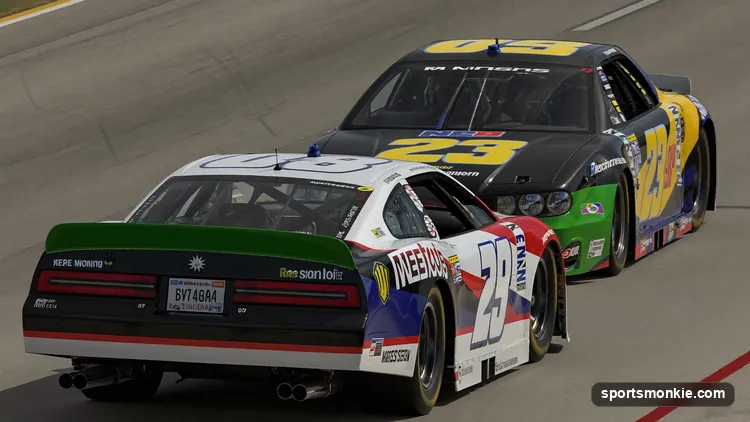
What Is the Lucky Dog in NASCAR? (Free Pass)
The lucky dog, or free pass, gives the first car one lap down its lap back when a caution comes out — a chance to rejoin the lead lap and keep racing for the win.
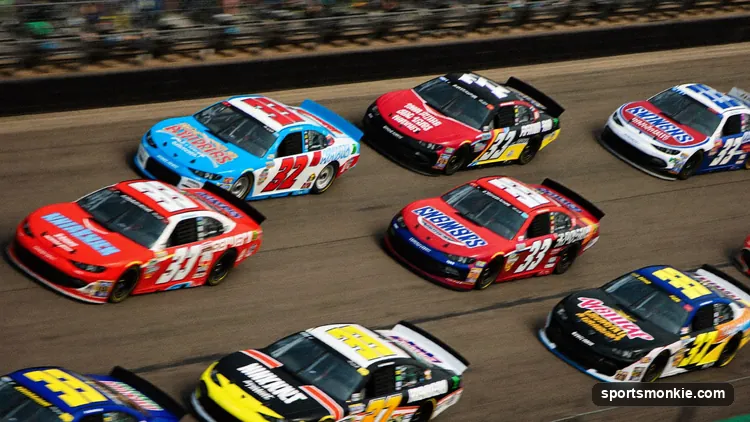
What Is a Restrictor Plate in NASCAR?
A restrictor plate limits airflow to a NASCAR engine to cap horsepower and speed at superspeedways like Daytona and Talladega, creating tight 'pack racing'.
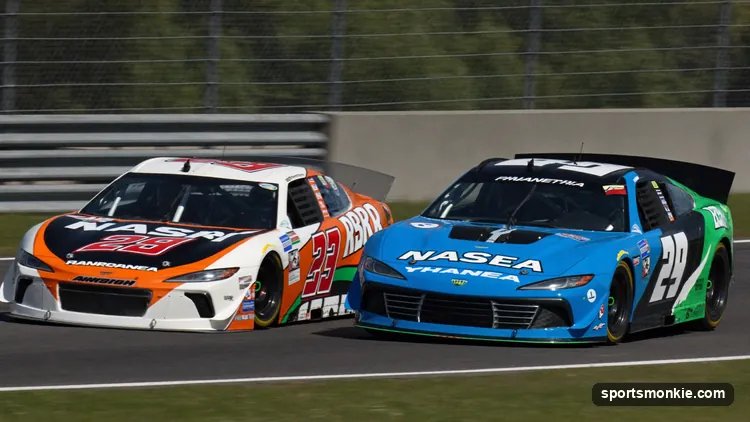
What Is Drafting in NASCAR?
Drafting is when NASCAR cars run nose-to-tail to cut aerodynamic drag, letting them go faster together than alone — the key to passing at superspeedways.