
What Is a Green-White-Checkered Finish in NASCAR?
On this page5
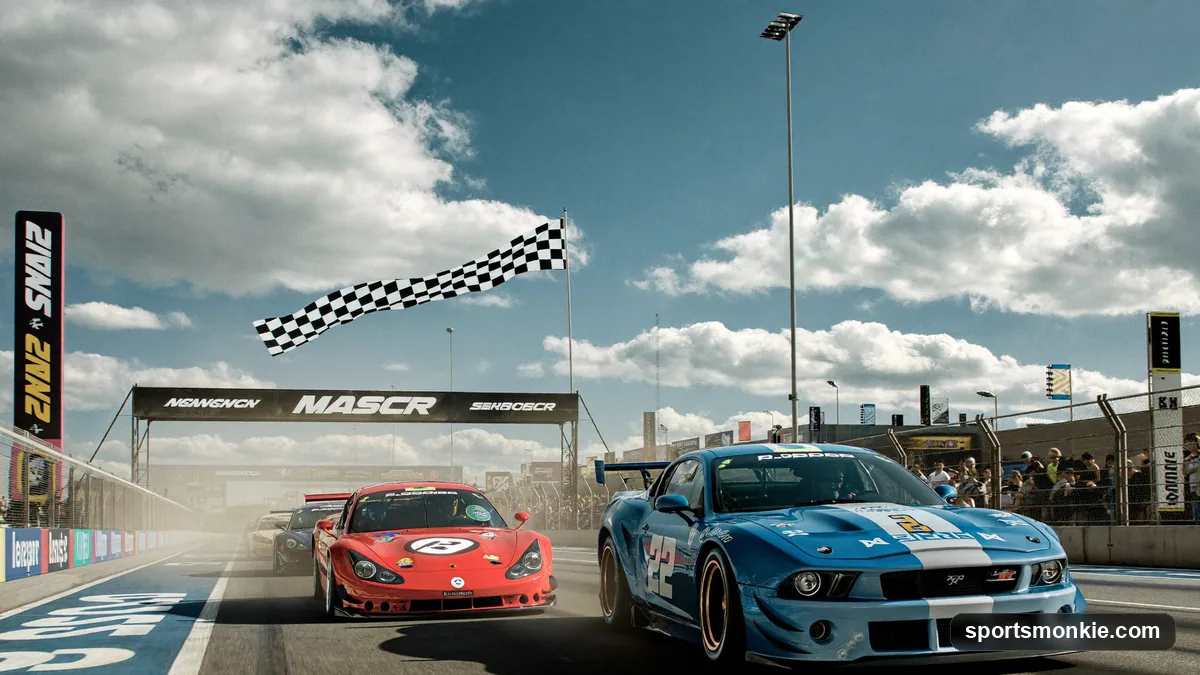
A green-white-checkered finish is NASCAR’s version of overtime. If a caution appears in the closing laps, the race is extended so it ends under green: the field takes a green flag, a white flag one lap later, then the checkered flag — a short dash to decide the winner. Modern NASCAR uses an “overtime line,” and races can go to multiple attempts until they finish green.
How it works
Rather than let a race end behind the pace car, NASCAR restarts the field for a two-lap sprint:
- Green flag — the field restarts racing
- White flag — one lap to go
- Checkered flag — the finish
That sequence gives the name green-white-checkered.
The overtime line
On the restart, the leader must reach the marked overtime line before any new caution for the finish to count. Clear the line and a later caution can freeze the order for the win; a caution before the line waves the attempt off and NASCAR resets for another try.
No limit on attempts
NASCAR removed the old cap on attempts, so a race keeps restarting until it ends under green. Superspeedway races, prone to late wrecks, can need several attempts, stretching well past the scheduled distance.
The fuel-strategy twist
Because overtime adds laps, teams that planned to just reach the scheduled finish can run dry, handing the win to whoever saved fuel or gambled on a late stop. Overtime rewrites the endgame.
Where it fits
The green-white-checkered finish is one of NASCAR’s caution and restart rules, alongside the lucky dog, stage breaks, and the flags — and it often crowns a late drafting battle. For more, see our motorsport guides.
Frequently asked questions
What is a green-white-checkered finish?+
It is a rule that keeps a NASCAR race from ending under caution. If a yellow flag flies near the scheduled finish, the race is extended so the field can restart on a green flag, run a lap to the white flag, and then take the checkered flag — hence 'green-white-checkered.' The idea is to give fans a real race to the finish rather than cars cruising home behind the pace car.
How does NASCAR overtime work?+
On the overtime restart, the leader must reach the 'overtime line' — a designated point on the track — before any new caution comes out for the finish to become official. If the leader passes the line and a caution then flies, the race can end under yellow with the running order frozen. If a caution comes before the line, NASCAR resets for another overtime attempt. There is no limit on attempts, so races continue until they finish green.
Why did NASCAR add the green-white-checkered rule?+
NASCAR introduced the green-white-checkered finish, and later the overtime format, so races would not end anticlimactically under caution. Fans disliked seeing a race decided by a yellow flag with the leaders coasting to the line. The rule guarantees, as much as possible, a competitive restart and a genuine sprint to decide the winner, adding drama to the closing laps.
What is the overtime line in NASCAR?+
The overtime line is a marked point on the track that determines whether an overtime restart 'counts.' If the leader crosses it before a caution flies, the current attempt becomes the final one and the race can be scored to the finish. If a caution appears before the leader reaches the line, the attempt is waved off and NASCAR sets up another restart. It replaced older rules that limited overtime to a set number of tries.
How many overtime attempts can a NASCAR race have?+
As many as it takes. NASCAR removed the earlier cap on green-white-checkered attempts, so a race keeps restarting until it finishes under green (or a leader clears the overtime line before a caution). Superspeedway races, prone to late wrecks, sometimes need several attempts, which can stretch a race well past its scheduled distance and produce chaotic, memorable finishes.
Does overtime add laps to the race?+
Yes. A green-white-checkered finish extends the race beyond its scheduled distance — at least two extra laps per attempt, and more if multiple attempts are needed. This can affect fuel strategy dramatically, as teams that planned to just make it to the scheduled finish may run out during overtime, handing the win to a driver who saved enough fuel or gambled on a late pit stop.
How does it relate to other NASCAR rules?+
The green-white-checkered finish is part of NASCAR's caution and restart rules, alongside the [lucky dog](/what-is-a-lucky-dog-in-nascar/) free pass, [stage](/nascar-stage-racing-explained/) breaks, and the [flags](/nascar-flags-meaning/) that control the race. Together they shape the strategy of the closing laps, especially at superspeedways where late [drafting](/what-is-drafting-in-nascar/) moves decide the win.
Sources
Play & tools
Free browser games and tools — no account, no download.
- Play 24-0 — Draft an F1 chassis and two drivers, then chase a perfect 24-0 — win every race on the 24-round calendar.
- Explore all our games →
Related motorsport guides
View all →
What Is the Lucky Dog in NASCAR? (Free Pass)
The lucky dog, or free pass, gives the first car one lap down its lap back when a caution comes out — a chance to rejoin the lead lap and keep racing for the win.
NASCAR Stage Racing Explained: Stages & Stage Points
NASCAR splits each race into three stages. The top finishers in each stage earn stage points, and a caution flies at each stage break to reset the field.
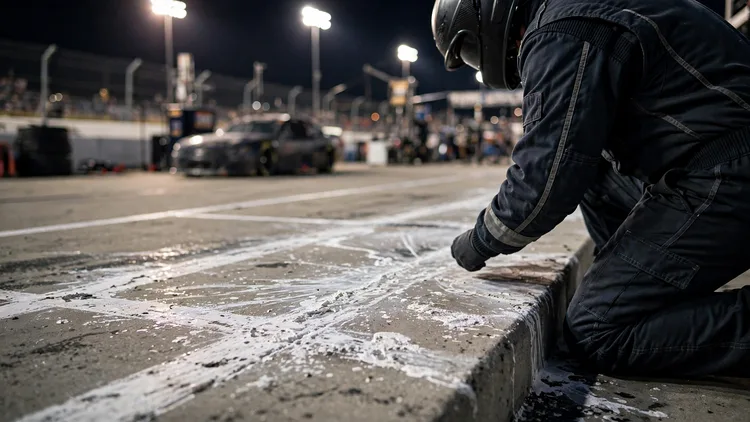
NASCAR Warns Teams After Pit-Stall Spray Left White Residue Over the Lines at Las Vegas
NASCAR has warned Cup teams about pit-stall traction spray after a white residue at Las Vegas threatened the lines its penalty equipment reads.
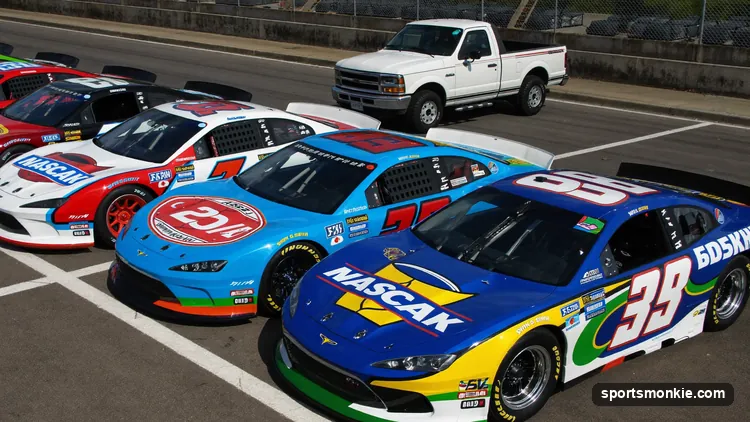
NASCAR Cup vs Xfinity vs Truck: The 3 Series
NASCAR's three national series are the Cup Series (top tier), the Xfinity Series (second), and the Craftsman Truck Series. See how the cars, races and drivers differ.
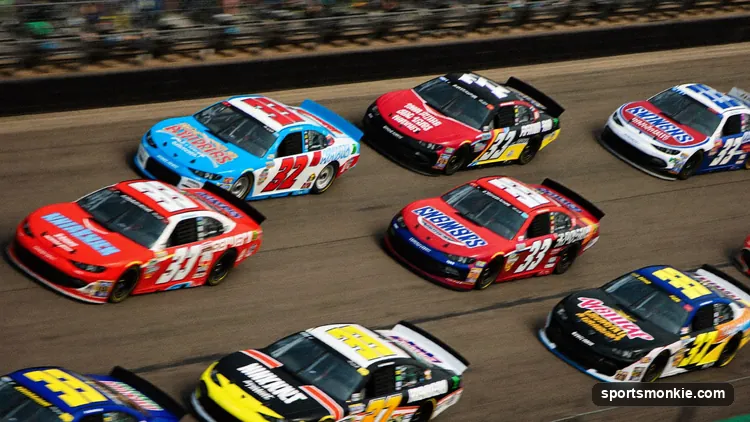
What Is a Restrictor Plate in NASCAR?
A restrictor plate limits airflow to a NASCAR engine to cap horsepower and speed at superspeedways like Daytona and Talladega, creating tight 'pack racing'.
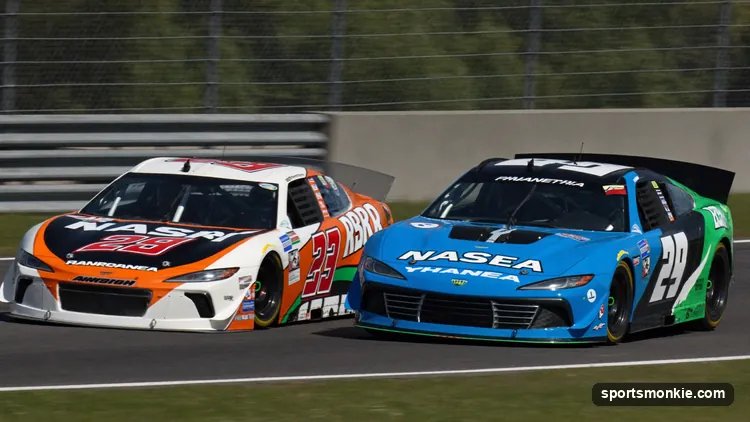
What Is Drafting in NASCAR?
Drafting is when NASCAR cars run nose-to-tail to cut aerodynamic drag, letting them go faster together than alone — the key to passing at superspeedways.