
NASCAR Stage Racing Explained: Stages & Stage Points
On this page5
NASCAR divides each race into three stages. The first two end at set lap counts, and the top 10 at each break earn stage points, while the stage winner earns a playoff point. A caution flies at each stage break, bunching the field and forcing pit decisions. The final stage ends with the race winner, worth the most points of all.
How the three stages work
Since 2017, every points race is split into three segments. Stages 1 and 2 finish at predetermined laps; the third runs to the checkered flag.
| Stage | Ends at | Rewards |
|---|---|---|
| Stage 1 | Set lap | Top 10 score stage points |
| Stage 2 | Set lap | Top 10 score stage points |
| Final stage | Race finish | Full race points to the winner |
Stage points and playoff points
The top 10 at each of the first two breaks score stage points on a 10-down-to-1 scale, and the stage winner also banks a playoff point. Those playoff points carry into the postseason, so running up front all race long — not just at the finish — pays off in the NASCAR playoffs.
Why NASCAR added stages
Introduced in 2017, stages reward drivers for leading throughout a race, guarantee action and cautions that keep the field close, and give teams new strategic decisions about when to pit. They make the middle of a race matter, not just the last laps.
What happens at a stage break
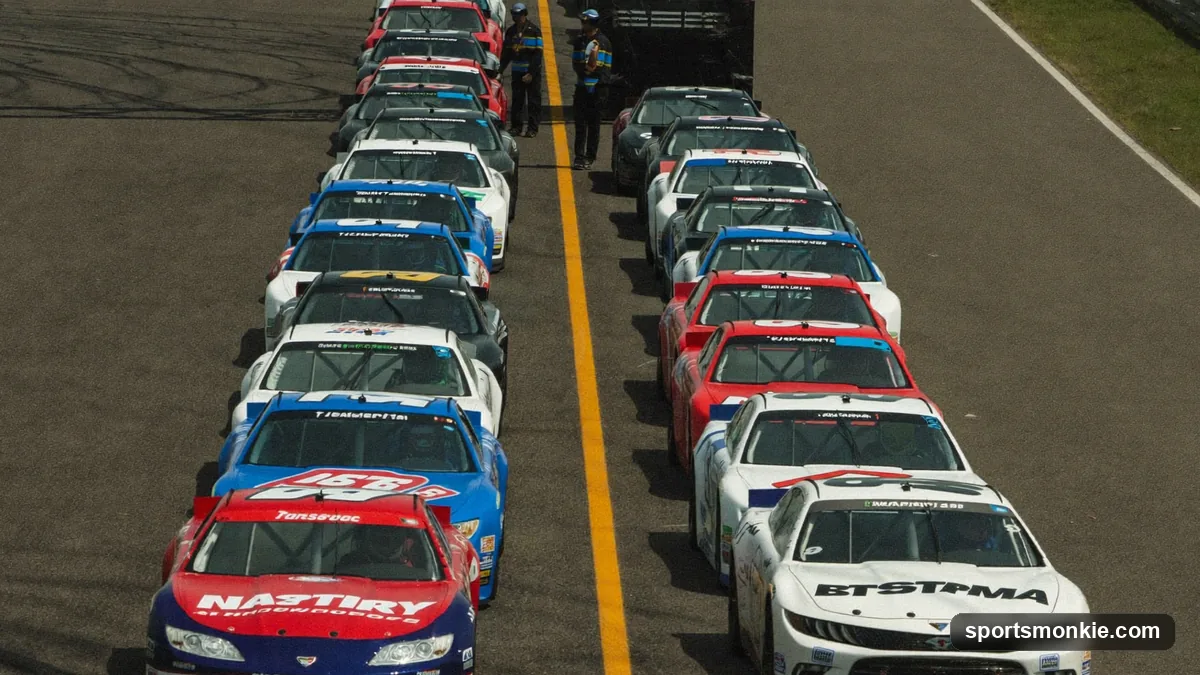
Each stage break brings a caution: the top 10 collect their points, the field bunches behind the pace car, and teams choose whether to pit — the same call they face under any caution. A restart then launches the next stage.
The bigger picture
Stage racing is one of several modern NASCAR features, alongside the overtime green-white-checkered finish and the differences between its national Cup, Xfinity and Truck series. For more, see our motorsport guides.
Frequently asked questions
How does stage racing work in NASCAR?+
Each race is split into three stages. Stages 1 and 2 end at predetermined lap numbers, and the top 10 cars at each of those points score stage points. The third and final stage ends at the finish of the race. A caution period follows each of the first two stage breaks, so the field bunches up and teams decide whether to pit, resetting strategy multiple times per race.
What are stage points in NASCAR?+
Stage points are awarded to the top 10 drivers at the end of stages 1 and 2, on a sliding scale from 10 points for first down to 1 point for tenth. They count toward the regular-season standings and, crucially, carry into the playoffs as bonus 'playoff points.' Winning a stage is also worth one playoff point, so stages reward speed all race long, not just at the finish.
Why did NASCAR add stages?+
NASCAR introduced stage racing in 2017 to reward drivers for running up front throughout a race rather than only at the finish, and to build in guaranteed action and cautions that keep the field close. It gave fans more moments that matter and gave broadcasters natural breakpoints, while adding a strategic layer of when to pit around each stage break.
Do stage points matter for the playoffs?+
Yes, significantly. Every stage point and stage win a driver accumulates during the regular season converts into playoff points that carry over and reset with them through the [NASCAR playoffs](/how-do-nascar-playoffs-work/). A driver who consistently finishes in the top 10 of stages builds a cushion that can be the difference in surviving the elimination rounds. Stages make the whole season matter, not just race wins.
How long is each stage?+
Stage lengths vary by race and track, set by NASCAR for each event, but the pattern is consistent: two shorter stages followed by a longer final stage. For example, a race might break at lap 60, lap 120, and finish at lap 200. The exact lap counts are announced before each race, and they are chosen to balance the competition and the pit-strategy windows.
What happens at a stage break?+
When a stage ends, NASCAR throws a caution flag. The top 10 collect their stage points, and the field slows and bunches together behind the pace car. Teams then decide whether to pit for tires and fuel or stay out for track position, exactly as they would under any [caution](/what-is-a-lucky-dog-in-nascar/). Racing resumes with a restart for the next stage.
Does the stage winner get anything besides points?+
Beyond the stage points and a playoff point, winning a stage brings prestige and momentum, but no separate trophy — the race win is still the main prize. The value is strategic: a stage win adds a playoff point that stays with the driver deep into the postseason, which can matter far more than the handful of stage points when the elimination rounds arrive.
Sources
Play & tools
Free browser games and tools — no account, no download.
- Play 24-0 — Draft an F1 chassis and two drivers, then chase a perfect 24-0 — win every race on the 24-round calendar.
- Explore all our games →
Related motorsport guides
View all →
What Is a Green-White-Checkered Finish in NASCAR?
A green-white-checkered finish is NASCAR overtime: if a late caution appears, the race is extended so it ends under green over a two-lap dash to the checkered flag.
What Is the Lucky Dog in NASCAR? (Free Pass)
The lucky dog, or free pass, gives the first car one lap down its lap back when a caution comes out — a chance to rejoin the lead lap and keep racing for the win.
How Do NASCAR Playoffs Work?
NASCAR's playoffs feature 16 drivers in a 10-race, four-round elimination format that ends with a winner-take-all Championship 4 finale. Explained simply.
NASCAR Cup vs Xfinity vs Truck: The 3 Series
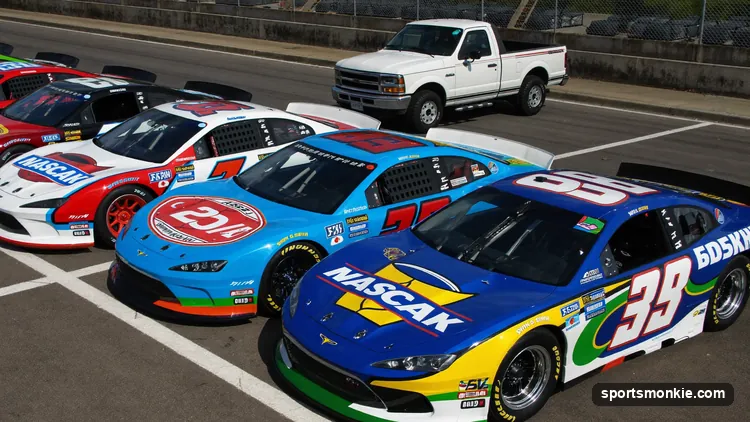
NASCAR's three national series are the Cup Series (top tier), the Xfinity Series (second), and the Craftsman Truck Series. See how the cars, races and drivers differ.
What Is a Restrictor Plate in NASCAR?
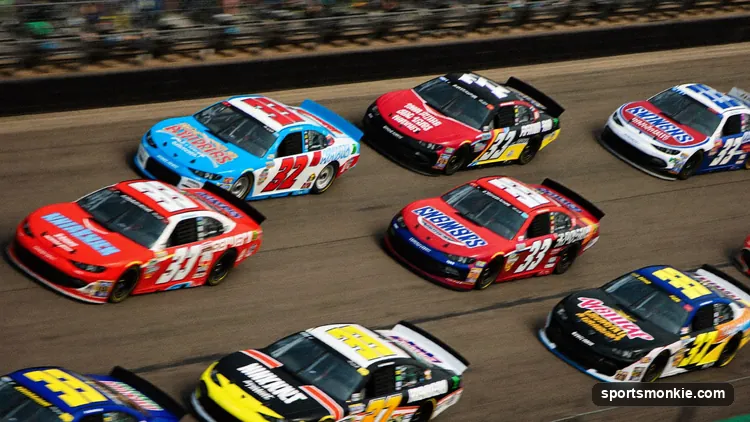
A restrictor plate limits airflow to a NASCAR engine to cap horsepower and speed at superspeedways like Daytona and Talladega, creating tight 'pack racing'.
What Is Drafting in NASCAR?
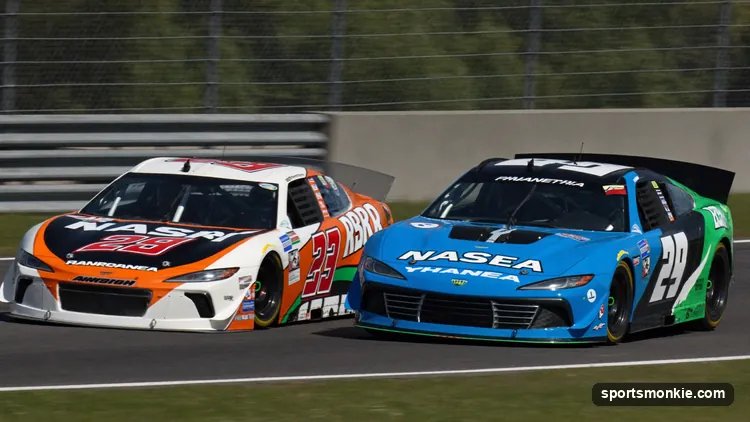
Drafting is when NASCAR cars run nose-to-tail to cut aerodynamic drag, letting them go faster together than alone — the key to passing at superspeedways.