
Fred Lorenzen Diagnosed With Stage 3 CTE, the First Confirmed Case in a NASCAR Driver
On this page5
Fred Lorenzen pledged his brain to research in 2016. He was 81, living with dementia, and watching his memory go. His daughter Amanda made the pledge official with the Concussion Legacy Foundation, the organisation now called the Concussion & CTE Foundation, and told the Associated Press at the time that she was convinced years of hard wrecks in the 1960s had damaged him. He was the second known driver to pledge, weeks after Dale Earnhardt Jr made the same decision. The study took a decade to finish. It finished this year, and the family released the results on Tuesday through the foundation: stage 3 CTE, and the first confirmed diagnosis in a NASCAR driver.
What did the brain study actually find?
Stage 3 CTE, on a scale that runs to 4. The diagnosis came from researchers at the Boston University CTE Center, in the post-mortem examination the foundation’s release describes. Dr Thor Stein, the centre’s director of molecular research and the neuropathologist who studied Lorenzen’s brain, said the case was a cortical-sparing form of the disease. In about 10 percent of CTE cases, he said, the damage concentrates in the areas of the brain controlling behaviour and movement, so behavioural symptoms and Parkinson’s-like movement problems start earlier in life. Stein called Lorenzen’s the first identified subtype of the disease. That detail matters for how the family’s story reads: Amanda Lorenzen Gardstrom said her father struggled for many years before anyone diagnosed dementia in his 60s, and that the family spent years grieving losses they did not understand. A diagnosis does not change any of that, as she put it herself in the release reported by FanBuzz. It explains it.
Who was Fred Lorenzen?
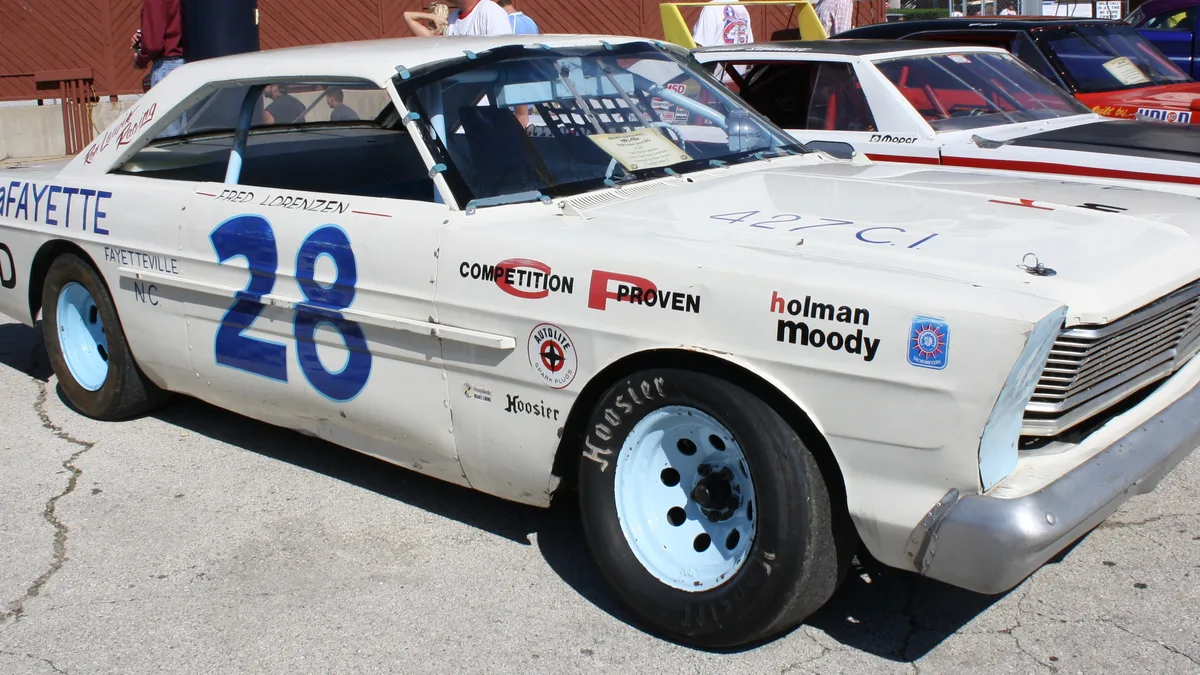
He was the Golden Boy of 1960s NASCAR, a driver on the most wins list from the sport’s first television decade. Lorenzen won the Daytona 500 in 1965, won 26 races in all, and in 1963 became the first driver to earn more than $100,000 in a single season. NASCAR put him in its Hall of Fame in January 2015. By then he was living in a nursing home under round-the-clock care. USA TODAY’s account, shared by the family with the outlet, says he had lost the ability to walk and could not give an induction speech, so his son Chris gave it for him. He died on December 18, 2024, twelve days short of turning 90, after roughly twenty years with dementia. The sport’s own obituary at the time, on NASCAR.com, closed by noting the brain pledge, which is where Tuesday’s announcement picks the story up.
Why is he the first, when football has had hundreds of cases?
Partly timing and partly arithmetic. CTE can only be confirmed after death, by examining brain tissue, so a diagnosis needs a driver who pledged, a family who followed through, and a research centre with the years the work takes. Football built that pipeline first because its brain bank is older and its donor numbers are far larger. Racing’s pledges started later: Dale Earnhardt Jr in 2016, Lorenzen weeks after him. Lorenzen’s study is the first of those pledges to come back with a published diagnosis. His daughter’s point in the release is the obvious follow-on: the family has heard from other drivers through its outreach, and she does not believe her father is the only one who suffered. Whether more diagnoses follow depends on how many other families pledged and follow through, which nobody outside the research centres can currently count.
What has the family set up with the result?
A service, funded by their own money. Chris Lorenzen and Amanda Lorenzen Gardstrom announced a $1 million donation to the Concussion & CTE Foundation on Tuesday. The donation establishes the Fred Lorenzen Memorial HelpLine, which FanBuzz describes as a free service for current and former drivers and their families, offering personalised help to people dealing with long-term symptoms of concussion, CTE or related neurological disorders. The family opened a dialogue with NASCAR leadership in January, once the diagnosis was known, and hoped the sanctioning body would join the initiative. In the foundation’s release, Chris Lorenzen said the family was disappointed that had not happened and remains hopeful there will be chances to work together to support the drivers who helped build the sport. NASCAR’s side of that conversation has not been published in the coverage checked on Tuesday. It is the live part of this story: a response, whenever it comes, changes what this initiative is.
Is Lorenzen’s case the only one in racing this year?
It is the second neurological diagnosis made public by a Hall of Fame driver’s family in 2026, and the two cases are different in kind. On September 23, Darrell Waltrip’s family announced he would step away from public life after a diagnosis of frontotemporal degeneration, complicated by possible CTE. Possible is the family’s own word: Waltrip is living, and CTE cannot be confirmed in a living person. Lorenzen’s is a confirmed post-mortem finding. Put together, the two announcements describe where racing actually is on this subject in 2026: one confirmed case, one suspected case, a helpline run by a foundation and a family, and a sanctioning body that has not yet said anything in public about either. This site’s coverage of the modern sport, from Larson’s Phoenix crash and the points lead it cut to NASCAR letting teams change brakes at Phoenix after a season of wall hits, is about a series that manages crash consequences every week. The Lorenzen study is about the longest of those consequences, arriving sixty years after the crashes.
One confirmed diagnosis does not establish how common CTE is among drivers, and this article does not claim it does. What it establishes is that the disease is present in at least one driver from the sport’s most dangerous era, that the subtype in his case attacks behaviour and movement early, and that the first institutional response to a confirmed case in NASCAR came from the driver’s family and a foundation rather than from the sport. The next facts that matter are NASCAR’s response and whether other pledged studies publish. Both are named above as update triggers.
Frequently asked questions
What did Fred Lorenzen's brain study find?+
Researchers at the Boston University CTE Center diagnosed stage 3 chronic traumatic encephalopathy, on a four-stage scale, after a post-mortem examination of his brain. The neuropathologist who studied the brain, Dr Thor Stein, described a cortical-sparing subtype that is worse in areas controlling behaviour and movement in about 10 percent of cases.
Is Lorenzen the first NASCAR driver diagnosed with CTE?+
Yes, as far as published diagnoses go. The Concussion & CTE Foundation's release describes him as the first NASCAR driver known to be diagnosed with the disease. CTE can only be confirmed after death, which is one reason racing's first confirmed case arrived much later than football's.
When did Lorenzen die, and when did he pledge his brain?+
He pledged his brain to the foundation and Boston University in 2016, at 81 and living with dementia, weeks after Dale Earnhardt Jr made the same pledge. He died on December 18, 2024, at 89, and his family released the study results on October 20, 2026.
What is the Fred Lorenzen Memorial HelpLine?+
A free service at the Concussion & CTE Foundation for current and former drivers and their families, funded by a $1 million donation from Lorenzen's children, Chris Lorenzen and Amanda Lorenzen Gardstrom. It offers personalised help to people facing long-term symptoms of concussion, CTE or related neurological disorders.
What did NASCAR say about the diagnosis?+
Nothing in public by the time this article was checked on October 20. The family said it opened a dialogue with NASCAR leadership in January and that NASCAR declined to join the helpline initiative. Chris Lorenzen said the family remains hopeful of working with NASCAR later.
Does one diagnosis show how common CTE is in racing?+
No. A single confirmed case establishes that the disease has been found in a driver from the sport's 1960s era. It cannot support a rate or a risk figure for drivers generally, and researchers would need many more published studies before any prevalence claim is possible.
How is Darrell Waltrip's case different?+
Waltrip's family announced in September 2026 that he is stepping away from public life after a diagnosis of frontotemporal degeneration complicated by possible CTE. He is living, and CTE cannot be confirmed during life, so his case is described as possible. Lorenzen's is a confirmed post-mortem diagnosis.
Sources
- Concussion & CTE Foundation release via Jayski: Fred Lorenzen diagnosed with CTE; family donates $1 million for research (the diagnosis, stage, donation, helpline and January dialogue)
- FanBuzz: NASCAR Hall of Famer diagnosed posthumously with CTE (the release, Dr Stein's subtype comments, the helpline's free service terms and the Waltrip parallel)
- USA TODAY: NASCAR legend diagnosed with CTE, lived '35 years of constant heartbreak' (the family's account, the 2015 induction and the decline)
- NASCAR.com: Fred Lorenzen, NASCAR Hall of Famer, dies at 89 (career record, the 2016 brain pledge and its Earnhardt Jr inspiration)
- Sportsnet (Associated Press): NASCAR great Lorenzen battling dementia, pledges brain donation (the 2016 pledge made official, and his daughter's conviction at the time)
Play & tools
Free browser games and tools — no account, no download.
- Play 24-0 — Draft an F1 chassis and two drivers, then chase a perfect 24-0 — win every race on the 24-round calendar.
- Explore all our games →
Related motorsport guides
View all →
Herbst Dumps McDowell at Phoenix and Wrecks Himself in Stage One
Riley Herbst drove into Michael McDowell's bumper in Turn 3 at Phoenix, sent the No. 71 backwards into the wall and wrecked himself in the day's first caution.
NASCAR Will Let Teams Change Brakes at Phoenix After a Season of Wall Hits
NASCAR will let Cup teams swap front brake rotors and pads after Saturday qualifying at Phoenix, a safety concession after failures at four short tracks.
NASCAR Gives McDowell and Stenhouse No Penalty for Their Charlotte Cool-Down Clash
NASCAR says the McDowell-Stenhouse cool-down lap clash at Charlotte was the closest thing to a penalty without being one, and explains where the line sits.

NASCAR Warns Teams After Pit-Stall Spray Left White Residue Over the Lines at Las Vegas
NASCAR has warned Cup teams about pit-stall traction spray after a white residue at Las Vegas threatened the lines its penalty equipment reads.

Points Leader Sheldon Creed Leaves Haas for Sam Hunt in a Driver Swap With Dean Thompson
Sheldon Creed leads the O'Reilly Series Chase yet will leave Haas Factory Team for Sam Hunt Racing in 2027, swapping seats with Dean Thompson in a deal he says was not his first choice.
NASCAR Stage Racing Explained: Stages & Stage Points
NASCAR splits each race into three stages. The top finishers in each stage earn stage points, and a caution flies at each stage break to reset the field.