
Hall of Fame RB Marshall Faulk Says He Has Parkinson's Disease
On this page6
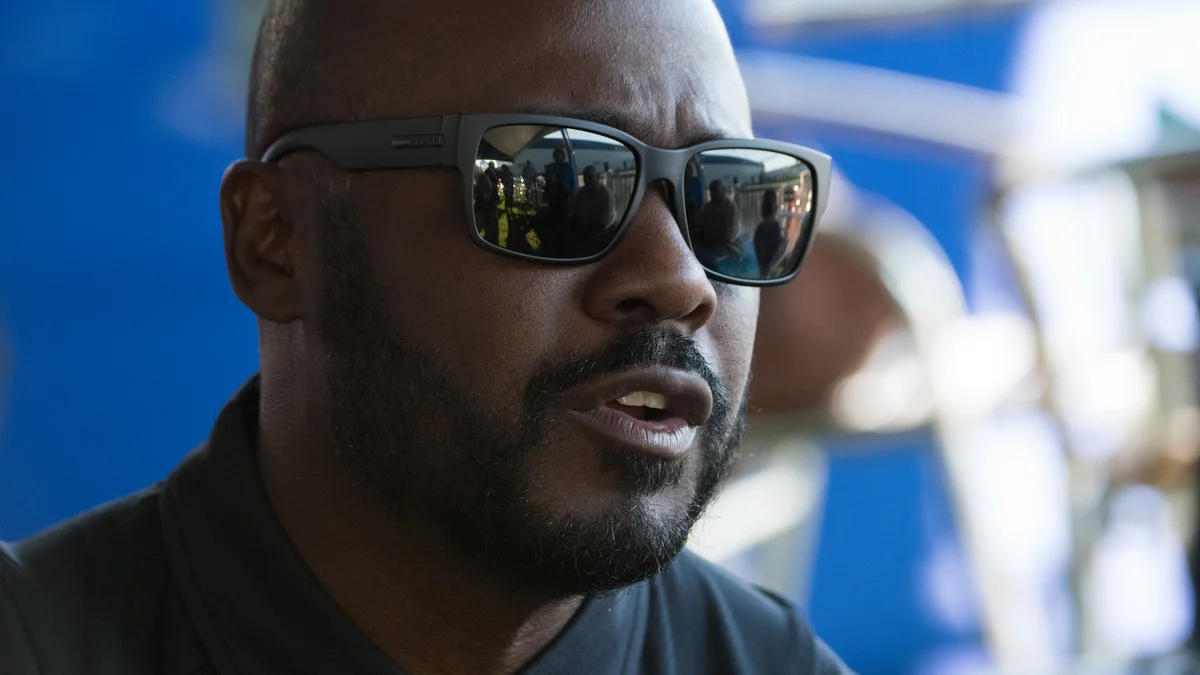
Marshall Faulk found out the way a lot of people find out something is wrong: doing something ordinary. He was playing golf when his hand did not feel right. “The rigidity in my hand, just sometimes after I play a lot or I practice a lot,” he said on the October 21 episode of “The Caring Neurologist” with Dr. Sandeep Thakkar. “I just thought it was, you know, normal nerves when putting and stuff like that.” The podcast was where the 53-year-old revealed he has been diagnosed with Parkinson’s disease, a disclosure first reported by The Advocate’s Toyloy Brown III and carried Wednesday by USA Today and Saturday Down South.
How did he find out?
In stages, which is part of the story he is telling. The rigidity appeared when he was golfing, and he wrote it off. Then it kept appearing when he was not golfing. Faulk raised it at one of his two physicals a year, and his doctor told him to get it checked, just to be safe. That check became a Parkinson’s diagnosis, which he has now been living with for roughly 18 months, per both outlets.
Faulk credits a specific group for the early catch: other former NFL players. He said conversations with players whose symptoms got dismissed as football-related issues pushed him to take his own seriously, and USA Today reports that his advocacy push is tied to former Titans star Chris Johnson’s ALS diagnosis. The detection sequence, golf swing to routine physical to referral, is the part of this story most worth remembering, because it is the part anyone can copy.
Why is he going public now?
Because he thinks the early catch is the whole story. Faulk called himself “one of the lucky ones” for getting the diagnosis when he did, and his message on the podcast was blunt: “Just start on the medication. Don’t wait for it to get worse.”
He is framing the disclosure as awareness work. “What you want to do with that information is pass it on to the next generation to make sure that they have it better, that they know more,” he said. “And you’re doing the leave this world a better place than it was, when I got here.” The ex-player angle gives the message its audience: he wants people to get checked instead of ignoring warning signs, and he wants more affordable care and education around the disease.
What has the last 18 months actually looked like?
Normal, by his account. Faulk said his life has stayed the same since the diagnosis, and that he is more active now than before. “Since I’ve started on the medication, I don’t really have a lot of issues,” he said. The condition has not worsened. He pays attention to the small things: “The little tremors that I get, you know, they are what they are. I just pay attention to my gait, while I walk, when I’m working out, my ability to balance. It’s still where it is.”
He compared managing Parkinson’s to managing injuries during his playing career. “I didn’t look at it like if I got a diagnosis, it was something bad that I was, you know, life was going to end,” he said. “Now, if you don’t take care of it, there’s an opportunity for that to be, but you have to take care of it.”
One detail deserves plain reporting: he has not told his friends and family yet. “I haven’t really had the conversation with them about it,” Faulk said. “If it comes a time to where my lifestyle changes, then I will. Then that conversation could be had. I’m functioning. I’m good. You know, I just think I caught it early. I’m in a good place.” That is his stated position, and it stays his.
Where does coaching fit in?
Faulk is the head coach at Southern University, a job he took this year after starting his coaching career as the running backs coach on Deion Sanders’ staff at Colorado, per Rams Wire. He gave no indication the diagnosis changes his coaching plans, and everything he said about his daily function points the other way. Saturday Down South identifies him in the present tense as “the Southern football coach,” which is the answer to the question most fans will ask first: yes, he is still coaching.
Why does this keep happening to former NFL players?
It keeps being disclosed, which is not the same thing. Brett Favre disclosed a Parkinson’s diagnosis in 2024, Ahman Green did the same this year, and Chris Johnson’s ALS disclosure came in June, per the reporting around Faulk’s announcement. No source in this story links Parkinson’s to football, and Faulk himself does not claim that: the only football connection he draws is that other players’ experiences got him to a doctor sooner. The wider pattern of athletes disclosing neurodegenerative diagnoses after the career is one this site has tracked, including Fred Lorenzen’s Stage 3 CTE diagnosis, the first confirmed case in a NASCAR driver. Faulk’s version adds a wrinkle the others did not: he caught his early, on purpose.
What happens next?
The disclosure is the whole of the news for now. The open questions are the practical ones: any statement from Southern University on his coaching status, any disclosed change in his condition, and the advocacy work he says he wants to do. His career record needs no updating, but the record books remain where they are: his place in the touchdown record books and his standing among the game’s rushing greats are part of the resume now sitting beside the disclosure, and his place among the most important athletes of the modern era is the frame the wider football world will use for him. This page updates when Faulk, his family, or Southern says something new.
Frequently asked questions
Is Marshall Faulk still coaching at Southern?+
Yes. Faulk is the head coach at Southern University, the job he took this year after starting his coaching career on Deion Sanders' staff at Colorado. Nothing in his disclosure suggested he plans to step away, and he described himself as functioning well and actually more active than before.
How did Marshall Faulk find out he had Parkinson's?+
He noticed rigidity in his hand while playing golf and assumed it was putting nerves. When the stiffness kept appearing off the course too, he mentioned it at one of his twice-yearly physicals and his doctor told him to get checked. That check became the Parkinson's diagnosis, which he has now managed for about 18 months.
What are Marshall Faulk's symptoms now?+
Mild, by his own account. He takes medication, reports small tremors, and monitors his gait and balance when walking and working out. He says the condition has not worsened since the diagnosis and that he has not had to change his daily routine.
Why is Marshall Faulk going public with his diagnosis?+
To push early detection. His message on the podcast was direct: start medication early and do not wait for it to get worse. He also wants to advocate for more affordable care and education around the disease, and tied the disclosure to former Titans star Chris Johnson's ALS diagnosis.
Has Marshall Faulk told his family?+
Not yet, by his own account. He said he has not had the conversation with his friends and family because his lifestyle has not changed, and that he will tell them if that changes. He described himself as functioning and in a good place.
Which other NFL players have disclosed Parkinson's diagnoses?+
Brett Favre disclosed a Parkinson's diagnosis in 2024 and Ahman Green did the same in 2026, per Bleacher Report. Faulk said conversations with former players whose symptoms were dismissed as football wear and tear helped him take his own symptoms seriously and get checked early.
What was Marshall Faulk's playing career?+
Twelve seasons with the Colts and Rams, Super Bowl XXXIV champion, the 2000 NFL MVP, and three straight NFL Offensive Player of the Year awards. He finished with 12,279 rushing yards and 6,875 receiving yards, 19,154 from scrimmage, and entered the Pro Football Hall of Fame in 2017 and the College Football Hall of Fame in 2011.
Sources
- USA Today: Hall of Fame RB Marshall Faulk reveals Parkinson's diagnosis (the podcast disclosure, the golf detail, the 18-month timeline, the quotes on medication and family, the Chris Johnson framing)
- Saturday Down South: NFL legend Marshall Faulk diagnosed with Parkinson's disease (the Southern coaching role, the roughly 18 months of management, the Advocate's original report)
- Rams Wire: Rams legend Marshall Faulk reveals he has Parkinson's disease (the Colorado coaching start, the career line of 19,154 scrimmage yards)
- Bleacher Report: Marshall Faulk Reveals Parkinson's Diagnosis (the Favre and Ahman Green disclosures)
Play & tools
Free browser games and tools — no account, no download.
- Play 17-0 — Draft nine and chase a flawless NFL regular season — the perfect 17-0 run, no playoffs.
- Play 20-0 — Draft nine and chase a perfect NFL season — regular season and playoffs, undefeated.
- Play 16-0 — Draft nine and chase a perfect 16-0 — the classic 16-game NFL regular season, no playoffs.
- Play Flawless Six — Draft five players and a head coach, then chase a perfect NFL season with the right chemistry.
- Play Guess the NFL Player — A new mystery NFL player every day. Eight guesses, with a clue on each — plus free unlimited mode.
- Play NFL Wordle — A Wordle for football — guess the daily NFL player in eight tries, with green-amber-grey feedback on every clue.
- Play NFL Connections — Sort sixteen football tiles into four hidden groups of four. A new daily puzzle, four mistakes allowed, plus unlimited mode.
- Explore all our games →
- Open the schedule simulator — Pick every 2026 NFL game and watch the standings and playoff seeds update live.
- Open the squares generator — Generate a randomized, printable Super Bowl squares grid for your party — free, no sign-up.
- Open the trade calculator — Weigh any fantasy football trade instantly — clear winner and value gap.
- Run the NFL predictor — Simulate the NFL bracket and see who your picks send to the Super Bowl.
- Open the passer rating calculator — Calculate the official NFL passer rating (0–158.3) from any passing line, with the formula shown.
- Explore all our free sports tools →
Related nfl guides
View all →
Bob Huggins Living With a Progressive Cognitive Condition, Family Says
Bob Huggins is living with a progressive cognitive condition that affects his memory, his family said Wednesday through the University of Cincinnati, days before his Hall of Fame induction there.
Drake Maye Says He Is 'Skeptical' of the Moon Landing and NASA Replies It Has the Receipts
Patriots quarterback Drake Maye told WEEI he is a little bit skeptical the US landed on the moon, and NASA administrator Jared Isaacman answered that he has the receipts.
Titans CEO Says 'We're Sorry' for the 0-5 Start and Backs Saleh Anyway
Titans CEO Burke Nihill apologised to fans for the winless start on Friday, then pledged patience with Robert Saleh and Mike Borgonzi after four straight years of firings.
McVay Says He Is 'Sick' After Settling for the Kick That Was Blocked in Overtime
Sean McVay blamed himself for a conservative third-down run that set up Harrison Mevis's blocked 48-yard kick in the Rams' 37-34 overtime loss to Buffalo.
Lanning Says Alexander Will Face No Oregon Punishment for the Iamaleava Swing
Dan Lanning said Monday that Bear Alexander will not be punished by Oregon, calling the swing a late attempt to punch the ball out, while UCLA's Bob Chesney called the play egregious and Nico Iamaleava's knee injury was reported as a torn ACL.
Michigan's Zack Marshall Apologizes for Leaked Texts Criticizing Coordinator Jason Beck
Michigan tight end Zack Marshall apologized after group-chat texts criticizing offensive coordinator Jason Beck and the Wolverines' scheme leaked online.