
NASCAR Will Let Teams Change Brakes at Phoenix After a Season of Wall Hits
On this page5
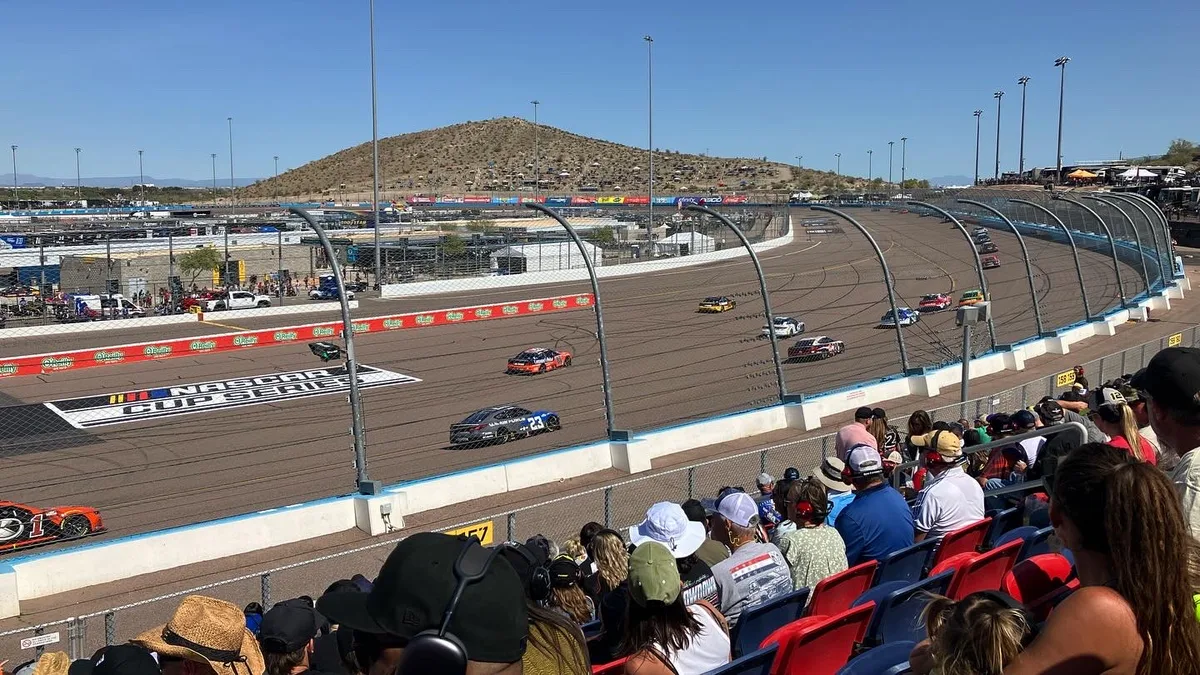
The rulebook moved this week because the wall kept winning arguments. NASCAR has told Cup Series teams they may change front brake rotors and pads after practice and qualifying at Phoenix Raceway on Saturday, reversing the impound logic that has governed these weekends all season. The policy is narrow on paper, front rotors and pads only, nothing else in the brake system, but it answers a complaint that has been building since the summer: at the tracks where brakes work hardest, teams have been forced to race on parts they no longer trusted.
What does the new policy actually allow?
One swap, of named parts, at a named time. The memo issued to teams on Wednesday says that at Phoenix, teams will be given the option to remove and replace front brake rotors and pads only, following practice and qualifying on Saturday, and that no other brake system components are permitted to be changed during the process, Jayski reports. The rear of the car stays under the existing procedure: rear rotors may be inspected during the normal pre-race adjustment period on Sunday, and any issue found then will be managed case by case. Cup Series managing director Brad Moran acknowledged on SiriusXM NASCAR Radio that a pad change during an impound weekend is uncommon for the series, and said a procedure has been set up to do it at Phoenix, RACER reports.
Why did NASCAR act before Phoenix specifically?
Because Phoenix is where the problem was most likely to repeat. Moran described it as a high-energy braking racetrack, and this is the field’s first trip back since the package changed: lower downforce and more power both feed braking load, RACER reports. The timing is the other half of it. The last high-braking track on the schedule was World Wide Technology Raceway on September 13, where multiple brake failures led to hard hits for Zane Smith, Ryan Blaney, Noah Gragson and Chase Elliott. Before that, Nashville Superspeedway, Iowa Speedway and New Hampshire Motor Speedway had all produced brake issues of their own. Added practice time has also raised the wear: teams now get 50 minutes of practice each weekend, which puts more work through parts that were previously fresher on race day. Phoenix, in other words, was the worst available combination of a known fault and a heavier load, arriving on a playoff weekend.
How hard did the garage push for this?
Hard enough that one of its biggest names threatened to park his car. RacingNews.co reports Denny Hamlin told NASCAR he was not going to start the race at Iowa Speedway after officials refused to let him change part of his brake system before the green flag, arguing it was a safety issue, and that NASCAR replied the penalty for refusing to start would be much larger than pitting during the race to make the change. Hamlin, who has already had one public standoff this autumn over a strategy call he refused to follow, is not the only voice: crew chiefs at the recent short-track weekends told Motorsport.com they wished NASCAR would allow like-for-like pad changes, Jayski reports. RACER adds that teams and drivers had previously asked NASCAR to allow them to change parts. The Phoenix memo is the first time the answer has been yes.
What does the change not cover?
Most of the brake system, deliberately. Calipers, lines and every other component remain off limits during the Saturday window, and the rear rotors cannot be swapped in advance at all, only inspected on Sunday with problems handled case by case. That asymmetry is the compromise: the front brakes do the bulk of the stopping at a track like Phoenix, so the allowance targets the highest-wear parts while keeping the impound principle intact for everything else. It also leaves a grey area the garage will test immediately, since a case-by-case Sunday decision is exactly the kind of call that produced the Iowa argument. NASCAR has had a procedural month of those: Christopher Bell spent Charlotte arguing the sport does too little to protect qualifying procedure, and officials will spend part of this same Phoenix weekend sitting down with Michael McDowell and Ricky Stenhouse Jr. over their cool-down lap contact. NASCAR has already warned teams this month over the white residue sprayed in pit stalls; brake policy is now on the same list of procedures being renegotiated in public.
What happens if a car still has a brake failure on Sunday?
That is the question the policy is designed to make awkward. A failure after a sanctioned inspection-and-swap window would shift the argument from access to judgment: the team had its chance to look, and chose its parts. A failure traced to a component outside the allowance, a rear rotor problem found too late, or a caliper issue NASCAR would not let anyone touch, would restart the Iowa argument with a playoff race as evidence. The other branch is quieter and more likely to matter: if Phoenix runs clean, the memo becomes the template every other high-braking track will ask for, and an exception written for one weekend becomes next season’s standard procedure. Either way, the garage got the thing it asked for at the track it asked loudest about, and the burden of proof moves with it.
Frequently asked questions
What exactly is NASCAR allowing at Phoenix?+
A limited swap. Teams may remove and replace front brake rotors and pads only, after practice and qualifying on Saturday, and no other brake system components may be changed in the process, according to the policy NASCAR issued to teams on Wednesday and Jayski published.
What about the rear brakes?+
They stay under the old rules. Teams may inspect the rear rotors during the normal pre-race adjustment period on Sunday, as they already could, and NASCAR will handle any issue found at that point on a case-by-case basis, RACER reports.
Why has NASCAR made this change now?+
Because of the failure pattern at the high-braking short tracks. Last month's race at World Wide Technology Raceway produced multiple brake failures and hard hits, and Nashville, Iowa and New Hampshire had brake issues of their own, RACER reports. Phoenix is the first trip back to a high-braking track since, with a lower-downforce, higher-power package adding load.
Who asked for this change?+
The teams and drivers did, over several weekends. Crew chiefs at the recent short-track races told Motorsport.com they wished NASCAR would allow like-for-like pad changes, Jayski reports, and Denny Hamlin threatened not to start at Iowa after being refused a brake change he considered a safety issue, RacingNews.co reports.
What did NASCAR say to Hamlin at Iowa?+
That sitting out would cost more than pitting to fix it. RacingNews.co reports NASCAR answered that if Hamlin refused to start, the penalty would be much larger than coming in during the race to make the change.
Is this a permanent rule change?+
Not yet. The memo is written for Phoenix Raceway specifically. Cup Series managing director Brad Moran called a pad change on an impound weekend uncommon for NASCAR, RACER reports, and the policy reads as a trial at the track where the braking load is highest.
When is the Phoenix race?+
Sunday, October 18. Practice and qualifying run on Saturday, which is when the new allowance applies: teams get 50 minutes of practice, then qualifying, then the option to change front rotors and pads before the cars are impounded for race day.
Sources
- RACER: NASCAR to allow brake parts changes at Phoenix (the Wednesday policy, Moran's SiriusXM explanation, the WWTR failures and the list of tracks with brake issues)
- Jayski: NASCAR to allow brake pad and rotor changes at Phoenix (the full policy text issued to teams, and Motorsport.com's reporting of crew chiefs asking for like-for-like pad changes)
- RacingNews.co: NASCAR rulebook updated ahead of Phoenix Raceway (the memo wording and Hamlin's threatened boycott at Iowa over a refused brake change)
Play & tools
Free browser games and tools — no account, no download.
- Play 24-0 — Draft an F1 chassis and two drivers, then chase a perfect 24-0 — win every race on the 24-round calendar.
- Explore all our games →
Related motorsport guides
View all →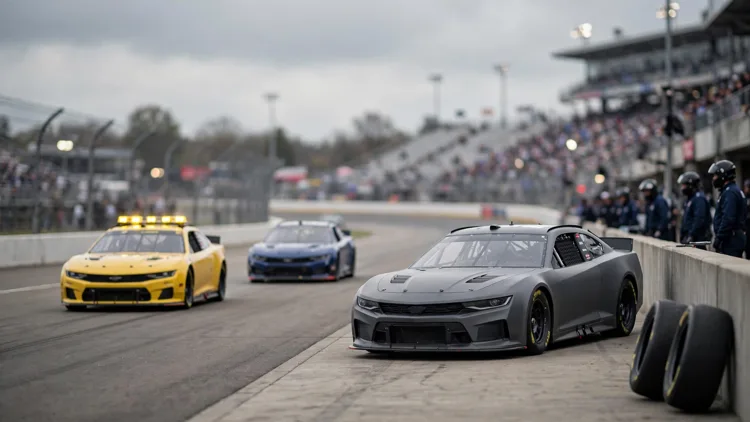
Hamlin Says He Would Have Defied the Pit Call Had He Known Larson Was a Lap Down
Denny Hamlin says he would never have turned down pit road at Las Vegas if he had known his stop would hand Kyle Larson the wave-around back onto the lead lap.
NASCAR Warns Teams After Pit-Stall Spray Left White Residue Over the Lines at Las Vegas
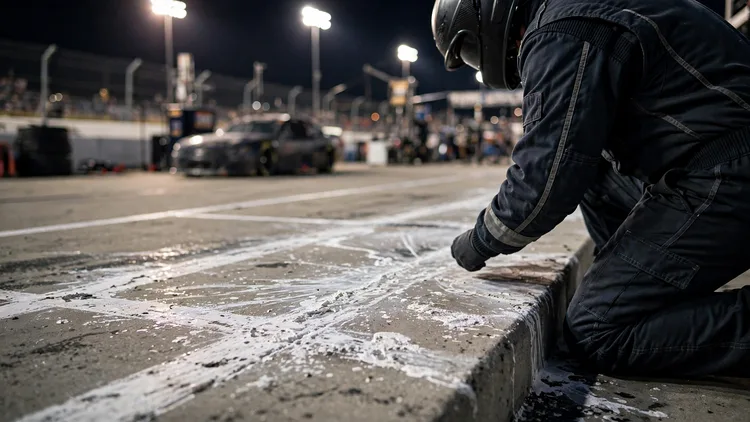
NASCAR has warned Cup teams about pit-stall traction spray after a white residue at Las Vegas threatened the lines its penalty equipment reads.
NASCAR Gives McDowell and Stenhouse No Penalty for Their Charlotte Cool-Down Clash
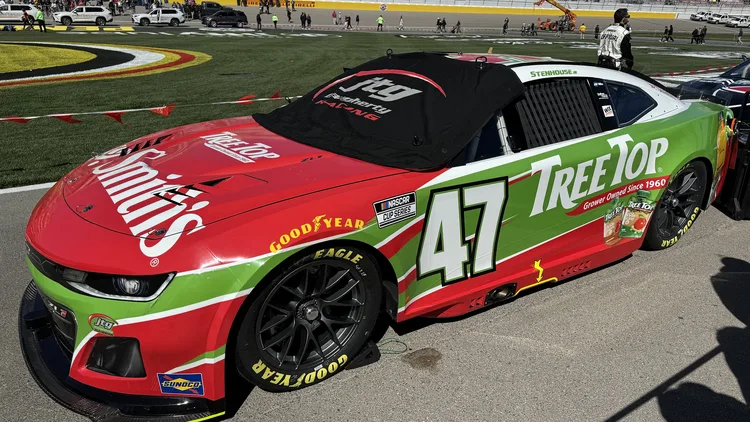
NASCAR says the McDowell-Stenhouse cool-down lap clash at Charlotte was the closest thing to a penalty without being one, and explains where the line sits.
Keselowski Says Hocevar's Differentiator Is Intentional Accidents as Their Feud Stews On
Brad Keselowski told Kelly Crandall that what sets Carson Hocevar apart is a lot of intentional accidents, the latest turn in a feud running since Darlington.

Dale Earnhardt Jr. Asked Greensboro Police for a Speeding Discount and Got 107 mph Back
Greensboro police warned drivers that praising Dale is no excuse for speeding. Dale Earnhardt Jr. asked for a discount anyway, and the reply is the story.

Briscoe Beats Bell by 0.029 Seconds in a Charlotte Photo Finish Between Team-Mates
Chase Briscoe held off Joe Gibbs Racing team-mate Christopher Bell by 0.029 seconds at Charlotte, the closest Cup finish of 2026 and the second-closest in the track's history.