
How Do NASCAR Playoffs Work?

On this page6
The NASCAR Cup Series playoffs are a 10-race, elimination-style postseason featuring 16 drivers, who qualify mainly by winning a race during the regular season, with stage points helping seed the field. It runs in four rounds, and after each of the first three rounds the four lowest drivers in the standings are eliminated, cutting the field from 16 to 12 to 8 to 4, before a single winner-take-all finale decides the champion.
If that sounds more like a stick-and-ball bracket than traditional motorsport, that is exactly the point, NASCAR built its playoffs to create do-or-die drama every autumn. Here is how a driver gets in, how the elimination rounds work, and how the title is actually won.
How drivers qualify
The main way into the playoffs is simple: win a race. During the 26-race regular season, race winners lock up a playoff spot, which is why a single victory can transform a driver’s entire year. If there are still open spots in the 16-driver field after accounting for winners, the remaining places go to the drivers highest in the regular-season points standings.
A driver who leads the standings across the regular season also earns a bonus that carries into the playoffs, rewarding season-long consistency on top of race wins. Once all 16 are set, the postseason format takes over and the points are reseeded for the playoff run. Leading the standings guarantees nothing about next season, though: in October 2026 the O’Reilly Series points leader announced he was changing teams mid-Chase, in Sheldon Creed’s swap from Haas to Sam Hunt.
The four rounds and the elimination format
The playoffs are 10 races long, split into four rounds. The first three rounds are three races each, and every round ends with eliminations.
| Round | Drivers | Races | What happens |
|---|---|---|---|
| Round of 16 | 16 | 3 | Lowest 4 in points eliminated |
| Round of 12 | 12 | 3 | Lowest 4 in points eliminated |
| Round of 8 | 8 | 3 | Lowest 4 in points eliminated |
| Championship 4 | 4 | 1 | Highest finisher wins the title |
Reading down the table, the field is halved and then halved again: 16 to 12 to 8 to 4. The pressure ratchets up each round, because a bad race, an engine failure, a crash, a pit-road mistake, can end a championship campaign in an afternoon.
The golden ticket: win and advance
The single most important rule in the playoffs is this: win a race in a round, and you automatically advance to the next round, regardless of your points. This “win and you’re in” mechanic is what makes NASCAR’s postseason so volatile.
A driver sitting on the elimination line can rescue his entire season with one victory, leaping past rivals who were ahead on points. It rewards aggression, drivers push harder, take bigger risks and chase wins rather than settling for steady top-10 finishes. Everyone else in the round has to advance on points, sweating over every position.
The Championship 4 finale
The playoffs culminate in the Championship 4: the four surviving drivers head into the final race of the season, and it becomes a straight shootout. The rule could not be simpler, whichever of the four finishes highest in that one race is the Cup Series champion.
Season-long points no longer matter at this stage. A driver who dominated all year has no advantage over a fellow finalist in the final race; they start level, and the title comes down to who beats the other three on the day. Other cars are on track, but only the four finalists can win the championship, so all eyes are on their private battle within the race.
Why NASCAR uses this format
The elimination playoff exists to guarantee suspense. A traditional points championship can be decided with races to spare, but NASCAR’s format keeps titles alive until the final laps of the final race almost every year. It rewards winning over consistency and produces the kind of high-stakes finishes that keep fans watching to the checkered flag.
Understanding the stage system helps too, since stage points feed into who makes the field in the first place. For more NASCAR essentials, our guide to what NASCAR flags mean decodes the signals you see during a race, and the best female NASCAR drivers profiles some of the sport’s notable competitors. If you enjoy comparing how different series crown champions, our explainer on the F1 points system shows a very different, season-long approach to the same goal.
The short version
NASCAR’s playoffs put 16 drivers, mostly race winners, into a 10-race, four-round elimination format. The Round of 16, 12 and 8 each drop the lowest four drivers in points, while winning any race guarantees advancement. The last four contenders then meet in the winner-take-all Championship 4, where the highest finisher in a single final race is crowned champion.
Frequently asked questions
How many drivers make the NASCAR playoffs?+
Sixteen drivers make the NASCAR Cup Series playoffs. Spots are earned primarily by winning a points race during the 26-race regular season, race winners get priority, and any remaining playoff spots are filled based on regular-season points standings. A season-long points leader also earns a bonus that carries into the playoffs. Once the 16-driver field is set, the elimination rounds begin.
How do the NASCAR playoff rounds work?+
The playoffs run over 10 races in four rounds: the Round of 16, Round of 12, Round of 8 and the Championship 4. Each of the first three rounds is three races long, and after each round the four lowest drivers in the standings are eliminated, cutting the field from 16 to 12, then to 8, then to 4. Winning any race within a round automatically advances that driver to the next round, no matter their points position.
How is the NASCAR champion decided?+
The champion is decided in a single, winner-take-all final race, the Championship 4. Four title contenders start the last race of the season, and whichever of them finishes highest in that race becomes the Cup Series champion, regardless of how many points they scored earlier in the year. The other drivers on track that day cannot win the title, only the four finalists are eligible, so it comes down to a direct showdown between them.
What are NASCAR stages and how do they affect the playoffs?+
Each Cup Series race is split into stages, usually three, and drivers earn bonus points for finishing near the front at the end of the first two stages, with the race winner earning the most points overall. These stage points accumulate during the regular season and can help a driver qualify for the playoffs on points. Winning stages and races also earns playoff points that carry into the postseason, giving consistent front-runners a cushion in the elimination rounds.
Sources
Play & tools
Free browser games and tools — no account, no download.
- Play 24-0 — Draft an F1 chassis and two drivers, then chase a perfect 24-0 — win every race on the 24-round calendar.
- Explore all our games →
Related motorsport guides
View all →
NASCAR Stage Racing Explained: Stages & Stage Points
NASCAR splits each race into three stages. The top finishers in each stage earn stage points, and a caution flies at each stage break to reset the field.
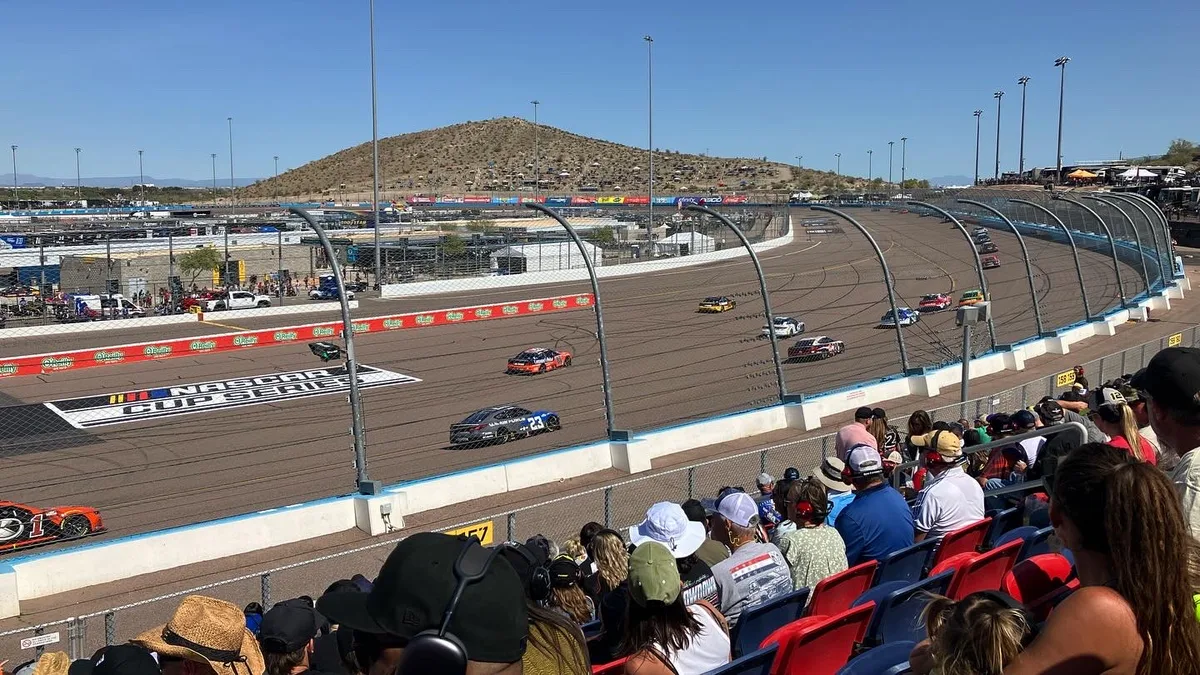
NASCAR Will Let Teams Change Brakes at Phoenix After a Season of Wall Hits
NASCAR will let Cup teams swap front brake rotors and pads after Saturday qualifying at Phoenix, a safety concession after failures at four short tracks.
NASCAR Gives McDowell and Stenhouse No Penalty for Their Charlotte Cool-Down Clash
NASCAR says the McDowell-Stenhouse cool-down lap clash at Charlotte was the closest thing to a penalty without being one, and explains where the line sits.

NASCAR Warns Teams After Pit-Stall Spray Left White Residue Over the Lines at Las Vegas
NASCAR has warned Cup teams about pit-stall traction spray after a white residue at Las Vegas threatened the lines its penalty equipment reads.

Best Female NASCAR Drivers of All Time, Ranked
The 10 most accomplished female NASCAR drivers, ranked by on-track results — from 1949 pioneer Sara Christian to Danica Patrick and full-time racer Toni Breidinger.
Herbst Dumps McDowell at Phoenix and Wrecks Himself in Stage One
Riley Herbst drove into Michael McDowell's bumper in Turn 3 at Phoenix, sent the No. 71 backwards into the wall and wrecked himself in the day's first caution.