
What Is a Drive-Through Penalty in F1?
On this page5
A drive-through penalty in Formula 1 makes a driver enter the pit lane, drive through it at the speed limit without stopping, and rejoin the race. It typically costs around 20 seconds. It is a mid-severity punishment from the stewards — harsher than a time penalty, lighter than a stop-go — for offences such as an unsafe release, pit-lane speeding, or causing a collision.
How it is served
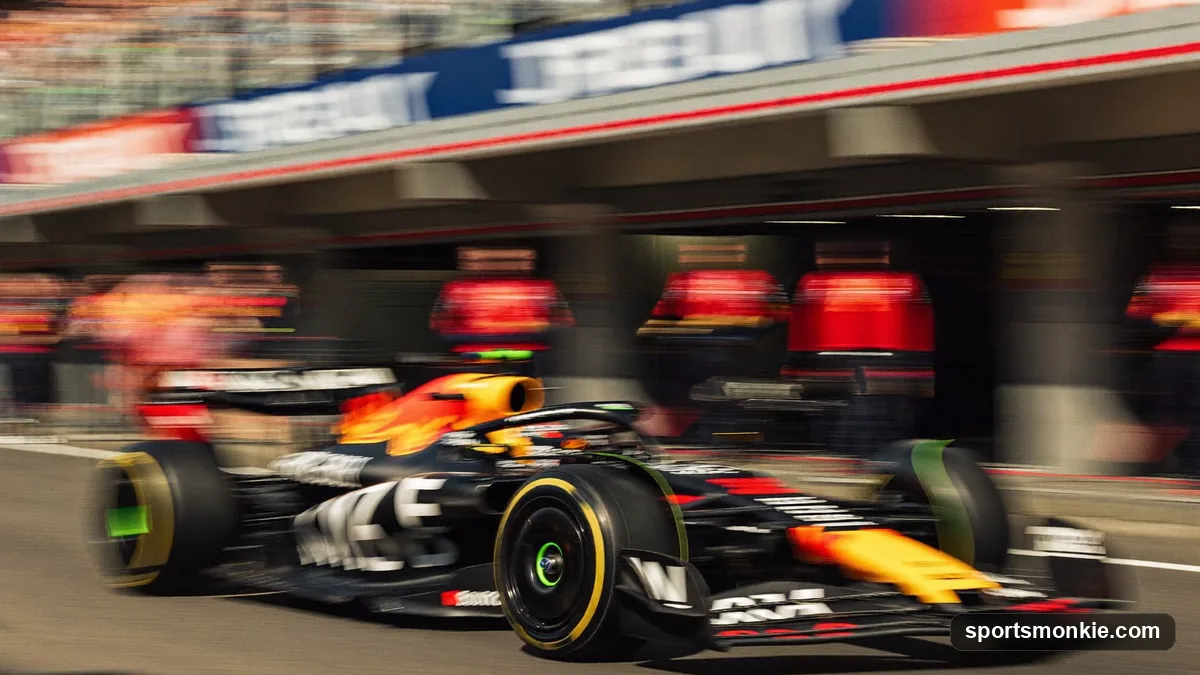
After the stewards issue the penalty, the driver is given a set number of laps to serve it. They peel into the pit lane, hold the mandatory pit speed limit down its full length, and rejoin without stopping at their box. Because the pit lane is far slower than the track and adds distance, the detour bleeds time — commonly about 20 seconds, more at circuits with a long pit lane.
Where it sits on the penalty scale
Formula 1’s in-race penalties run from mild to severe, and the drive-through sits in the middle.
| Penalty | What it means | Severity |
|---|---|---|
| 5-second time penalty | Added at next stop or to final time | Light |
| Drive-through | Through the pit lane, no stop | Medium |
| Stop-go (5s/10s) | Stationary at the box, no work | Heavy |
| Grid penalty | Applied at a later race start | Varies |
For the complete range, see our guide to F1 penalties.
What earns one
Typical triggers include an unsafe release from a pit stop, speeding in the pit lane, causing a collision, or ignoring blue flags for lapping traffic. Repeated track-limits abuse can escalate to a drive-through after warnings. The stewards match the penalty to the offence, which is why the same incident can draw different sanctions depending on its severity.
Drive-through vs. stop-go
The drive-through’s harsher cousin is the stop-go penalty, where the driver must stop stationary at their pit box for a set time — usually five or ten seconds — with no work allowed on the car, before rejoining. A stop-go costs more time than a drive-through and is reserved for more serious offences. Both are served during the race, unlike a grid penalty, which is applied at the start of a later Grand Prix.
Late penalties and retirements
If a drive-through is issued too late to serve, or the driver retires, it is converted into a time penalty added to the final result — usually a larger time loss than serving it on track — so teams cannot simply ignore it. And while the penalty itself never ends a race, the incident behind it sometimes leads to a DNF. For more on how F1 races are officiated, browse our motorsport guides.
Frequently asked questions
How does a drive-through penalty work?+
Once notified, the driver has a limited number of laps to enter the pit lane, drive its full length at the mandatory speed limit, and exit without stopping at their garage. Because the pit lane is much slower than the track, the detour costs time — commonly around 20 seconds depending on the circuit. The driver stays in the race and does not lose a lap unless the field is very tightly bunched.
How much time does a drive-through penalty cost?+
It varies by circuit, but a drive-through usually costs somewhere around 20 seconds relative to staying on track, because of the pit-lane speed limit and the longer route through the pits. On tracks with a long, slow pit lane it costs more; on those with a short one, less. It is designed to be a real punishment without ending a driver's race.
What offences get a drive-through penalty?+
Common triggers include an unsafe release from a pit stop, speeding in the pit lane, causing a collision, ignoring blue flags for too long, or repeatedly exceeding track limits. The stewards choose the penalty to fit the offence, so a drive-through sits in the middle of the scale. Our guide to F1 penalties covers the full range of sanctions.
What is the difference between a drive-through and a stop-go penalty?+
A drive-through requires the driver to pass through the pit lane without stopping, while a stop-go forces them to stop at their pit box for a set time — usually five or ten seconds — before rejoining, with no work allowed on the car during that time. A stop-go costs more time and is the harsher of the two. Both are served during the race rather than after it.
Can a drive-through penalty be converted to a time penalty?+
Yes. If a driver is issued a drive-through in the closing laps and does not serve it before the race ends, or if they retire, the stewards convert it into a time penalty added to their final race time — typically longer than the equivalent time loss on track. This stops teams from simply ignoring a late penalty to avoid the pit-lane detour.
Does serving a penalty risk a DNF?+
Serving the penalty itself does not cause a retirement, but the incident that earned it — contact, damage, a mechanical issue — sometimes does, turning a bad afternoon into a [DNF](/what-is-dnf-in-f1/). The penalty and the retirement are separate outcomes: one is a time loss served in the pits, the other is leaving the race entirely.
Sources
Play & tools
Free browser games and tools — no account, no download.
- Play 24-0 — Draft an F1 chassis and two drivers, then chase a perfect 24-0 — win every race on the 24-round calendar.
- Explore all our games →
Related motorsport guides
View all →
Russell to Start Singapore GP From Back of Grid After Mercedes Confirms New Engine
Mercedes confirmed George Russell has no engines left in his allocation and will take a new power unit in Singapore, sending him to the back of the grid.
What Is Dirty Air in F1? Why It Kills Overtaking
Dirty air in F1 is the turbulent wake behind a car that robs the following car of downforce, making it slide and struggle to follow closely or overtake.
What Is a DNF in F1? Did Not Finish, Explained
A DNF in F1 means 'Did Not Finish' — a driver who retires from a race through a crash, mechanical failure or other issue and is not classified in the results.
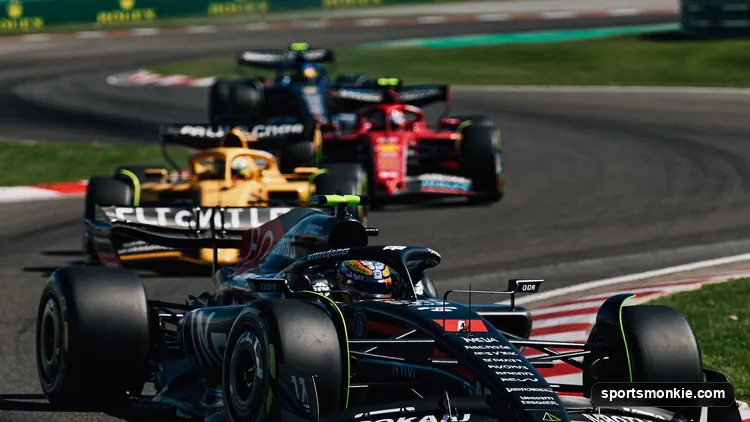
What Is Pole Position in F1? How It's Decided
Pole position in F1 is first place on the starting grid, earned by setting the fastest lap in qualifying. It gives the cleanest line into turn one and a big advantage.
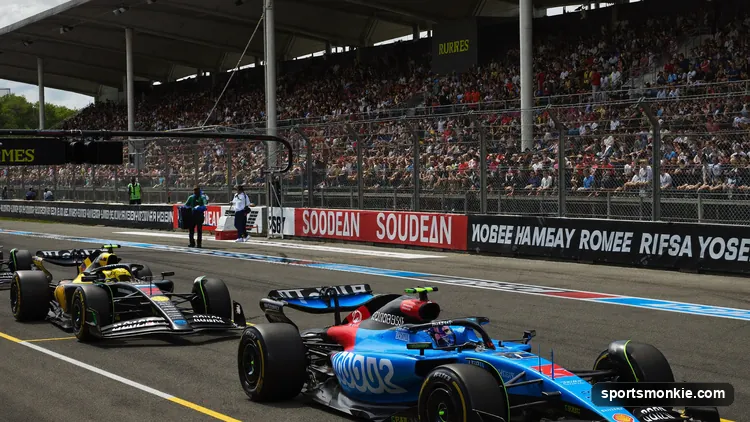
What Is Sprint Qualifying in F1? The Sprint Format
Sprint qualifying in F1 is the short session that sets the grid for the Saturday Sprint, a mini-race of about 100km that awards points to the top eight finishers.
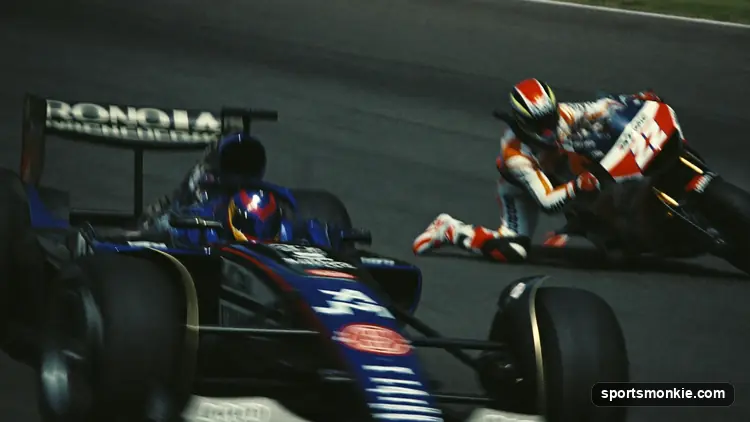
MotoGP vs F1: Speed, Cost and Key Differences
MotoGP is premier motorcycle racing; F1 is premier open-wheel car racing. How they compare on speed, cost, driver pay and difficulty, explained.