
What Is a DNF in F1? Did Not Finish, Explained
On this page5
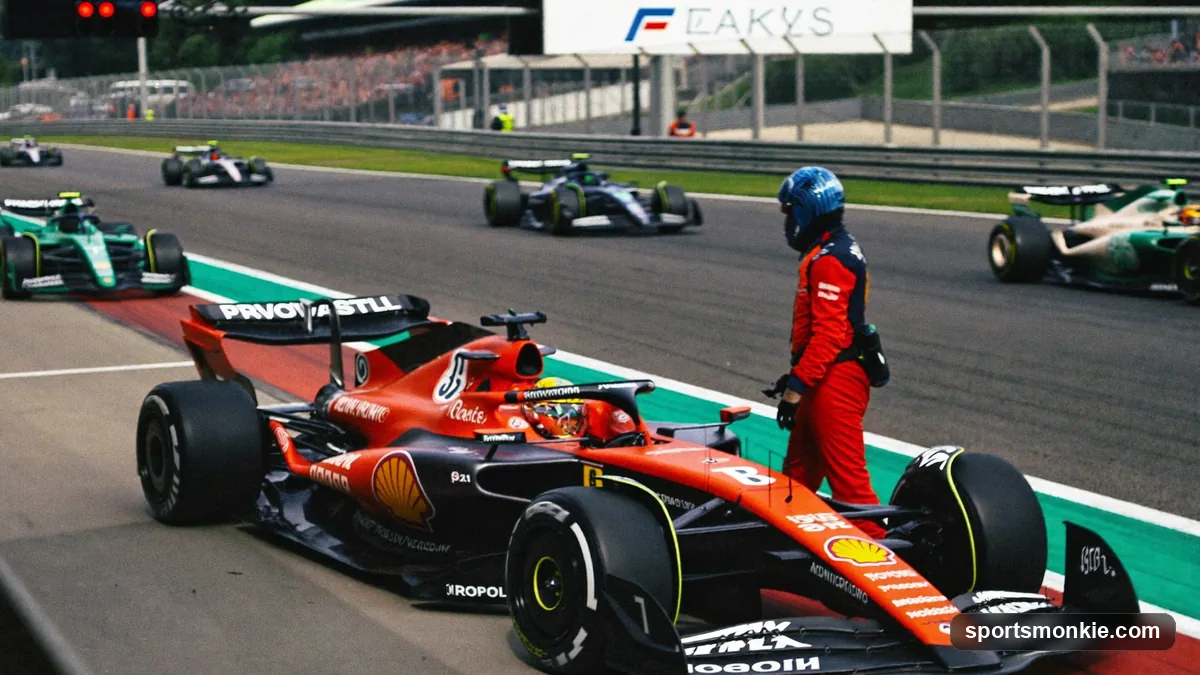
A DNF in Formula 1 means “Did Not Finish” — a driver who starts a race but retires before the end, usually from a crash, a mechanical failure, or terminal damage. A DNF almost always means zero points, which is why reliability and clean racing matter as much to a championship as raw speed.
What a DNF actually is
When a car leaves a race for good, the results list the driver as DNF rather than giving a finishing position. It sits in a family of racing abbreviations: DNS (“Did Not Start,” retiring before the lights), DNQ (“Did Not Qualify”), and DSQ (“Disqualified”). DNF is the one that happens during the race itself.
The common causes
| Cause | Examples |
|---|---|
| Accidents | First-lap contact, crashes, being collected by another car |
| Mechanical failure | Engine, gearbox, hydraulics, power-unit issues |
| Damage | Punctures, broken suspension, floor or wing damage |
| Brakes/overheating | Brake failure or terminal cooling problems |
In the modern era, cars are so reliable that accidents now cause a larger share of DNFs than failures do.
The 90% rule: when a DNF still counts
There is an important exception. If a car retires but has already completed at least 90% of the race distance, the driver is still classified at the position they held when they stopped. That means a driver who nurses a dying car to within a few laps of the end can still score, and what looks like a DNF can quietly become championship points.
Why DNFs decide championships
A DNF usually costs a full points haul to a rival who finishes, so a single retirement can swing a title race. Over a season, a fast car with poor reliability or frequent incidents falls behind steadier competitors. It is the reason “to finish first, first you have to finish” remains F1’s oldest truism, and why the most successful drivers pair speed with the discipline to bring the car home.
DNF vs. an in-race penalty
A DNF ends the race; a drive-through penalty merely costs time while the driver keeps going. The two can be linked — damage from the incident that earned a penalty may later force a retirement — but they are distinct outcomes. For more on how F1 races are run and scored, see our motorsport guides.
Frequently asked questions
What does DNF mean in F1?+
DNF means 'Did Not Finish.' It is used in the results to show that a driver took the start but retired before completing the race, whether from an accident, an engine or gearbox failure, a puncture, or damage that made the car undriveable. A DNF is different from DNS ('Did Not Start') and DNQ ('Did Not Qualify'), which happen before the race begins.
Do you get points for a DNF in F1?+
Almost never. Because championship points are awarded only to the top ten classified finishers, a driver who records a DNF usually scores zero. The rare exception is if enough cars ahead also retire and the driver has completed 90% of the race distance, in which case they can still be classified in a points position despite stopping. See our guide to the F1 points system.
What is the most common cause of a DNF?+
Historically the two biggest causes are collisions — often first-lap incidents — and mechanical failures such as engine, gearbox, hydraulic or power-unit problems. Punctures, brake failures, and crash damage from contact also feature. In the modern era reliability has improved dramatically, so accidents cause a larger share of DNFs than they once did.
Is a driver always unclassified after a DNF?+
Not always. If a car retires but has already completed at least 90% of the race distance, the driver is classified in the finishing order at the position they held, even though they did not cross the line running. This rule rewards drivers who nurse a wounded car close to the end, and it can turn what looks like a DNF into championship points.
How does a DNF affect the championship?+
A single DNF can swing a title fight because it usually means losing a full haul of points to a rival who finishes. Over a season, a driver or team with poor reliability or frequent incidents falls behind even if their car is fast on pace. This is why teams value finishing races, and why a run of DNFs is often more damaging than a run of low-points finishes.
What is the difference between DNF and a drive-through penalty?+
A DNF ends a driver's race entirely. A [drive-through penalty](/what-is-a-drive-through-penalty-in-f1/) is an in-race punishment where the driver loses time by driving through the pit lane but continues racing. One is a retirement; the other is a time loss. A severe enough problem that follows a penalty can, of course, still lead to a DNF later in the same race.
Can a DNF happen behind the safety car?+
Yes. A car can retire at any point in a race, including during a [safety car](/f1-safety-car-explained/) period — for example if earlier damage forces it to stop, or a failure develops while circulating slowly. The DNF is recorded whenever the car leaves the race for good, regardless of whether the race is running at full speed or neutralised.
Sources
Play & tools
Free browser games and tools — no account, no download.
- Play 24-0 — Draft an F1 chassis and two drivers, then chase a perfect 24-0 — win every race on the 24-round calendar.
- Explore all our games →
Related motorsport guides
View all →
No, Kim Kardashian and Lewis Hamilton Are Not Married: The Viral Wedding Screenshot Is Fake
A viral post claiming Kim Kardashian secretly married Lewis Hamilton used a fabricated Instagram story screenshot and AI-generated wedding images. No such post exists.
What Is a Drive-Through Penalty in F1?
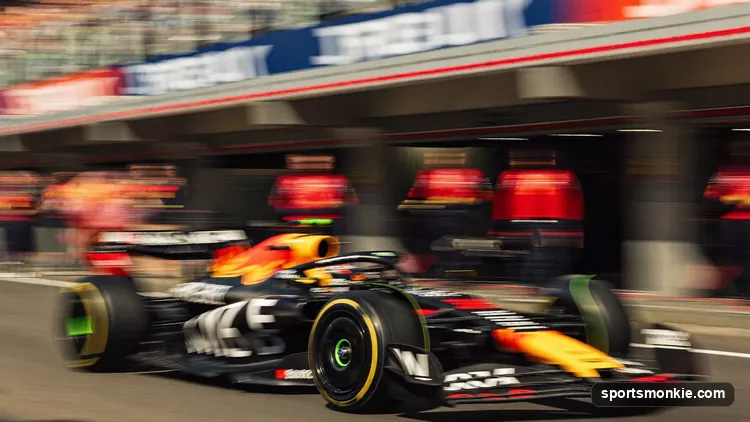
A drive-through penalty in F1 makes a driver drive through the pit lane at the speed limit without stopping, losing around 20 seconds but staying in the race.
What Is Dirty Air in F1? Why It Kills Overtaking
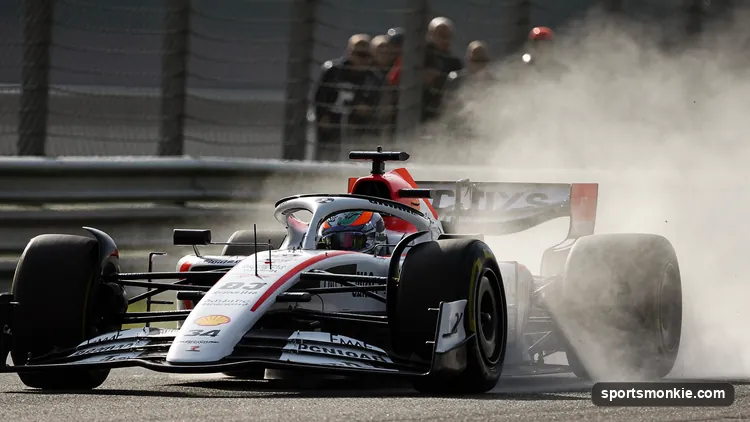
Dirty air in F1 is the turbulent wake behind a car that robs the following car of downforce, making it slide and struggle to follow closely or overtake.
What Is Pole Position in F1? How It's Decided
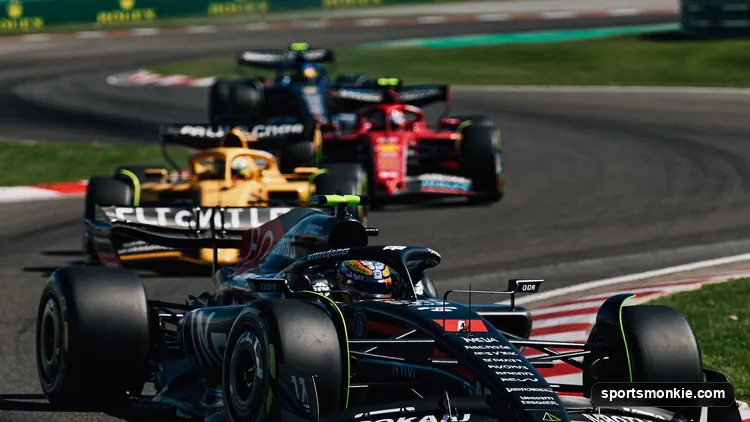
Pole position in F1 is first place on the starting grid, earned by setting the fastest lap in qualifying. It gives the cleanest line into turn one and a big advantage.
What Is Sprint Qualifying in F1? The Sprint Format
Sprint qualifying in F1 is the short session that sets the grid for the Saturday Sprint, a mini-race of about 100km that awards points to the top eight finishers.
MotoGP vs F1: Speed, Cost and Key Differences
MotoGP is premier motorcycle racing; F1 is premier open-wheel car racing. How they compare on speed, cost, driver pay and difficulty, explained.