
MotoGP vs F1: Speed, Cost and Key Differences
On this page7
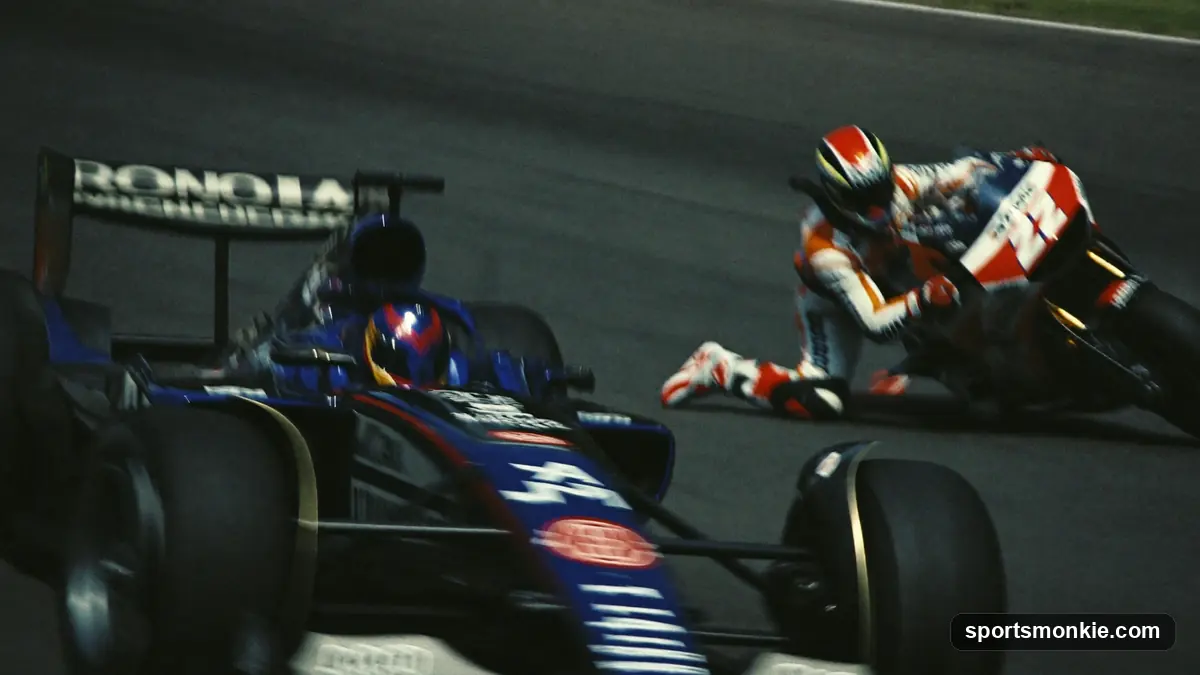
MotoGP is the premier class of motorcycle road racing, and Formula 1 is the premier class of open-wheel car racing. They share huge global followings and cutting-edge engineering, but on almost every measurable point, speed, cost, driver pay and physical demand, they are very different sports.
The rivalry between fans of two and four wheels is endless, so let us settle the comparison with facts rather than loyalty. Here is how MotoGP and F1 stack up on the things people actually argue about: which is faster, which costs more, who earns more, and which is harder.
The core difference: two wheels vs downforce
The single most important difference is aerodynamics. F1 cars generate enormous downforce, air pressure that pushes the car into the track, which lets them corner and brake at speeds that would be physically impossible on a motorcycle. A MotoGP bike, by contrast, has to lean and rely on tyre grip alone, with a rider hanging off the machine to keep it stable.
This is why the two can look similar on a straight but diverge completely in the corners. On the same circuit, an F1 car is dramatically faster through a fast bend, which is where it builds its lap-time advantage.
Head-to-head comparison
Here is how the two categories compare across the headline numbers. Figures are approximate and reflect current-era machinery under each sport’s regulations.
| Element | MotoGP | Formula 1 |
|---|---|---|
| Machine | ~1000cc four-stroke motorcycle | ~1.6L V6 turbo-hybrid car |
| Wheels | Two | Four (open-wheel) |
| Top speed | Exceeds ~360 km/h (~225 mph) | Exceeds ~350 km/h (~220 mph), higher in low-downforce trim |
| Cornering | Limited by lean angle and tyre grip | Very high, thanks to aerodynamic downforce |
| Lap time (same track) | Slower overall | Faster overall |
| Driver protection | Exposed rider, protective suit | Enclosed survival cell, halo device |
| Team budgets | Much lower | Far higher (subject to a cost cap) |
| Top driver pay | Low-to-mid millions | Tens of millions |
The takeaway from the table is that top speeds are close, but everything downstream of aerodynamics, cornering, lap time, and the money involved, tilts heavily toward F1.
Which is faster?
In a straight line, it is remarkably close: both MotoGP bikes and F1 cars comfortably exceed 350 km/h, and MotoGP’s lighter machines can actually post very high straight-line speeds. Off the line, bikes accelerate ferociously and can even out-drag a car in the first instants.
But over a lap, F1 wins clearly. The car’s downforce lets it brake far later and carry vastly more speed through corners, so on any shared circuit an F1 car laps quicker than a MotoGP bike. If raw car speed is what fascinates you, our look at the fastest F1 cars digs into where those numbers come from. For a car-versus-car angle, IndyCar vs F1 makes a useful companion comparison.
Which costs more, and who gets paid more?
F1 is the more expensive sport by a wide margin. Even with a spending cost cap in place to rein in the biggest teams, F1 budgets dwarf those in MotoGP, reflecting the complexity of building a hybrid racing car versus a racing motorcycle.
That flows through to pay. The best-paid F1 drivers earn salaries in the tens of millions of dollars a year, while even top MotoGP riders typically earn a fraction of that. The gap comes down to F1’s larger commercial machine, bigger audiences in key markets, and richer sponsorship. In short, F1 has more money in the system, and its stars take home more of it, a pattern reflected across the careers of the greatest Formula 1 drivers.
Which is harder?
This is the argument that never ends, and honestly there is no clean winner, only different kinds of difficulty. MotoGP is more physically raw and more dangerous: the rider is exposed, has to muscle the bike and hang off it at the limit of grip, and a mistake can mean a high-speed crash with no protective shell.
F1 is punishing in a different way. Drivers endure sustained high g-forces under braking and cornering that few human activities produce, all while managing a fiendishly complex car and making split-second strategic calls. Most people who have experienced both describe them as different challenges rather than one simply being harder. Bravery and physical toughness lean toward MotoGP; sustained g-load and technical precision lean toward F1.
Racing formats and seasons
The two championships are also structured differently as competitions. Both crown a world champion based on points scored across a season of races held at circuits around the world, and both award more points to higher finishers. But the on-track product differs: MotoGP grids are packed with riders who can slipstream and out-brake each other into corners, producing frequent lead changes and dramatic last-lap passes. F1, with its aerodynamic cars, has historically found overtaking harder, which is why the sport keeps tweaking its rules and car designs to encourage closer racing.
Both series have also added sprint races, shorter events that award additional points, to pack more competition into a weekend. The net effect is that a MotoGP race often looks like a closely fought scrap decided by braking bravery, while an F1 race is frequently a strategic chess match involving tyre choices and pit stops. Neither approach is superior; they simply reward different kinds of excellence.
So which should you watch?
If you love wheel-to-wheel bravery, spectacular lean angles and a raw, exposed spectacle, MotoGP delivers it. If you are drawn to engineering, strategy and the sheer cornering speed that downforce unlocks, F1 is your sport. Neither is objectively “better”, they are two different answers to the same question of how fast a human can go around a track.
The short version: MotoGP and F1 have similar top speeds, but F1 is faster over a lap thanks to aerodynamic downforce, costs far more to compete in, and pays its drivers considerably more. MotoGP is the rawer, more physically exposed challenge; F1 is the higher-g, more technical one.
Frequently asked questions
Who gets paid more, MotoGP or F1?+
F1 drivers are paid significantly more than MotoGP riders. The best-paid F1 drivers earn salaries in the tens of millions of dollars per year, while even the top MotoGP riders typically earn a fraction of that, in the low-to-mid millions. The gap reflects F1's larger global commercial footprint, bigger team budgets and higher sponsorship revenue. A mid-grid F1 driver often out-earns a MotoGP front-runner.
Is MotoGP faster than F1?+
It depends on what you measure. In a straight line the two are close, with both MotoGP bikes and F1 cars exceeding 350 km/h. But over a full lap F1 is clearly faster, because an F1 car's aerodynamic downforce lets it carry enormous speed through corners and brake far later than a motorcycle can. So MotoGP can match F1 on top speed but loses badly in the corners, making F1 quicker lap for lap on the same circuit.
Is MotoGP harder than F1?+
Both are among the hardest things in motorsport, and 'harder' is subjective. MotoGP is more physically raw and dangerous, since riders are exposed, must physically wrestle the bike, and hang off it through corners at the limit of grip. F1 subjects drivers to extreme g-forces under braking and cornering and demands intense precision with a technically complex car. Most experts call them different challenges rather than one being simply harder than the other.
Why did F1 stop racing at the old Nürburgring?+
F1 stopped using the original Nürburgring Nordschleife after 1976, largely on safety grounds. The circuit was extremely long and difficult to marshal, and a serious crash that year highlighted how dangerous it had become for modern cars. F1 later returned to race on the shorter, purpose-built modern Nürburgring GP circuit, but the fearsome old Nordschleife was deemed unsuitable for Formula 1.
Sources
Play & tools
Free browser games and tools — no account, no download.
- Play 24-0 — Draft an F1 chassis and two drivers, then chase a perfect 24-0 — win every race on the 24-round calendar.
- Explore all our games →
Related motorsport guides
View all →
IndyCar vs F1: Which Is Faster?
IndyCar vs F1 compared: top speed, horsepower, cars, ovals, cost and driver pay. Which is faster and which is harder, explained side by side.
FIA to Investigate Software Glitch That Stopped F1 Cars on the Formation Lap in Malaysia
The FIA promised a full review after a software bug cut power to F1 cars on a wet formation lap at Sepang, forcing Hamilton to stop and restart his car.
What Is a Drive-Through Penalty in F1?
A drive-through penalty in F1 makes a driver drive through the pit lane at the speed limit without stopping, losing around 20 seconds but staying in the race.
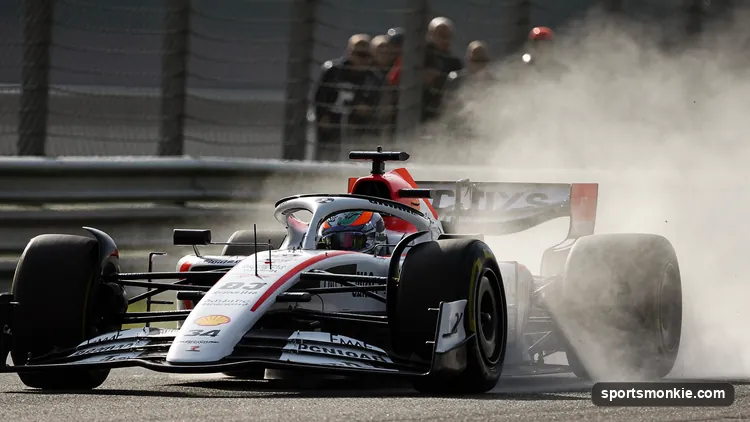
What Is Dirty Air in F1? Why It Kills Overtaking
Dirty air in F1 is the turbulent wake behind a car that robs the following car of downforce, making it slide and struggle to follow closely or overtake.
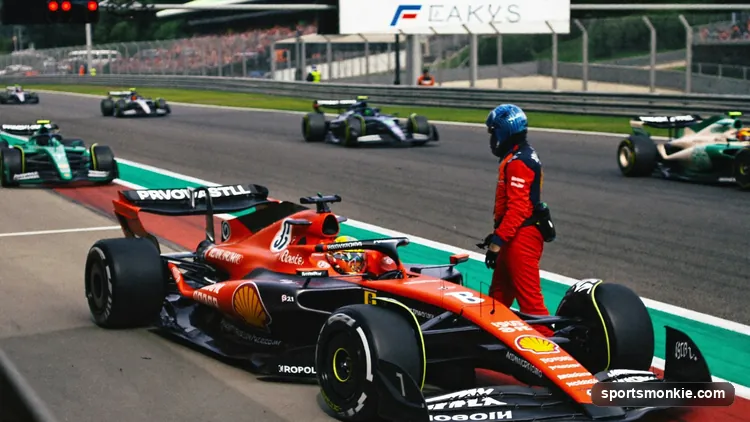
What Is a DNF in F1? Did Not Finish, Explained
A DNF in F1 means 'Did Not Finish' — a driver who retires from a race through a crash, mechanical failure or other issue and is not classified in the results.
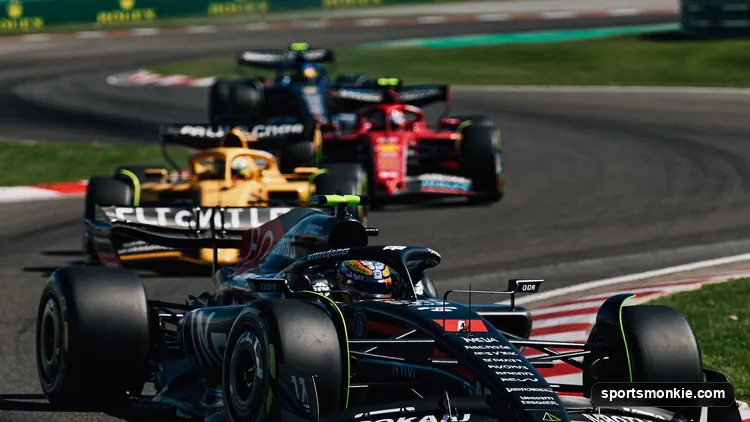
What Is Pole Position in F1? How It's Decided
Pole position in F1 is first place on the starting grid, earned by setting the fastest lap in qualifying. It gives the cleanest line into turn one and a big advantage.