
What Is Sprint Qualifying in F1? The Sprint Format
On this page5
On a Sprint weekend, “sprint qualifying” — officially the Sprint Shootout — is the short knockout session that sets the grid for the Saturday Sprint, a mini-race of about 100km. The Sprint awards championship points to its top eight finishers and runs separately from the Sunday Grand Prix, which has its own qualifying and its own race.
How the Sprint weekend fits together
A Sprint weekend rearranges the usual schedule into two separate competitions, each with its own qualifying and race:
| Session | Sets the grid for | When |
|---|---|---|
| Qualifying | Sunday Grand Prix | Friday |
| Sprint Shootout (sprint qualifying) | Saturday Sprint | Saturday morning |
| Sprint | — (scores points) | Saturday afternoon |
| Grand Prix | — (main race) | Sunday |
The key thing to grasp is that the two grids are independent: sprint qualifying only sets the Sprint grid, and normal qualifying only sets the Sunday grid.
What the Sprint Shootout is
The Shootout borrows normal qualifying’s knockout structure — three segments, slowest cars eliminated — but with shorter sessions and mandated tyre compounds to keep it sharp. The fastest driver earns pole for the Sprint, though not for the Grand Prix.
Points and why the Sprint matters
The Sprint is about a third of race distance with no mandatory pit stop, and it pays points to the top eight, from eight for the win down to one for eighth. Those points feed both championships, so a good Saturday can quietly shape a title fight across a season. The full-race totals are set out in our F1 points system guide.
Sprint qualifying vs. normal qualifying
The two sessions look alike but serve different races. Normal qualifying is longer, offers free tyre choice, and sets the Sunday grid; the Sprint Shootout is shorter, mandates specific tyre compounds in each segment, and sets only the Saturday Sprint grid. Mixing them up is the single most common misunderstanding of the format, because both crown a fastest driver but for entirely separate races.
Why F1 uses it
The Sprint exists to make Friday and Saturday competitive rather than just practice, and to add strategic variety. It has been refined repeatedly since 2021 — most importantly by separating sprint qualifying from the main qualifying format so the two no longer interfere. Only a handful of rounds each year use it. For more on how F1 weekends run, see our motorsport guides.
Frequently asked questions
What is sprint qualifying in F1?+
Sprint qualifying, officially called the Sprint Shootout, is a shortened knockout qualifying session held on Sprint weekends to decide the starting order for the Saturday Sprint race. It uses the same Q1-Q2-Q3 elimination idea as normal qualifying but with shorter sessions and mandated tyre compounds. It sets only the Sprint grid, not the Sunday Grand Prix grid.
How is the F1 Sprint different from the main race?+
The Sprint is a standalone mini-race of about 100km, roughly one-third of a Grand Prix distance, with no mandatory pit stop. It awards fewer points and runs on Saturday. The main Grand Prix on Sunday is the full-distance race with its own separate qualifying session held earlier in the weekend. Results in one do not set the grid for the other.
How many points does the F1 Sprint pay?+
The Sprint awards championship points to the top eight finishers, on a reduced scale from the main race — eight points for the win down to one point for eighth. Ninth and below score nothing. Those points count toward both the drivers' and constructors' championships, so a strong Sprint can be worth a meaningful swing over a season. See our guide to the F1 points system for the full race scale.
Does sprint qualifying set the Sunday grid?+
No. On a Sprint weekend the Sunday Grand Prix grid is set by a normal qualifying session held on Friday, while sprint qualifying (the Shootout) sets only the Saturday Sprint grid. This means a driver can start the Sprint and the Grand Prix from completely different positions. It is one of the most common points of confusion about the format.
Why did F1 introduce the Sprint format?+
F1 introduced Sprints to make more of a race weekend competitive, giving fans meaningful on-track action on Friday and Saturday rather than only practice. It also adds strategic variety and championship points outside the Sunday race. The format has been refined since its 2021 debut, including separating sprint qualifying from the main [qualifying format](/f1-qualifying-format-explained/) so the two no longer affect each other.
How many Sprint weekends are there in a season?+
Only a handful of Grands Prix each season use the Sprint format — typically around six of the roughly two-dozen rounds — chosen for circuits that tend to produce good racing. The rest of the calendar uses the traditional format of practice, one qualifying session, and the Sunday race. The exact number and venues are set by F1 each year.
Sources
Play & tools
Free browser games and tools — no account, no download.
- Play 24-0 — Draft an F1 chassis and two drivers, then chase a perfect 24-0 — win every race on the 24-round calendar.
- Explore all our games →
Related motorsport guides
View all →
FIA Admits Human Error Gave Some Cars Extra Power in Singapore Sprint Qualifying
The FIA says a Race Control human error switched Overtake Mode on for 27 seconds in Singapore SQ1, giving some cars extra power, and Sainz wants to know why.
F1 Qualifying Format Explained: Q1, Q2 and Q3 Knockout
F1 qualifying is a three-part knockout — Q1 drops the slowest 5, Q2 drops 5 more, and Q3's 10 cars fight for pole. Here's how each session works.
Verstappen Keeps Singapore Sprint Pole After Stewards Find a Yellow-Flag Breach but No Penalty
Max Verstappen breached the yellow-flag rule passing Lewis Hamilton in Singapore sprint qualifying, but the stewards imposed no penalty and he keeps pole.
What Is a Drive-Through Penalty in F1?
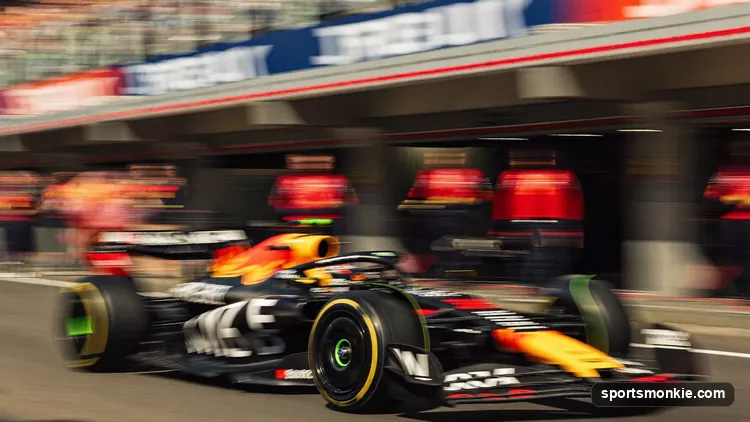
A drive-through penalty in F1 makes a driver drive through the pit lane at the speed limit without stopping, losing around 20 seconds but staying in the race.
What Is Dirty Air in F1? Why It Kills Overtaking
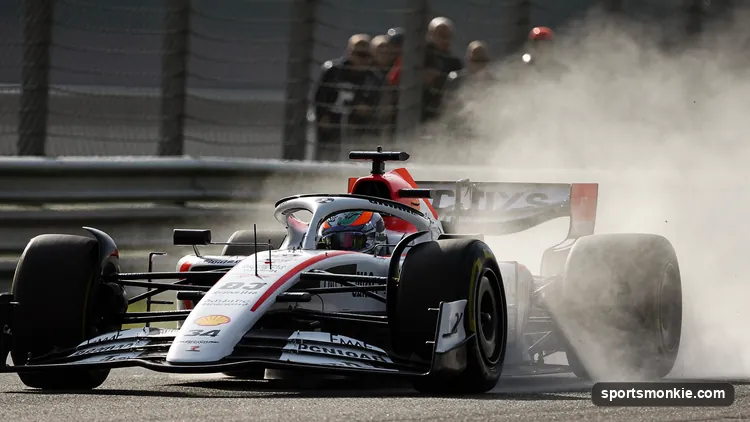
Dirty air in F1 is the turbulent wake behind a car that robs the following car of downforce, making it slide and struggle to follow closely or overtake.
What Is a DNF in F1? Did Not Finish, Explained
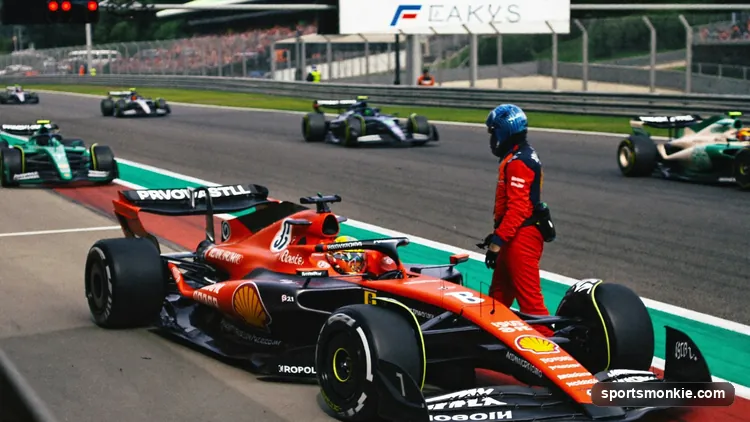
A DNF in F1 means 'Did Not Finish' — a driver who retires from a race through a crash, mechanical failure or other issue and is not classified in the results.