
Direct-Drive vs Belt-Drive Sim Racing: Which Is Better?

On this page5
Direct-drive and belt-drive wheelbases both create force feedback, but they transmit it differently. Direct drive connects the motor to the shaft; belt drive routes force through a belt, which smooths the feel and lowers cost.
Direct-drive strengths
The motor responds quickly to small changes in tyre load, kerbs and slides. That detail helps a driver sense the limit, especially in a simulator with a stable frame and good pedals.
Belt-drive strengths
Belt systems are often smoother, quieter and less expensive. Their filtered feel can be comfortable for long sessions, and they remain a practical choice for a first cockpit.
Mounting and safety
Torque is only useful if the wheelbase is bolted to a rigid surface. Secure cables, use a reachable emergency stop where provided, and never let children use high-force settings unsupervised.
The rest of the rig matters
Pedal consistency, seating position and frame flex can erase the benefit of an expensive base. Our sim-racing rig guide covers the complete system, while sim-racing setup focuses on mounting and ergonomics.
Which one should you choose?
Choose belt drive when value, low noise and easy setup are priorities. Choose direct drive when you want maximum detail, plan to upgrade other components and have a rigid rig that can handle the torque.
For a safety-first certification decision, compare SSI and PADI. Other practical comparisons include keelboats and dinghies and all-mountain versus carving skis.
Frequently asked questions
What is direct drive in sim racing?+
The motor is mounted directly to the steering shaft, so force feedback reaches the wheel without a belt or gear transmission.
Are belt-drive wheels more realistic?+
They can feel smooth and convincing, but direct drive usually delivers more detail and stronger peaks when the rest of the rig can use them.
Is direct drive harder to use?+
Not necessarily, but high torque requires careful settings and a secure mounting system. Start with conservative force-feedback strength.
Which is quieter?+
Belt-drive systems are often quieter, although fan noise, mounting vibration and the game setup can matter as much as the transmission.
Should beginners buy direct drive?+
Buy based on budget, mounting space and goals. A good belt system can teach racecraft; direct drive is an upgrade for detail and future headroom.
Does direct drive improve lap times?+
It can improve information and consistency, but practice, pedals, driving technique and setup usually matter more than the wheelbase alone.
Sources
Play & tools
Free browser games and tools — no account, no download.
- Play 24-0 — Draft an F1 chassis and two drivers, then chase a perfect 24-0 — win every race on the 24-round calendar.
- Explore all our games →
Related motorsport guides
View all →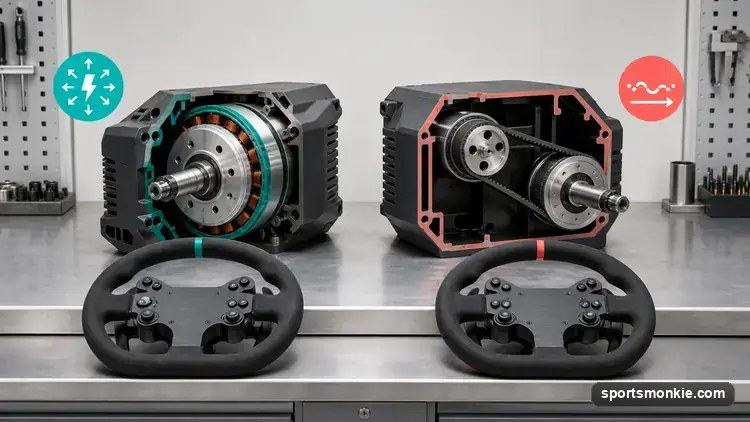
Direct Drive vs. Belt Drive: Which Wheelbase Do You Need?
Direct drive vs belt drive sim racing wheelbases compared on torque, price, noise, and durability, with real 2026 product numbers to help you pick.

All-Mountain vs Carving Skis: Which Should You Choose?
All-mountain skis handle varied snow and terrain, while carving skis focus on groomed pistes and clean edge turns. Compare width, shape, stability and skill level.

Keelboat vs Dinghy: Key Differences and Which to Choose
Keelboats use a fixed ballast keel for stability, while dinghies are lighter, shallower and more responsive. Compare handling, safety, cost and best uses.
SSI vs PADI: Key Scuba Certification Differences
SSI and PADI both teach internationally recognised recreational scuba courses. Compare learning materials, instructor pathways, digital records and what actually matters when choosing.
MotoGP vs F1: Speed, Cost and Key Differences
MotoGP is premier motorcycle racing; F1 is premier open-wheel car racing. How they compare on speed, cost, driver pay and difficulty, explained.
NASCAR Stage Racing Explained: Stages & Stage Points
NASCAR splits each race into three stages. The top finishers in each stage earn stage points, and a caution flies at each stage break to reset the field.