
Direct Drive vs. Belt Drive: Which Wheelbase Do You Need?

On this page8
- 01How do direct drive, belt drive, and gear drive actually work?
- 02Direct drive vs. belt drive vs. gear drive: full comparison
- 03How much stronger is direct drive force feedback, really?
- 04Why is direct drive so much more expensive?
- 05Does direct drive mean a noisier setup?
- 06Which one actually lasts longer?
- 07Who actually needs direct drive vs. who’s fine with belt drive?
- 08The bottom line
Direct drive wheelbases connect the motor straight to the steering shaft, with no belt or gears between them, which is why they deliver sharper, more detailed force feedback than belt-drive or gear-drive wheels. The trade-off is price: a usable direct drive base starts around $300, and a genuinely capable one runs $900 to $2,000-plus, against $250 to $500 for a good belt-drive wheel. Race a few nights a week and want to feel a tire losing grip clearly, buy direct drive. Testing the hobby or racing a couple of times a month, a belt-drive wheel still gets you most of the way there for a third of the price.
How do direct drive, belt drive, and gear drive actually work?
The difference is purely mechanical. Gear drive uses interlocking cogs to turn the steering shaft, the same basic principle as a machine gearbox. Belt drive swaps those cogs for a tensioned belt and pulley, which spreads the motor’s force more evenly. Direct drive skips both: the motor’s rotor is bolted directly to the shaft your hands hold, so Fanatec’s own technical explainer puts it plainly, energy flows straight to the shaft instead of through intermediate parts that flex, stretch, or backlash under load.
That single design choice cascades into everything else in this comparison. Fewer parts between motor and hands means less energy lost to friction, less mechanical slop to smooth over, and a motor that can be sized far larger without needing a gearbox to multiply its force. It also means direct drive bases are heavier and pricier to manufacture, since the motor itself has to do all the work a belt or gear train would otherwise share.
Direct drive vs. belt drive vs. gear drive: full comparison
| Drive type | Torque range | Price range (2026, USD) | Noise | Best for |
|---|---|---|---|---|
| Gear drive | ~2-3 Nm | $250-$350 | Audible grind/whine under heavy load | First wheel, tight budget, casual arcade racing |
| Belt drive | ~3-6 Nm | $350-$500 | Quiet at idle, some belt hum at high force feedback | Most weekend sim racers; best all-around value |
| Entry direct drive | 5-9 Nm | $299-$450 | Motor whine noticeable at high force feedback | Racers ready to feel real tire and curb detail |
| Mid-to-high direct drive | 11-32 Nm | $900-$2,000+ | Loudest at max force feedback; some add cooling fans | League racers, esports competitors, GT3/rally specialists |
How much stronger is direct drive force feedback, really?
Meaningfully stronger, and it shows up in torque numbers you can compare directly. A Logitech G923, a gear-driven wheel, tops out around 2Nm of real-world force. Step up to the belt-driven Thrustmaster T300RS GT, and independent torque testing puts it closer to 4Nm, still filtered through a dual-belt system that damps some of that force before it reaches your hands. An entry direct drive base like the Moza R9 delivers a genuine 9Nm with nothing in between motor and wheel, and high-end bases like the Simucube 2 Sport push that to 17Nm, with Simucube’s Pro and Ultimate tiers reaching 25Nm and 32Nm for racers who want headroom they’ll rarely use at full strength.
The number that matters more than peak torque is how cleanly that force arrives. A belt has a small amount of stretch and give built into it by design, since that’s part of what makes it quieter, but it also means the wheel doesn’t transmit the exact instant a tire breaks loose with the same immediacy. Direct drive removes that buffer entirely, so a sudden loss of grip, a curb strike, or a wheel lockup arrives at your hands with noticeably less delay and more texture. That’s the entire sales pitch for direct drive, and it’s real; it’s just not something every driver needs to feel to enjoy the game.
Why is direct drive so much more expensive?
Because the motor has to do all the work. A gear or belt system lets manufacturers use a smaller, cheaper motor and multiply its output mechanically, the same reason a bicycle uses gears instead of a giant single sprocket. Direct drive has no such multiplier, so hitting double-digit torque numbers requires a larger, more expensive servo motor and driver electronics precise enough to control it smoothly at every angle of rotation. That’s why even the cheapest direct drive base, the Moza R5 bundle at $379 for 5.5Nm, costs more than the belt-driven T300RS despite offering barely more torque. Once you climb toward serious torque, the price climbs fast: the Logitech G Pro Racing Wheel runs $999 for 11Nm, and Fanatec’s PlayStation-licensed Gran Turismo DD Pro asks $919.99 for just 5Nm standard, 8Nm with its Boost Kit installed.
You’re also paying for durability the belt-drive tier doesn’t need to engineer around. A direct drive motor built to survive years of full-torque braking zones costs more to design and cool than one that only ever pushes force through a belt that absorbs part of the shock.
Does direct drive mean a noisier setup?
Not automatically, but yes at higher force feedback levels. Belt drive has a genuine acoustic advantage: the belt’s stretch acts like a shock absorber, smoothing out the small vibrations that would otherwise become audible whine. Direct drive motors, with no belt to filter that vibration, can produce a noticeable hum or whine as force feedback strength increases, particularly on cheaper entry-level units where the motor and mounting hardware aren’t as refined. High-torque bases sometimes add a small cooling fan to manage heat under sustained load, which adds its own low hum on top of the motor noise.
In practice, this matters most if you’re racing in a shared living space or a bedroom with thin walls late at night. A belt-drive wheel run at a comfortable force level is close to silent. A direct drive base cranked toward its peak torque during a hard braking zone is not, and no amount of software tuning fully removes that.
Which one actually lasts longer?
Direct drive, with fewer parts to wear out, but belt drive isn’t fragile either. According to Fanatec’s own guidance, belt tension can loosen or the belt itself can wear over years of use, and feedback detail fades gradually rather than failing outright. That’s a slow decline most casual racers won’t notice for a long time, and belts are cheap and simple to replace when they finally do wear. Direct drive needs less frequent maintenance since there’s no belt to tension or replace, but when something does go wrong, motor or driver-board repairs cost more and usually require sending the unit back to the manufacturer.
Gear-driven wheels sit at the other end: the cogs themselves wear under repeated heavy loading, and that wear shows up as increased play and a rougher feel well before a comparable belt-drive wheel would show its age.
Who actually needs direct drive vs. who’s fine with belt drive?
Buy belt drive if you race casually, share your setup with family, live somewhere noise matters, or simply aren’t sure sim racing is a hobby you’ll stick with for years. A $350-450 wheel like the T300RS gets you real, usable force feedback without the price or noise of direct drive, and it will not hold back a casual driver’s lap times.
Buy direct drive once you’re racing several nights a week, competing in leagues where car control at the limit actually decides positions, or you’ve simply outgrown what a belt-drive wheel can tell you about the car. An entry base in the 5-9Nm range, the Moza R5 or R9, is the right starting point for almost everyone making that jump; save the 15Nm-plus bases for drivers who specifically race trucks, rally, or open-wheel cars where that extra strength is felt rather than just theoretical.
Before you spend on a wheelbase, make sure the rest of your setup can actually hold it steady under braking. Our racing sim rig guide breaks down frame types and torque ratings so a $999 direct drive base doesn’t end up bolted to a stand that flexes under it, and if you’re building out a broader simulator setup, our golf simulator launch monitor guide covers the same buy-once, buy-right thinking for a different kind of sim rig.
The bottom line
Direct drive and belt drive aren’t a straight upgrade path, they’re built for different racers. Direct drive buys near-instant, highly detailed force feedback in exchange for a real jump in price and noise, while belt drive buys quieter, cheaper, still genuinely good feedback with a small amount of built-in smoothing that most casual racers will never miss. Match the wheelbase to how often you actually race, not to the torque number that looks most impressive on a spec sheet. A driver logging two sessions a month gets more value from a $400 belt-drive wheel and better pedals than from a $999 direct drive base gathering dust between races, the same way a Fastest F1 Cars grid full of a thousand horsepower still comes down to what the driver does with it.
Frequently asked questions
Is a direct drive wheelbase worth it for a beginner?+
Only if you're already sure sim racing is sticking. Entry direct drive bases like the Moza R5 (5.5Nm, $379) let you turn torque down in software, so they aren't too strong for a new driver. But if you're still deciding whether the hobby is for you, a $350-450 belt-drive wheel is the safer first purchase.
What's the real difference between belt-drive and gear-drive wheels?+
Gear drive uses interlocking cogs to turn the shaft, which feels notchy and grinds under heavy load. Belt drive replaces the gears with a tensioned belt, smoothing out that grind and delivering noticeably higher, more detailed forces. Belt drive costs more than gear drive but far less than direct drive, and remains the better all-around buy for casual racers.
How much torque do you actually need for sim racing?+
Less than the marketing suggests. Most drivers run their wheelbase well under its peak rating, and a 5-9Nm entry direct drive base or even a 3-4Nm belt-drive wheel is plenty for road racing. Torque above 15Nm mainly matters for feeling curb strikes and heavy GT3 cars at race pace, not everyday driving.
Why are direct drive wheelbases so much more expensive?+
You're paying for a precision servo motor and driver electronics strong enough to move the wheel directly, with no belt or gears multiplying a smaller motor's force. That hardware, plus tighter manufacturing tolerances, is why even an entry base like the Moza R9 (9Nm, $299) costs more than a comparable belt-drive wheel.
Do belt-drive wheels wear out over time?+
Yes, gradually. Fanatec's own technical guidance notes belt tension can loosen or the belt can wear, and feedback detail fades as that happens rather than failing all at once. It's a slow decline, not a sudden breakdown, and most belt-drive wheels give years of solid use before you'd notice a real difference.
Is 5Nm of direct drive torque enough, or should I get more?+
5-9Nm, what you get from a Moza R5 or R9, is enough for most sim racers, including GT3 and open-wheel driving at race pace. Go past 15Nm only if you race heavy trucks or rally cars that genuinely need that force, or you're a competitive league racer chasing every bit of realism.
Sources
- Fanatec – Gear/Belt-Driven vs Direct Drive Wheel Base: What Is Better? (mechanical differences, feedback quality)
- Logitech G – G923 TRUEFORCE Sim Racing Wheel (gear-driven force feedback)
- MOZA Racing – R5 Racing Bundle (5.5Nm direct drive torque and bundle pricing)
- MOZA Racing – R9 Wheelbase (9Nm direct drive torque and pricing)
- Fanatec – Gran Turismo DD Pro (5Nm/8Nm torque and Boost Kit pricing)
- Logitech G – PRO Racing Wheel (11Nm direct drive torque and pricing)
- Simucube – Simucube 2 Sport (17Nm direct drive torque and pricing)
- Thrustmaster – T300RS GT Edition (dual-belt drive system and pricing)
Play & tools
Free browser games and tools — no account, no download.
- Play 24-0 — Draft an F1 chassis and two drivers, then chase a perfect 24-0 — win every race on the 24-round calendar.
- Explore all our games →
Related motorsport guides
View all →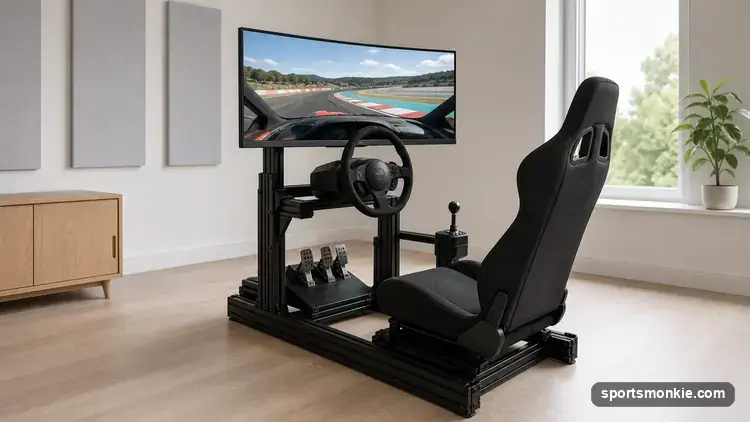
Racing Sim Rig: The Complete Beginner's Guide
What a racing sim rig actually is, the three main types, real 2026 prices from $70 to $3,000+, and whether to buy pre-built or build your own.

3 Wood vs 5 Wood: Which Fairway Wood Do You Actually Need?
3 wood vs 5 wood: the 5 wood's extra loft makes it easier to hit off the deck, and most amateurs get similar distance. Here is the data.
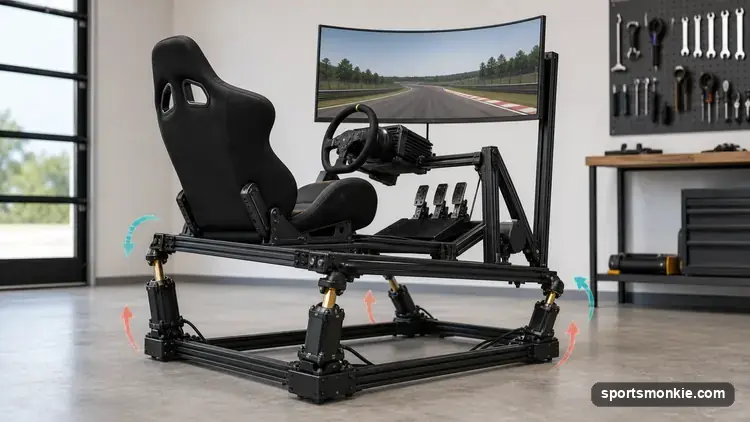
Sim Racing Motion Rigs: What They Do and Whether You Need One
A sim racing motion rig physically tilts and shifts your cockpit to mimic G-forces. Real 2026 prices from $1,499 to $30,000, and who actually needs one.

Golf Wedges for Beginners: Which Ones You Actually Need
Beginners need a pitching wedge and a sand wedge, not all four. Here's the loft, bounce, and 2026 price breakdown that tells you what to buy next.
Marc Marquez Will Not Give His Opinion on Qatar as MotoGP Riders Split Over Racing There
Marc Marquez refused to give his opinion on MotoGP racing in Qatar on November 6 to 8. Martin, Alex Marquez, Acosta and Bagnaia each answered differently at Phillip Island.
MotoGP Bids Farewell to Phillip Island After 30 Years
MotoGP races at Phillip Island for the last time this weekend. The Australian Grand Prix moves to Adelaide in 2027. Martin leads Marquez by two points, and a storm is forecast.