
Sim Racing Motion Rigs: What They Do and Whether You Need One

On this page7
- 01What does a motion rig actually do?
- 02How much does a sim racing motion rig cost?
- 03Next Level Racing’s motion platforms: what do you actually get?
- 04Is a motion rig worth it, or should you just buy a bass shaker?
- 05Who actually benefits from a motion rig?
- 06Does a motion rig need a specific cockpit or frame?
- 07The bottom line on sim racing motion rigs
A sim racing motion rig is a powered platform that physically tilts, shifts, or vibrates your cockpit to mimic the G-forces of braking, cornering, and road texture, on top of whatever your wheel and pedals already deliver. It’s a separate purchase from the frame and wheelbase covered in our racing sim rig guide, starting around $1,499 for a basic seat-mover and running past $30,000 for professional hybrid platforms. It’s worth the money only if you already own a solid direct-drive wheelbase and pedals and race often enough to notice the extra layer of feedback; for most people, a $280 bass shaker gets you most of the immersion for a tenth of the cost.
What does a motion rig actually do?
It moves the parts of your setup that a wheel and pedals can’t. Force feedback through the wheel tells you what the front tires are doing. A motion rig adds the sensation of the whole car’s body shifting: nose-diving under braking, rolling into a corner, squatting on acceleration. Sensors read telemetry straight from the game, iRacing, Assetto Corsa Competizione, or others, and drive actuators that push, tilt, or vibrate the platform in near real time.
Three motion approaches cover almost every product on the market:
- Seat-mover platforms move only the seat, while the wheel, pedals, and frame stay fixed. Next Level Racing’s Motion Platform V3 and DOF Reality’s Mover series work this way, and it’s the same principle professional driver-training simulators use, since isolating seat movement from control inputs keeps steering and braking inputs steady.
- Full-rig platforms tilt the entire cockpit, wheel, pedals, seat, and frame together, which adds more perceived realism but demands a rigid frame underneath it or the extra movement just becomes wobble.
- Bass shakers and tactile transducers don’t move anything. They vibrate in response to audio and telemetry, simulating curb strikes, gear changes, and engine rumble through your seat or pedals without any physical tilt.
How much does a sim racing motion rig cost?
Price scales almost directly with degrees of freedom (DOF), the number of axes a platform can move along. Two DOF covers pitch and roll; add yaw or heave for 3DOF; a full 6DOF rig combines pitch, roll, yaw, heave, sway, and surge.
| Motion type | DOF | Price range (2026, USD) | Best for |
|---|---|---|---|
| Bass shaker / tactile transducer | 0 (vibration only) | $150 – $400 | Anyone; cheapest immersion upgrade, no physical tilt |
| Seat-mover platform | 2 | $1,499 – $3,000 | Budget motion, subtle brake/corner feel, keeps wheel and pedals fixed |
| Full-rig platform | 2 – 3 | $2,499 – $3,999 | The most realistic G-force feel per dollar |
| Full-rig, high axis count | 4 – 6 | $6,999 – $10,000 | Dedicated enthusiasts chasing complete road feel |
| Professional hybrid system | 6-plus (hybrid) | $20,000 – $35,000+ | Sim centers, driver-training rigs, unlimited budget |
DOF Reality’s own comparison page lines up the mid-market clearly: its M2 seat-mover starts at $1,499, the H2 full-rig platform runs $2,499, and DOF climbs past $6,999 once you add a third and fourth axis. At the top end, SimXperience’s Stage 5 lists at $29,999 and uses a hybrid seat-mover-plus-rear-traction-loss design rather than pure 6DOF, which is the kind of engineering trade-off that separates hobbyist platforms from ones built for sim centers.
Next Level Racing’s motion platforms: what do you actually get?
Next Level Racing is the name most people searching for a next level racing sim rig actually mean, and it sells two distinct approaches rather than one motion product.
The Motion Platform V3 is $2,999 and moves only the seat, delivering pitch and roll plus two-point vibration feedback tied to in-game telemetry. Because the wheel and pedals stay fixed, it bolts under most existing cockpits without a frame swap, which is the main reason it’s the platform enthusiasts mention most often when the topic of home motion setups comes up.
The Motion Plus Platform, also $2,999 per unit, takes the opposite approach: it tilts the entire rig, wheel, pedals, seat, and frame together, for heave, pitch, and roll motion. Stack two units and Next Level Racing rates the combination for 3DOF. It’s a genuinely different feel from the V3, more like the whole car moving under you rather than just your body reacting to it, and picking between them comes down to whether you want subtle body feedback or the full cockpit shifting.
Is a motion rig worth it, or should you just buy a bass shaker?
For most sim racers, a bass shaker first, motion later, if ever. A ButtKicker Gamer Plus costs $279.95 direct from the manufacturer, clamps to your existing frame in minutes, and translates curb strikes, gear shifts, and collisions into vibration you feel through the seat. It doesn’t tilt anything, so you lose the sensation of the car’s body rolling into a corner, but it captures a surprising amount of the immersion a $1,499 motion platform delivers, at under a fifth of the price.
Motion earns its cost once two things are already true: your wheelbase and pedals are good enough that force feedback isn’t the weak link, and you race often enough, several sessions a week, not once a month, to notice the extra layer rather than just the novelty of it. A driver still running a belt-driven wheel or basic pedals gets a bigger improvement from upgrading those first; our direct drive vs. belt drive comparison breaks down exactly where that money goes further. Motion doesn’t make you faster either. It changes how a slide or a lockup feels in your body, which some drivers use to react a beat sooner, but competitive lap time still comes from the wheel’s force feedback and your own reps, not the platform under you.
Who actually benefits from a motion rig?
Committed sim racers, not casual players. If you’re racing a couple of hours a week on a used chair with a $200 wheel, motion is the wrong next purchase, full stop. The buyer who gets real value already has a cockpit rated for their wheelbase’s torque, load-cell pedals, and a race schedule that makes the extra immersion worth noticing session after session. If you’re still assembling that base setup, our best budget sim racing setup guide covers where to spend first without wasting money on motion too early.
Sim racers using their rig for real driver training, karting or club racing crossover, also get more out of motion than pure esports competitors do, since the seat-mover style platforms mirror what professional driver simulators use to build reflexes for weight transfer.
Does a motion rig need a specific cockpit or frame?
Yes, and this is where buyers get caught out after already spending on the platform. Full-rig platforms need a frame rigid enough to transmit motion without flexing or rattling loose over time; a bargain aluminum stand undersells a $2,999 Motion Plus Platform the same way it undersells a high-torque wheelbase. Seat-mover platforms like the Motion Platform V3 are more forgiving since they isolate movement to the seat rail, but they still need a stable base to bolt to. If you’re planning to add motion down the line, buy the cockpit rated for it now rather than upgrading the frame twice.
The bottom line on sim racing motion rigs
Buy a bass shaker first. At $279.95, it’s the highest-value immersion upgrade in sim racing, full stop, and it works with any frame you already own. Move up to a seat-mover platform like the Next Level Racing Motion Platform V3 once your wheelbase, pedals, and race frequency justify $2,999, and only step into full-rig or 6DOF territory if you’ve already outgrown everything below it and the extra axes of movement are the last box left to check. For everything else shaping a home sim setup, from frame material to torque ratings, our complete sim racing rig guide is the place to start before motion enters the conversation at all.
Frequently asked questions
What is a sim racing motion rig?+
A motion rig is a powered platform that physically tilts, pitches, or shifts your cockpit in response to in-game telemetry, mimicking acceleration, braking, and cornering forces. It sits under or around a wheel stand or cockpit and is a separate purchase from the frame, wheelbase, and pedals.
Is a motion rig worth it for sim racing?+
Only if you already own a solid wheelbase, pedals, and frame and race often enough to notice subtler feedback. Motion adds immersion, not lap time, and starts around $1,499. Most people get more improvement per dollar from better pedals or a bass shaker first.
What's the cheapest way to get motion-like feedback in sim racing?+
A bass shaker or tactile transducer, such as the ButtKicker Gamer Plus at $279.95 from the manufacturer, bolts to your rig and vibrates with engine, curb, and collision audio. It doesn't tilt anything, but it delivers most of the immersion gain of a motion rig for roughly a tenth of the cost.
How much does the Next Level Racing Motion Platform V3 cost?+
$2,999 direct from Next Level Racing. It's a seat-only 2DOF platform, meaning the seat pitches and rolls under you while the wheel, pedals, and frame stay fixed, which is the same approach professional driver-training simulators use for realistic body feedback.
What's the difference between 2DOF, 3DOF, and 6DOF motion rigs?+
DOF stands for degrees of freedom, the axes a rig can move along. 2DOF covers pitch and roll (braking and cornering); 3DOF adds yaw or heave; 6DOF combines pitch, roll, yaw, heave, sway, and surge for the most complete feel. Price roughly doubles with each added axis.
Does a motion rig make you a faster sim racer?+
Not directly. Motion improves how threats like a slide or lockup feel, which can help some drivers react sooner, but most competitive sim racers still rely on force feedback through the wheel and audio cues for lap time. Treat motion as an immersion upgrade, not a performance one.
Sources
- Next Level Racing – Motion Platform V3 (price, seat-only 2DOF design)
- Next Level Racing – Motion Plus Platform (price, heave/pitch/roll full-rig spec)
- DOF Reality – Compare All Motion Simulator Models (price ladder by DOF)
- SimXperience – Stage 5 Full Motion Racing Simulator (price, hybrid motion design)
- ButtKicker – Gamer Plus bass shaker (official price)
Play & tools
Free browser games and tools — no account, no download.
- Play 24-0 — Draft an F1 chassis and two drivers, then chase a perfect 24-0 — win every race on the 24-round calendar.
- Explore all our games →
Related motorsport guides
View all →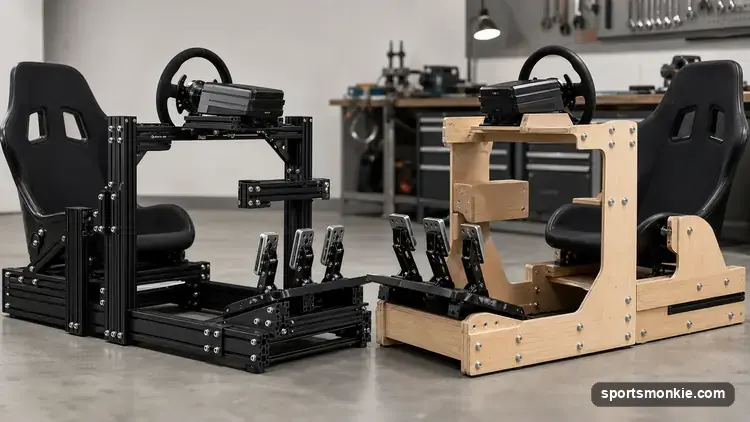
Aluminum vs. Wood Sim Racing Rigs: Does Frame Material Matter?
Aluminum extrusion vs wood sim racing rigs compared on rigidity under direct drive torque, real 2026 cost, modularity, and DIY difficulty.
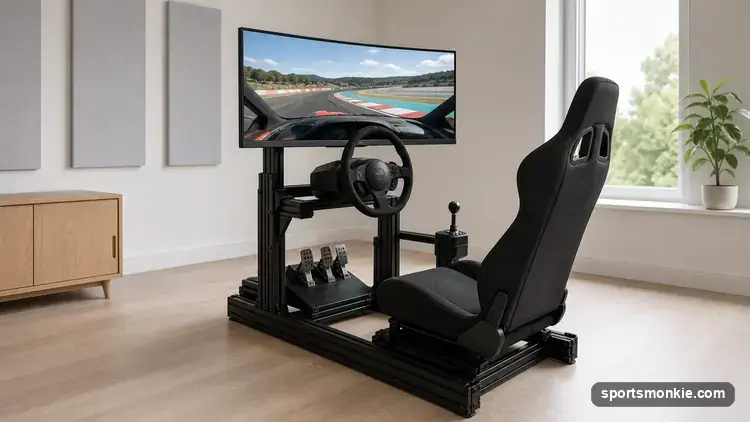
Racing Sim Rig: The Complete Beginner's Guide
What a racing sim rig actually is, the three main types, real 2026 prices from $70 to $3,000+, and whether to buy pre-built or build your own.
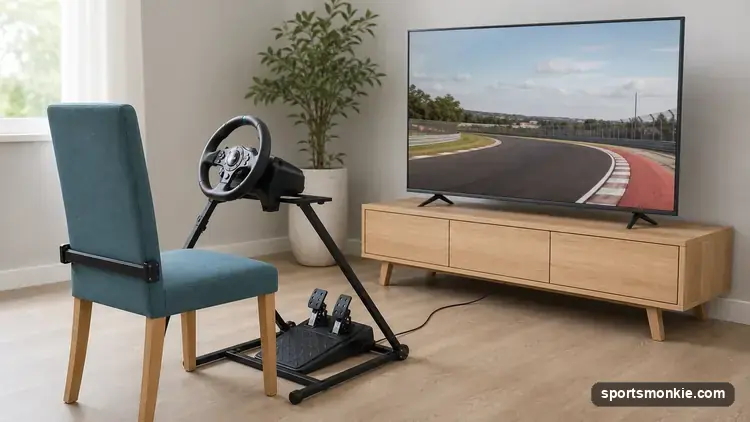
Best Budget Sim Racing Setup: What to Buy Under $500
The best budget sim racing setup costs $230-500: a wheel-and-pedal bundle, a desk clamp, and no fancy rig. Real 2026 prices and picks.
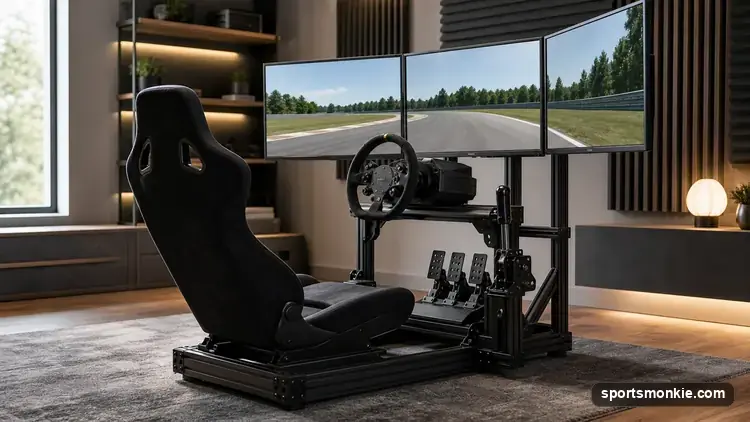
Best Sim Racing Cockpits in 2026
The best sim racing cockpit for most buyers is a folding aluminum or steel rig under $250. Compare folding, fixed, seat and triple-monitor picks by price.
Direct Drive vs. Belt Drive: Which Wheelbase Do You Need?
Direct drive vs belt drive sim racing wheelbases compared on torque, price, noise, and durability, with real 2026 product numbers to help you pick.
Triathlon Bike vs. Road Bike: Do You Need One to Start?
Triathlon bike vs road bike compared: geometry, price, and when beginners should actually upgrade, plus why tri bikes are banned in draft-legal racing.