
Best Sim Racing Cockpits in 2026

On this page6
- 01What is the best sim racing cockpit overall?
- 02What is the best folding sim racing cockpit for small spaces?
- 03Fixed vs. folding: which one should you actually buy?
- 04What racing seat should you use on a sim rig?
- 05Is a triple monitor setup worth it for sim racing?
- 06How much should you actually spend?
The best sim racing cockpit for most people is a folding rig under $250 — the Next Level Racing GTLite ($199) or GT Omega SPRINT (around $400 with its mesh-and-suede seat) both hold a wheel and pedals rigidly enough for regular racing and pack away in seconds. If you already own a stronger direct-drive wheel base, skip folding entirely and go fixed: the Trak Racer TR8 Pro V2 ($699) is rated for 30Nm without flex. This guide covers folding cockpits for small spaces, fixed rigs for serious torque, seat choice, and where triple monitors actually earn their keep.
What is the best sim racing cockpit overall?
Four rigs cover almost every buyer. Match your wheel’s torque and your available floor space first, then pick from this table.
| Cockpit | Price | Foldable? | Best for |
|---|---|---|---|
| Next Level Racing GTLite | $199 | Yes — folds with wheel/pedals still mounted | Tightest budget, apartments |
| Playseat Challenge | $229–$399 | Yes — fastest fold, ~2 min | Simplicity, shared living rooms |
| GT Omega SPRINT | ~$373–$415 | Yes | Sturdier folding pick, includes padded seat |
| Trak Racer TR8 Pro V2 | $699 | No, but 580mm compact footprint | First “real” fixed cockpit, up to 30Nm |
| Next Level Racing GTtrack | $899 | No | All-in-one frame, seat and optional monitor mount |
| GT Omega PRIME | ~$1,020+ | No | High-torque direct drive, zero-flex aluminum profile |
My honest take: don’t buy the GT Omega PRIME or GTtrack as a first cockpit. Both are excellent, but they’re solving a rigidity problem you don’t have yet with an entry wheel. Buy folding first, upgrade the frame when your wheel base actually needs it.
What is the best folding sim racing cockpit for small spaces?
This is a genuinely different buying decision from “best cockpit,” and most guides don’t treat it as one. If you’re racing in a bedroom, a shared living room, or an apartment where the rig has to disappear between sessions, rigidity-per-dollar matters less than fold speed and storage depth.
The Next Level Racing GTLite is the strongest pick here. Its adjustment hubs are rated to withstand 150kg of force each, and the frame folds flat for storage without unbolting the wheel or pedals first — you fold it once, wheel and pedals still attached, and it’s out of the way. At $199 it’s also the cheapest rig on this list. One caveat: keep the base GTLite on belt or gear-driven wheels. If you already own a direct-drive base, its sturdier sibling, the GTLite Pro, adds bracing specifically to handle direct drive up to 13Nm without the flex the base frame shows under that torque.
The Playseat Challenge trades a little rigidity for the fastest fold-to-storage cycle of any cockpit here, and it starts at $229 for the ACTIFIT edition, up to $399 for the direct-drive F1 edition with a built-in seat. If your rig lives in a 10-square-meter bedroom and comes out for an hour a night, that speed matters more than a few extra Newton-meters of stiffness.
The GT Omega SPRINT sits between the two: a lightweight frame with a quick-release wheel deck and folding pedal tray, wrapped in suede and breathable mesh on the seat itself, priced around $373–$415 depending on current promotions. It’s the pick if you want a folding rig that still feels like a proper seat rather than a stripped-down frame.
None of these three folding frames, in their base configuration, are meant for a high-torque direct-drive base above roughly 13Nm — see the torque note below.
Fixed vs. folding: which one should you actually buy?
Fixed cockpits win on rigidity and on not having to reset your wheel angle every session. Folding cockpits win on space and, usually, price. The honest trade-off:
- Buy folding if you share the room the rig lives in, if you’re on an entry or mid-tier wheel base (under roughly 10Nm), or if this is your first cockpit and you’re not sure how much you’ll actually use it.
- Buy fixed once you own a direct-drive wheel above roughly 15Nm, race more than a few hours a week, or have a dedicated space where the rig can live permanently.
I’d tell a friend buying their first rig to start with the GTLite or Playseat Challenge, not the TR8 Pro V2. You can always sell a $199 folding cockpit once you outgrow it; you can’t easily un-spend $700 on rigidity you didn’t need yet.
What racing seat should you use on a sim rig?
Every cockpit on the table above ships with some kind of seat, and for most buyers that stock seat is fine to start. The upgrade question comes later.
A dedicated bucket seat adds hip bolstering that a flat gaming or office chair doesn’t have, which matters once force feedback is pulling your hands and torso under braking and cornering loads. If you’re racing more than a couple of hours a week, a proper seat is usually a better next purchase than a heavier frame. If you’re racing occasionally, don’t bother — the seat that comes with a GTLite or Challenge will not be the thing holding your lap times back.
One sizing note worth knowing before you buy an aftermarket bucket seat separately: measure your hip width against the seat’s interior dimensions first. A narrow FIA-style bucket that doesn’t fit your build is an expensive mistake, and it’s not returnable once it’s been mounted.
Is a triple monitor setup worth it for sim racing?
As a complement to the cockpit itself, yes, and it’s the single biggest visual upgrade available short of VR. Three monitors angled around the driver deliver roughly 135–180 degrees of horizontal field of view, which is enough to see an apex or a car alongside you through actual peripheral vision instead of a mirror or a HUD indicator. A single ultrawide monitor is simpler to set up and mount, but it can’t replicate that side coverage no matter how curved the panel is.
Three practical things to get right:
- Field of view, not monitor size. Set your seating position first, then match FOV to your actual eye-to-screen distance — a 27-inch triple setup and a 32-inch triple setup need different FOV values for the same seat position. Most racing sims (ACC, iRacing, the F1 series) have an in-game FOV field or slider; get this wrong and the track looks stretched or too zoomed even on correct hardware.
- Mounting. A cockpit with an integrated monitor mount, like the optional stand for the Next Level Racing GTtrack, keeps the screens locked to the seat position so they don’t need re-aiming every session. A separate floor-standing triple stand works too, but it has to clear the wheel deck and not wobble under desk-thump vibration.
- GPU headroom. Driving three 1440p panels (or higher) at a stable frame rate takes meaningfully more GPU than a single monitor at the same resolution — triples are effectively rendering close to 3x the pixels, often at a wider FOV that raises the render cost further. Budget for a GPU tier or two above what you’d buy for single-monitor racing at the same settings, or plan to run one notch lower on graphics settings to hold your frame rate.
Triples are a display upgrade, not a cockpit upgrade — you can bolt them onto any of the rigs above, folding or fixed, as long as the mount clears the frame.
How much should you actually spend?
Treat the price ladder as tiers, not a single “best” number:
- Under $250 — folding, entry-level: GTLite, Playseat Challenge ACTIFIT. Right for casual racers and shared spaces.
- $350–$450 — folding, sturdier: GT Omega SPRINT. Right if you want a nicer seat without going fixed.
- $650–$900 — fixed, mid-to-high torque: Trak Racer TR8 Pro V2, Next Level Racing GTtrack. Right once your wheel base or your weekly hours justify it.
- $1,000+ — fixed, aluminum-profile, high-torque: GT Omega PRIME. Right for direct-drive bases above 15–20Nm where flex is a real, felt problem.
If you’re just starting out, our full sim racing rig build guide walks through wheel, pedals and PC choices alongside the cockpit itself, and if you’re choosing a wheel base to pair with any of these frames, direct drive vs. belt drive explains why torque rating and frame rigidity have to be picked together. For a cheaper way to feel real cornering forces before you buy any of this, our beginner’s guide to go-karting is worth a look — it’s the closest real-world equivalent to what a stiff cockpit and a bucket seat are trying to simulate.
Frequently asked questions
Frequently asked questions
What is the best sim racing cockpit for most people?+
For most buyers it is a folding cockpit in the $200–$400 range, such as the Next Level Racing GTLite or GT Omega SPRINT. Both hold a wheel base and pedals firmly enough for casual racing on belt or gear-driven wheels, fold flat for storage, and cost far less than a fixed steel or aluminum rig.
What is the best folding sim racing cockpit for a small apartment?+
The Next Level Racing GTLite is the strongest apartment pick: it folds even with the wheel and pedals still mounted, so there is no re-bolting each session. The Playseat Challenge is the fastest to set up and store, at roughly two minutes fold-to-away.
Is a triple monitor setup better than one big screen for sim racing?+
For competitive racing, yes. Triples give roughly 135–180 degrees of horizontal field of view, so you can see apexes and side-by-side cars through peripheral vision the way you would in a real car. A single ultrawide is easier to set up but never matches that peripheral coverage.
Do I need a real racing seat, or will my office chair work?+
An office chair is fine to start. A dedicated bucket seat adds hip bolstering that keeps you planted under braking and cornering forces you feel through force feedback, which matters over long stints. If you race more than a few hours a week, the seat is worth upgrading before the wheel.
How much torque should a sim racing cockpit handle?+
Match the frame to your wheel base, not the other way round. Belt and gear-driven wheels are fine on most folding rigs. Direct drive needs a frame purpose-built for it, like the GTLite Pro (13Nm) or a fixed rig such as the Trak Racer TR8 Pro V2, rated to 30Nm, or you will feel flex under hard steering inputs.
Can a folding cockpit handle a direct drive wheel?+
Only some. The base Next Level Racing GTLite is best kept to belt or gear-driven wheels; reviewers report flex under real direct-drive torque. Its sturdier sibling, the GTLite Pro, is purpose-built for direct drive up to 13Nm. Above that, step up to a fixed steel or aluminum-profile frame.
Sources
- Next Level Racing — GTLite folding cockpit specifications
- Playseat — Challenge cockpit pricing and editions
- GT Omega — SPRINT Folding Cockpit specifications
- Trak Racer — TR8 Pro V2 cockpit specifications
- Next Level Racing — GTtrack cockpit and monitor stand pricing
- GT Omega — PRIME aluminum-profile cockpit
Play & tools
Free browser games and tools — no account, no download.
- Play 24-0 — Draft an F1 chassis and two drivers, then chase a perfect 24-0 — win every race on the 24-round calendar.
- Explore all our games →
Related motorsport guides
View all →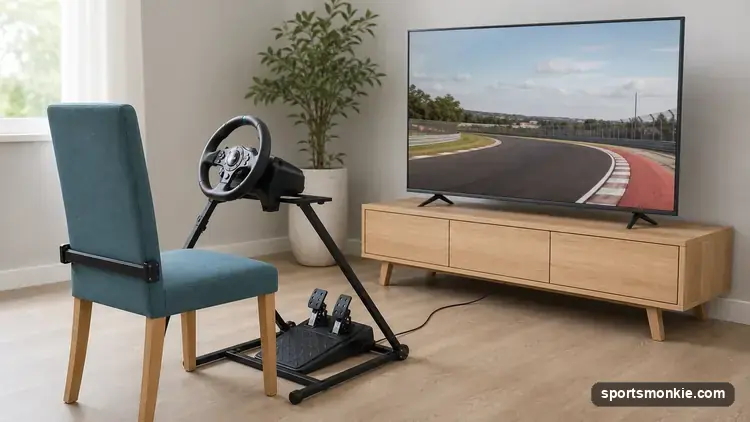
Best Budget Sim Racing Setup: What to Buy Under $500
The best budget sim racing setup costs $230-500: a wheel-and-pedal bundle, a desk clamp, and no fancy rig. Real 2026 prices and picks.
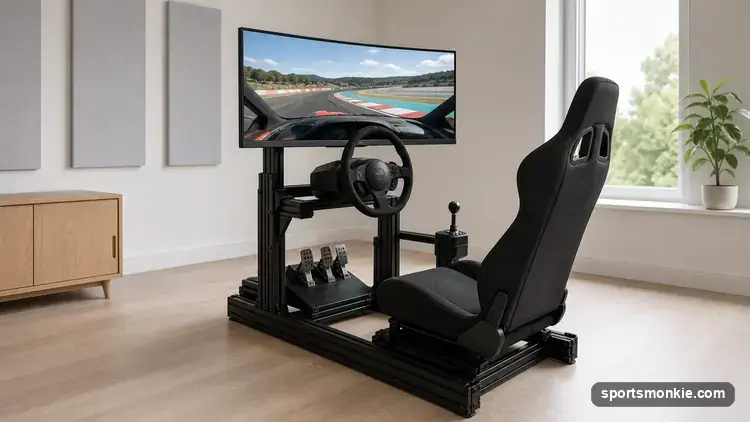
Racing Sim Rig: The Complete Beginner's Guide
What a racing sim rig actually is, the three main types, real 2026 prices from $70 to $3,000+, and whether to buy pre-built or build your own.
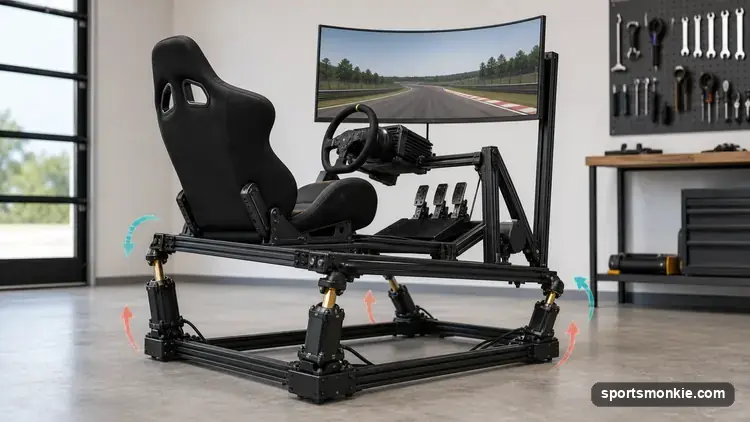
Sim Racing Motion Rigs: What They Do and Whether You Need One
A sim racing motion rig physically tilts and shifts your cockpit to mimic G-forces. Real 2026 prices from $1,499 to $30,000, and who actually needs one.
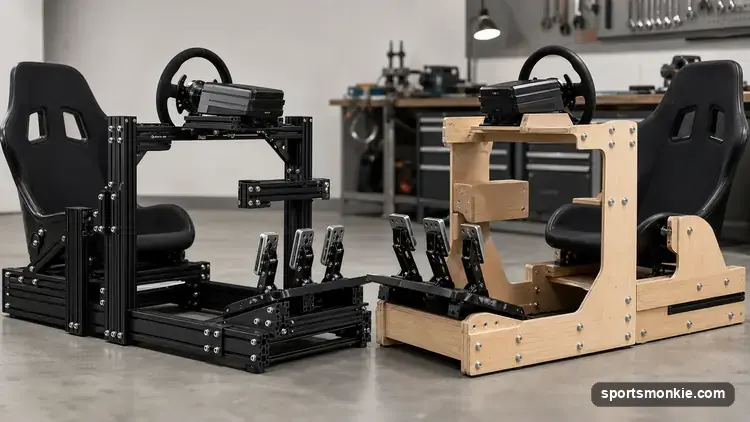
Aluminum vs. Wood Sim Racing Rigs: Does Frame Material Matter?
Aluminum extrusion vs wood sim racing rigs compared on rigidity under direct drive torque, real 2026 cost, modularity, and DIY difficulty.
F1's Fuel Flow Meter Supplier Is Sued Over a Patent Days Before the US Grand Prix
Sentronics, the FIA's former fuel flow meter supplier, has sued its replacement Allengra in Texas, claiming the sensors on every F1 car infringe its patent.

F1 Restores 305km Race Distance in 2028 After One Season at 290km
The FIA's published 2027 regulations restore the 305km grand prix distance from 2028. The 290km cut lasts one season. Here is the timeline and the engine changes behind it.