
FIA Admits Human Error Gave Some Cars Extra Power in Singapore Sprint Qualifying
On this page5
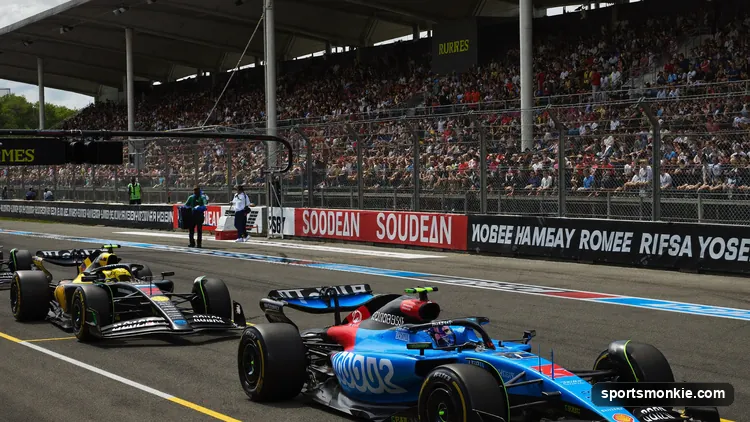
For the second weekend in a row, Formula 1’s systems failed in public, and this time the governing body has put its own hands up. The FIA admitted after Singapore sprint qualifying on Friday that a human error in Race Control meant Overtake Mode was wrongly unavailable after the SQ1 red flag, then switched on for 27 seconds before being turned off again, GrandPrix247 reports. Some cars ran the decisive segment with extra electric power and some did not, and the session was allowed to stand.
What did Race Control actually do wrong?
Two separate things went wrong in one session, and the FIA’s statement deals with the more serious one. After Sergio Perez crashed his Cadillac and brought out the red flag with a little over six minutes of SQ1 left, PlanetF1 reports, Overtake Mode was not available when the session restarted. When that was noticed, it was activated, left on for a period of 27 seconds, and deactivated again, the FIA said.
The consequence is built into the timing. Twenty-seven seconds is long enough for a car in the right part of Marina Bay to run a sector, or reach a deployment zone, with the extra energy, and far too short for the whole field to share it. The FIA accepted that the error affected the performance of certain cars depending on the timing of their run and their position around the lap, and stressed that SQ2 and SQ3 were unaffected. It did not name the winners or the losers of its own mistake.
How much power are we actually talking about?
Enough to decide an elimination. Overtake Mode is the 2026 regulations’ additional electrical deployment, worth a further 0.5 megajoules of energy over a lap, PlanetF1 reports, a system related to but broader than the old DRS overtaking aid because it changes the car’s power delivery rather than its drag. Sainz put a number on the split from the receiving end: about half the cars, by his estimate, did the lap with an engine roughly half a second quicker than the other half.
His own lap is the case study. Sainz was slowest in SQ1, fighting brake trouble that had already forced a change after practice, and said the lap was run with less power than any other lap of his weekend, PlanetF1 reports. Whether the missing deployment alone explains last place is not provable from outside, and Sainz did not claim it was. His argument is that nobody should have to prove it: a qualifying segment in which the cars were not running the same specification is not a contest that can be audited afterwards.
Why is the Malaysia comparison the heart of the row?
Because the FIA has already shown it will intervene when its systems distort a session, and a week ago it did. The previous round in Malaysia was stopped on the formation lap by a power-unit software failure, an episode this desk covered when the FIA published its Sepang review, and the handling of that weekend’s restart order turned on sporting fairness. Sainz’s complaint, reported by PlanetF1 and MotorBiscuit, is that the principle was applied there and not here, and that the difference looks like it depends on who was eliminated.
The Singapore weekend now has three separate systems stories running at once: the timing fault in the same SQ1 session, in which lap times briefly stopped registering and SQ2 was delayed, Crash.net reports; this Overtake Mode error; and the stewards’ yellow-flag verdict that let Max Verstappen keep the sprint pole he won in that same qualifying hour. Verstappen’s pole itself is not tainted by the power error, since SQ3 was unaffected, but the grid behind him was partly written in a segment the FIA now says was unequal.
What can actually be done about it now?
Very little that is clean, which is the point Sainz is making. PlanetF1 reports the FIA conceded fault and expects protests. But SQ1’s eliminated drivers cannot be given their laps back at equal power, and promoting them would punish drivers who advanced in a segment the FIA also says produced correct timings once its other fault was fixed. Every available remedy is a fresh judgment layered on top of the error.
That leaves the sprint on Saturday starting from a grid whose first cut was made under unequal power, with George Russell’s separate engine penalty already reshaping Sunday’s race behind it. The longer damage is institutional: two consecutive weekends of admitted systems failure, one software and one human, in the first season of a complicated new power formula. The FIA fixed Malaysia’s configuration question in a published review. Singapore’s question is harder, because it is not about a setting. It is about whether a result produced by an admitted error should count simply because correcting it is inconvenient.
What happens next?
The sprint runs on Saturday and the Grand Prix on Sunday, and any protest will have to be lodged and heard inside that timetable. Watch for Williams or another eliminated team to formalise Sainz’s complaint, for the FIA to publish which cars held the mode during the 27 seconds, if it can, and for Race Control’s procedures around red-flag restarts to be rewritten in public, as they were after Sepang. A championship being decided by hundredths chased across a season cannot afford a stopwatch, or a power switch, that only works for half the field at a time.
Frequently asked questions
What exactly did the FIA admit after Singapore sprint qualifying?+
A human error in Race Control, separate from a timing fault in the same session. In its statement the FIA said Overtake Mode was not available after the SQ1 red flag, was then activated for 27 seconds once the mistake was noticed, and was deactivated again, GrandPrix247 reports. It accepted the error had an impact on the performance of certain cars based on the timing of their runs and their position on the lap.
What is Overtake Mode and how much is it worth?+
It is the 2026 power units' extra electrical deployment, worth an additional 0.5 megajoules of energy across a lap, PlanetF1 reports, and a significant pace advantage while it is active. Sainz estimated that about half the field ran its SQ1 lap with an engine roughly half a second quicker than the other half, an estimate the FIA has neither confirmed nor quantified.
Which drivers benefited from the error?+
The FIA has not said. Its statement did not identify who had the mode during the 27-second window or measure the gain, GrandPrix247 reports, and because the window opened and closed mid-session, the benefit depended on the accident of where each car was on track at that moment. SQ2 and SQ3 were not affected, the FIA stressed.
What caused the red flag that started the sequence?+
Sergio Perez's crash. Sprint qualifying was halted with a little over six minutes of SQ1 remaining after Perez hit the barriers in his Cadillac and spread debris as he recovered to the pits, PlanetF1 reports. The Overtake Mode fault, and a separate timing problem in which lap times were not registering properly, both followed the restart.
Why is Sainz so angry about it?+
Because he was on the wrong end of it and because of the precedent. Sainz qualified slowest in SQ1, also fighting brake problems, and said his lap was run with less power than any other lap of his weekend, PlanetF1 reports. His complaint is comparative: in Malaysia a week earlier the FIA acted on sporting equity after a systems failure, and in Singapore, with half the cars powered differently from the other half, it let the session stand.
What was the other failure in the same session?+
The timing system. After the restart, lap times were not being registered properly, drivers did not know whether they had done enough to advance, and the start of SQ2 was delayed while it was fixed, Crash.net reports. Commentator Martin Brundle called the situation embarrassing for Formula 1 during the Sky Sports broadcast, in a session that already had a championship leader's pole decided under a separate investigation.
Can the sprint qualifying result be changed?+
That is the open question the admission creates. PlanetF1 reports the FIA conceded fault and expects protests to be launched. SQ1 eliminations cannot be rerun fairly after the fact, which is precisely Sainz's sporting-equity point: the drivers knocked out in the affected segment have no remedy that restores the laps they ran at lower power, and any remedy applied to the grid would be a judgment call rather than a correction.
Sources
- GrandPrix247: FIA admits human error gave some cars boost advantage in Singapore Sprint Qualifying (FIA statement)
- PlanetF1: Carlos Sainz launches FIA attack after Singapore GP human error
- Crash.net: Martin Brundle brands F1 timing glitch in Singapore sprint qualifying embarrassing
- Autosport: Verstappen takes sprint pole amid F1 Overtake Mode controversy, Singapore Grand Prix 2026
- MotorBiscuit: Sainz calls out after another lapse as FIA accepts human error in Singapore GP
Play & tools
Free browser games and tools — no account, no download.
- Play 24-0 — Draft an F1 chassis and two drivers, then chase a perfect 24-0 — win every race on the 24-round calendar.
- Explore all our games →
Related motorsport guides
View all →
Verstappen Keeps Singapore Sprint Pole After Stewards Find a Yellow-Flag Breach but No Penalty
Max Verstappen breached the yellow-flag rule passing Lewis Hamilton in Singapore sprint qualifying, but the stewards imposed no penalty and he keeps pole.
FIA to Investigate Software Glitch That Stopped F1 Cars on the Formation Lap in Malaysia
The FIA promised a full review after a software bug cut power to F1 cars on a wet formation lap at Sepang, forcing Hamilton to stop and restart his car.
Russell to Start Singapore GP From Back of Grid After Mercedes Confirms New Engine
Mercedes confirmed George Russell has no engines left in his allocation and will take a new power unit in Singapore, sending him to the back of the grid.
What Is Sprint Qualifying in F1? The Sprint Format
Sprint qualifying in F1 is the short session that sets the grid for the Saturday Sprint, a mini-race of about 100km that awards points to the top eight finishers.

Wolff Calls Mercedes Favouritism Claims 'Brainless' and Tells the Accusers to Watch Teletubbies
Toto Wolff dismissed claims Mercedes favour Kimi Antonelli over George Russell as brainless in Singapore, pointing to equal machinery and Russell's bad luck.

No, Kim Kardashian and Lewis Hamilton Are Not Married: The Viral Wedding Screenshot Is Fake
A viral post claiming Kim Kardashian secretly married Lewis Hamilton used a fabricated Instagram story screenshot and AI-generated wedding images. No such post exists.