
F1 Safety Car Explained: When It Comes Out and the Rules
On this page6
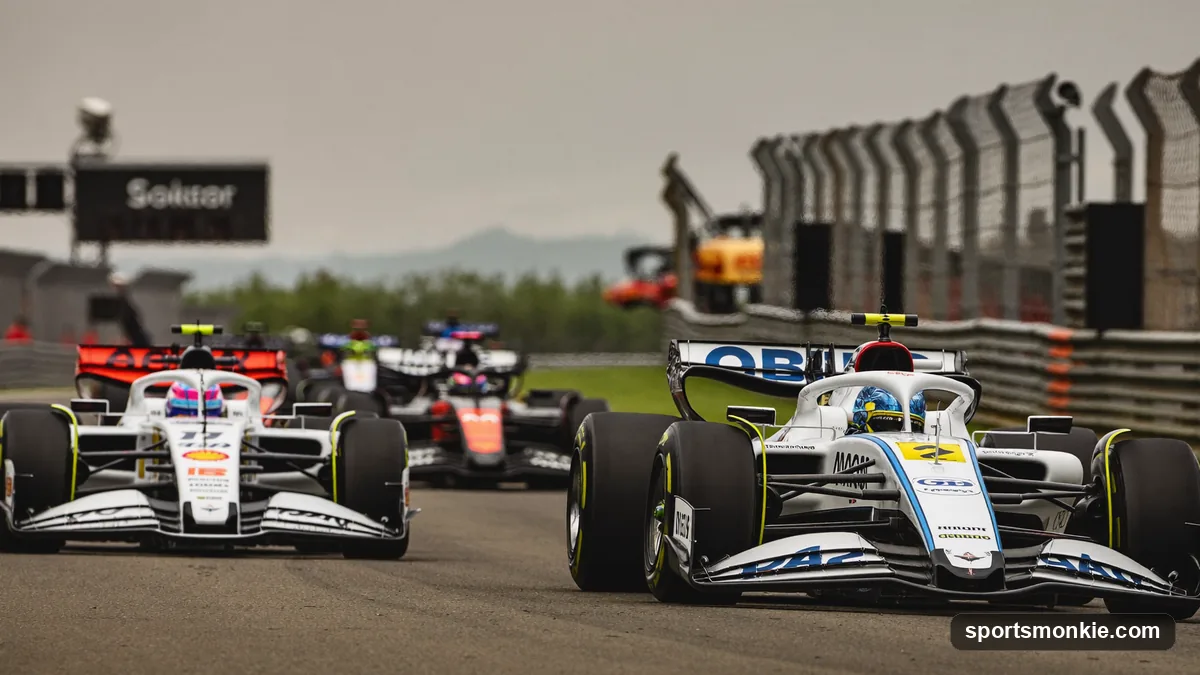
The Formula 1 safety car is a real, fast road car that comes onto the circuit and leads the field at reduced speed whenever there is a serious hazard, neutralising the race so marshals can work safely. When it is out, overtaking stops, the pack closes up nose to tail, and the race only resumes once it pulls into the pits. It is the sport’s tool for the moments a race cannot simply carry on.
Think of it as pressing pause without stopping the clock. Cars keep circulating, laps keep ticking down, but the racing is frozen until the danger is cleared.
When the safety car comes out
Race control deploys it when there is something on or beside the track that people need to attend to: a crashed car in a risky spot, a recovery crane or marshals on the racing line, scattered debris, or weather bad enough that racing at full speed is unsafe. The FIA sporting regulations give race control the call.
The key judgement is whether a Virtual Safety Car would be enough instead. The VSC slows everyone with a lap-time delta but leaves them spread around the lap; the full safety car is used when marshals need the whole field physically grouped and crawling, or when the hazard is too big for a delta alone to protect the people working on it.
The rules while it’s out
Once the safety car is deployed, a strict set of rules applies until the restart.
| Rule under the safety car | What it means |
|---|---|
| No overtaking | Passing is banned, bar narrow exceptions like a clearly slowing car |
| Close up | Drivers must reduce the gap and run nose to tail behind the car ahead |
| Minimum pace | Cars can’t crawl so slowly they cool tyres and brakes dangerously |
| Pit lane | The pit lane may stay open or be temporarily closed; teams often pit here |
| Lapped cars | Race control may wave them past to un-lap and rejoin the back |
That “close up” instruction matters because a strung-out field would make the restart chaotic. Drivers weave and brake to keep heat in their tyres, but they cannot fall dangerously far back or drive erratically, and penalties follow if they do.
Why lapped cars get waved past
This one confuses newcomers. When the safety car is about to come in, race control can send a “lapped cars may now overtake” message, letting backmarkers unlap themselves and drop to the tail of the queue. The point is a clean restart: the leaders line up against each other, not separated by cars a lap down.
It became the most argued-about rule in the sport after the 2021 Abu Dhabi finale, when only some lapped cars were waved through before a one-lap dash to the flag decided the championship. The FIA rewrote the procedure afterwards to remove the ambiguity, but the principle stayed the same.
How the restart works
When the hazard is gone, the safety car turns off its orange lights, signalling that it will pit at the end of that lap. From there the race leader controls the pace. They are allowed to back the pack up, dictate the run to the line, and cannot be overtaken until the start-finish line.
Everyone jostles for a tow and a clean launch, because the moment the leader crosses the line the race is live again. A good restart can win a place; a sluggish one can lose several. That is why restarts are among the most watchable moments in any grand prix, packing the drama of a standing start into the middle of a race.
The safety car itself
It is not a stripped-out race car. F1 uses high-performance road-based models, in recent years rotating between Mercedes-AMG and Aston Martin, driven by a professional with a co-driver wired into race control. It has to be genuinely quick, because if it leads too slowly the F1 cars behind lose tyre and brake temperature, which is dangerous in its own right when racing resumes.
The bottom line on the F1 safety car
The safety car is the sport’s pause button: a fast car that leads a frozen, bunched-up field so danger can be cleared, with overtaking banned and the leader controlling a rolling restart. Its trickiest wrinkle is the un-lapping rule, which the FIA tightened after 2021. Understand the restart and you understand where half of F1’s late-race drama comes from.
For the lighter-touch version that uses no car at all, see our side-by-side on the virtual safety car versus the safety car. And to know why a slow car ahead has to let a leader through under blue flags — a different situation entirely — read our F1 blue flag guide.
Frequently asked questions
When is the safety car deployed in F1?+
Race control deploys the safety car when a hazard needs marshals or recovery vehicles on or near the track: a heavy crash, a stranded car in a dangerous spot, scattered debris, or conditions too poor to race safely. It is used when a Virtual Safety Car alone would not give enough protection to people working trackside.
Can you overtake behind the safety car?+
No. Overtaking is forbidden from the moment the safety car is deployed until the race restarts, with narrow exceptions such as passing a clearly slowing car or obeying an instruction to un-lap. Drivers must also close up to the car ahead and stay within a set distance, not stopping or weaving dangerously.
Why do lapped cars overtake behind the safety car?+
Race control can wave lapped cars past the leaders so the restart has all cars on the lead lap grouped together, avoiding backmarkers separating the front-runners. This is signalled by a 'lapped cars may now overtake' message. It became controversial after the 2021 Abu Dhabi finish, and the FIA later tightened the wording of the rule.
How does an F1 restart after a safety car work?+
When the hazard is clear, the safety car switches off its lights and pits at the end of a lap. The race leader controls the pace on the final safety-car lap and cannot be overtaken until the start-finish line. Everyone accelerates and racing resumes at the line, making the restart a key overtaking opportunity.
What is the difference between the safety car and the virtual safety car?+
The safety car is a physical car that leads the field at reduced speed. The Virtual Safety Car has no car at all: drivers must instead hold to a minimum lap-time delta set by race control, keeping the gaps between them roughly fixed. The VSC is used for lesser hazards that don't need a full neutralisation.
Which car is used as the F1 safety car?+
F1 rotates its official safety car between manufacturers, most recently high-performance Mercedes-AMG and Aston Martin road-based models. It carries a professional driver and a co-driver in constant contact with race control, and it has to be quick enough not to cool the F1 cars' tyres and brakes too much while it leads.
Sources
Play & tools
Free browser games and tools — no account, no download.
- Play 24-0 — Draft an F1 chassis and two drivers, then chase a perfect 24-0 — win every race on the 24-round calendar.
- Explore all our games →
Related motorsport guides
View all →
F1 Red Flag Explained: What It Means and How Restarts Work
A red flag stops an F1 session immediately. Cars slow to a delta and return to the pit lane, teams can work on them, and the race restarts from there.
Virtual Safety Car vs Safety Car: The Key Differences
The safety car is a real car that bunches the F1 field; the virtual safety car uses a delta time and no car at all. Here's when each is used and why.
F1 Blue Flag Meaning: Get Out of the Way, Fast
A blue flag in F1 tells a slower, about-to-be-lapped driver to let a faster car past. Ignore it three times and you're penalised. Here's the full rule.
Parc Fermé in F1 Explained: The Rules That Lock a Car's Setup
Parc fermé is F1's restricted-work condition from the start of qualifying to the race. Change the setup and the car has to start from the pit lane.

F1 Flags Explained: Every Racing Flag and What It Means
A full reference to every F1 flag — green, yellow, double yellow, red, blue, white, black, meatball, black-and-white, chequered and the striped flag.
F1 Formation Lap Explained: Purpose, Rules and Aborted Starts
The formation lap is the single lap to the grid before an F1 race starts. Drivers warm tyres and brakes, hold position, and stop for the standing start.