
F1 Slipstream and Tow Explained: The Physics of Drafting
On this page5
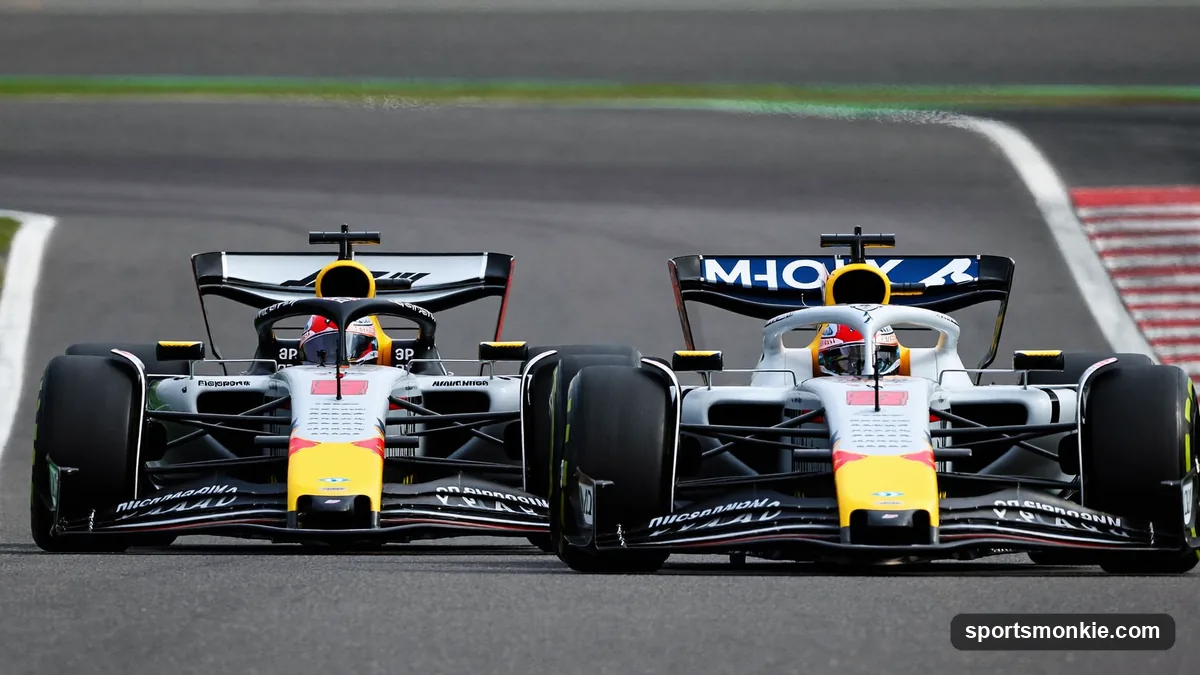
A slipstream — or tow — is the pocket of low-pressure, turbulent air trailing a Formula 1 car. A driver who follows closely and tucks into it meets far less air resistance, so the car accelerates harder and hits a higher top speed down the straight. Drivers use it to line up overtakes and to steal a few tenths in qualifying. The trade-off is that the same disturbed air wrecks grip in the corners.
It is one of the oldest tricks in motor racing, and it still decides races and pole positions today.
The physics of the slipstream
A Formula 1 car spends huge energy simply pushing air out of the way. At 300km/h, aerodynamic drag is the single biggest force slowing the car down. Behind it, though, the air is left churning and thin — a low-pressure “hole” punched through the atmosphere.
A following car that slots into that hole doesn’t have to work as hard to move forward, because the air ahead of it has already been disturbed. Less drag means the engine’s power goes further, so the trailing car can accelerate more strongly and reach a higher terminal speed than it could in clean air. Get the run right and you arrive at the braking zone alongside the car ahead, ready to pass.
How drivers use the tow
In a race, the tow is an overtaking tool. A driver stalks the car ahead through the final corner before a long straight, stays glued to its gearbox, then uses the slipstream to close the gap and dive down the inside into the next braking zone. On tracks with long straights this is the classic overtaking move, and it is the natural effect that DRS then amplifies.
In qualifying the tow becomes a deliberate tactic. Teams position their drivers so one gives the other a tow down the main straight, worth real lap time.
| Circuit type | Value of a tow |
|---|---|
| Long-straight tracks (e.g. Monza) | High — up to ~0.2–0.3s a lap or more |
| Balanced circuits | Moderate — a few hundredths |
| Twisty, low-speed tracks | Low — little straight-line benefit |
That is why an out-lap in qualifying can turn into a slow-motion chess game, with every driver trying to be the one receiving the tow rather than giving it.
The catch: dirty air in the corners
The slipstream is a gift on the straights and a curse in the corners. The turbulent wake that reduces drag also robs the following car of the clean airflow its wings need to make downforce. In this “dirty air” the trailing car loses grip, slides more, and overheats its tyres trying to stay close — especially through fast corners.
This is the central tension of following in F1. You gain on the straight and lose in the corners, and on a corner-heavy track the losses can outweigh the gain, making it hard to even get close enough to use the tow. The 2022 ground-effect regulations were written specifically to reduce how much a car’s wake disturbs the one behind, letting cars follow more closely and race harder.
Tow versus DRS: not the same thing
It is easy to lump the slipstream in with DRS, but they are distinct. The tow is a natural aerodynamic effect any following car gets for free. DRS is a mechanical device — a flap in the rear wing that a driver can open to cut drag further, but only when within one second of the car ahead in a marked zone.
DRS builds on the slipstream. A following car first gains from the tow, then, if it is close enough, opens DRS on top for an even bigger straight-line boost. When several cars all sit within a second of each other, that advantage cancels out into a DRS train, where nobody can pull off a pass because everyone has the same help at once.
The bottom line on slipstream and tow
A slipstream, or tow, is the low-drag wake behind an F1 car; follow into it and you gain top speed on the straights, which sets up overtakes and buys lap time in qualifying. The cost is lost grip in dirty air through the corners. It is the free, natural effect that DRS then amplifies — and understanding it is the first step to understanding how cars actually pass in F1.
To see how the sport tries to add that extra straight-line punch on demand, read our DRS explainer, then find out why a queue of cars can neutralise it entirely in our DRS train guide.
See also how this compares in F1 Porpoising Explained.
Frequently asked questions
What is a slipstream in F1?+
A slipstream is the pocket of low-pressure, turbulent air a car leaves behind it as it punches through the atmosphere. A following car sitting in that pocket meets less drag, so it can accelerate harder and reach a higher top speed. Drivers call it a 'tow', and using it well is a core overtaking skill on any track with a long straight.
What is the difference between a tow and a slipstream in F1?+
There is no real difference — 'tow' and 'slipstream' describe the same thing, the drag-reducing wake behind a car. 'Tow' is the more common term in the F1 paddock, especially in qualifying, where a driver may deliberately position themselves behind another car on a straight to gain speed. Both refer to following in low-pressure air.
How much time does a tow gain in F1 qualifying?+
It varies by track, but on a long-straight circuit like Monza a good tow can be worth around two to three tenths of a second a lap, sometimes more. That is why teams orchestrate their drivers to give each other tows in qualifying, and why traffic management on an out-lap becomes a tactical game of its own.
What is the downside of following in a slipstream?+
The same wake that cuts drag on the straights also disturbs the airflow the following car needs for downforce in the corners. In that 'dirty air' the trailing car loses grip and slides more, so drivers gain on the straights but struggle to stay close through fast corners. The 2022 ground-effect rules were designed to reduce this effect.
How is a slipstream different from DRS?+
A slipstream is a natural aerodynamic effect available to any following car. DRS is a driver-activated device that opens a flap in the rear wing to cut drag further, but only when a car is within one second of the one ahead in a designated zone. DRS builds on the slipstream rather than replacing it — the two work together.
Why do F1 drivers give each other a tow in qualifying?+
Teammates or cars from the same team sometimes coordinate so one runs ahead and gifts the other a tow down the main straight, gaining lap time. It is a legal tactic, but risky — mistime it and both drivers ruin their laps in traffic, or the leading car gets held up. On tow-sensitive tracks it can decide who takes pole.
Sources
Play & tools
Free browser games and tools — no account, no download.
- Play 24-0 — Draft an F1 chassis and two drivers, then chase a perfect 24-0 — win every race on the 24-round calendar.
- Explore all our games →
Related motorsport guides
View all →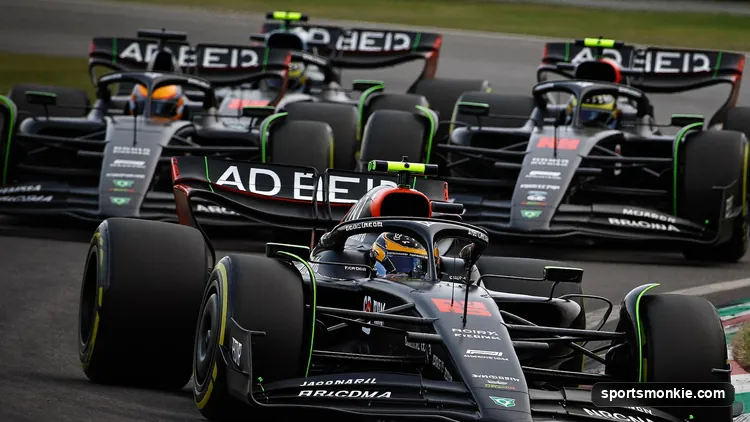
What Is a DRS Train in F1? Why a Queue Cancels the Advantage
A DRS train is a line of F1 cars each within one second of the next, so every car opens DRS at once and nobody gains — the passing aid neutralises itself.
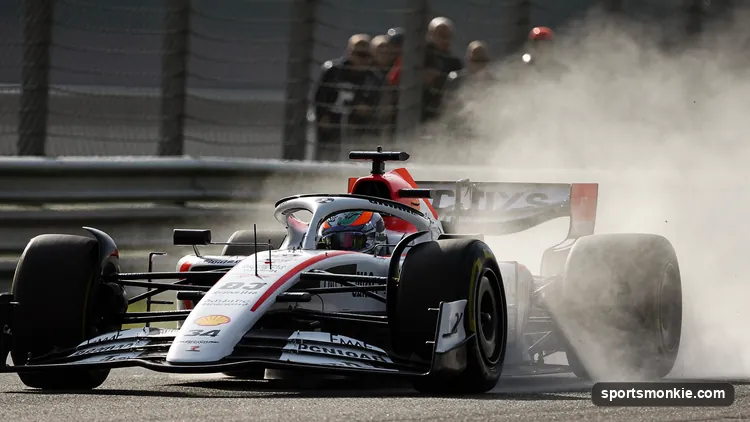
What Is Dirty Air in F1? Why It Kills Overtaking
Dirty air in F1 is the turbulent wake behind a car that robs the following car of downforce, making it slide and struggle to follow closely or overtake.
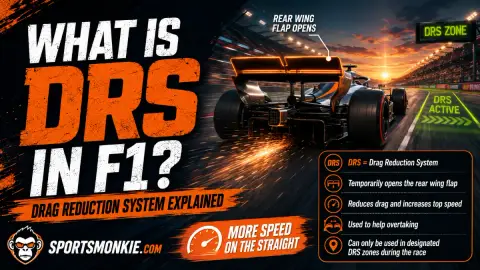
What Is DRS in F1? Drag Reduction System Explained
DRS opened a flap in an F1 rear wing to cut drag and aid overtakes. It was dropped for 2026, replaced by active aero and Override Mode. See how it works.
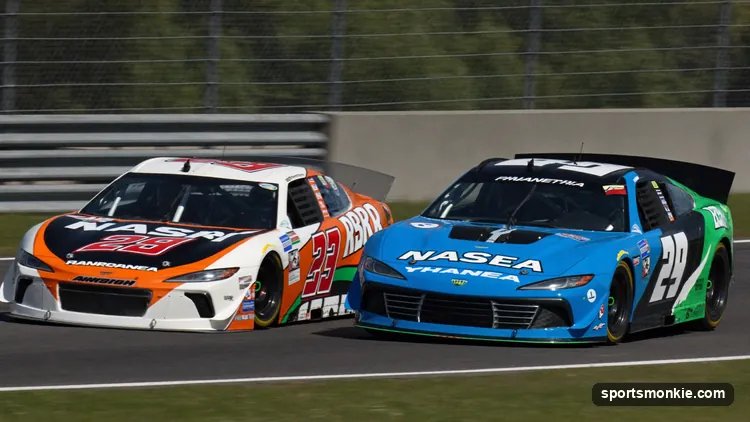
What Is Drafting in NASCAR?
Drafting is when NASCAR cars run nose-to-tail to cut aerodynamic drag, letting them go faster together than alone — the key to passing at superspeedways.
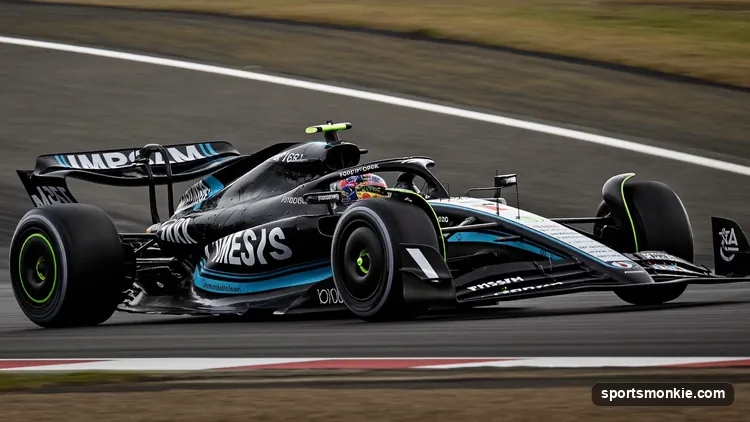
F1 Ground Effect Explained: The Floor That Sucks Cars Down
F1 ground effect uses the car's floor to create downforce, sucking it to the track. It returned in 2022 via venturi tunnels, and brought porpoising too.
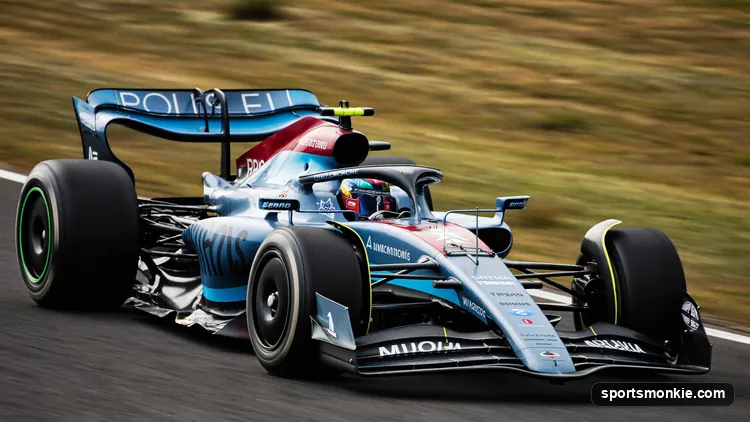
F1 Porpoising Explained: The 2022 Bouncing and How It Was Fixed
Porpoising is the violent vertical bouncing that hit F1's ground-effect cars in 2022. Here's the aerodynamics behind it and how teams and the FIA cured it.