
F1 Sprint Race Explained: Format, Length and Points
On this page5
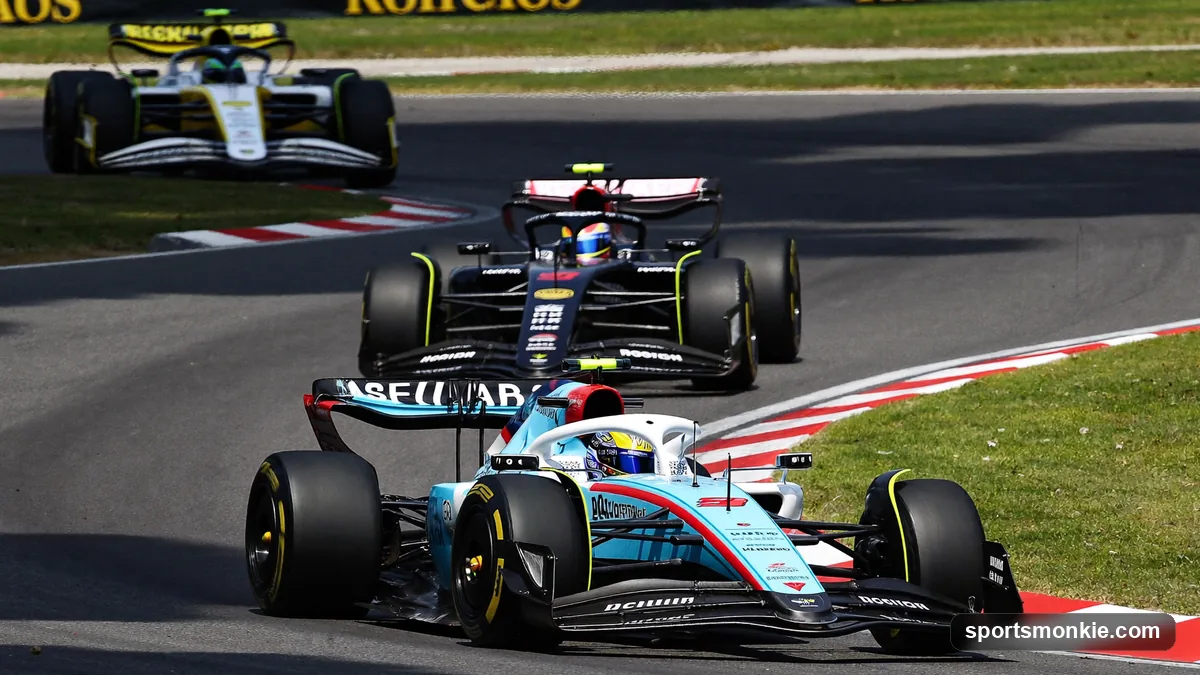
A Formula 1 sprint is a short race of about 100km — roughly a third of a grand prix — run on the Saturday of selected weekends, with its own separate qualifying and points for the top eight finishers. There is no mandatory pit stop, so drivers push flat out from start to finish. Since 2022 it has been a standalone event that does not set the grid for Sunday’s main race.
The idea is simple: give the weekend a second competitive race and put championship points on the line before Sunday. Whether that improves the show is one of the sport’s livelier arguments.
How long the sprint is and how it’s raced
At around 100km, a sprint lasts roughly 25 to 30 minutes. That length is deliberate. It is short enough that a car can run the full distance on one set of tyres without needing to stop, which strips out the pit-stop strategy that shapes a normal grand prix.
The result is a flat-out dash. Drivers do not have to nurse tyres to a pit window or juggle undercuts, so the racing tends to be more aggressive from the first corner. It is a different discipline from Sunday’s race — closer to a qualifying mindset stretched over a full, if brief, contest.
The sprint points system
Points are the whole reason the sprint matters to the championship. The F1 sprint rewards the top eight only.
| Position | Sprint points |
|---|---|
| 1st | 8 |
| 2nd | 7 |
| 3rd | 6 |
| 4th | 5 |
| 5th | 4 |
| 6th | 3 |
| 7th | 2 |
| 8th | 1 |
| 9th and below | 0 |
Those points stack on top of the grand prix haul and count for both the drivers’ and constructors’ titles. It is a smaller pot than Sunday’s — a grand prix win is worth 25 — but across six sprint weekends it can add up to a title-deciding margin in a close year.
How a sprint weekend fits together
A sprint weekend reshuffles the usual three days by cutting practice right back. A typical layout:
- Friday: one practice session, then sprint qualifying to set the sprint grid.
- Saturday: the sprint race, then traditional qualifying for Sunday.
- Sunday: the grand prix.
The key point for newcomers: the sprint has its own qualifying, and a completely separate qualifying still decides Sunday’s grid. The two events do not feed into each other. This is the change most old guides get wrong, because in the very first season the sprint did set the main grid.
Where the sprint stands now
F1 has settled on six sprint events per season, placed at selected rounds rather than every weekend, with the FIA and F1 reviewing the circuits and the number each year. They tend to pick tracks that produce close racing, since a short flat-out format lives or dies on overtaking.
Fan opinion stays split. Supporters like the extra points, the Saturday stakes, and the aggressive racing. Critics argue it dilutes the grand prix and reduces valuable practice time on the very weekends teams most need it. The format has been tweaked repeatedly since 2021 precisely because the sport is still deciding what it wants a sprint to be.
The bottom line on F1 sprints
A sprint is a 100km, no-pit-stop Saturday race with its own qualifying and points down to eighth place, run six times a year and kept separate from Sunday’s grand prix since 2022. It rewards outright aggression over strategy and adds a second slice of racing to the weekend. Love it or not, those sprint points are real, and in a tight championship they count.
Those eight points slot straight into the bigger picture of how a title is won. Our full guide to the F1 points system shows how sprint and grand prix scores combine across a season. And to understand the qualifying-style intensity a sprint demands, our look at the fastest F1 cars puts the outright pace in context.
Frequently asked questions
How long is an F1 sprint race?+
A sprint covers around 100 kilometres, which is roughly a third of a full grand prix distance and takes about 25 to 30 minutes. The shorter length means no mandatory pit stop is required, so drivers can push flat out from lights to flag on a single set of tyres without managing a stop.
How many points does an F1 sprint award?+
The top eight finishers score points on a sliding scale: 8 for the winner, then 7, 6, 5, 4, 3, 2 and 1 point down to eighth place. Anyone ninth or lower scores nothing. The points count towards both the drivers' and constructors' championships, on top of Sunday's grand prix points.
Does the sprint set the grid for the grand prix?+
No, not since 2022. The sprint is now a standalone event with its own dedicated qualifying session. A separate, traditional qualifying still sets the grid for Sunday's grand prix. Between 2021 and 2022 the sprint did decide the main-race grid, which is why some older explanations differ.
How does a sprint weekend schedule work?+
A sprint weekend compresses practice to a single session. A typical format is one practice then sprint qualifying on Friday, the sprint race followed by grand prix qualifying on Saturday, and the grand prix on Sunday. It gives two competitive sessions and a full race across the weekend instead of long practice running.
How many sprint races are there in a season?+
Formula 1 has run six sprint events per season in recent years, spread across selected rounds of the calendar rather than every weekend. The FIA and F1 review the number and the chosen circuits each year, favouring tracks that tend to produce close, action-heavy racing.
Why did F1 introduce sprint races?+
To add competitive action and a reason to watch on Saturday, and to test a shorter, higher-intensity format. First trialled in 2021, sprints put championship points on the line earlier in the weekend and reward aggressive, no-pit-stop racing. They remain divisive, with fans split on whether they add excitement or dilute the grand prix.
Sources
Play & tools
Free browser games and tools — no account, no download.
- Play 24-0 — Draft an F1 chassis and two drivers, then chase a perfect 24-0 — win every race on the 24-round calendar.
- Explore all our games →
Related motorsport guides
View all →
F1 Blue Flag Meaning: Get Out of the Way, Fast
A blue flag in F1 tells a slower, about-to-be-lapped driver to let a faster car past. Ignore it three times and you're penalised. Here's the full rule.
F1 Safety Car Explained: When It Comes Out and the Rules
The F1 safety car neutralises the race behind a real car when there's danger on track. Learn when it deploys, the rules, and how restarts work.
Virtual Safety Car vs Safety Car: The Key Differences
The safety car is a real car that bunches the F1 field; the virtual safety car uses a delta time and no car at all. Here's when each is used and why.
What Is DRS in F1? Drag Reduction System Explained
DRS opened a flap in an F1 rear wing to cut drag and aid overtakes. It was dropped for 2026, replaced by active aero and Override Mode. See how it works.
What Is Sprint Qualifying in F1? The Sprint Format
Sprint qualifying in F1 is the short session that sets the grid for the Saturday Sprint, a mini-race of about 100km that awards points to the top eight finishers.
F1 Qualifying Format Explained: Q1, Q2 and Q3 Knockout
F1 qualifying is a three-part knockout — Q1 drops the slowest 5, Q2 drops 5 more, and Q3's 10 cars fight for pole. Here's how each session works.