
F1 Tyre Compounds Explained: Colours, C1–C5 and Strategy
On this page5
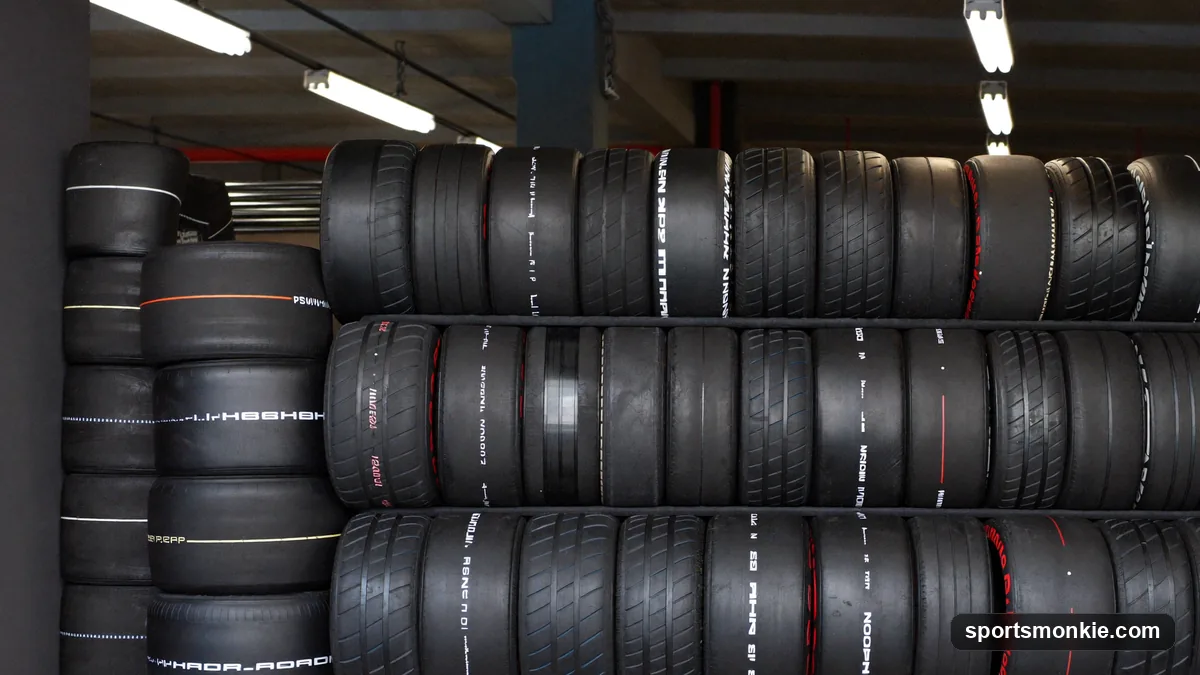
Formula 1 runs on Pirelli tyres graded from C1, the hardest, to C5, the softest slick, plus intermediate and full-wet tyres for rain. At each race Pirelli picks three of the slicks and colours them white (hard), yellow (medium) and red (soft). The twist that confuses most fans: those colours describe each tyre’s role that weekend, not a fixed compound, so a given C-number can be the hard tyre at one race and the soft at another.
Get that one idea and the rest of tyre strategy falls into place.
The compound range
Pirelli’s slick range is a ladder from durable to grippy. The company periodically adds a softer or harder step at either end, but the working core is C1 to C5.
| Compound | Character | Best suited to |
|---|---|---|
| C1 | Hardest, most durable | Abrasive, high-load circuits |
| C2 | Hard–medium | High-energy tracks |
| C3 | Balanced all-rounder | Most circuits |
| C4 | Soft | Lower-energy, smoother tracks |
| C5 | Softest, grippiest | Slow, smooth street circuits |
Then there are the two rain tyres, which sit outside that scale entirely: the intermediate (green) for a damp or drying track, and the full wet (blue) for standing water.
What the colours actually mean
This is the part worth slowing down on, because it is the single biggest source of confusion. Per Pirelli’s system, only three slick compounds appear at any given race, and they are always dressed in the same three colours by role:
- White = the hardest of the three chosen (the “hard”)
- Yellow = the middle one (the “medium”)
- Red = the softest of the three (the “soft”)
So if Pirelli brings C2, C3 and C4 to a race, the C2 is the white hard and the C4 is the red soft. Bring C1, C2 and C3 to a tougher circuit, and now C2 is the yellow medium. The colour is relative; the compound underneath is fixed. That is why a “soft” tyre at an abrasive track can be physically harder than a “hard” tyre at a smooth one.
Softer versus harder: the eternal trade-off
Every strategy call comes back to one balance. Softer rubber generates more grip and a faster lap, but it wears and overheats sooner. Harder rubber is slower but lasts far longer and copes better with heat and load. There is no free lunch — you buy pace with durability or durability with pace.
That trade governs how many stops a race needs. A one-stop race usually leans on harder compounds that can go long; a two- or three-stopper trades that endurance for the outright speed of softer tyres over shorter stints. Track temperature, abrasiveness and each car’s tendency to chew its tyres all feed into the sums.
The two-compound rule and rain
Two regulations shape almost every dry race. First, in a dry grand prix a driver must use at least two different slick compounds, which forces at least one pit stop and stops anyone simply bolting on one set and driving to the flag. Second, that rule is waived the moment it rains and intermediate or wet tyres come into play.
Rain rewrites everything. Intermediates handle a damp or drying surface and are the workhorse rain tyre; full wets clear the most water to fight aquaplaning in a downpour. Judging the exact moment to switch — slicks to inters, inters to wets, and back again as a track dries — is one of the biggest gambles in the sport, and races are routinely won and lost on a single well-timed or badly-timed call.
The bottom line on F1 tyre compounds
F1 tyres run from hard C1 to soft C5, shown each weekend as white, yellow and red by relative role, with green inters and blue wets for the rain. The key insight is that the colours are relative, not absolute, and that every choice trades pace against durability under a rule that forces two dry compounds per race. Once you see the tyres, you start to see the strategy.
Tyre choice is only useful if the stop that fits them is quick. See the choreography behind that in our guide to how F1 pit stops work, and the outright record for it in our fastest F1 pit stop breakdown.
Frequently asked questions
What are the F1 tyre compounds?+
Pirelli produces a range of slick compounds graded C1 to C5, from hardest and most durable to softest and grippiest, plus intermediate and full-wet tyres for rain. The slick range gives Pirelli options to suit different circuits, from smooth low-energy tracks that favour soft rubber to abrasive high-load tracks needing harder compounds.
What do the F1 tyre colours mean?+
At each race Pirelli selects three slick compounds and colours them by role: white for hard, yellow for medium, red for soft. Green marks the intermediate tyre for a damp track and blue marks the full wet for heavy rain. The colours show the relative role for that weekend, not a fixed compound.
Why can the same tyre be hard one week and soft the next?+
Because the white, yellow and red colours describe the three chosen compounds' relative roles that weekend, not the absolute C-number. If Pirelli brings C2, C3 and C4 to a race, C2 is the white hard; if it brings C1, C2 and C3, then C2 becomes the yellow medium. The colour is relative, the compound is fixed.
What is the difference between softer and harder F1 tyres?+
Softer compounds grip better and are faster over a lap but wear out and lose performance sooner. Harder compounds are slower but last far longer and resist overheating. The whole game is trading raw pace against durability, which is why strategy hinges on how many stops a set of tyres can be pushed to survive.
When do F1 cars use intermediate and wet tyres?+
Intermediates (green) are for a damp or drying track with no standing water, and are the most-used rain tyre. Full wets (blue) are for heavy rain with standing water, clearing the most water to resist aquaplaning. Teams switch between slicks and wets as conditions change, and calling that switch is a major strategic gamble.
Do F1 drivers have to use two tyre compounds in a race?+
In a dry grand prix, yes: drivers must use at least two different slick compounds during the race, forcing at least one pit stop. The rule is waived if it rains and wet or intermediate tyres are used. This mandatory-two-compound rule is a big reason strategy varies so much between cars.
Sources
Play & tools
Free browser games and tools — no account, no download.
- Play 24-0 — Draft an F1 chassis and two drivers, then chase a perfect 24-0 — win every race on the 24-round calendar.
- Explore all our games →
Related motorsport guides
View all →
Undercut vs Overcut in F1: The Two Pit Strategies Explained
The undercut means pitting earlier to jump a rival on fresh tyres; the overcut means staying out longer to pass them. Here's exactly when each one wins.
F1 Blue Flag Meaning: Get Out of the Way, Fast
A blue flag in F1 tells a slower, about-to-be-lapped driver to let a faster car past. Ignore it three times and you're penalised. Here's the full rule.
F1 Cost Cap Explained: The Budget Limit and What Counts
F1's cost cap limits team spending to roughly $135M a year, adjusted for inflation. Driver pay is excluded. Breach it and fines and testing cuts follow.
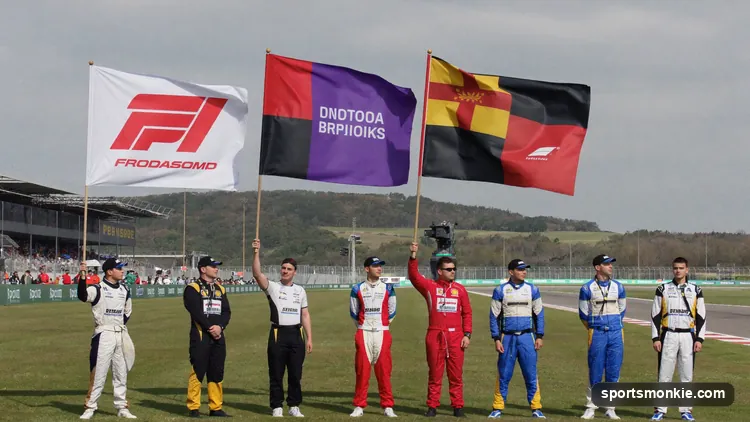
F1 Flags Explained: Every Racing Flag and What It Means
A full reference to every F1 flag — green, yellow, double yellow, red, blue, white, black, meatball, black-and-white, chequered and the striped flag.
F1 Formation Lap Explained: Purpose, Rules and Aborted Starts
The formation lap is the single lap to the grid before an F1 race starts. Drivers warm tyres and brakes, hold position, and stop for the standing start.
F1 Ground Effect Explained: The Floor That Sucks Cars Down
F1 ground effect uses the car's floor to create downforce, sucking it to the track. It returned in 2022 via venturi tunnels, and brought porpoising too.