
How F1 Pit Stops Work: The 20-Person, 2-Second Job
On this page5
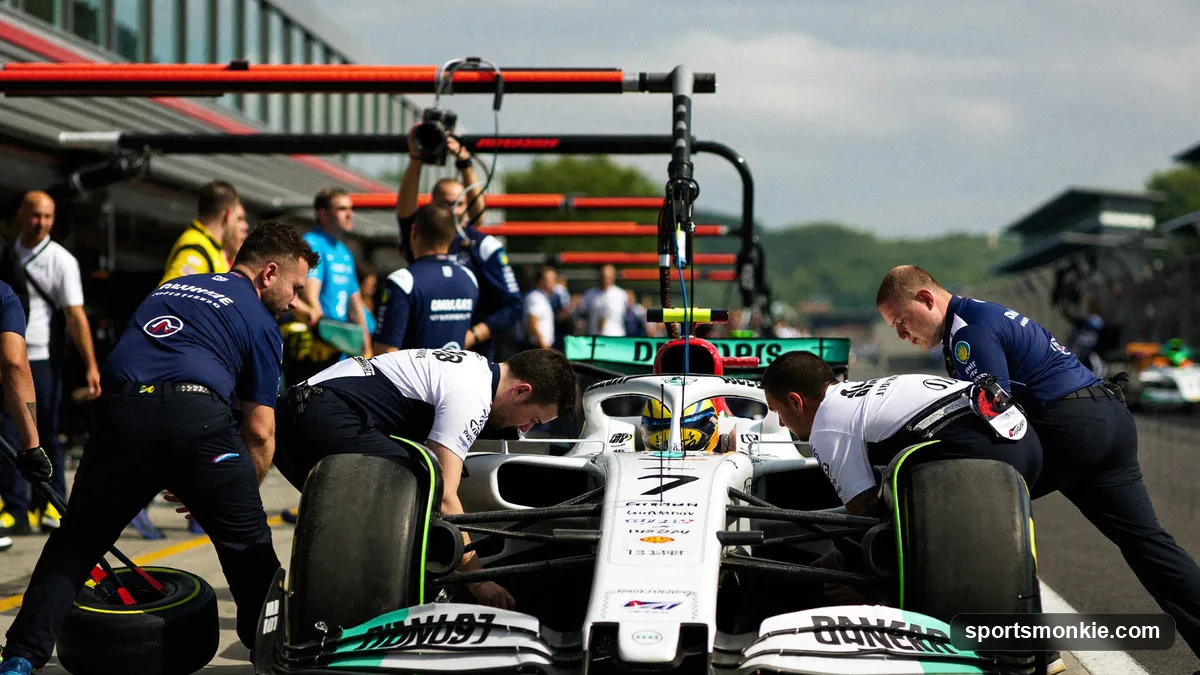
A Formula 1 pit stop changes all four tyres in roughly two to three seconds, using a crew of around 20 people who each do one small job and nothing else. The car brakes onto its marks, jacks lift it, three mechanics attack each wheel, and a light turns green the instant every tyre is on. There is no refuelling: that was banned in 2010, which is why a stop is now purely a test of tyre-changing speed.
Watch it at full pace and it looks like chaos. It is the opposite. Every hand knows exactly where it will be at every tenth of a second, and the whole thing has been rehearsed hundreds of times.
Who does what in an F1 pit stop
The crew breaks down into clear jobs. The bulk of it is the twelve people on the wheels, three per corner.
| Role | Number | Job |
|---|---|---|
| Wheel gun operators | 4 | One per corner, loosens then tightens the central nut |
| Tyre-off mechanics | 4 | Pull the old wheel clear |
| Tyre-on mechanics | 4 | Fit and hold the new wheel |
| Jack operators | 2 (+2 backup) | Lift the front and rear off the ground |
| Front-wing adjusters | 2 | Change wing angle if requested |
| Stabilisers | 2 | Steady the car as it is jacked |
| Release controller | 1 | Runs the traffic-light system |
That is roughly 18 to 22 people depending on how a team counts its backups. A modern F1 car uses a single central wheel nut rather than five bolts, which is the mechanical trick that lets one gun operator do in half a second what a road-car mechanic needs a minute for.
Why it only takes two to three seconds
The short answer is that a pit stop no longer does very much. Since refuelling was banned, the crew only has to swap tyres, so the whole operation is built around that one task.
The car arrives, hits its marks, and the front and rear jacks lift it almost simultaneously. Each gun operator cracks the wheel nut, the tyre-off mechanic yanks the old wheel away, the tyre-on mechanic slots the new one home, and the gun operator tightens and signals “done.” When all four signals land, the release light goes green and the driver is gone.
The old lollipop — a sign held in front of the car telling the driver when to go — has mostly been replaced by an automated traffic-light system. The light will not go green until every wheel gun confirms its nut is secure, which removes human error from the single most dangerous moment: releasing a car with a loose wheel.
The bit nobody watches: the pit lane itself
Here is what the two-second figure hides. The stationary part is tiny; the expensive part is the drive in and out. Pit-lane speed is capped, usually at 80km/h, enforced by a limiter the driver switches on. Break it and you get a penalty.
Add the slow-down, the limited-speed lane, and the acceleration back to racing speed, and a single stop costs the driver somewhere between 20 and 30 seconds of race time depending on the circuit. That “pit loss” is why strategy exists at all: a team is constantly weighing fresh tyres against the time it takes to fit them.
When a pit stop goes wrong
The failure modes are well known. A cross-threaded or unseated wheel nut is the classic: the gun operator cannot get the “done” signal, the light stays red, and a two-second stop balloons into ten while the whole race order reshuffles. Worse is an unsafe release, where a car leaves before a wheel is properly secured. Teams are fined heavily for it, and the driver is normally told to stop the car at once rather than risk a wheel detaching at 200mph.
Then there is the human cost. A gun operator standing in the pit lane is a target for any car that loses control on entry, which is why crews wear helmets and fire-resistant gear even though they never leave the garage.
The bottom line on F1 pit stops
An F1 pit stop is 20 specialists doing one job each, so tightly rehearsed that all four tyres change before you finish reading this sentence. The speed comes from a single wheel nut, a jacked car, and an automated release, but the real time cost lives in the pit lane’s speed limit, not the tyre change. It is the most concentrated piece of teamwork in the sport.
If two seconds sounds impossible, wait until you see the record. Our breakdown of the fastest F1 pit stop explains how a crew got under 1.8 seconds and exactly how that time is measured. And to understand when teams choose to pit at all, our guide to F1 tyre compounds shows how rubber choice drives the whole strategy.
Frequently asked questions
How many people are in an F1 pit crew?+
A full tyre-change crew is around 18 to 22 people. Twelve handle the wheels, three per corner: one to remove the old tyre, one to fit the new one, and one on the wheel gun. Add two jack operators, front-wing adjusters, stabilisers, and the person controlling the release light.
Why don't F1 cars refuel during pit stops?+
Refuelling was banned from the 2010 season on cost and safety grounds. Cars now start each race with all their fuel on board, so a pit stop only changes tyres and occasionally the front wing. Removing the fuel rig is the single biggest reason stops dropped from around seven seconds to under three.
What is the fastest an F1 pit stop can go?+
The quickest recorded stops are under two seconds, with the outright record around 1.8 seconds. That is the stationary time only, measured from the car stopping to it being released. The full pit-lane loss, including the slow drive through the limited-speed lane, is usually 20 to 30 seconds.
What is the lollipop in an F1 pit stop?+
The lollipop was a long sign a crew member held in front of the car to tell the driver when to brake and when to leave. Most teams replaced it years ago with an automated traffic-light system that only turns green once every wheel gun confirms its tyre is fitted, removing human reaction time from the release.
What happens if a wheel isn't fitted properly?+
The release light stays red until every gun signals the wheel is secure, so the car should not be sent out on a loose wheel. If a car does leave with an unsafe wheel, the team faces a heavy fine and the driver is usually told to stop immediately, ending their race to avoid the wheel coming off on track.
How fast can cars go in the pit lane?+
Pit-lane speed is capped, usually at 80km/h and sometimes 60km/h at tighter circuits, enforced by an electronic limiter drivers switch on. Exceeding it brings a penalty. This speed limit, not the tyre change itself, is why a pit stop costs 20-plus seconds of race time even when the stationary part takes two.
Sources
Play & tools
Free browser games and tools — no account, no download.
- Play 24-0 — Draft an F1 chassis and two drivers, then chase a perfect 24-0 — win every race on the 24-round calendar.
- Explore all our games →
Related motorsport guides
View all →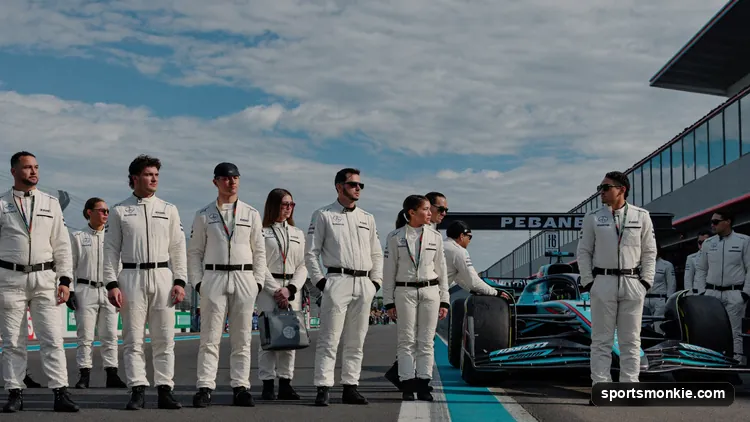
F1 Pit Crew Salary: What Mechanics Really Earn
F1 pit crew members are team mechanics who earn a reported £30,000-£100,000+ a year depending on role. Here's how the pay breaks down by job.
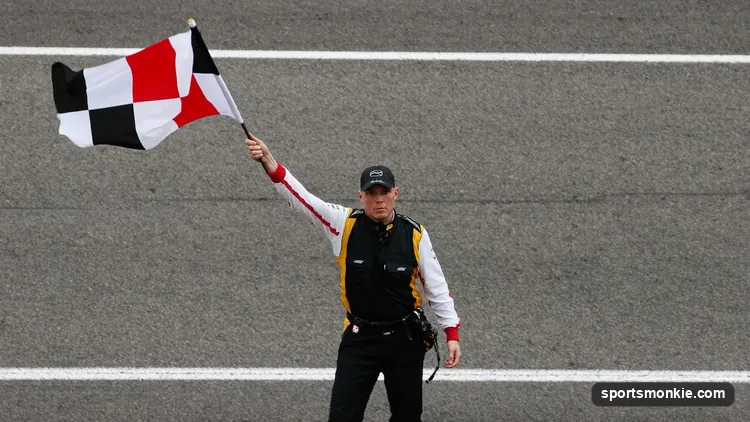
F1 Red Flag Explained: What It Means and How Restarts Work
A red flag stops an F1 session immediately. Cars slow to a delta and return to the pit lane, teams can work on them, and the race restarts from there.
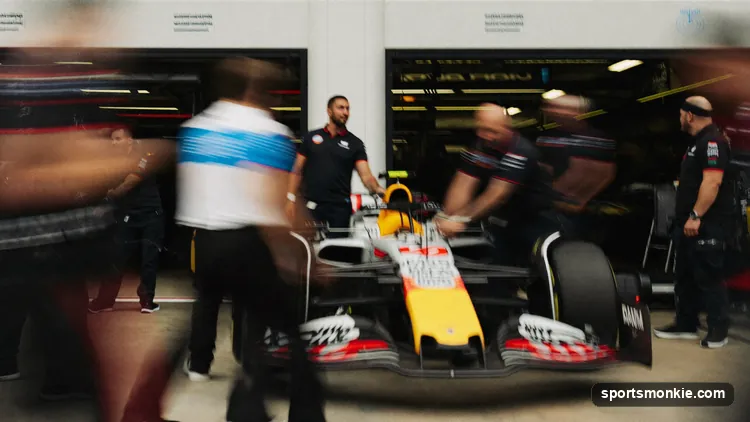
Fastest F1 Pit Stop Ever: The Full Leaderboard (1.80s Record)
McLaren's 1.80-second stop for Lando Norris at the 2023 Qatar GP is the fastest F1 pit stop ever, ratified by Guinness. See the full top-9 leaderboard.
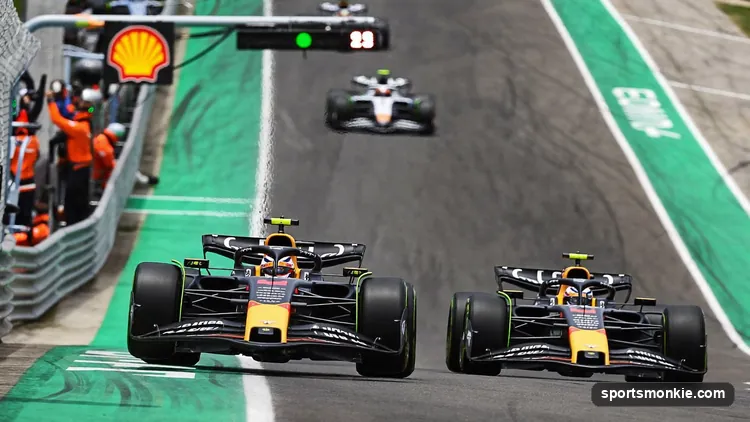
Undercut vs Overcut in F1: The Two Pit Strategies Explained
The undercut means pitting earlier to jump a rival on fresh tyres; the overcut means staying out longer to pass them. Here's exactly when each one wins.
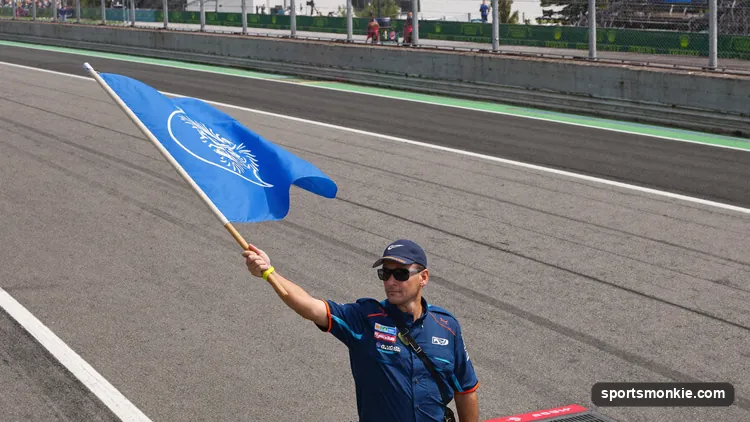
F1 Blue Flag Meaning: Get Out of the Way, Fast
A blue flag in F1 tells a slower, about-to-be-lapped driver to let a faster car past. Ignore it three times and you're penalised. Here's the full rule.

F1 Flags Explained: Every Racing Flag and What It Means
A full reference to every F1 flag — green, yellow, double yellow, red, blue, white, black, meatball, black-and-white, chequered and the striped flag.