
Parc Fermé in F1 Explained: The Rules That Lock a Car's Setup
On this page5
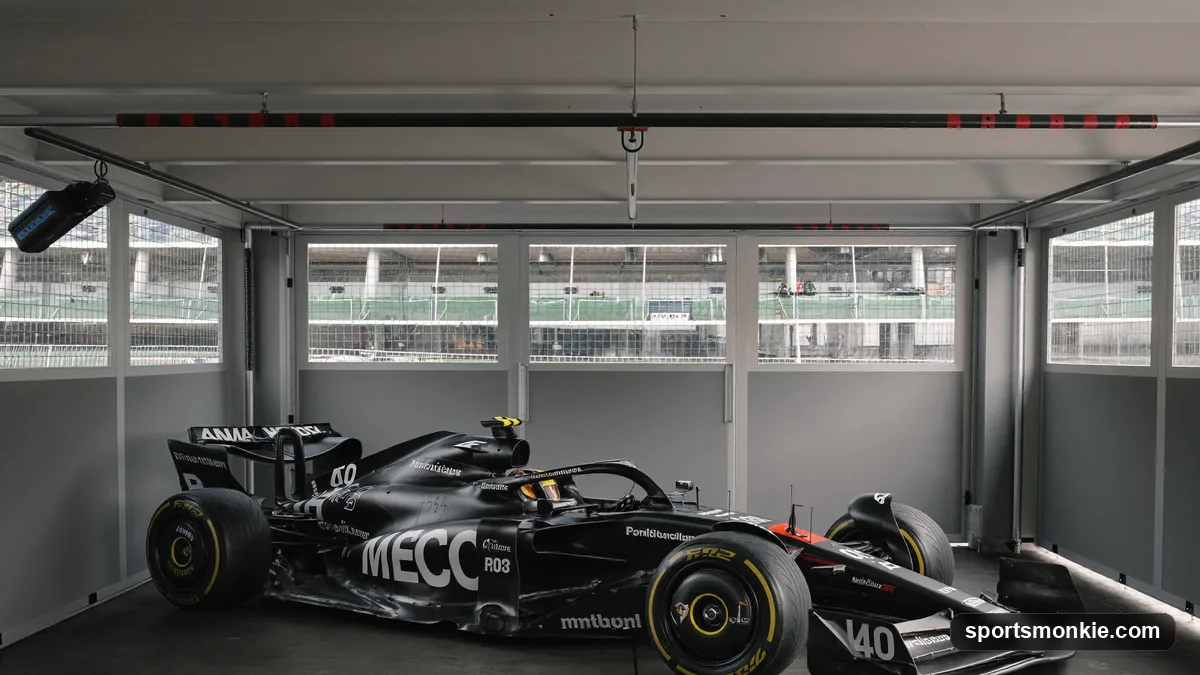
Parc fermé — French for “closed park” — is the restricted condition that locks a Formula 1 car’s setup from the start of qualifying until the race begins. Once a car runs in qualifying, teams can only carry out a short list of approved jobs; change anything that affects performance, and the car has to start the race from the pit lane. It is the rule that stops teams qualifying one car and racing a different one.
Understand parc fermé and a lot of confusing weekend decisions — pit-lane starts, “we’re changing setup under parc fermé” radio calls — suddenly make sense.
What parc fermé actually is
Parc fermé is not a physical place so much as a legal state the car enters. From the moment it leaves the garage in qualifying, the setup is frozen. The FIA’s scrutineers can inspect any car, and teams are trusted to touch only what the rules allow.
The goal is fairness. Qualifying rewards outright single-lap pace, and the race rewards a car that can look after its tyres over a stint. Those two things want different setups. Without parc fermé, a team could run a stripped, low-downforce car to steal pole, then rebuild it overnight into a proper race car. Locking the setup forces one compromise for both jobs.
When parc fermé applies
The timing is the part people get wrong. Parc fermé begins when a car leaves the pit lane for the first time in qualifying — in practice, the start of Q1 — and runs until the car crosses the line to start the race.
| Weekend phase | Setup status |
|---|---|
| Free practice | Open — teams change whatever they want |
| Start of qualifying (Q1) | Parc fermé begins; setup locked |
| Between qualifying and the race | Locked; only permitted jobs allowed |
| Race start | Parc fermé lifts |
On a sprint weekend the schedule is compressed and the setup is locked earlier, from the start of sprint qualifying, which is why teams have even less room to react to changing conditions.
What teams can and can’t do
Under parc fermé, mechanics are limited to a defined list of jobs that keep the car safe and running without changing how it performs. Broadly:
Allowed:
- Changing tyres and setting tyre pressures
- Topping up oil, coolant and hydraulic fluid
- Changing brake pads and bleeding brakes
- Adjusting the front-wing flap angle (a permitted aero tweak)
- Removing bodywork for cooling, then refitting it unchanged
- Cosmetic and safety-related work
Not allowed:
- Changing ride height, springs, dampers or anti-roll bars
- Altering gear ratios or differential settings
- Swapping to a different-downforce wing package
- Any change that alters mechanical or aerodynamic performance
The front-wing flap adjustment is the one meaningful setup lever left, which is why you often see crews out on the grid tweaking exactly that.
The penalty: a pit-lane start
Break parc fermé and the consequence is clean and automatic: the car starts the race from the pit lane rather than its earned grid slot, released after the rest of the field has launched.
Teams sometimes choose this on purpose. If a driver crashes in qualifying, or the team gambled wrong on the weather and qualified with an unsuitable setup, they may decide the qualified position is not worth keeping. They break parc fermé deliberately, fit an ideal race setup, and accept the pit-lane start as the price. On a track where overtaking is realistic, that trade can pay off.
Engine changes are a separate matter. Swapping power-unit parts beyond a driver’s season allocation brings its own grid penalty, and a big enough change can also send the driver to the back or the pit lane — sometimes stacked on top of a parc-fermé setup change.
The bottom line on parc fermé
Parc fermé locks an F1 car’s setup from the start of qualifying to the race, limiting teams to tyres, fluids, brakes and front-wing angle. Touch anything that changes performance and the car starts from the pit lane — a penalty teams occasionally take on purpose to escape a bad qualifying setup. It exists so the car you see on pole is the car that races.
The setup you lock in has to survive contact with the penalties rulebook and a full race distance. To see how the grid it protects is actually set, read our F1 qualifying format explainer.
Frequently asked questions
What does parc fermé mean in F1?+
Parc fermé is French for 'closed park' and refers to a restricted condition in which teams are barred from making meaningful changes to a car's setup. It applies from the start of qualifying through to the race, and it exists to stop teams running a low-downforce qualifying setup and then rebuilding the car for the race.
When does parc fermé start in F1?+
Parc fermé conditions begin the moment a car leaves the pit lane for the first time in qualifying — effectively the start of Q1 — and stay in force until the car crosses the line at the race start. On a sprint weekend the timing shifts, with setups locked from the start of sprint qualifying.
What can teams change under parc fermé?+
Only a short list of permitted jobs: changing tyres, adjusting tyre pressures, topping up fluids, changing brake pads, front-wing flap angle adjustments, and cosmetic or safety-related work. Bodywork can be removed for cooling as long as the setup underneath is not altered. Anything that changes mechanical or aerodynamic performance is banned.
What happens if a team breaks parc fermé?+
If a team changes a car's setup outside the permitted list, the car must start the race from the pit lane rather than its qualified grid slot. Teams sometimes accept this deliberately — for example after a big crash or a wrong weather call — to fit a completely fresh setup better suited to race conditions.
Can a team change the engine under parc fermé?+
Changing a power-unit component is allowed but usually carries its own grid penalty under the engine-allowance rules, separate from parc fermé. Swapping parts that count against a driver's season allocation triggers a grid drop, and a full setup change on top of that can push the driver to a pit-lane start.
Why does F1 use parc fermé at all?+
Parc fermé keeps qualifying honest. Without it, teams could bolt on a stripped-out, low-drag car to grab pole, then rebuild it overnight into a completely different race car. Locking the setup means the car you qualify is essentially the car you race, which rewards getting the compromise right the first time.
Sources
Play & tools
Free browser games and tools — no account, no download.
- Play 24-0 — Draft an F1 chassis and two drivers, then chase a perfect 24-0 — win every race on the 24-round calendar.
- Explore all our games →
Related motorsport guides
View all →
F1 Flags Explained: Every Racing Flag and What It Means
A full reference to every F1 flag — green, yellow, double yellow, red, blue, white, black, meatball, black-and-white, chequered and the striped flag.
F1 Formation Lap Explained: Purpose, Rules and Aborted Starts
The formation lap is the single lap to the grid before an F1 race starts. Drivers warm tyres and brakes, hold position, and stop for the standing start.
F1 Red Flag Explained: What It Means and How Restarts Work
A red flag stops an F1 session immediately. Cars slow to a delta and return to the pit lane, teams can work on them, and the race restarts from there.
F1 Safety Car Explained: When It Comes Out and the Rules
The F1 safety car neutralises the race behind a real car when there's danger on track. Learn when it deploys, the rules, and how restarts work.
F1 Cost Cap Explained: The Budget Limit and What Counts
F1's cost cap limits team spending to roughly $135M a year, adjusted for inflation. Driver pay is excluded. Breach it and fines and testing cuts follow.
F1 Porpoising Explained: The 2022 Bouncing and How It Was Fixed
Porpoising is the violent vertical bouncing that hit F1's ground-effect cars in 2022. Here's the aerodynamics behind it and how teams and the FIA cured it.