
F1 Red Flag Explained: What It Means and How Restarts Work
On this page6
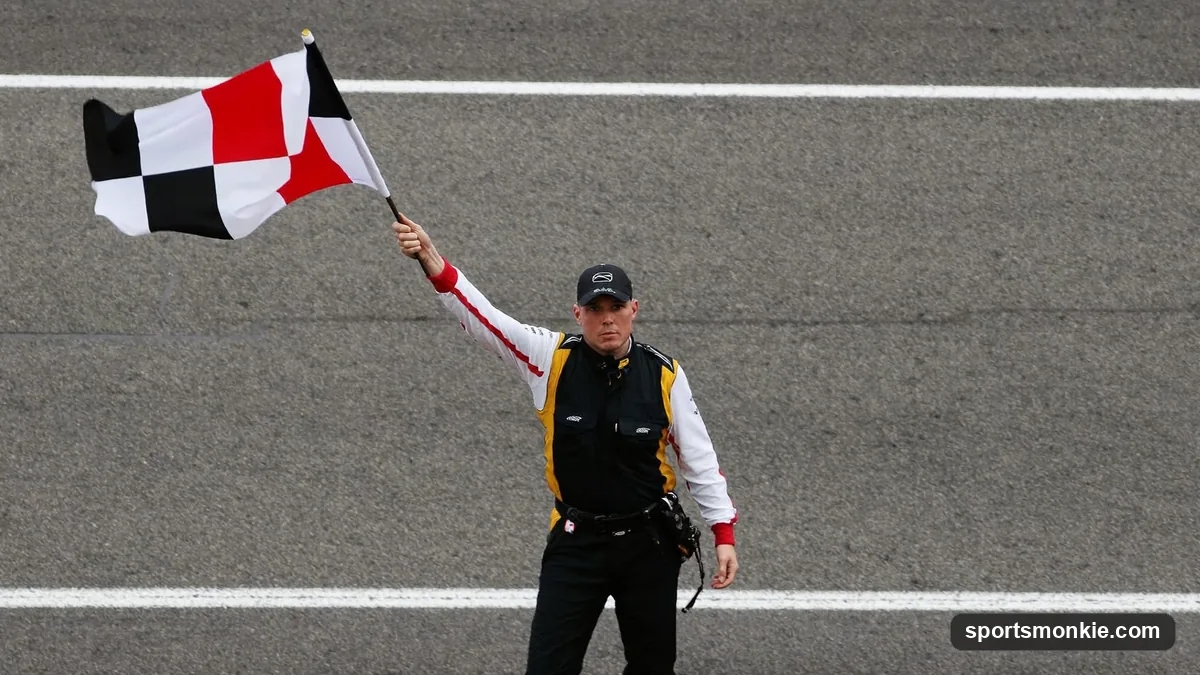
A red flag in Formula 1 stops the session immediately because the track has become too dangerous to keep racing on. When it flies, every driver slows to a controlled delta speed, stops overtaking, and returns to the pit lane, where the cars line up in the order they were running. The clock is paused, teams are allowed to work on the cars, and the race is later restarted from a fresh grid.
It is the most serious signal race control can give, short of abandoning the event entirely.
Why a red flag is shown
Race control reaches for the red flag when the track cannot be made safe with cars still circulating. The usual triggers are a heavy crash that scatters wreckage across the racing line, a car stranded in a dangerous spot, a barrier that needs repair, or weather so bad — standing water, poor visibility — that racing is unsafe even behind the safety car.
The distinction matters. A yellow flag or safety car slows the race but keeps it alive. A red flag admits the problem is bigger than that.
What drivers must do
The instant the red flag appears, drivers have to obey a strict set of rules:
- Slow down immediately to a defined maximum delta speed set by race control — no racing to the line.
- Stop overtaking. Positions are frozen; you hold the order you are in.
- Return to the pit lane (or, at some circuits, to a designated point on the grid) and line up in running order.
- No pit-lane speeding or unsafe releases — the usual pit rules still apply.
Ignoring any of this brings a penalty, because a red flag exists precisely because marshals, medical crews, or recovery vehicles may be on or near the track.
The rule that changes races: working on the car
Here is the quirk that makes red flags so consequential. While the race is stopped, mechanics are allowed to work on the cars in the pit lane, and that includes fitting a fresh set of tyres for free.
| Situation | Effect of a red flag |
|---|---|
| Leader hadn’t pitted yet | Gets a “free” tyre stop without losing the lead |
| Driver under pressure | Gap to chaser is wiped out on restart |
| Damaged car | Can be repaired without a normal pit-stop time loss |
| Strategy gambles | A late red flag can reward or ruin a one-stop plan |
A driver who was about to make a costly pit stop can suddenly change tyres at no cost, while a leader who built a big lead sees it erased. That is why a red flag is often described as a strategy reset as much as a safety measure.
How the race restarts
Once the track is clear, race control chooses one of two restart methods:
- Standing restart — the most common. Cars form up on the grid in running order and the race resumes with a lights-out standing start, exactly like the beginning of the formation lap sequence.
- Rolling restart — used when conditions are still marginal, such as a wet track. The field circulates behind the safety car and racing resumes when the safety car peels in.
Teams get several minutes of notice, and drivers return to their cars if they had climbed out. The race then runs to its remaining distance, subject to the overall time limit.
What happens if the race can’t resume
If the track cannot be made safe in time, the race can be declared finished at the point it was stopped. Full points are awarded if enough distance was completed; if less than three-quarters of the planned laps were run, a reduced points scale applies. That scale, and how a shortened race is scored, ties directly into the wider F1 points system.
The bottom line on the red flag
A red flag stops an F1 session cold: cars slow to a delta, stop racing, and file back to the pit lane in running order while the clock pauses. Track position is protected, but every gap resets and teams can work on the cars — which is why a well-timed red flag can be worth more than any overtake. Restarts come as either a standing grid or a rolling safety-car release.
Red is only one of eleven flags marshals use to control a race. For the full picture, read our guide to every F1 flag and what it means, or see how the softer signal works in our safety car explainer.
Frequently asked questions
What does a red flag mean in F1?+
A red flag means the session is stopped because the track is unsafe to keep running on — usually a heavy crash, a blocked track, debris, or dangerous weather. Every driver must slow to a controlled pace, stop racing, and return to the pit lane or hold on track as instructed by race control.
Can teams work on the car during a red flag?+
Yes, and this is a big strategic quirk. While the race is red-flagged, mechanics can work on a stopped car in the pit lane, including fitting a fresh set of tyres without losing track position. A driver who has not yet pitted effectively gets a free stop, which can swing a whole race.
How does an F1 race restart after a red flag?+
The race resumes in one of two ways: a standing restart from a fresh grid formed in the order cars were running, or a rolling restart led by the safety car if conditions are still marginal. Race control decides based on track and weather, and gives the teams several minutes of warning before the lights.
Do drivers keep their position after a red flag?+
Yes. Cars line up in the pit lane in the order they were running when the red flag flew, so track position is preserved. The gaps between cars are wiped out, though, which is why a red flag can hand a huge advantage to a leader who was under pressure or about to pit.
What is the difference between a red flag and a safety car?+
A safety car neutralises the race but keeps the cars circulating at reduced speed, so racing can resume quickly. A red flag stops the session entirely, sends cars to the pit lane, and pauses the clock. Race control uses the red flag only when the track cannot be made safe with cars still moving.
Does the race clock stop during a red flag?+
Yes. When the red flag comes out the countdown to the two-hour maximum race window is suspended, and there is a separate three-hour overall limit from the scheduled start. If a race cannot be resumed, results can be declared, and reduced points apply if less than three-quarters of the distance was completed.
Sources
Play & tools
Free browser games and tools — no account, no download.
- Play 24-0 — Draft an F1 chassis and two drivers, then chase a perfect 24-0 — win every race on the 24-round calendar.
- Explore all our games →
Related motorsport guides
View all →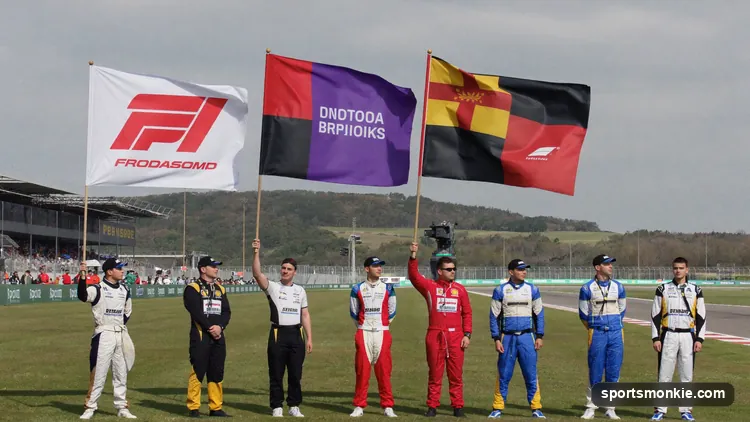
F1 Flags Explained: Every Racing Flag and What It Means
A full reference to every F1 flag — green, yellow, double yellow, red, blue, white, black, meatball, black-and-white, chequered and the striped flag.
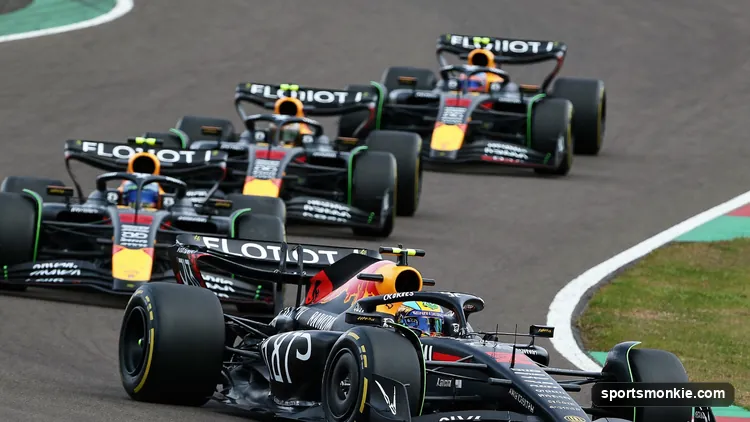
F1 Formation Lap Explained: Purpose, Rules and Aborted Starts
The formation lap is the single lap to the grid before an F1 race starts. Drivers warm tyres and brakes, hold position, and stop for the standing start.
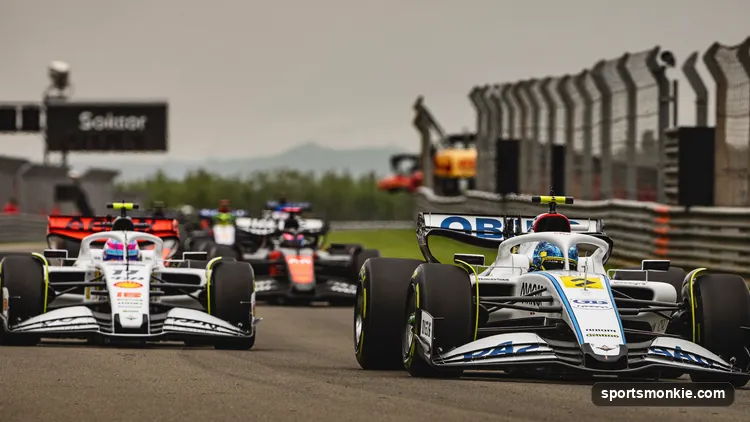
F1 Safety Car Explained: When It Comes Out and the Rules
The F1 safety car neutralises the race behind a real car when there's danger on track. Learn when it deploys, the rules, and how restarts work.
Parc Fermé in F1 Explained: The Rules That Lock a Car's Setup
Parc fermé is F1's restricted-work condition from the start of qualifying to the race. Change the setup and the car has to start from the pit lane.
F1 Cost Cap Explained: The Budget Limit and What Counts
F1's cost cap limits team spending to roughly $135M a year, adjusted for inflation. Driver pay is excluded. Breach it and fines and testing cuts follow.
F1 Porpoising Explained: The 2022 Bouncing and How It Was Fixed
Porpoising is the violent vertical bouncing that hit F1's ground-effect cars in 2022. Here's the aerodynamics behind it and how teams and the FIA cured it.