
What Is ERS in F1? The Hybrid Boost, Explained
On this page5
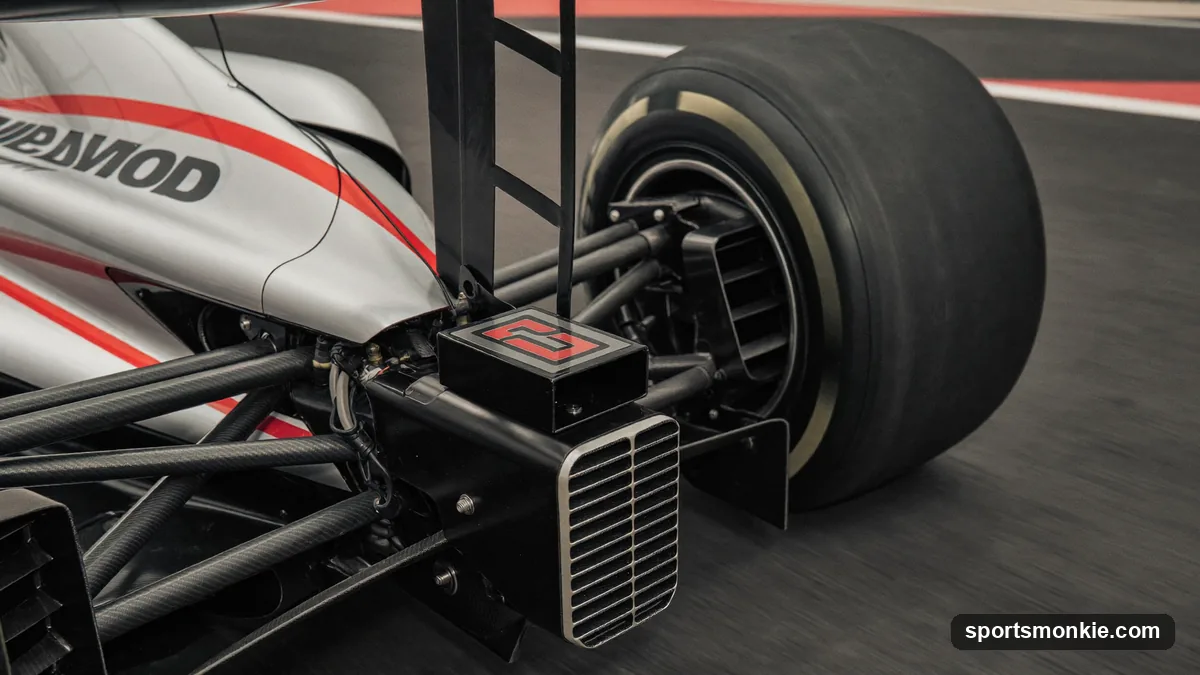
ERS stands for Energy Recovery System: the hybrid part of a Formula 1 power unit that harvests otherwise-wasted energy, stores it in a battery, and deploys it as an electric boost worth around 160 horsepower a lap. On current cars it uses two motor generators, the MGU-K and MGU-H. From 2026 the MGU-H is dropped and the electrical output is roughly tripled, turning the hybrid side into about half of the car’s total power.
It is the reason a modern F1 engine is called a “power unit” rather than an engine. Half electrical thinking, half combustion, working together.
What ERS is made of
The current F1 power unit pairs a 1.6-litre turbocharged V6 with two energy-recovery motors and a battery. The ERS is that recovery-and-deployment system.
| Component | What it does |
|---|---|
| MGU-K | Recovers kinetic energy under braking; deploys it to the wheels |
| MGU-H | Recovers heat energy from the exhaust and turbocharger |
| Energy store (battery) | Holds the harvested energy until it’s deployed |
| Control electronics | Manage when and how the energy is released |
The MGU-K (K for kinetic) works like a road-car hybrid: as the driver brakes, it turns the car’s motion into electricity instead of throwing it away as heat. The MGU-H (H for heat) is the exotic one — it recovers energy from the hot exhaust gases spinning the turbo, which is why F1 power units run so efficiently.
How much boost it gives
On the current cars, the ERS deploys around 120 kilowatts — roughly 160 horsepower — on top of the combustion engine for a limited window each lap. The V6 does most of the heavy lifting toward the roughly 1,000 total horsepower a modern power unit makes; the ERS is the hybrid top-up.
Managing that deployment is a real skill. A driver has a finite amount of stored energy per lap and has to spend it where it helps most: onto the straights, out of slow corners, and defending or attacking into a braking zone. Deploy it all early and you have nothing left when a rival comes past.
The big 2026 change
Here is the part that matters going forward. From 2026 the regulations drop the MGU-H entirely and roughly triple the electrical output to around 350 kilowatts. That flips the balance of the car: instead of the ERS being a top-up, the hybrid side becomes about half of total power.
Why remove the MGU-H at all? It is brilliant but brutally complex and expensive, and it was a barrier keeping new engine manufacturers out of F1. Simplifying the power unit for 2026 helped attract new makers to the grid. The recovery the MGU-H used to do is offset by a far more powerful MGU-K and a much larger deployment allowance.
The knock-on effect reaches the racing itself. With so much more electrical power in play, energy management becomes central, and deployment tapers off at high speed to stop the cars becoming uncontrollably fast on the straights.
ERS versus DRS: don’t mix them up
They sound similar and both help you go faster, but they are unrelated. ERS is about power — stored electrical energy boosting the engine. DRS was about aerodynamics — a rear-wing flap that cut drag. DRS was scrapped for 2026, and its overtaking job partly handed to an electrical Override Mode that draws on ERS-style stored energy. So in a sense, ERS is quietly inheriting one of DRS’s old duties.
The bottom line on ERS
ERS is F1’s hybrid heart: harvest energy with the MGU-K and MGU-H, bank it, and deploy about 160 horsepower a lap. In 2026 the MGU-H goes, the electrical power roughly triples, and the hybrid side becomes half the car — a bigger shift than any single rule change in years. Understand ERS and you understand why these cars are called power units, not engines.
For the aerodynamic side of that overtaking story — and the Override Mode now drawing on ERS energy — see our explainer on DRS in F1 and its 2026 replacement. And to see what all this power actually delivers on track, read our breakdown of the fastest F1 cars.
A natural follow-up read is F1 Cost Cap Explained.
Frequently asked questions
What does ERS stand for in F1?+
ERS stands for Energy Recovery System. It is the hybrid element of the power unit that harvests energy which would otherwise be wasted, stores it in a battery, and deploys it as extra electrical power to boost the car. It works alongside the turbocharged internal combustion engine rather than replacing it.
What is the difference between MGU-K and MGU-H?+
The MGU-K recovers kinetic energy under braking and deploys it to drive the wheels, similar to a road-car hybrid. The MGU-H recovers heat energy from the exhaust and turbocharger. On current power units both feed the battery, but from 2026 the MGU-H is dropped, leaving the MGU-K to do the recovery.
How much power does F1's ERS add?+
On current power units the ERS deploys around 120 kilowatts, roughly 160 horsepower, on top of the combustion engine, for a limited time each lap. The internal combustion engine provides the bulk of the roughly 1,000 total horsepower, with the ERS supplying the hybrid top-up used for overtaking and acceleration.
What is changing about ERS in 2026?+
From 2026 the MGU-H is removed to simplify and cheapen the power units, and the electrical output is roughly tripled to about 350 kilowatts. That makes the hybrid ERS around half of the car's total power, a much bigger share than today, and shifts how drivers manage energy deployment across a lap.
Why is the MGU-H being dropped?+
The MGU-H is complex, expensive, and a barrier to new manufacturers joining F1. Removing it for 2026 simplifies the power unit and lowers costs, which helped attract new engine makers to the sport. The lost recovery is offset by a much more powerful MGU-K and a larger electrical deployment.
Is ERS the same as DRS?+
No. ERS is about power, harvesting and deploying electrical energy to boost the engine. DRS was about aerodynamics, opening a rear-wing flap to cut drag. DRS was dropped for 2026 and its overtaking role partly handed to an electrical Override Mode, which draws on the same kind of stored ERS energy.
Sources
Play & tools
Free browser games and tools — no account, no download.
- Play 24-0 — Draft an F1 chassis and two drivers, then chase a perfect 24-0 — win every race on the 24-round calendar.
- Explore all our games →
Related motorsport guides
View all →
F1 Blue Flag Meaning: Get Out of the Way, Fast
A blue flag in F1 tells a slower, about-to-be-lapped driver to let a faster car past. Ignore it three times and you're penalised. Here's the full rule.
F1 Cost Cap Explained: The Budget Limit and What Counts
F1's cost cap limits team spending to roughly $135M a year, adjusted for inflation. Driver pay is excluded. Breach it and fines and testing cuts follow.

F1 Flags Explained: Every Racing Flag and What It Means
A full reference to every F1 flag — green, yellow, double yellow, red, blue, white, black, meatball, black-and-white, chequered and the striped flag.
F1 Formation Lap Explained: Purpose, Rules and Aborted Starts
The formation lap is the single lap to the grid before an F1 race starts. Drivers warm tyres and brakes, hold position, and stop for the standing start.
F1 Ground Effect Explained: The Floor That Sucks Cars Down
F1 ground effect uses the car's floor to create downforce, sucking it to the track. It returned in 2022 via venturi tunnels, and brought porpoising too.
F1 Penalties Explained: Every Type and What It Costs
F1 penalties range from 5-second time penalties to drive-throughs, stop-gos, grid drops and superlicence points. Here's every type and when it's used.