
F1 Ground Effect Explained: The Floor That Sucks Cars Down
On this page5
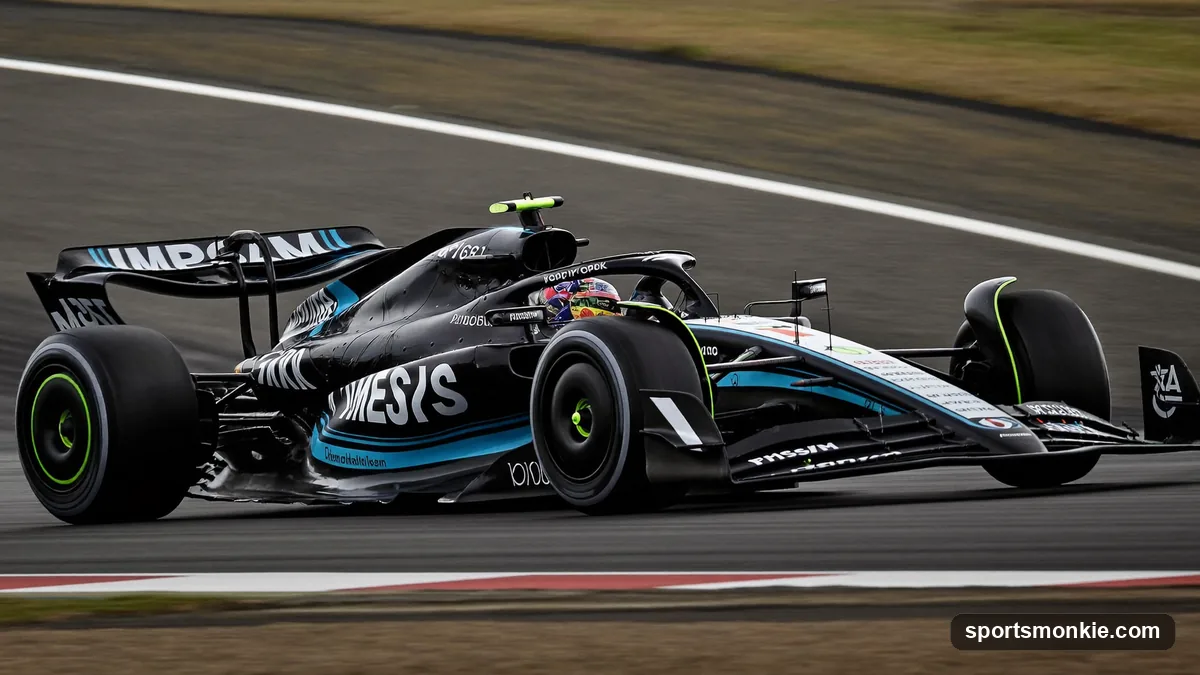
Ground effect in Formula 1 is downforce made by the floor of the car instead of the wings: air is accelerated through shaped tunnels underneath, creating a low-pressure zone that sucks the car to the track. It returned with the 2022 regulations, when venturi tunnels replaced the old flat floor, chiefly to let cars follow each other more closely. The trade-off was porpoising — a violent high-speed bounce that dominated that first season.
It is the most important aerodynamic idea in modern F1, and the one that decides whether cars can actually race or just parade.
The physics, without the jargon
Downforce presses a car onto the road so it can corner faster. There are two ways to make it: with wings, which push down from above but create a lot of drag and turbulence, or with the floor, which does it underneath.
Ground effect uses the floor. The underside is shaped into narrowing venturi tunnels. As the car moves, air is forced to speed up as it squeezes through those tunnels, and faster-moving air has lower pressure. That low pressure beneath the car, against normal atmospheric pressure above, effectively sucks the whole car down onto the track. More grip, far less drag than a big wing would cost.
The catch is that the effect is enormously sensitive to ride height. Run the floor closer to the ground and it works harder — right up until it works too hard and stalls.
Why F1 brought it back in 2022
The 2022 rules were built around one goal: better racing. The problem they set out to fix was the wake.
| Downforce source | Wake left behind | Effect on following car |
|---|---|---|
| Wings (pre-2022) | Large, turbulent “dirty air” | Loses grip, can’t follow closely |
| Floor / ground effect (2022 on) | Cleaner, less disruptive | Keeps more grip, can race closer |
A wing-dominated car punches a hole of turbulent air that robs the car behind of its own downforce, which is why the pre-2022 era so often produced processions. By moving downforce to the floor, the 2022 regulations left a cleaner wake, so a chasing car keeps more grip and can stay close enough to attack. The sport traded a little single-lap perfection for the ability to actually overtake.
Porpoising: the side effect nobody wanted
Ground effect came with a nasty companion. Because the effect strengthens as the car gets lower, at high speed the floor pulls the car down hard — until the airflow under it suddenly stalls, the downforce collapses, the car springs back up, the airflow re-attaches, and it slams down again. That cycle repeats several times a second, and the car bounces down the straight. That is porpoising, named for the way a porpoise arcs through water.
In 2022 it was brutal, rattling drivers so badly some reported back pain and blurred vision. Teams fought it by raising ride height, stiffening and reshaping the floor edges, and refining the tunnels so the stall was less abrupt. The FIA stepped in with safety limits on how much bouncing was allowed, and the worst of it was engineered out over the following seasons.
A quick history lesson
None of this is new. Lotus pioneered ground effect in the late 1970s, and cornering speeds climbed so fast that a sudden floor failure or a hard kerb strike could throw a car off the road with no warning. On safety grounds the sport mandated flat bottoms from 1983, ending the first ground-effect era. The 2022 rules brought the concept back deliberately — this time tightly controlled, and aimed at the racing rather than at raw lap time.
The bottom line on ground effect
Ground effect makes downforce with the floor, using venturi tunnels to suck the car down with far less drag than wings. F1 brought it back in 2022 to clean up the wake and let cars race closely, accepting porpoising as the price of admission until teams tamed it. It is the single design idea behind the modern era’s closer racing.
Ground effect is only part of why current cars are so fast; the power unit is the other half. See how the hybrid system adds its punch in our explainer on ERS in F1, and find out what all that grip and power add up to in our rundown of the fastest F1 cars.
Frequently asked questions
What is ground effect in F1?+
Ground effect is downforce generated by the underside of the car rather than by the wings. Air is accelerated through shaped tunnels beneath the floor, which lowers the pressure under the car and effectively sucks it toward the track. This grip lets the car corner faster without the large, draggy wings that dominated earlier eras.
When did ground effect return to F1?+
Ground effect returned with the 2022 technical regulations, which replaced the previous flat, stepped floor with proper venturi tunnels underneath. It had been effectively banned since 1983. The 2022 change was designed to reduce the turbulent wake a car leaves behind, so following cars keep more grip and can race closer.
What is porpoising in F1?+
Porpoising is a rapid vertical bouncing at high speed caused by ground effect. As the car goes faster the floor generates more downforce and pulls the car lower, until the airflow stalls, downforce collapses, the car rises, and the cycle repeats several times a second. It plagued teams when ground effect returned in 2022.
Why did F1 bring ground effect back?+
To improve racing. Wing-generated downforce creates a large turbulent wake that robs a following car of grip, making it hard to follow closely and overtake. Floor-generated ground effect leaves a cleaner wake, so a chasing car keeps more of its own downforce. The 2022 rules prioritised close racing over outright single-lap pace.
Why was ground effect banned in the first place?+
The original ground-effect cars of the late 1970s and early 1980s reached enormous cornering speeds, and a sudden loss of downforce, from a kerb strike or floor failure, could pitch a car off the road instantly. On safety grounds the sport mandated flat bottoms from 1983, ending the first ground-effect era.
How do teams stop porpoising?+
Teams reduce porpoising by raising ride height, stiffening or reshaping the floor edges, and refining the tunnel design so the airflow does not stall abruptly. The FIA also introduced measures to limit the amount of bouncing on safety grounds. Later cars in the ground-effect era largely designed the worst of it out.
Sources
Play & tools
Free browser games and tools — no account, no download.
- Play 24-0 — Draft an F1 chassis and two drivers, then chase a perfect 24-0 — win every race on the 24-round calendar.
- Explore all our games →
Related motorsport guides
View all →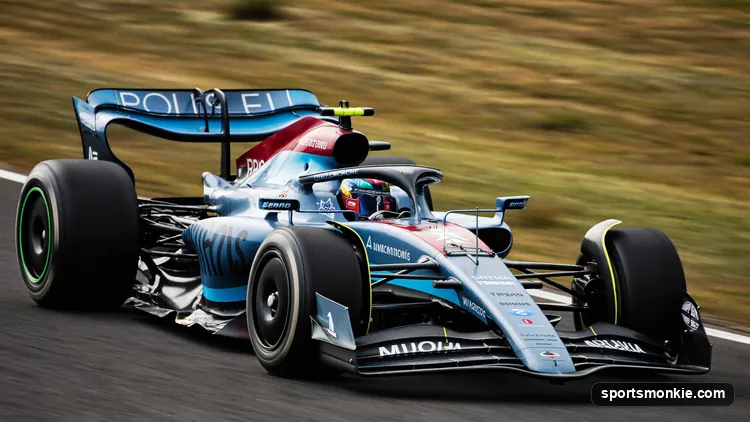
F1 Porpoising Explained: The 2022 Bouncing and How It Was Fixed
Porpoising is the violent vertical bouncing that hit F1's ground-effect cars in 2022. Here's the aerodynamics behind it and how teams and the FIA cured it.
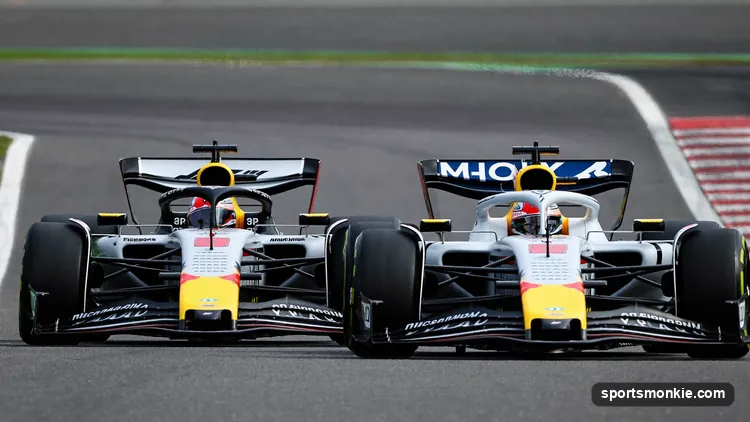
F1 Slipstream and Tow Explained: The Physics of Drafting
A slipstream, or tow, is the low-drag pocket of air behind an F1 car. Follow closely and you gain top speed on the straights — the base that DRS builds on.
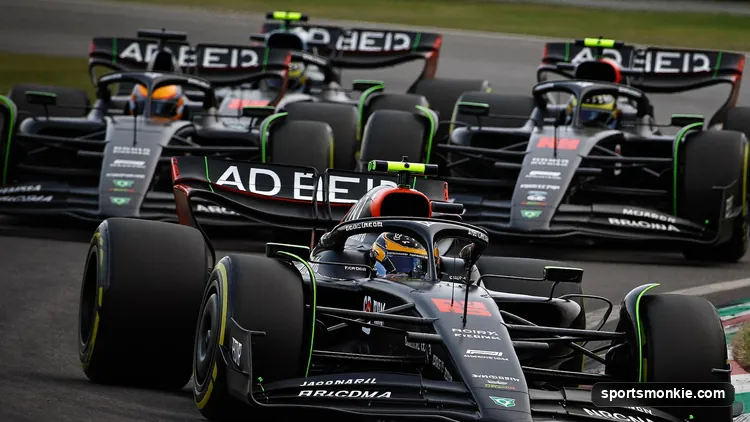
What Is a DRS Train in F1? Why a Queue Cancels the Advantage
A DRS train is a line of F1 cars each within one second of the next, so every car opens DRS at once and nobody gains — the passing aid neutralises itself.
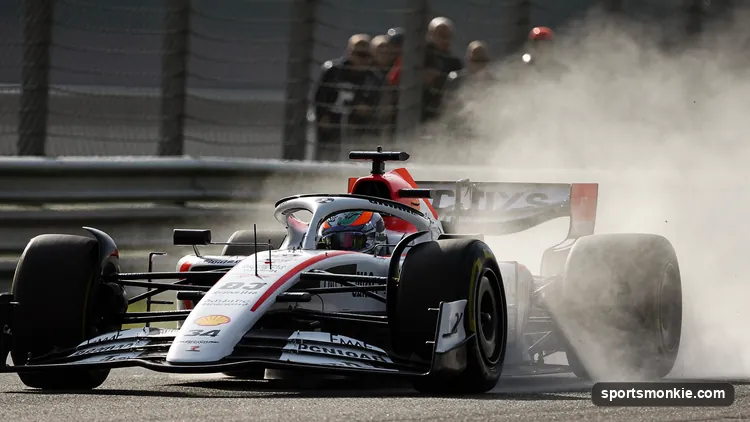
What Is Dirty Air in F1? Why It Kills Overtaking
Dirty air in F1 is the turbulent wake behind a car that robs the following car of downforce, making it slide and struggle to follow closely or overtake.
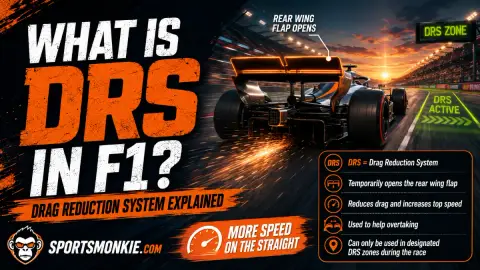
What Is DRS in F1? Drag Reduction System Explained
DRS opened a flap in an F1 rear wing to cut drag and aid overtakes. It was dropped for 2026, replaced by active aero and Override Mode. See how it works.
FIA Admits Human Error Gave Some Cars Extra Power in Singapore Sprint Qualifying
The FIA says a Race Control human error switched Overtake Mode on for 27 seconds in Singapore SQ1, giving some cars extra power, and Sainz wants to know why.