
Traditional Lacrosse Stringing vs Mesh: Which Pocket to Play

On this page7
Traditional lacrosse stringing builds the pocket from four leather runners laced together with nylon crosslace, prized for deep hold, a soft custom feel, and its Haudenosaunee roots. Mesh is a single synthetic piece that drops in, strings fast, and holds its shape through rain, which is why the large majority of players use it today. The short answer: play mesh for consistency and easy upkeep, play traditional for feel, hold, and craft if you are willing to maintain it.
What traditional stringing actually is
A traditional pocket is built from parts, not one panel. Four leather runners are threaded down the length of the head from the scoop to the throat, then tied together with rows of nylon crosslace woven in a diamond pattern between them. Adjusting the tension on individual leathers and lace rows lets a stringer place the pocket exactly where they want it and set the hold to taste.
This is the original design. The game comes from the Haudenosaunee (Iroquois) peoples, who played with wooden sticks strung in leather and gut long before synthetic mesh existed, as USA Lacrosse documents in the sport’s history. For many Haudenosaunee players a traditional pocket, and a wooden stick, still carries meaning well beyond performance.
What mesh is and why it took over
Mesh is a single ready-made panel of woven synthetic, usually nylon, that you string into the head with sidewall string, a topstring, and a bottom string. Modern versions add wax or specific weaves, semi-soft, hard, or performance mesh, engineered to break in predictably and resist water. StringKing and ECD build their mesh lines around exactly that repeatability.
Mesh won the mainstream on three points: it is cheaper, it strings faster, and it plays the same in the rain as in the sun. For a coach outfitting a team or a player who wants to string once and go, that reliability is hard to beat.
Traditional vs mesh: side by side
Here is how the two pockets compare on the factors that decide games and practices.
| Factor | Traditional (leathers) | Mesh |
|---|---|---|
| Construction | 4 leather runners + crosslace | Single synthetic panel |
| Hold | Deep, very grippy | Good, consistent |
| Feel | Soft, custom, connected | Uniform, predictable |
| Weather | Stretches and bags when wet | Holds shape in rain |
| Maintenance | Regular re-tuning needed | Occasional pocket check |
| Consistency | Varies as leathers break in | Very consistent |
| Break-in | Longer, hands-on | Faster, especially soft mesh |
| Cost | Higher (leathers + lace) | Lower (mesh piece) |
| Best for | Goalies, finesse attack, tradition | Most field players, all levels |
The pattern is clear: traditional trades convenience for feel and adjustability, mesh trades a touch of custom feel for consistency and near-zero upkeep.
Which pocket should you play?
For most players, mesh is the right buy. If you are new, on a team, or just want a pocket that behaves the same every game, string quality mesh and spend your energy on skills instead of maintenance. Our guide to the best lacrosse mesh breaks down soft, hard, and wax options so you can match the weave to your position.
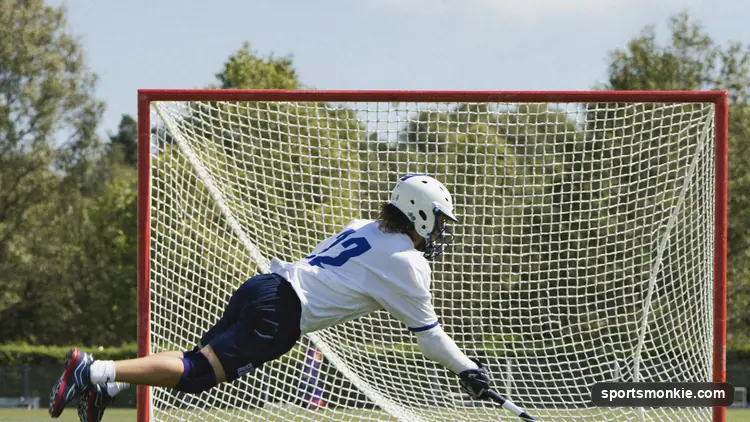
Traditional earns its place in three cases. Goalies love the hold and soft feel on saves. Finesse attackmen who cradle and dodge in traffic value the deep pocket and the connected feel on a quick stick. And players connected to the game’s Haudenosaunee heritage often string traditional as part of that lineage. The catch is honest: leather stretches when wet, so a traditional pocket bags out in a downpour and needs re-tuning as it breaks in. If you will not maintain it, you will fight an inconsistent pocket all season.
The maintenance reality
This is where the two diverge most. A traditional pocket is a living thing. New leathers stretch as they break in, rain deepens the pocket temporarily, and the whole setup needs periodic tension checks to stay legal and consistent. Many traditional players keep a backup stick or adjust between games as a matter of routine.
Mesh, especially wax or performance mesh, largely solves this. Once it is broken in and set, it holds through weather and needs only an occasional check that the pocket has not sagged past the legal depth. For a player who wants to think about lacrosse and not stringing, that difference alone often decides it.
What a traditional string job costs and needs
Traditional stringing runs a little more than mesh once you add up the parts. A set of four leathers plus nylon crosslace typically costs a few dollars more than a comparable mesh piece, and the real cost is time: stringing a traditional pocket well takes practice, and the leathers need tuning as they break in. Many players learn on mesh first, then attempt traditional once they understand how a pocket should sit.
If you want to try it, budget for a spare set of leathers, because a first attempt rarely lands perfectly, and expect to re-tension the pocket over the first few sessions as the leather stretches. Wax-treated leathers resist water better than raw ones and are worth the small premium if you play in wet conditions. None of this is a reason to avoid traditional, but it is the honest workload that mesh sidesteps.
Getting started with either
Whichever you choose, the head and the stringing job matter as much as the material. A pocket only plays as well as it is strung, so if you are learning, start with our step-by-step on how to string a lacrosse head, then dial the pocket to your position. Specialists have their own needs too: our breakdown of faceoff lacrosse heads covers why faceoff players string differently for ground-ball clamps.
The practical move for most players: string quality mesh first, learn how a pocket behaves, and try a traditional string job later once you know what feel you are chasing. You will understand what traditional gives you only after you have lived with a consistent mesh pocket.
Freshness note: mesh technology and stringing rules evolve; confirm current legal pocket-depth rules with USA Lacrosse each season, and check StringKing and ECD for updated mesh lines before restringing.
Frequently asked questions
What is traditional lacrosse stringing?+
Traditional stringing builds a pocket from four leather runners strung down the head, laced together with nylon crosslace in a diamond pattern. It predates modern mesh and traces to the Haudenosaunee, who invented the game. The leathers are tuned individually, giving a custom pocket with deep hold and a distinctive feel that many players describe as more connected to the ball.
Is traditional stringing better than mesh?+
Neither is universally better; they trade different strengths. Traditional offers deeper hold, a softer feel, and fine adjustability, which some attackmen and goalies prefer. Mesh offers consistency, weather resistance, and almost no upkeep, which is why most players choose it. Traditional rewards a stringer willing to maintain it; mesh rewards anyone who wants to string once and forget it.
Is traditional lacrosse stringing harder to maintain?+
Yes. Leather absorbs water, so a traditional pocket stretches and bags out in rain and needs re-tuning as it breaks in and dries. Players often carry a backup or adjust the pocket between games. Mesh, especially wax or performance mesh, holds its shape through weather and typically needs only occasional pocket checks, making it far lower maintenance.
Who uses traditional lacrosse pockets?+
Goalies favor traditional for its hold and soft feel on saves, and some attackmen use it for cradling and finesse. It is also central to Haudenosaunee players and communities, where it carries cultural meaning beyond performance. At most youth and high school levels, mesh dominates because it is cheaper, more consistent, and easier to string.
Sources
Play & tools
Free browser games and tools — no account, no download.
- Play today's Sports Connections — Today's Sports Connections — daily hints, answers, and play the grid.
- Play Guess the NFL Player — A new mystery NFL player every day. Eight guesses, with a clue on each — plus free unlimited mode.
- Explore all our games →
Related guides

Parts of a Lacrosse Stick: Head, Shaft and Pocket Explained
The parts of a lacrosse stick: the head (scoop, sidewall, throat), the shaft, and the pocket (mesh, sidewall strings, shooting strings). A labeled anatomy guide.

How to Break In a Lacrosse Pocket the Right Way
Break in a lacrosse pocket with wall ball, targeted stretching and small string adjustments — and stay inside the NCAA pocket-depth rule while you do it.

Lacrosse vs Soccer: Which Should Your Kid Play?
Lacrosse vs soccer compared on cost, contact, injury rates, college roster odds and where you can actually play. A parent's decision guide, with real numbers.

Lacrosse Equipment List: Everything You Need to Play
The full lacrosse equipment list: a men's player needs a helmet, gloves, and pads; a girls' player needs eyewear, a mouthguard, and a stick. Checklist inside.
The Attackman Position in Lacrosse
An attackman is an offensive lacrosse player who stays on the attacking half to score and feed. The role, sticks and skills explained.

Box Lacrosse vs Field Lacrosse
Box lacrosse is a fast 5-on-5 indoor game; field lacrosse is a 10-on-10 outdoor sport. Rules, field, gear and physicality compared.