
How to Break In a Lacrosse Pocket the Right Way
On this page5
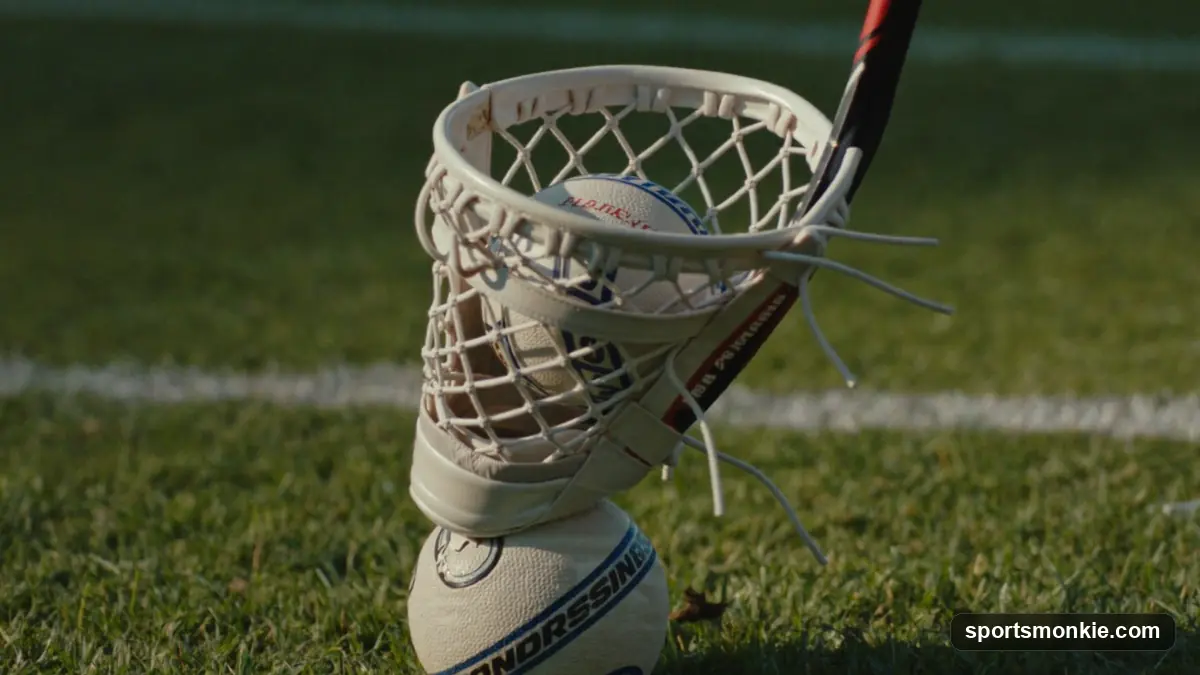
Breaking in a lacrosse pocket means throwing it, shaping it by hand, and adjusting the sidewall knots in small increments until the ball sits in a consistent channel and leaves from the same spot every time. Wall ball does most of the work. Between 200 and 300 hard throws will tell you more than any soaking trick, and you should re-check the pocket depth against the rulebook after every session, because a pocket that plays perfectly can also be illegal.
That last part is the bit most guides skip, so it goes first.
Know the depth limit before you start stretching
You are not aiming for “as deep as it will go.” You are aiming for the deepest legal pocket for your level, and the two main codes measure it differently.
| Code | The test | Where the limit sits |
|---|---|---|
| NCAA men’s field | Ball placed at the deepest point of the pocket, head held perpendicular to the ground. If you can see daylight between the top of the ball and the bottom edge of the sidewall, the pocket is too deep. | Deeper of the two. Goalkeeper crosses are exempt. |
| NCAA women’s field | Ball placed in the front and back of the pocket with the stick held horizontally. The top of the ball must remain visible above the sidewall, on both sides. | Much shallower. |
The men’s wording is set out in the NCAA men’s lacrosse rules book, which defines a pocket as sagged too deeply when the top surface of a ball placed in it sits below the bottom edge of the sidewall. The NCAA women’s rules book sets the opposite reference point: the ball has to stay visible at the top of the sidewall.
Two other men’s limits catch people out mid-break-in. Shooting strings must sit within four inches of the top of the head, and hanging string ends are capped at two inches. Pull strings used to change pocket depth are illegal outright.
The three-test check officials actually run
Rather than eyeballing it, copy the field inspection from Appendix I of the men’s rulebook. It takes fifteen seconds and it is the same sequence an official will use on you.
- Depth. Ball at the deepest point, head perpendicular to the ground. Look for daylight between the top of the ball and the bottom edge of the sidewall. Daylight means illegal.
- Forward roll-out. Ball in a horizontal head, raise to vertical, then tip forward 90 degrees. The ball should roll out at the throat.
- Downward roll-out. Ball in a horizontal head, tip downward 90 degrees. The ball should roll out at the tip of the head.
Failing the depth test is the cheap failure: in NCAA men’s play it is a one-minute nonreleasable penalty and the stick can come back once corrected. Failing either roll-out test is the expensive one — three minutes nonreleasable, and the crosse stays at the scorer’s table for the rest of the game.
Run all three every time you adjust a knot. It is the only way to break in aggressively without one day discovering the stick you have trusted all season is illegal.
The break-in sequence
Day one, before you throw anything. Push the mesh down into the channel with your thumb, working from the top of the head toward the bottom. Then flex the whole head laterally a few times. You are unlocking the diamonds, not deepening the pocket.
First 100 throws. Wall ball, right hand and left, at a range where you have to throw hard. Hard throws stretch the mesh where it matters. Soft catch-and-cradle work barely loads the pocket at all.
Re-shape between sets. Every 25 or so throws, stop and press the ball into the pocket at the point where you want it to sit, then leave it there for a minute while you rest. This is the single most effective shaping move and it costs nothing.
Adjust sidewalls, not the bottom. If the ball is drifting to one side, tighten the sidewall knot on that side by one loop. If the channel is too shallow, loosen the mid-pocket sidewall knots. Leave the bottom string alone; the bottom is what most often pushes you over the depth line.
Set the shooters last. Shooting strings control hold and release, not depth. Tighten them only after the mesh has stopped moving, or you will spend a week chasing a whip that the mesh keeps changing.
A realistic break-in schedule
Modern coated mesh needs far less work than the uncoated nylon of a decade ago. ECD’s Hero 3.0, for example, is sold on the promise of a quick break-in rather than a long one. Adjust the table to your mesh: semi-soft is at the fast end, semi-hard at the slow end.
| Session | Throws | What to do | What “done” looks like |
|---|---|---|---|
| 1 | ~100 | Hand-shape, hard wall ball, re-shape every 25 | Ball finds a channel but release is inconsistent |
| 2 | ~100 | Same, plus one sidewall adjustment per side maximum | Two of three throws leave from the same point |
| 3 | ~75 | Add overhand and sidearm; set shooting strings | Release repeatable overhand |
| 4 | ~50 | Play a full session, then re-check all three legality tests | Pocket unchanged after the session |
If the pocket is still moving after four sessions, the mesh is the problem, not your technique. Semi-hard and wax mesh both go through a stretch phase where they briefly get too deep before settling; keep checking the depth test through that window.
What not to do
Do not put a ball in the head and leave the stick under a mattress overnight. It deepens the pocket in the one place you cannot easily undo, and it puts a permanent bag in the mesh that no sidewall adjustment removes.
Do not soak coated mesh. Water break-in was genuine advice for uncoated nylon, which softens and dries into shape. Coated and wax mesh is treated to shed water, so soaking mostly changes how the stick plays for one wet session and then reverts.
Do not break in a pocket in cold weather and assume it holds. Wax mesh in particular stiffens below about 10°C / 50°F and loosens in heat, which is why a stick strung in a British or Canadian winter can play noticeably deeper by May. Re-run the depth test at the first warm session of the season.
Do not chase whip early. Whip is the last variable to set, and every mesh adjustment you make before that resets it.
If you are stringing from scratch rather than breaking in a factory pocket, start with our guides to stringing a lacrosse head and choosing lacrosse mesh; traditional stringers should read the traditional pocket guide, which behaves differently from mesh at every stage above.
Frequently asked questions
How do you break in a traditional pocket?+
Traditional pockets of leather thongs and nylon cross-lace break in through the leathers, not the mesh. Work them by hand along their length, keep them dry, and expect the pocket to deepen unevenly as each thong stretches at a different rate. Re-tie the top of the leathers after the first week to reclaim the depth you lose.
How do I make a pocket deeper without breaking the rule?+
Loosen the sidewall knots around the mid-pocket rather than the bottom, then re-check with a ball. In the men's game the top of the ball must not drop below the bottom edge of the sidewall; in the women's game it must stay visible above the sidewall. The women's limit is the shallower of the two by a wide margin.
Does soaking mesh in water actually help?+
It helps with older uncoated nylon, which softens when wet and holds a shape as it dries. It does very little for modern coated or wax mesh, which is treated to resist water absorption. Soaking a coated pocket mostly wastes an evening and can leave a stick that plays inconsistently for a session.
How long does a new pocket last before it needs restringing?+
A coated mesh pocket played several times a week typically stays consistent for a season, then starts bagging out. Wax mesh loses its wax faster in hot weather. The signal to restring is not appearance but behaviour: when release point drifts between throws and re-tying the sidewalls no longer fixes it.
Can an official make you change your stick mid-game?+
Yes. In NCAA men's play an illegal deep pocket is a one-minute nonreleasable penalty and the crosse may return once corrected, while a crosse illegal for any other reason draws three minutes and stays at the table for the rest of the game. Coaches can request an inspection, and every stick on a team is eligible.
Sources
Play & tools
Free browser games and tools — no account, no download.
- Play today's Sports Connections — Today's Sports Connections — daily hints, answers, and play the grid.
- Play Guess the NFL Player — A new mystery NFL player every day. Eight guesses, with a clue on each — plus free unlimited mode.
- Explore all our games →
Related guides
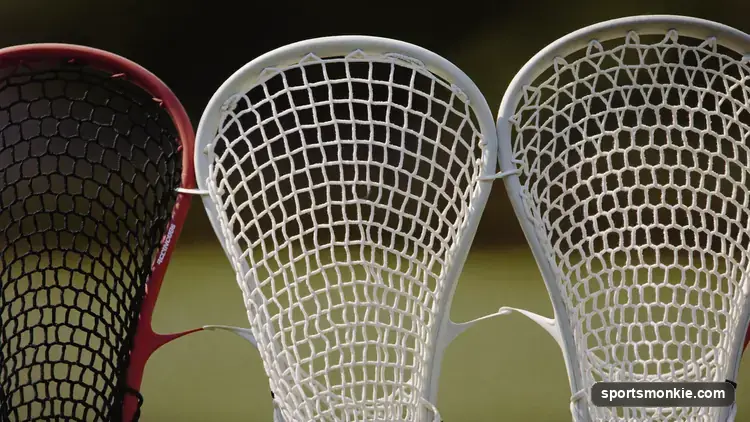
Best Lacrosse Mesh: Types, Brands and How to Choose
The best lacrosse mesh for most players is a semi-soft performance mesh. How the mesh types compare, the top brands, and how to pick the right pocket feel.
Faceoff Lacrosse Heads: What Makes Them Different
Faceoff lacrosse heads use flexible plastic and an aggressive scoop for the clamp. What separates them, the legal rules, and the top heads compared.
What Is a D-Pole? Long Poles vs Short Sticks
A lacrosse d-pole is the long defensive stick, 52 to 72 inches. How long poles differ from short sticks, who carries one, and the four-pole rule.
Lacrosse Rebounders: Are They Worth It and Which to Buy
A lacrosse rebounder returns your passes for solo stick-skills practice. Whether one is worth it, how the top models compare, and the free alternative.
Lacrosse Cleats vs Football Cleats: What's Actually Different
Lacrosse cleats vs football cleats: molded football cleats are usually legal for lacrosse, but metal spikes aren't. Here's the real difference and what to buy.

Lacrosse Equipment List: Everything You Need to Play
The full lacrosse equipment list: a men's player needs a helmet, gloves, and pads; a girls' player needs eyewear, a mouthguard, and a stick. Checklist inside.