
Hybrid Bike Fit Guide: Sizing Chart and How to Check It

On this page6
- 01What size hybrid bike do I need?
- 02How do I check standover height before I buy?
- 03How high should my saddle be on a hybrid bike?
- 04How is a hybrid bike fit different from a road bike fit?
- 05How do I set reach and handlebar position for the upright hybrid stance?
- 06What are the signs a hybrid bike is the wrong size?
Pick a hybrid bike by matching your height to the frame’s size chart (roughly 17”–18” for 5’6”–5’10” riders), then confirm the fit two ways: 1 to 2 inches of standover clearance over the top tube, and a saddle height that leaves a slight bend in your knee at the bottom of the pedal stroke. Hybrid bikes sit you more upright than a road bike, so the handlebar should sit level with or above the saddle, not several inches below it.
What size hybrid bike do I need?
Start with height, then let inseam and torso length break any tie between two sizes. This chart is a generalized industry baseline built from brand size guides; treat it as a starting point, not gospel, since Trek’s own sizing guide and Giant’s charts both shift these bands by an inch depending on the specific model’s geometry.
| Height (ft/in) | Height (cm) | Frame size (in) | Letter size |
|---|---|---|---|
| 4’10”–5’2” | 147–158 | 13”–14” | XS |
| 5’2”–5’6” | 158–168 | 15”–16” | S |
| 5’6”–5’10” | 168–178 | 17”–18” | M |
| 5’10”–6’1” | 178–185 | 19”–20” | L |
| 6’1”–6’4” | 185–193 | 21”–22” | XL |
| 6’4”+ | 193+ | 23”+ | XXL |
Giant’s rider-height-to-frame-size chart uses this same height-first approach across its hybrid line, and it is the standard method most shops use for a first-pass recommendation before a test ride. The catch: a Medium at Trek is not built to the same reach and stack as a Medium at Giant or Specialized. Always cross-check the actual model’s published chart, not just the letter on the sticker.
Once you know your band, cycling for beginners walks through choosing between a hybrid and an entry-level road bike if you’re still deciding which style suits how you’ll actually ride.
How do I check standover height before I buy?
Standover height is the single fastest sanity check, and it takes thirty seconds in the shop or your driveway. Stand over the top tube in flat shoes, feet flat on the ground, and check the gap between your inseam and the frame.
- Under 1 inch: too tight. An emergency dismount risks real contact with the top tube.
- 1–2 inches: the target range for a hybrid, per Evans Cycles’ hybrid sizing guide.
- Over 3 inches: the frame is likely a size too big, even if the seat can be lowered to compensate.
This test catches the most common buying mistake: choosing a frame that “feels fine” sitting on the saddle in a shop but is actually too large once you’re riding in traffic or need to put a foot down fast. REI’s bike fitting guide treats standover as step one for exactly this reason — it’s the one measurement you can’t fix after the sale.
How high should my saddle be on a hybrid bike?
Saddle height is what actually determines pedaling efficiency, and it’s adjustable within a frame size, unlike standover. The long-standing starting point, sometimes called the LeMond method, is inseam in centimeters multiplied by 0.883, measured from the center of the pedal crank (bottom bracket) to the top of the saddle along the seat tube, a formula BikeDynamics’ saddle height research confirms is still the most common baseline in bike fitting, even as fitters layer on hip-height and pelvic-depth adjustments for precision.
In practice: measure your inseam in a thin pair of pants, standing against a wall with a book pulled up snug into the crotch, floor to book top in centimeters. Multiply by 0.883 to get your starting saddle height in centimeters. From there, sit on the bike, clip in or place your heel on the pedal at the bottom of the stroke — your leg should be almost straight with the heel method, or bent 25 to 35 degrees with the ball of your foot on the pedal, which is how you’ll actually ride.
Too low, and you’ll feel it in the front of your knees within a few miles. Too high, and your hips rock side to side while your toes stretch for the pedal. Neither is subtle once you notice it.
How is a hybrid bike fit different from a road bike fit?
This is where hybrid buyers get tripped up the most: the same height doesn’t map to the same reach. Hybrid geometry is built around comfort and visibility in traffic, road geometry around aerodynamics and sustained power output.
| Fit element | Hybrid bike | Road bike |
|---|---|---|
| Torso angle | Near upright, 70–90° | Bent forward, closer to 45° |
| Handlebar vs. saddle height | Level with or above saddle | Often 1–2” below saddle |
| Reach (saddle to bar) | Short to moderate | Longer, stretched-out |
| Wrist/hand load | Light | Higher, needs bar rotation |
| Riding view | Head naturally forward | Neck extension required |
REI’s hybrid bike guide is direct about why this exists: hybrids are built for commuting and multi-surface riding, where seeing traffic and staying comfortable for an hour matters more than shaving watts. If you’ve ridden a road or gravel bike before and a hybrid feels strangely tall and short at the same time, that’s the geometry working as intended, not a bad fit — our gravel bike vs. road bike comparison breaks down how much of that upright trade-off actually costs you in speed.
How do I set reach and handlebar position for the upright hybrid stance?
Reach — the horizontal distance from saddle to handlebar — should let your elbows sit softly bent, never locked, with your shoulders relaxed down and away from your ears. If you’re reaching so far your shoulders round forward, or so short your knees brush the bars while pedaling, the frame reach is fighting you and no amount of stem swapping will fully fix it.
Handlebar height is the adjustable lever here. Most hybrids ship with the bar level with the saddle or slightly above it. Raise it further — many quill and threadless stems allow an inch or two of adjustment — if you want less pressure on your wrists and a fully vertical back, common for commuters riding in stop-and-go traffic. Lower it slightly if you want a bit more power transfer on longer rides without giving up the upright view REI describes as the hybrid’s main advantage over a road bike.
What are the signs a hybrid bike is the wrong size?
A handful of tells show up fast, usually within the first mile or two:
- Numb hands or wrists after 10–15 minutes, often meaning too much reach or too low a bar.
- Knee pain at the front of the joint, almost always a saddle set too low.
- Hips rocking side to side while pedaling, a saddle set too high.
- Toes pointing down to reach the pedals, also a saddle-too-high sign.
- Standover clearance under an inch, an unsafe frame-size call regardless of how the saddle feels.
- Constantly sliding forward or backward on the saddle to find a comfortable reach, meaning the frame’s reach doesn’t match your torso and arm length.
One or two of these can be dialed out with saddle and stem adjustments. Several at once, especially combined with tight standover, usually means the frame size itself is wrong, and no amount of fine-tuning fixes that.
Before you commit, test ride two adjacent sizes back to back for at least ten minutes each, on the same route if the shop allows it. The size that disappears under you, rather than the one that feels impressive standing still, is the one to buy. Once the frame is right, frame material becomes the next real decision: our carbon vs. aluminum bike guide covers whether the upgrade is worth it once fit is no longer the variable.
Frequently asked questions
What size hybrid bike do I need for my height?+
Match your height to a frame size band, then confirm with standover clearance. A rider around 5'6" to 5'10" typically needs a 17" to 18" (medium) frame; 5'10" to 6'1" needs 19" to 20" (large). These bands are a starting point — brands shift them by an inch or more, so check the specific model's chart before buying.
How much clearance should I have when standing over a hybrid bike?+
Aim for 1 to 2 inches (about 2.5 to 5 cm) of air between your inseam and the top tube while standing flat-footed, per Evans Cycles' hybrid sizing guide. Less than an inch is too tight for a quick dismount; more than 3 inches usually means the frame itself is too big for you.
Should I size up or down on a hybrid bike if I'm between sizes?+
Size down if you want a quicker, more responsive feel with a lower standover; size up if comfort and a fully upright back matter more than agility. A shorter torso and arms lean smaller, a longer reach leans larger. Test ride both before deciding — hybrid geometry is forgiving, but not infinitely so.
What's the difference between hybrid bike sizing and road bike sizing?+
Both use height and inseam to pick a frame, but hybrid bikes size for a taller head tube and shorter effective reach, putting your torso close to upright. Road bikes size for a lower stack and longer reach, folding you forward. A rider who fits a 54cm road frame often needs a differently proportioned hybrid, not the same number in a new unit.
Can I test ride a hybrid bike before buying online?+
Most bike shops let you test ride in-store even if you plan to buy the exact configuration online later, and several online-first brands ship a size, offer a home trial window, and cover return shipping if the fit is wrong. Always confirm the return policy before ordering a hybrid bike sight unseen.
How do I know if my hybrid bike saddle is too low or too high?+
Too low shows up as sore knees on the front of the joint and a cramped, inefficient pedal stroke. Too high causes your hips to rock side to side and your heels to reach for the pedals. At the bottom of the stroke your knee should hold a slight, comfortable bend, roughly 25 to 35 degrees.
Sources
Play & tools
Free browser games and tools — no account, no download.
- Play today's Sports Connections — Today's Sports Connections — daily hints, answers, and play the grid.
- Play Guess the NFL Player — A new mystery NFL player every day. Eight guesses, with a clue on each — plus free unlimited mode.
- Explore all our games →
Related guides

Shuffleboard Table Dimensions: Sizes, Room Space and Fit Calculator
Shuffleboard table dimensions by length: 9 to 22 ft sizes, 22 ft regulation tables, room space needed, playfield width, foul lines and fit calculator.

Skateboard Size Chart: Deck Width Guide
Skateboards are sized by deck width, not length. Match width to your shoe size, height and riding style, and pick trucks that fit the deck.

Lacrosse Helmet Sizing: How to Get the Right Fit
Lacrosse helmet sizing starts with measuring head circumference above the brow, then matching it to the maker's chart. Here is how to size and fit a helmet right.

Climbing Shoes for Beginners: What to Buy and How They Should Fit
The best climbing shoes for beginners are flat, neutral, and snug, not painful. Here's how to size them, rent vs buy, and 5 real 2026 models with prices.
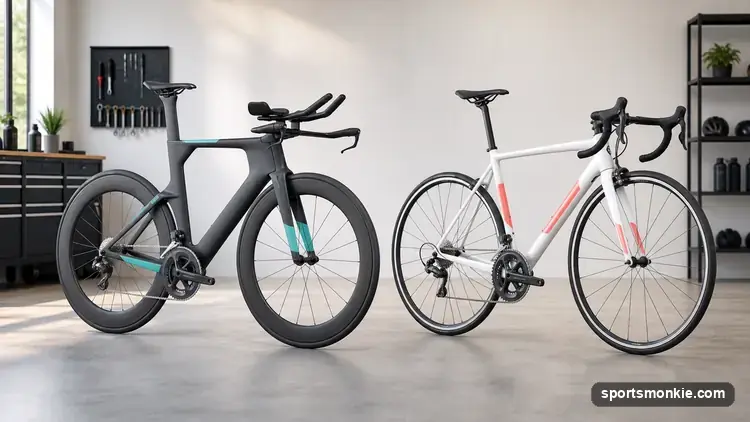
Triathlon Bike vs. Road Bike: Do You Need One to Start?
Triathlon bike vs road bike compared: geometry, price, and when beginners should actually upgrade, plus why tri bikes are banned in draft-legal racing.

Carbon vs. Aluminum Bikes: Is the Upgrade Worth It?
Carbon vs aluminum bike frames compared on weight, ride feel, crash durability, repairs, and 2026 prices — for road bikes and mountain bikes.