
Skateboard Size Chart: Deck Width Guide
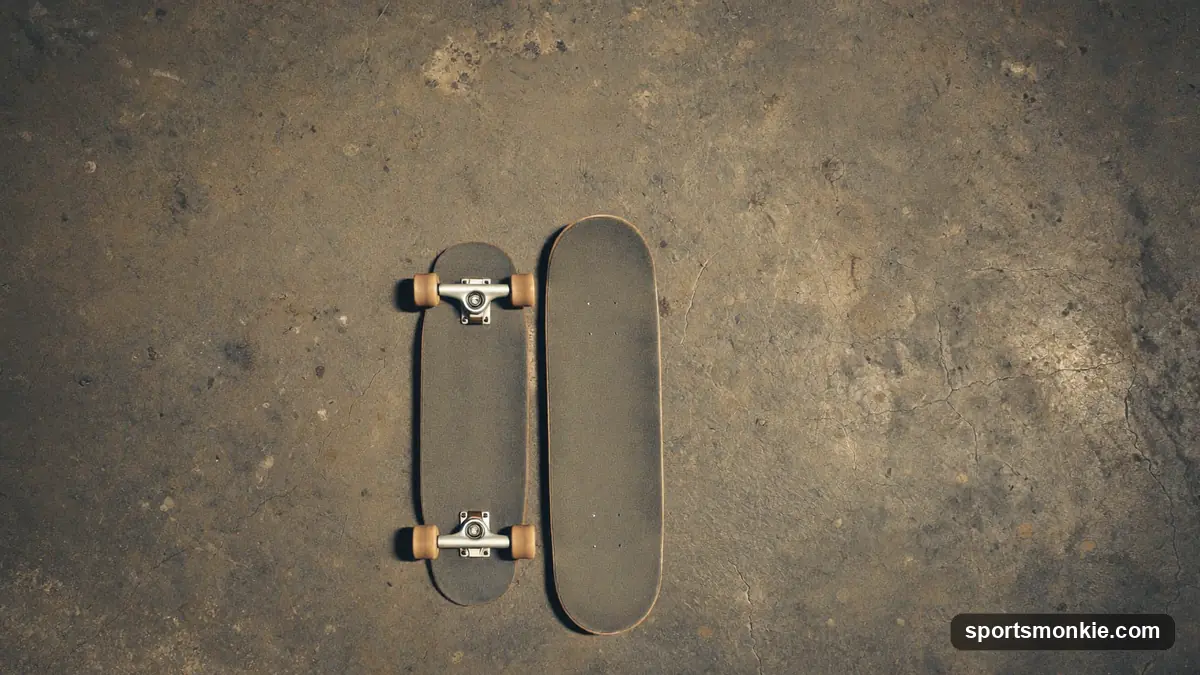
On this page8
Skateboards are sized by deck width in inches, not by length. For most adults, a street deck lands between 7.75 and 8.25 inches, while wider boards from 8.25 inches up suit ramps, bowls, cruising and larger riders. The right width comes down to your shoe size, height and, above all, the style of skating you plan to do.
Length and graphics get the attention, but width is what your feet actually feel. Below is a size chart mapping riders to deck width, how riding style shifts the choice, and why your trucks need to match whatever deck you land on.
Why deck width is the real measurement
When skaters talk about an “8.0” or an “8.25,” they mean the deck’s width across the middle, in inches. That number, not the length, dictates how stable, quick and controllable the board feels underfoot. A half-inch difference in width is immediately noticeable; a similar difference in length is not. So every buying decision starts with width.
Skateboard size chart by rider
The chart below reflects the general guidelines skate shops and deck makers use. Treat it as a starting point, since personal preference and skating style can move you a size in either direction.
| Deck width | Best for (age / height) | Typical shoe size (US) |
|---|---|---|
| 6.5-6.75 in (micro) | Age 5 and under, under about 3’5” | 3 and under |
| 7.0 in (mini) | Ages 6-8, roughly 3’5”-4’4” | 4-6 |
| 7.3 in (mid) | Ages 9-12, roughly 4’5”-5’2” | 7-8 |
| 7.5-7.75 in (full, narrow) | Teens and adults, technical street | 9-10 |
| 8.0-8.25 in (full, all-around) | Most adult riders, street and park | 9.5-12 |
| 8.25-8.5 in (wide) | Transition, ramps, cruising, taller riders | 11+ |
| 8.5 in and up | Vert, pools, cruising, large riders | 12+ |
How riding style changes the pick
Two skaters of the same height might choose very different decks:
- Technical street skaters lean narrower, often 7.75 to 8.25 inches, because a lighter, smaller board flips faster and feels snappier for ledge and flatground tricks.
- Park and transition skaters prefer wider decks, 8.25 to 8.5 inches, for the extra stability and foot room on ramps, in bowls and on landings.
- Cruising and commuting riders go wider still, valuing a planted, forgiving platform over trick response.
So the question is not just how tall you are, but what you want the board to do.
Is an 8.25 too big, or a 7.5 too small?
These are the two most common sizing worries, and the honest answer is that both are fine for the right rider. An 8.25 is one of the most popular all-around adult sizes; it is not too big for most people and only leans slightly toward stability over ultra-technical street. A 7.5 is on the narrow end, well suited to smaller feet and technical flip tricks, but it can feel cramped for a larger adult. Neither is wrong; they simply favor different styles.
Length, wheelbase and other board types
Width does the heavy lifting, but two more measurements fine-tune the feel. Length is the nose-to-tail measurement, and wheelbase is the distance between the inner truck mounting holes. A longer wheelbase spaces your stance wider and adds stability at speed, which taller riders and ramp skaters tend to like. A shorter wheelbase turns faster and feels snappier for technical street. Most riders lock in width first, then treat wheelbase as a preference tweak.
It also helps to know when you do not want a standard “popsicle” street deck at all:
- Cruisers are short boards with softer, larger wheels built for getting around, not tricks.
- Longboards are much longer and wider, prioritizing stability, carving and downhill riding over flip tricks.
- Old-school shaped decks are wider with a flat or minimal nose, popular for pools, ramps and cruising.
If your main goal is transportation or mellow carving rather than street tricks, a cruiser or longboard may fit better than any size on the standard chart.
How to measure a deck you already own
If you are replacing a board and want to match its size, measure the width across the middle of the deck from edge to edge, not the length. Deck makers print the width on the underside or the packaging, but a tape measure confirms it. Note the wheelbase too, by measuring between the inner truck holes, so a new deck feels familiar underfoot. Matching those two numbers is the quickest way to replace a board you already like without a period of readjustment.
Don’t forget the trucks
Once you pick a deck, your trucks need to match it. Trucks are the metal axles that mount under the board, and they are sized by axle or hanger width. The goal is for the axle width to roughly match the deck width, so the wheels sit flush with the edges. Trucks that are too narrow make the board tippy and unstable; trucks that are too wide throw off turning and can cause wheel bite. Most truck brands publish a chart pairing their models to deck-width ranges, so buy trucks to fit the deck you chose, not the other way around.
Getting it right
Start with width, size it to your feet and height using the chart, then adjust for your style: narrower for technical street, wider for transition and cruising. Match your trucks to the deck, and you have a board that feels like an extension of your feet rather than a fight.
For inspiration on where good board control can take you, see the greatest skateboarders and the best female skateboarders. And if you enjoy fitting gear to the person, the same logic drives choosing archery equipment in our compound bow vs recurve bow guide. The one rule to remember: width first, everything else second.
Frequently asked questions
Why is width more important than length for sizing?+
Width determines how the board feels underfoot and how it responds, while length and wheelbase mostly affect turning and stance spacing. Two decks of the same width but different lengths feel similar to ride, whereas a small width change is noticeable immediately. That is why shops and manufacturers list decks by width first.
How do wheels and truck height factor into deck choice?+
Wider decks generally pair with wider trucks and can clear larger wheels, which suit transition and cruising. Narrow street setups run smaller wheels for flip tricks and quicker response. If your wheels rub the deck when turning, you need riser pads or a truck-and-wheel combo better matched to the deck width.
Does deck length or wheelbase matter at all?+
It matters for feel more than sizing. A longer wheelbase adds stability at speed and a wider stance, favored by taller riders and ramp skating, while a shorter wheelbase turns quicker and feels snappier for technical street. Most riders settle on width first, then fine-tune wheelbase by preference.
Can an adult ride a narrow street deck comfortably?+
Yes. Many technical street skaters deliberately choose narrower decks around 7.75 to 8.0 inches for lighter, faster flip tricks, regardless of height. Width is ultimately about the skating you want to do and how the board feels, not a strict height rule, so a taller rider can still prefer a narrow deck.
Sources
Play & tools
Free browser games and tools — no account, no download.
- Play today's Sports Connections — Today's Sports Connections — daily hints, answers, and play the grid.
- Play Guess the NFL Player — A new mystery NFL player every day. Eight guesses, with a clue on each — plus free unlimited mode.
- Explore all our games →
Related guides

Compound Bow vs Recurve Bow: Key Differences
Compound bows use cams and let-off for a lighter hold and faster arrow; recurve bows are simpler, cheaper and the Olympic choice. How to pick one.
Longboard vs Skateboard: Which to Ride First
Longboards are longer, more stable and built for cruising; skateboards are shorter and made for tricks. Key differences and which to learn on first.
Snowboard Size Chart for Beginners: How to Size a Board
Snowboard size chart for beginners by weight, height, and boot width, plus how riding style shifts the number and the sizing mistakes that ruin a first season.
Golf Grip Size Chart: How to Find Your Correct Size
Measure wrist crease to middle fingertip, check it against glove size, then use this golf grip size chart to find undersize, standard, midsize, or jumbo.
Hybrid Bike Fit Guide: Sizing Chart and How to Check It
Find your hybrid bike size by height, check standover clearance, and set saddle and handlebar position for the upright hybrid riding stance.

Best Female Skateboarders of All Time, Ranked
Leticia Bufoni, Lizzie Armanto, Sky Brown, Rayssa Leal, and Patti McGee headline our ranked list of the best female skateboarders, with the record behind each name.