
Snowboard Size Chart for Beginners: How to Size a Board

On this page5
Snowboard length is set by rider weight, not height: match your weight to a size chart and you’ll land within a few centimeters of the right board, then adjust for width and riding style. A 150 lb (68 kg) beginner sizes around 148-153 cm, a 190 lb (86 kg) beginner around 158-162 cm, and beginners of any weight should lean toward the shorter end of their range because a shorter board turns and stops more easily at low speed.
That’s the length. Width is a separate number entirely, set by your boot size rather than your weight, and it’s the sizing mistake beginners make most: buying the right length on a board too narrow for their feet. Here’s how to get length, width, and style-based adjustments right in one pass, without duplicating the basic weight table already in our beginner snowboard buying guide.
What’s the snowboard size chart by weight and height?
Weight decides your length range because it controls how much board you need to flex the deck properly. A 110 lb rider and a 190 lb rider both 5’8” need boards 15-20 cm apart in length; height barely moves the number. As Jones Snowboards puts it, weight is “the single most important metric,” with height and riding style as secondary adjustments.
| Rider weight | Height (typical) | Board length (all-mountain) | Beginner-adjusted |
|---|---|---|---|
| 95-115 lb (43-52 kg) | 4’11”-5’3” | 140-146 cm | 138-143 cm |
| 115-135 lb (52-61 kg) | 5’2”-5’6” | 144-150 cm | 142-147 cm |
| 135-155 lb (61-70 kg) | 5’4”-5’8” | 148-154 cm | 146-151 cm |
| 155-175 lb (70-79 kg) | 5’6”-5’11” | 152-158 cm | 150-155 cm |
| 175-195 lb (79-88 kg) | 5’8”-6’1” | 156-162 cm | 154-159 cm |
| 195-215 lb (88-98 kg) | 5’10”-6’3” | 160-165 cm | 158-163 cm |
| 215+ lb (98+ kg) | 6’0”+ | 164 cm+ | 162 cm+ |
The “beginner-adjusted” column shaves roughly 2 cm off the standard range, matching the shorter-is-friendlier logic in evo’s sizing guide. If your weight sits between two rows, round to the lower one while you’re still learning. As a rough visual gut check, a board stood on its tail should land somewhere between your chin and nose, but treat that as a sanity check, not the method; it ignores width and riding style entirely.
Why doesn’t height decide the size?
Height sets your reach and leverage, which matters more for stance width and comfort than for the board’s core sizing. Two riders can share a height and need very different lengths once their weights diverge, because a heavier rider needs more surface area and a stiffer effective flex to stay stable at the same speed. Burton’s own guide frames its length recommendations around weight ranges for this exact reason, listing a length against a weight band like “120-180 lb,” not a height.
Where height does matter: a taller, lighter rider (think 6’0” at 150 lb) sometimes sizes up half a step from the pure weight chart for extra leverage and a longer effective edge, since their frame can control the added length without the board feeling sluggish. That’s the one case worth overriding the chart.
How do I size snowboard width to my boot size?
Width is where most beginner charts stop, and it’s the gap this guide fills. Once your boot passes a certain size, a “regular” width board sits your foot too close to the edge, and your toe or heel drags in the snow mid-turn, catching the edge and washing out the turn. The Good Ride ranks boot size as the single most important sizing factor, ahead of even weight, because a board that’s the wrong width is unsafe regardless of length.
| Men’s boot size (US) | Board waist width needed |
|---|---|
| 6-8 | 24-25 cm (Regular/Narrow) |
| 8-10 | 25-26 cm (Regular) |
| 10-11 | 25.5-26.3 cm (Regular to Mid-Wide) |
| 11-12 | 26-26.7 cm (Wide) |
| 12-14 | 26.7-28 cm (Wide/XL) |
Women’s boots run smaller and most women’s-specific boards taper their waist width to match: a women’s US 6-8 boot generally wants a 23.5-24.5 cm waist, and 8.5+ pushes into a wide women’s board around 24.5 cm or above.
The target is 1 to 1.5 cm of boot overhang past each edge, toe and heel, split evenly. Less than that and turns feel numb because your foot never reaches the edge; more than that and you’ll catch snow on aggressive carves. If you’re already deep into fitting the boot to the binding itself, our snowboard bindings size guide covers that separate step in detail; board width and binding size are related but not the same purchase.
How does riding style change the size I need?
The weight chart above assumes all-mountain riding, which covers most beginners. Once you know which direction you’re leaning, adjust from there:
- All-mountain (default): use the chart as written. It’s built for groomers, mixed terrain, and the occasional powder day, which is exactly what a first season looks like.
- Freestyle/park: size down 2-3 cm from the all-mountain number. A shorter board spins faster, swaps edges quicker, and feels lighter for jumps and rails, at the cost of some stability at speed.
- Freeride/big mountain: size up 2-3 cm. Extra length adds stability and grip at higher speeds and on firm snow, which matters once you’re riding steeper, faster terrain than a beginner slope.
- Powder: size up 2-3 cm, sometimes more with a directional or tapered shape. Extra surface area keeps the nose up and floating instead of diving.
Most beginners should stay in the all-mountain lane for at least a season before chasing a park or powder-specific size; a do-everything board teaches you more than a specialized one narrows your options too early. If you’re still deciding what kind of board to buy in the first place, our complete beginner’s snowboard guide covers profile, flex, and shape alongside sizing.
What sizing mistakes do beginners actually make?
Four mistakes show up over and over in shop fittings and gear forums:
- Sizing off height alone. The chin-to-nose trick ignores weight and width completely, and it’s the single fastest way to end up on the wrong board.
- Buying too long “to grow into it.” A longer board is harder to turn, harder to stop, and more tiring for a first-timer. Size for the rider you are this season, not a hypothetical future one.
- Ignoring width because the length felt right. A correctly-sized board for your weight can still be too narrow for a size 11+ boot, or too wide for a size 7. Check both numbers independently.
- Copying a friend’s size. Weight, boot size, and riding style rarely match between two people, even at the same height. Their board being “amazing” tells you nothing about whether it fits you.
Get length from weight, width from boot size, and adjust both slightly for how you actually plan to ride, and you’ll be within a size or two of what a good shop fitting would give you for free.
Ready to put a number on it? Grab your weight in pounds or kilograms and your boot size, run them against the tables above, and if you land between two rows, size down for your first season. For the rest of your setup, our snowboard bindings for beginners guide picks forgiving, budget-friendly bindings to match, and the winter sports hub has more gear breakdowns for the rest of the season.
FAQs
How do I read a snowboard size chart?
Find your weight along the left column; that row gives a length range in centimeters. Weight decides the range, height only nudges you toward the top or bottom of it, and riding style shifts the final number up or down another 2-3 cm. Boot size is a separate check against the board’s waist width, not the length chart.
Is snowboard size based on height or weight?
Weight. It sets how much board you need to flex properly and stay stable, which is why two riders of the same height can need boards 10 cm apart if their weights differ. Height only breaks ties within your weight range, nudging you toward the shorter or taller end.
Should a beginner size up or down on a snowboard?
Down. Pick the shorter end of your weight range, or even 1-2 cm under it. A shorter board turns at slower speed, initiates easier, and feels less intimidating while you’re still learning to link turns. You’ll lose a little high-speed stability, which is not a beginner’s problem yet.
What happens if my snowboard is too wide for my boots?
Nothing dangerous, but you lose quickness. A board too wide for your boot size sits your feet further from the edges, so you need more lean to tip the board over, and turns feel sluggish and delayed. It is the opposite problem from toe drag, and it’s just as common with small-footed riders on unisex boards.
What size snowboard for a 5-foot-6, 150-pound beginner?
Around 148-153 cm on a standard all-mountain chart, and a beginner should lean toward the 148-150 cm end for easier control. That assumes US men’s boot size 9-10 and a regular-width board; check your boot size against the board’s waist width separately before buying.
Do kids and adults use the same snowboard size chart?
No. Youth boards are sized on their own weight-based chart, starting as small as 80 cm for very young riders, and use softer flex ratings than adult boards of the same length. Never put a child on a scaled-down adult chart; use the brand’s dedicated youth or junior sizing table.
Frequently asked questions
How do I read a snowboard size chart?+
Find your weight along the left column; that row gives a length range in centimeters. Weight decides the range, height only nudges you toward the top or bottom of it, and riding style shifts the final number up or down another 2-3 cm. Boot size is a separate check against the board's waist width, not the length chart.
Is snowboard size based on height or weight?+
Weight. It sets how much board you need to flex properly and stay stable, which is why two riders of the same height can need boards 10 cm apart if their weights differ. Height only breaks ties within your weight range, nudging you toward the shorter or taller end.
Should a beginner size up or down on a snowboard?+
Down. Pick the shorter end of your weight range, or even 1-2 cm under it. A shorter board turns at slower speed, initiates easier, and feels less intimidating while you're still learning to link turns. You'll lose a little high-speed stability, which is not a beginner's problem yet.
What happens if my snowboard is too wide for my boots?+
Nothing dangerous, but you lose quickness. A board too wide for your boot size sits your feet further from the edges, so you need more lean to tip the board over, and turns feel sluggish and delayed. It is the opposite problem from toe drag, and it's just as common with small-footed riders on unisex boards.
What size snowboard for a 5-foot-6, 150-pound beginner?+
Around 148-153 cm on a standard all-mountain chart, and a beginner should lean toward the 148-150 cm end for easier control. That assumes US men's boot size 9-10 and a regular-width board; check your boot size against the board's waist width separately before buying.
Do kids and adults use the same snowboard size chart?+
No. Youth boards are sized on their own weight-based chart, starting as small as 80 cm for very young riders, and use softer flex ratings than adult boards of the same length. Never put a child on a scaled-down adult chart; use the brand's dedicated youth or junior sizing table.
Sources
Play & tools
Free browser games and tools — no account, no download.
- Play today's Sports Connections — Today's Sports Connections — daily hints, answers, and play the grid.
- Play Guess the NFL Player — A new mystery NFL player every day. Eight guesses, with a clue on each — plus free unlimited mode.
- Explore all our games →
Related winter sports guides
View all →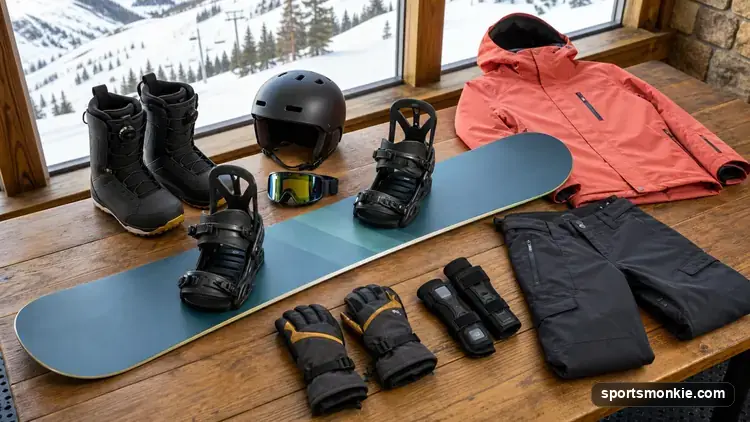
Snowboard Gear for Beginners: The Complete Checklist
The complete snowboard gear checklist for beginners, with real 2026 package prices and the rent-vs-buy math for a first season.
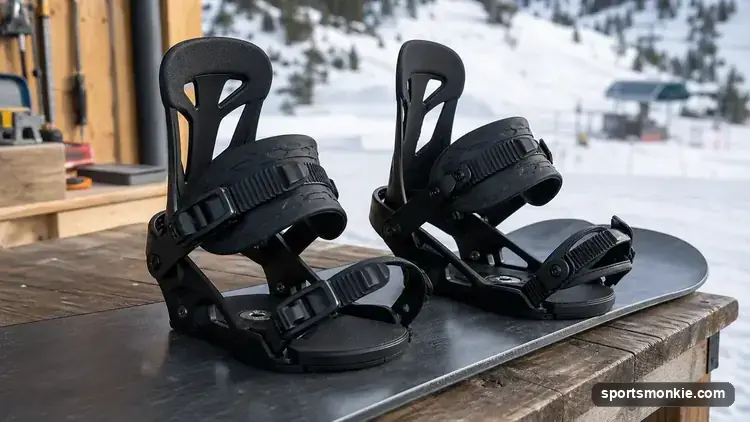
Snowboard Bindings for Beginners: Flex, Fit and Picks
The best snowboard bindings for beginners have soft-medium flex and easy entry. Strap vs rear-entry, sizing, and budget picks with real 2026 prices.
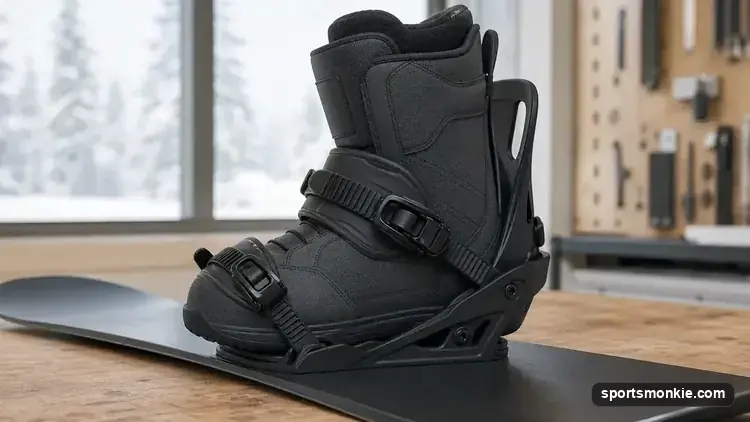
Snowboard Bindings Size Guide: Fit by Boot Size
Snowboard bindings size guide: match size to your boots, compare brand charts, get board width and flex right, and know 2x4, 4x4, and Channel mounting.
Ski Boot Flex Explained: Chart by Weight and Ability
Ski boot flex explained: what the number really measures, why it isn't standardized between brands, plus a flex chart by weight and ability level.
Snowboard for Beginners: How to Choose Your First Board
The best beginner snowboard is soft, all-mountain, and hybrid or rocker. Get profile, flex, and size right, with budget picks and a full gear checklist.
Skateboard Size Chart: Deck Width Guide
Skateboards are sized by deck width, not length. Match width to your shoe size, height and riding style, and pick trucks that fit the deck.