
Snowboard Bindings for Beginners: Flex, Fit and Picks
On this page6
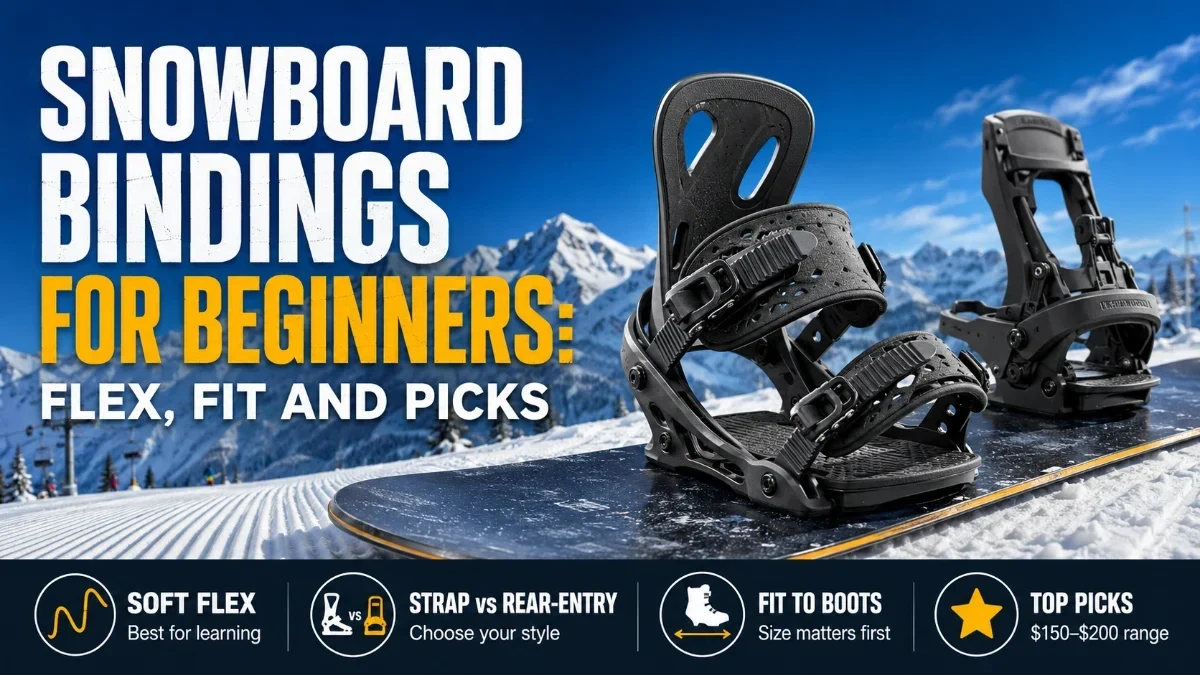
The best snowboard bindings for beginners are soft to medium-soft models, around 2 to 4 on a 10-point flex scale, because a forgiving binding absorbs the little ankle wobbles every new rider makes instead of firing them into the board. For most people learning, a traditional two-strap binding in the roughly $150 to $200 range is the smart buy. If you hate buckling up at every lift, a rear-entry model from Flow or K2 is worth the small trade in adjustability. Match the size to your boots first, then pick your entry style.
Bindings are the link between your boots and your board, and for a beginner that link should feel calm, not twitchy. A stiff, race-tuned binding punishes hesitation; a soft, playful one lets you find your balance and learn turns at your own pace. Here is what actually matters on your first pair, how the two main entry systems compare, and specific picks with current prices.
Why does flex matter most for beginners?
Flex is the single spec that changes how a beginner feels on snow. Bindings are usually rated 1 to 10, where lower is softer, and REI puts all-mountain beginners in the softer-to-medium band for a reason: a soft highback and baseplate flex under your movements instead of transmitting every twitch straight into the edges.
That does two useful things. It smooths out the unintentional inputs new riders make, so the board stays quiet underfoot, and it makes slow-speed steering, tweaking and off-balance recovery far easier. Stiffer bindings deliver sharper, instant response, which is exactly what an advanced carver wants and exactly what overwhelms someone still linking their first turns. Start soft, then move up to a medium flex once you are comfortable, since medium is the most versatile all-mountain range as your skills grow.
Strap vs rear-entry: which entry system should a beginner get?
This is the choice most beginners agonize over, and honestly both learn fine. The difference is how you get in.
Traditional strap bindings use two ratcheted straps, one over the ankle and one over the toe, that you tighten each time you strap in. Per evo, they offer the most adjustable, customizable fit between boot and binding, tend to be more durable, and usually cost less. The tradeoff is that you sit down and buckle at the top of every run.
Rear-entry bindings, sometimes called speed-entry, have a highback that reclines backward so you slide your boot in from behind, then flip the highback up to lock. Flow popularized the design, and K2’s Cinch line works the same way. The appeal is obvious the first time you step off a lift and ride away without sitting down. The tradeoffs: slightly less fine-tuning, a marginally bulkier feel, and the rear hinge can pack with snow in deep powder. My take: if you ride mostly groomed resort runs and value convenience, a rear-entry binding removes real friction from a beginner day. If you want the cheapest, most dialed fit and do not mind buckling, go strap.
What size snowboard bindings do I need?
Bindings are sized to your boot, not your foot or your board, and sold in ranges, commonly Small, Medium and Large, plus dedicated women’s and youth sizes. There is no universal industry standard, so a Medium from one brand may not equal a Medium from another. Always check the specific maker’s boot-size chart against your boot size.
Then do the physical test: seat your boot in the binding as if riding. The boot should sit centered on the baseplate without hanging noticeably off the toe or heel edge, and the straps should snug down without painful pressure or slack. For a full boot-to-binding breakdown, board-width limits and how to avoid toe drag, see our snowboard bindings size guide.
Are these bindings compatible with any board?
Mostly, yes. Nearly every board uses a standard 4-hole insert pattern, called 4x4 or 2x4, and almost all bindings fit it via their disc. The notable exception is Burton’s Channel (ICS) system, which requires Channel-compatible or EST bindings. A standard 4-hole binding transfers easily between most boards later, so a good beginner binding can follow you onto your next deck. Confirm your board’s mounting pattern before you buy.
Which beginner snowboard bindings are worth buying?
These models are widely recommended for new riders for the 2025-2026 season. Prices are approximate and fluctuate with sales and region, so verify current listings.
Salomon Rhythm: the value benchmark. A soft, forgiving flex with full EVA cushioning that smooths the learning curve, listed at $179.95 by Salomon for 2026. This is the pick I hand most beginners: comfortable day one, capable enough for first park laps.
Burton Freestyle Re:Flex: the compatibility pick. A long-running budget favorite with a soft flex; Burton lists it around $190. Its Re:Flex baseplate works across both standard and Channel boards, so it is the safe choice if you are unsure what board you will end up on.
K2 Indy: the simple strap option. A no-fuss traditional strap binding with a slightly more grounded response than K2’s freestyle models. Listed around $220 by K2, though it is a frequent sale item and regularly turns up for $130 to $180 at retailers during markdowns.
Flow Fenix / K2 Cinch: the rear-entry route. If you want to skip strapping in, the Flow Fenix lists near $270 new, and K2’s Cinch models sit in a similar bracket, though both routinely drop well below list price in end-of-season sales. Medium-soft flex, drop-and-go convenience, forgiving for a first season.
Beginner binding comparison
| Binding | Entry system | Flex feel | Approx. US price | Best for |
|---|---|---|---|---|
| Salomon Rhythm | Strap | Soft | $180 | Best all-round value day one |
| Burton Freestyle Re:Flex | Strap | Soft | ~$190 | Standard + Burton Channel boards |
| K2 Indy | Strap | Soft-medium | ~$220 (often $130-$180 on sale) | Simple, traditional feel |
| Flow Fenix | Rear-entry | Medium-soft | ~$270 (less on sale) | Fast on-and-off convenience |
Flex labels are relative; confirm the current spec on each manufacturer’s product page before buying.
What do these actually cost around the world?
A reliable beginner binding runs roughly $150 to $200 in the US, around £120 to £170 in the UK, and AU$220 to AU$300 in Australia. You do not need a premium, high-response binding for a first season. The single biggest saving is timing: brands cycle new colorways every autumn, so last season’s identical binding often drops 30 to 40 percent from spring onward. A $180 Salomon Rhythm at $110 in a clearance sale is the same binding you will learn on either way.
Spend your attention on fit and flex rather than the badge, and let the binding do its job for a beginner: stay quiet, stay comfortable, and let you learn. Ready to build the rest of your setup? Start with our guide to picking a first deck in snowboarding for beginners, then browse more gear and technique breakdowns in the winter sports hub.
Sources
- REI Expert Advice — How to Choose Snowboard Bindings
- evo — How to Choose Snowboard Bindings & Compatibility
- Salomon — Rhythm Snowboard Bindings (spec & price)
- Burton — Freestyle Re:Flex Snowboard Bindings
- Flow — Rear-Entry Bindings (REI listing)
If that interests you, Best Snowboards for Beginners in 2026 is a good next stop.
We dig into a related angle in Snowboard Gear for Beginners.
See also how this compares in Snowboard Size Chart for Beginners.
Frequently asked questions
What flex should beginner snowboard bindings be?+
Aim for soft to medium-soft, roughly 2 to 4 on a 10-point scale. A softer highback and baseplate forgive the small ankle wobbles every new rider makes, so the board reacts less and slow-speed turns feel calmer. Stiffer bindings respond faster but punish hesitation, which overwhelms most beginners.
Are strap or rear-entry bindings better for beginners?+
Both learn well. Strap bindings give the most adjustable fit and best value, but you sit down and buckle each run. Rear-entry bindings, like Flow models and K2's Cinch bindings, let you drop the highback and slide in from behind for faster laps. Pick strap for fine-tuning, rear-entry for convenience.
How much should I spend on beginner snowboard bindings?+
Budget roughly $150 to $200 in the US for a reliable soft-flex binding, around £120 to £170 in the UK and AU$220 to AU$300 in Australia. You do not need a premium binding to learn. Watch for end-of-season sales, when quality models routinely drop 30 to 40 percent off list price.
How do I know what size snowboard bindings I need?+
Bindings are sized to your boot, not your board, and sold in ranges like Small, Medium and Large. There is no universal standard, so a Medium differs between brands. Check the specific maker's boot-size chart, then confirm the boot sits centered on the baseplate without hanging off the toe or heel edge.
Do all snowboard bindings fit all boards?+
Most bindings ship with a disc for the common 4-hole (4x4 or 2x4) insert pattern found on nearly every board. The main exception is Burton's Channel system, which needs Channel-compatible or EST bindings. Before buying, confirm your board's mounting pattern matches the binding's disc so the two are compatible.
Should I buy boots or bindings first?+
Buy boots first. Boots are your direct connection to the board and must match your foot precisely, so they are the one fit decision you cannot compromise. Once you know your boot size, choose bindings that fit those boots, then a board wide enough that your boots do not drag in turns.
Sources
Play & tools
Free browser games and tools — no account, no download.
- Play today's Sports Connections — Today's Sports Connections — daily hints, answers, and play the grid.
- Play Guess the NFL Player — A new mystery NFL player every day. Eight guesses, with a clue on each — plus free unlimited mode.
- Explore all our games →
Related winter sports guides
View all →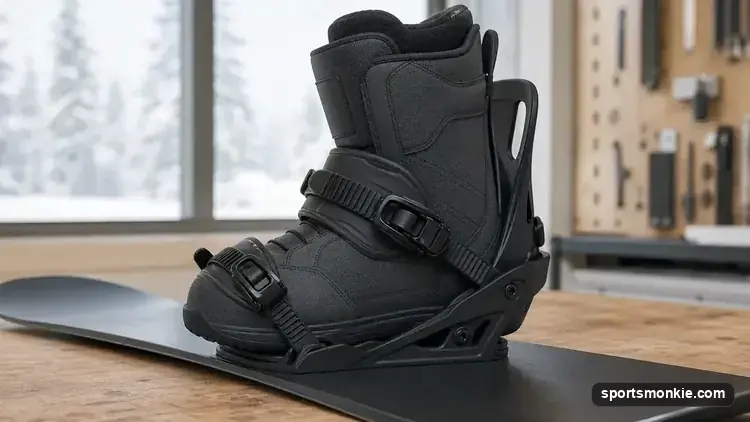
Snowboard Bindings Size Guide: Fit by Boot Size
Snowboard bindings size guide: match size to your boots, compare brand charts, get board width and flex right, and know 2x4, 4x4, and Channel mounting.
Snowboard Gear for Beginners: The Complete Checklist
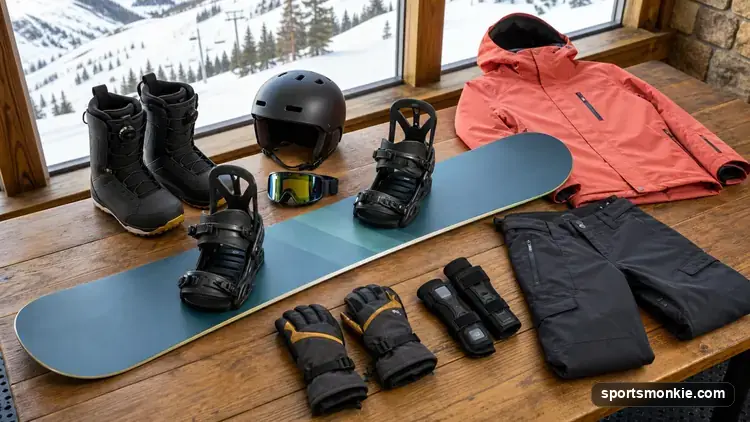
The complete snowboard gear checklist for beginners, with real 2026 package prices and the rent-vs-buy math for a first season.
Snowboard Size Chart for Beginners: How to Size a Board
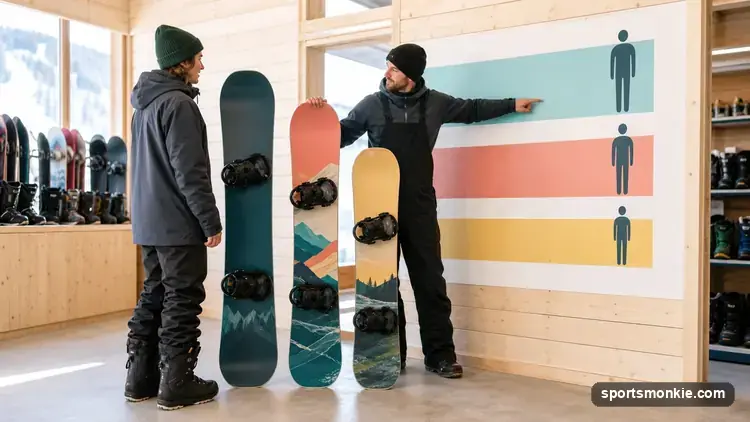
Snowboard size chart for beginners by weight, height, and boot width, plus how riding style shifts the number and the sizing mistakes that ruin a first season.
Ski Boot Flex Explained: Chart by Weight and Ability
Ski boot flex explained: what the number really measures, why it isn't standardized between brands, plus a flex chart by weight and ability level.
Snowboard for Beginners: How to Choose Your First Board
The best beginner snowboard is soft, all-mountain, and hybrid or rocker. Get profile, flex, and size right, with budget picks and a full gear checklist.
Best Snowboards for Beginners in 2026
The best snowboard for beginners in 2026 is a soft, all-mountain board like the Burton Cultivator ($429.95). Compare Burton, women's, and budget picks.